Lyretail Anthias: Pseudanthias squamipinnis
The Lyretail Anthias (Pseudanthias squamipinnis), also known as the Sea Goldie, is the crowning jewel of the Indo-Pacific reefs, defined by its stunning orange-to-gold gradient and complex social harems.
Also known as: sea goldie · wreck fish · Pseudanthias squamipinnis

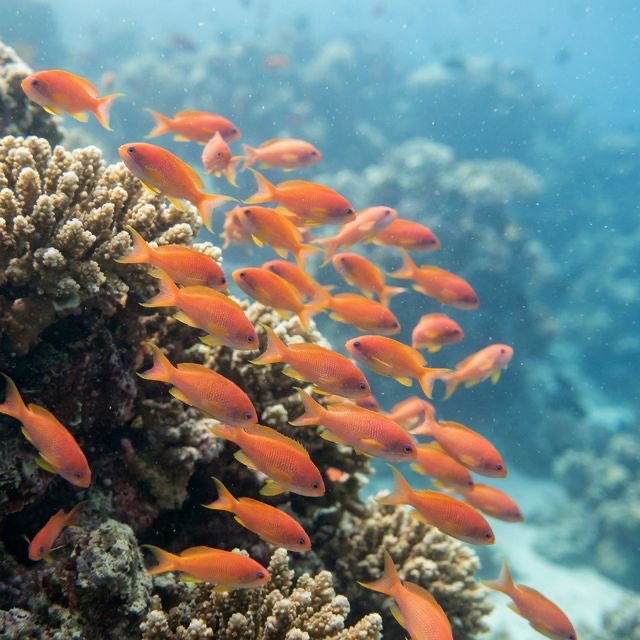
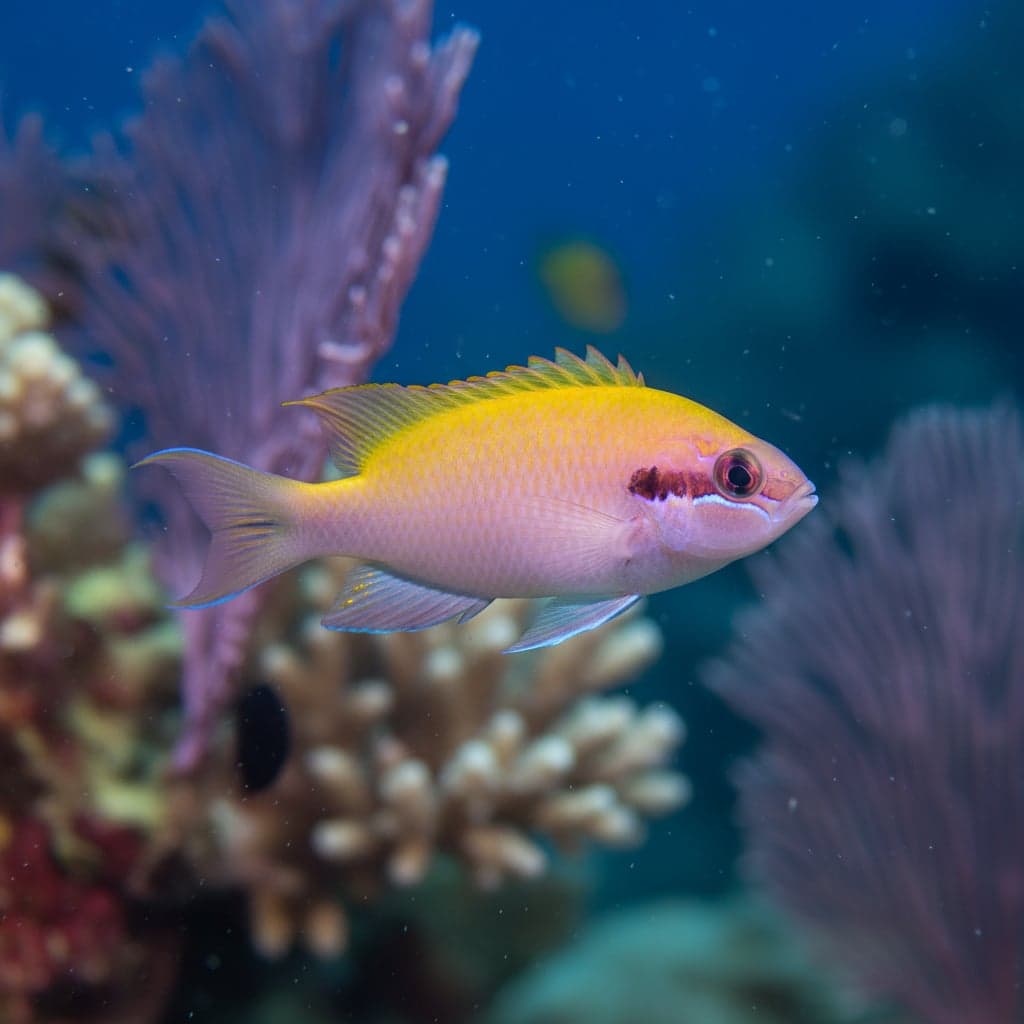
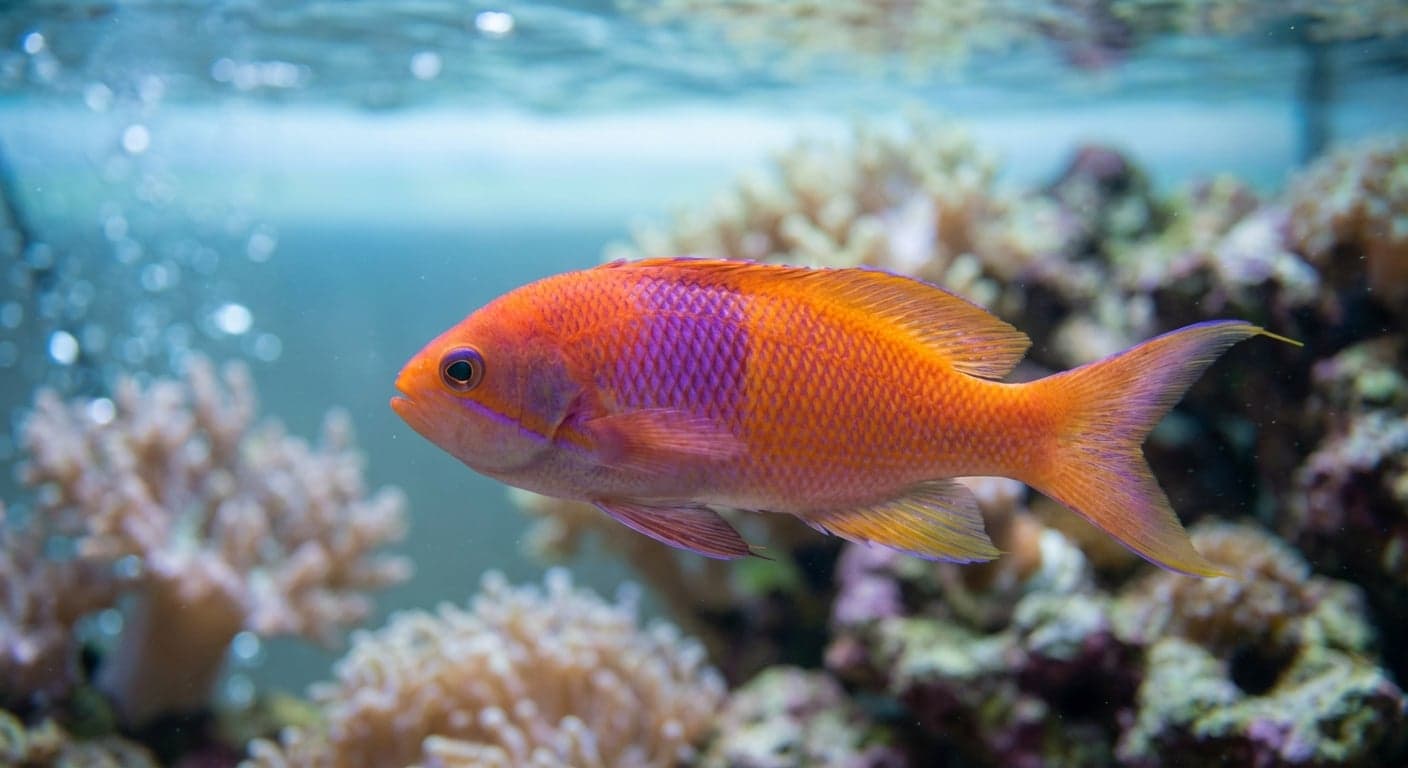
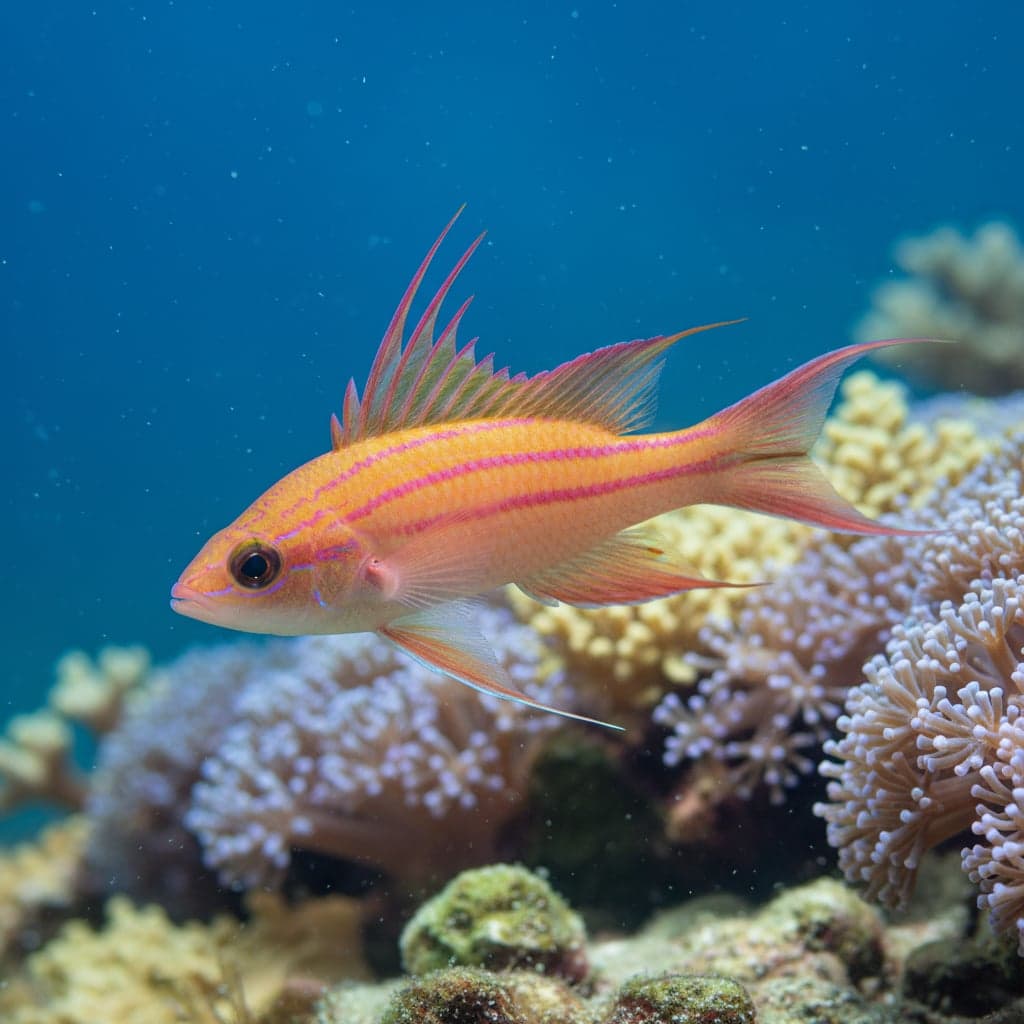
The Lyretail Anthias (Pseudanthias squamipinnis), often referred to as the Sea Goldie, is one of the most iconic and visually spectacular residents of the coral reef. It is defined by its striking sexual dimorphism and vibrant, sunset-inspired coloration; females are a brilliant, glowing orange with a characteristic purple streak beneath the eye, while dominant males transform into magnificent, deep violet-red or magenta specimens with elongated dorsal fin filaments. It is a highly social and active shoaler that brings a constant sense of motion and shimmering gold to the upper water column of any well-established marine aquarium.
In the aquarium, they are the "pulse of the reef." They are breathtaking when kept in a harem (one male to several females), where their constant interaction and the shifting hierarchies of the group create a true masterpiece of aquatic social behavior.
Natural Habitat & Origin
Pseudanthias squamipinnis is widely distributed throughout the Indo-West Pacific, ranging from the Red Sea and East Africa to the Solomon Islands and south to the Great Barrier Reef. They are reef-flat and slope specialists, typically found at depths of 2 to 20 meters. They inhabit areas with massive coral growth and strong currents, where they form enormous shoals that number in the thousands. They are almost always found hovering just above the coral heads, where they feed on the planktonic "soup" carried by the tides.
Care Requirements
The Lyretail Anthias is an Intermediate-difficulty species primarily because of its high metabolism and its requirement for frequent manual feeding. A minimum tank size of 100 gallons (375L) is required for a small harem.
Maintain stable marine parameters: a pH of 8.1 to 8.4 and a temperature of 75°F to 82°F (24°C to 28°C). The aquarium MUST feature strong, laminar water flow and high-volume filtration to simulate their oxygen-rich native reefs. They require plenty of open swimming space complemented by a robust liverock structure that offers numerous hiding spots for when they feel threatened. TIP: They are "sight" feeders; ensure your lighting is bright enough to showcase their vibrant colors and mimic the sun-drenched shallow reefs they inhabit.
Diet & Feeding
They are zooplanktivorous carnivores, naturally feeding on tiny crustaceans, fish larvae, and other planktonic organisms.
In captivity, they are not fussy but require a high-frequency feeding schedule for long-term survival:
- They SHOULD be fed at least 2-3 times per day (ideally more) to prevent them from losing weight (wasting).
- They MUST have frequent offerings of high-quality frozen foods: Vitamin-enriched Mysis shrimp, Brine shrimp, Calanus, and Cyclops are essential.
- Tip: They can be trained to accept high-protein marine flakes and micro-pellets, but frozen foods should always remain a significant portion of their diet to support their intense metabolism and coloration.
- A well-cycled Refugium is a major asset, providing a constant supplemental source of live pods.
Behavior & Temperament
They are peaceful and extremely social. They MUST be kept in a harem (1 male to 4+ females) to establish a natural social order; keeping too many males in a small volume will lead to fatal aggression. They are protogynous hermaphrodites, where the dominant female in the group will transition into a male if the primary male disappears. They spend the majority of their time in the upper water column, where they hover in the current, retreating into the rockwork only at night or when a predator is sensed.
Tank Mates
Suitable tank mates are other peaceful, active reef species:
- Tangs and Angelfish (all varieties)
- Wrasses (Fairy, Flasher, and Leopard Wrasses)
- Chromis and Clownfish
- Blennies and Gobies
- All corals (100% Reef Safe)
Avoid keeping them with overly aggressive, fast-moving, or boisterous fish (like large DOTTYBACKS or aggressive Triggers) that will outcompete them for food or stress the group.
Breeding
Breeding Pseudanthias squamipinnis in captivity is rare but achieving increased success in professional facilities. They are pelagic spawners, with pairs performing a rapid vertical dash into the water column to release eggs and sperm simultaneously. Rearing the larvae requires specialized, high-intensity micro-foods and precise environmental control, making it a significant challenge for the average home hobbyist.
Common Health Issues
The primary concern is Nutritional Wasting due to infrequent feeding and Uronema/Marine Ich if stressed. Maintaining a high-flow, stable reef environment with very frequent high-quality feedings is the best way to ensure the iconic and glowing Lyretail Anthias remains a healthy, vibrant centerpiece of your marine display.