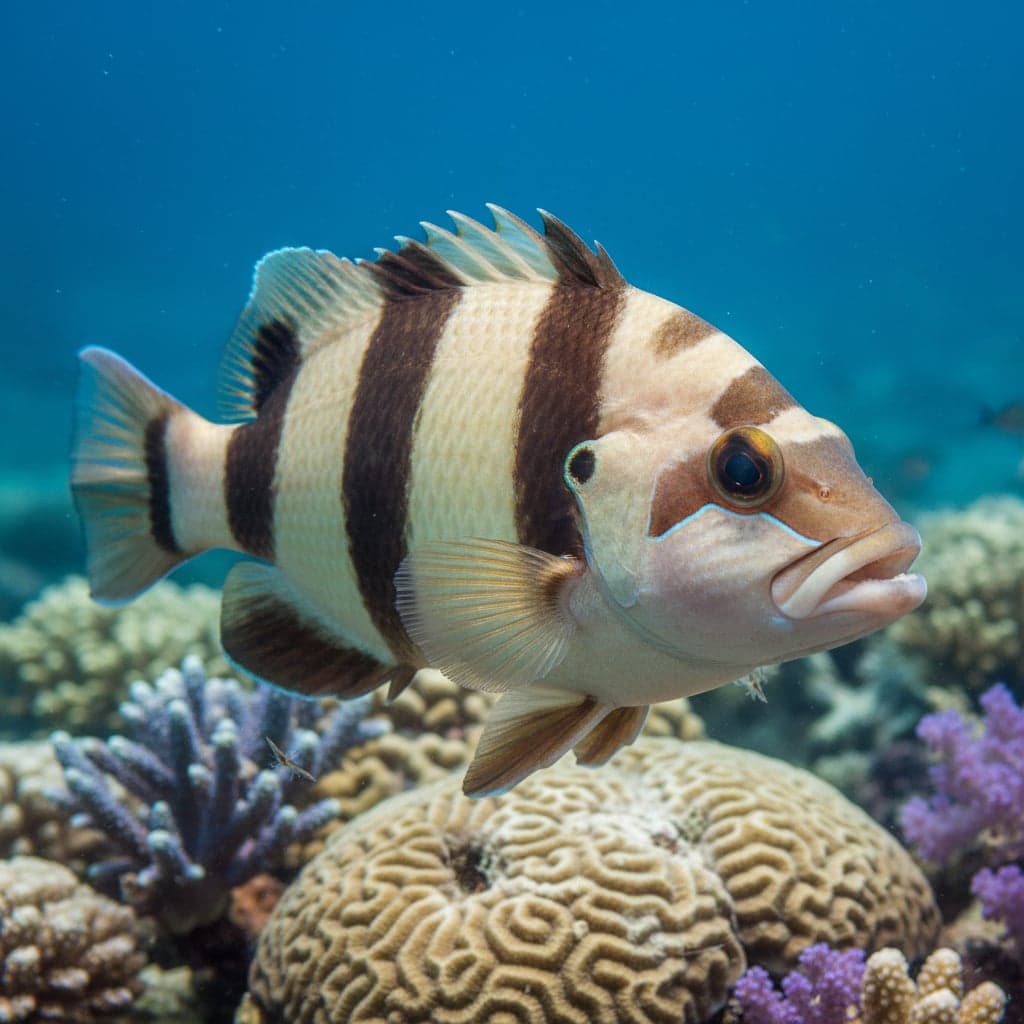
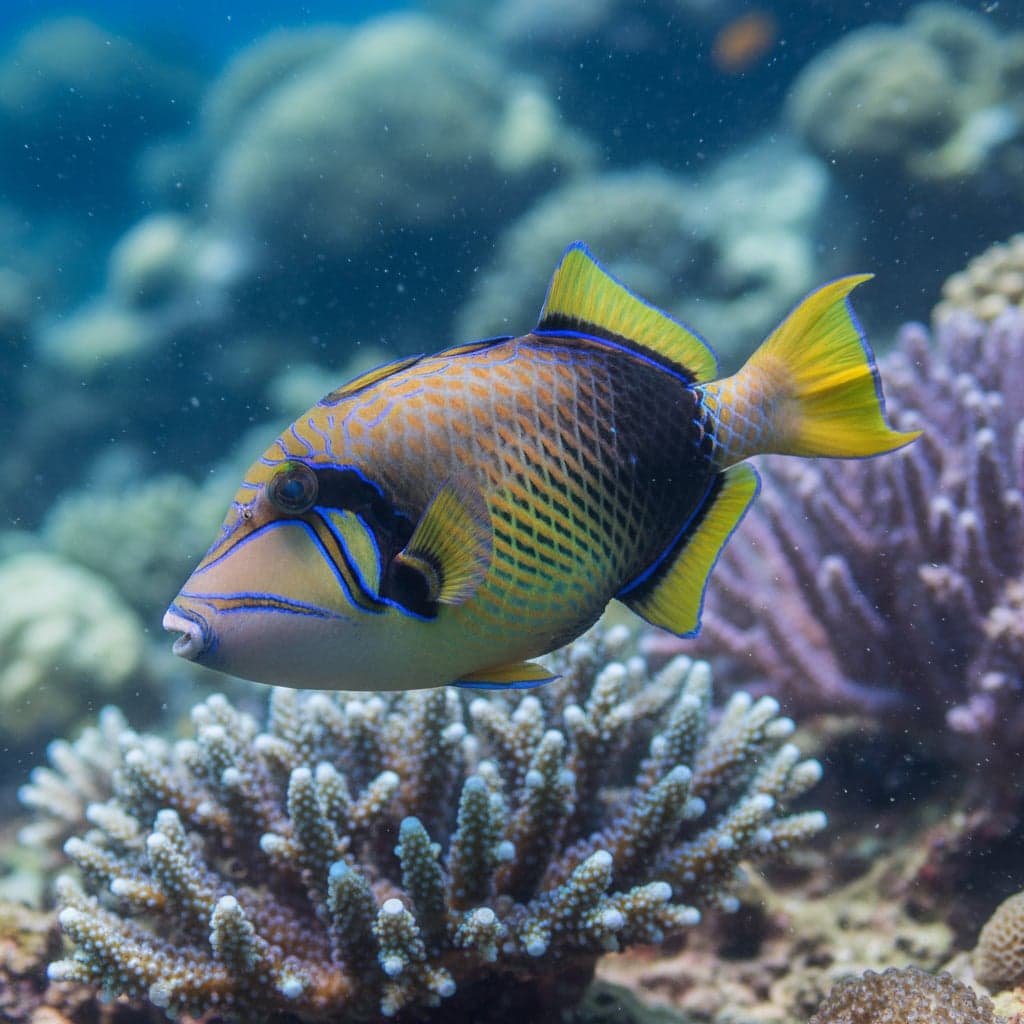
Lyretail Wrasse
The Lyretail Wrasse (Thalassoma lunare), or moon wrasse, is a hardy, brilliantly coloured Indo-Pacific wrasse — active and beautiful, but increasingly aggressive and a predator of invertebrates.
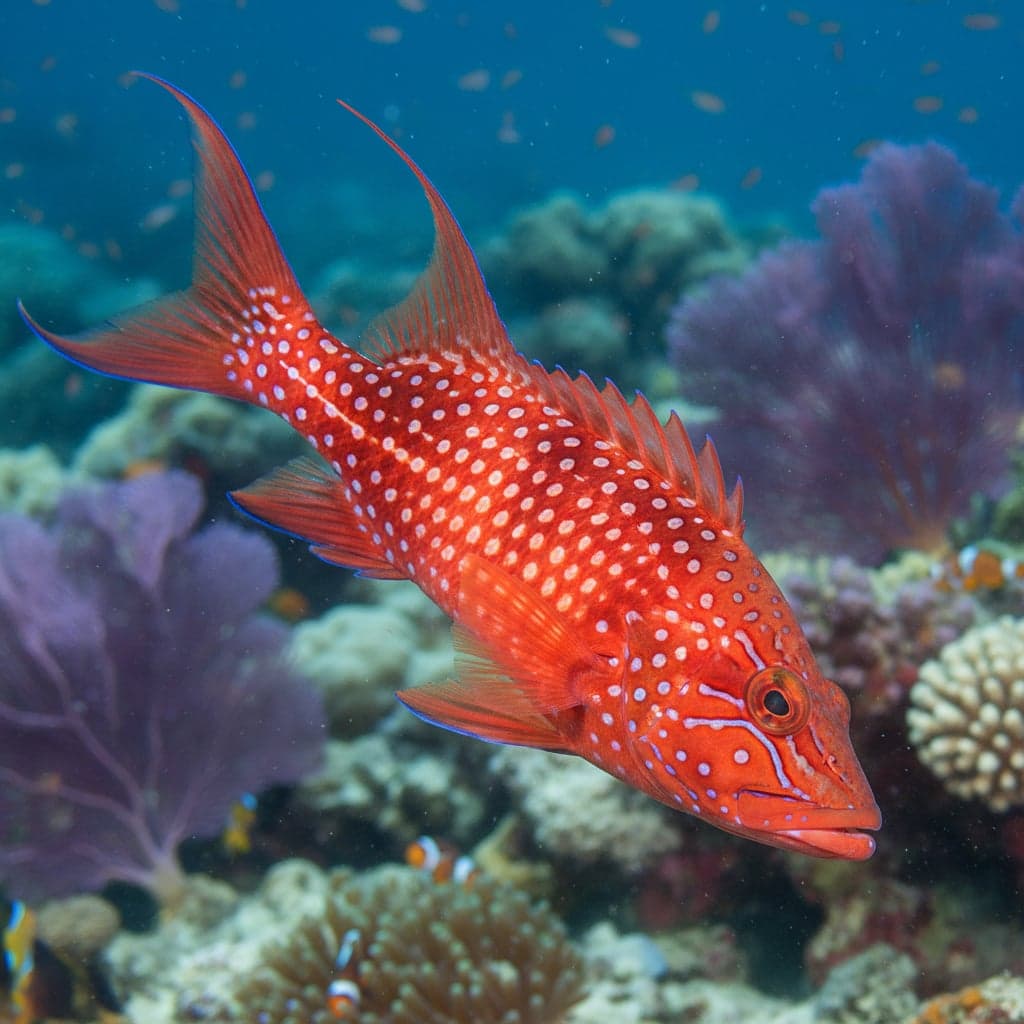
Lyretail Wrasse
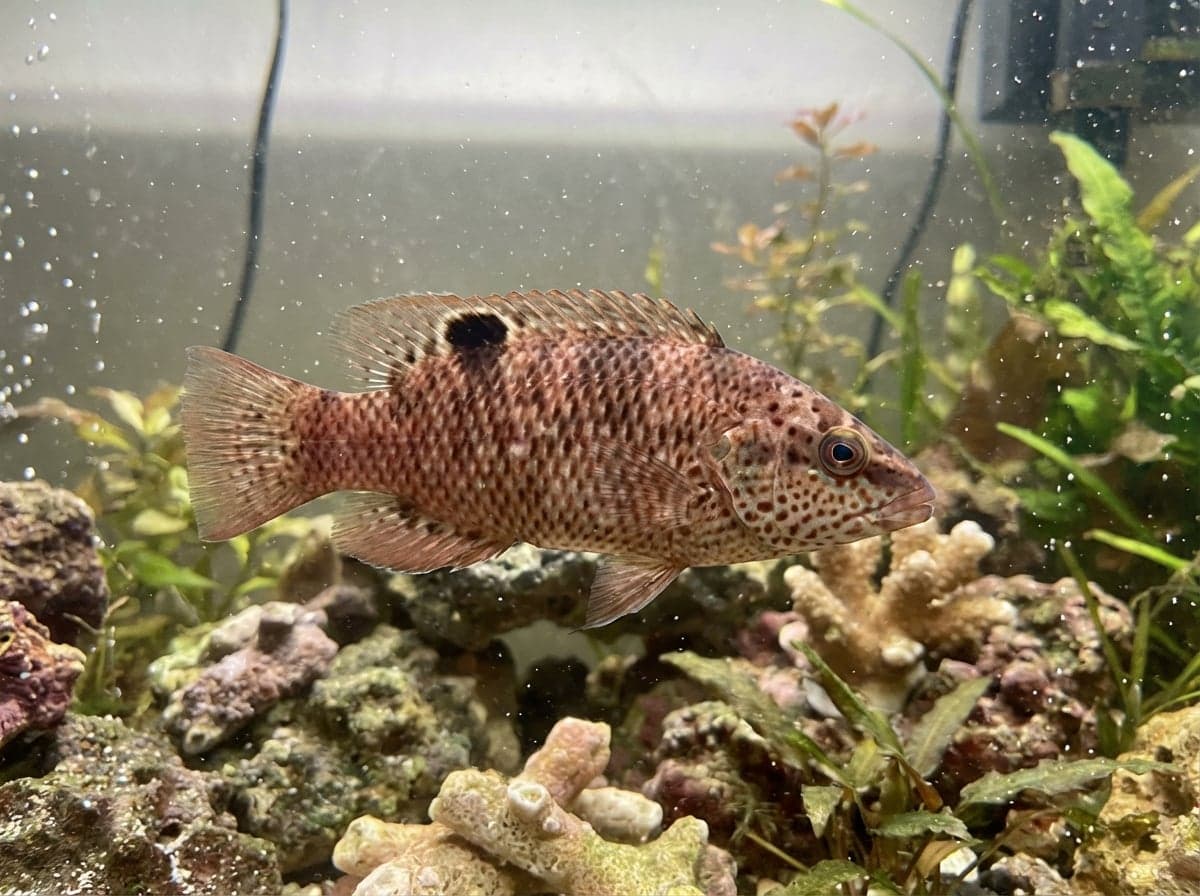
The Lyretail Wrasse (Thalassoma lunare), commonly called the moon wrasse, is a dazzling, energetic Indo-Pacific fish with a blue-green body, magenta-streaked face and a bright yellow, crescent-shaped (lyre) caudal fin that gives it its name. Hardy, inexpensive and always on the move, it is one of the most commonly offered wrasses in the trade — and one of the easiest to underestimate.
Beauty and toughness come with a short list of hard limits. It grows large for a “community wrasse,” becomes increasingly aggressive with age, and has a real appetite for small invertebrates. It is a superb fish for a robust fish-only or fish-with-hardy-coral system; it is a poor match for a delicate reef packed with ornamental shrimp and soft corals. Frontmatter lists solitary because captive fish are almost always kept as one dominant adult — wild aggregations do not license a pack in 340 litres.
Natural Habitat & Origin
Thalassoma lunare ranges widely across the Indo-Pacific, from the Red Sea and East Africa through the Indian Ocean to the central Pacific. It works coral and rocky reefs and reef flats as an active mid-water and rock-face hunter, chasing small invertebrates and zooplankton with restless energy. Juveniles often shelter in shallower rubble and branching coral before adopting the bold adult lifestyle; colour and pattern shift with sex and maturity, which is why shop bags of “moon wrasses” can look like different fish.
In the aquarium recreate that geometry: open swimming lanes above and beside the rock, live rock with crevices for cover, and a fine sand bed. Like many labrids, it dives into the sand to sleep and to escape sudden threat. A heavily cave-packed maze with no straight run produces a paced, stressed wrasse that never shows the lyre tail at speed.
Care Requirements
Stable marine water: salinity about 1.024–1.026, pH 8.1–8.4, temperature 24–26°C (75–79°F). Adults reach around 25 cm (10 inches) and stay extremely active, so plan on about 340 litres (around 90 US gallons) or more — and prefer tanks that are long, not just tall. Volume without swimming length still fails a Thalassoma.
A secure, gap-free lid is essential. Moon wrasses are accomplished jumpers; lights-out startle, a chase from a tankmate, or a net near the surface can put one on the floor overnight. Screen overflow boxes and filter intakes the same way you would for fairy wrasses.
Quarantine is mandatory even though the species is hardy once settled. Surgeonfish get the ich headlines; wrasses still import marine ich (Cryptocaryon irritans) and velvet (Amyloodinium ocellatum) under shipping stress. Run a proper quarantine protocol before the display; medications belong in a hospital tank, not on sessile inverts.
Use the Aquarium Tracker to log salinity, temperature and your change schedule. Chronic nitrate creep and oxygen neglect show up as dull colour and clamped fins long before this tireless swimmer stops moving.
Diet & Feeding
Carnivore first. Wild fish hunt small invertebrates and zooplankton through the day. In captivity it is a voracious, reliable feeder: frozen mysis and enriched brine shrimp, finely chopped seafood, and quality marine pellets or flakes. Feed once or twice a day with enough volume that the fish stays thick behind the pectorals without fouling a smaller system.
It will also hunt the rock and sand between meals — ornamental shrimp, small crabs, snails, worms and other mobile inverts are on the menu whether you intend them as food or décor. A well-fed moon wrasse is less frantic at the glass; it is not magically reef-safe with crustaceans. See marine diets and feeding schedules for timing active carnivores alongside slower tankmates.
Behavior & Temperament
Semi-aggressive and increasingly territorial with size and maturity. Juveniles can look peaceful in a shop; the same fish at 20 cm often dominates a mixed community in a mid-size tank. Keep only one per system unless the aquarium is truly large and heavily broken by rock. Add it later among robust fish so it cannot annex every swimming lane from day one.
Boundless energy is the other trait people misread as “happy.” Constant pacing along the glass in a short tank is not enrichment — it is a fish with nowhere to cruise. Toward unrelated, similarly sized fish it is usually manageable if space and food are adequate; hunger and crowding turn mild hustling into chasing.
Tank Mates
House with other robust marine fish — tangs, larger wrasses, angelfish, triggers (with care) and similar stock that can hold their own. Avoid small, timid fish that may be harassed or eaten as the wrasse grows. It is not reef-safe with mobile invertebrates: ornamental shrimp, small crabs, snails and worms are prey. It may also disturb corals as it crashes through the aquascape, so it belongs in fish-only or fish-with-hardy-coral setups rather than a delicate SPS reef.
Do not confuse compatibility charts that lump all “colourful wrasses” together. A peaceful fairy wrasse and a mature Thalassoma lunare share a family name and little else in husbandry drama.
Breeding
Thalassoma lunare is a protogynous hermaphrodite and pelagic spawner. Courtship and egg release are occasionally seen in large systems; rearing the planktonic larvae is beyond the home aquarium. Trade specimens are wild-collected. There is no reliable captive-bred pipeline that removes quarantine duty.
Common Health Issues
Among the hardier marine fish sold, still a marine import. Ich and velvet follow shipping stress, poor oxygen and dirty water. Jumping is the other common killer — seal the lid before you blame disease. Quarantine every arrival, keep flow and oxygenation high, and give the adult the swimming room the 25 cm body requires.
Mindful of growth, conspecific intolerance and an invertebrate appetite, the lyretail wrasse is otherwise an easy, brilliantly coloured and active fish for a robust marine community. Undersize the system or stock it over shrimp and shy gobies, and the same hardy moon wrasse becomes the tank’s bully and cleanup crew predator.