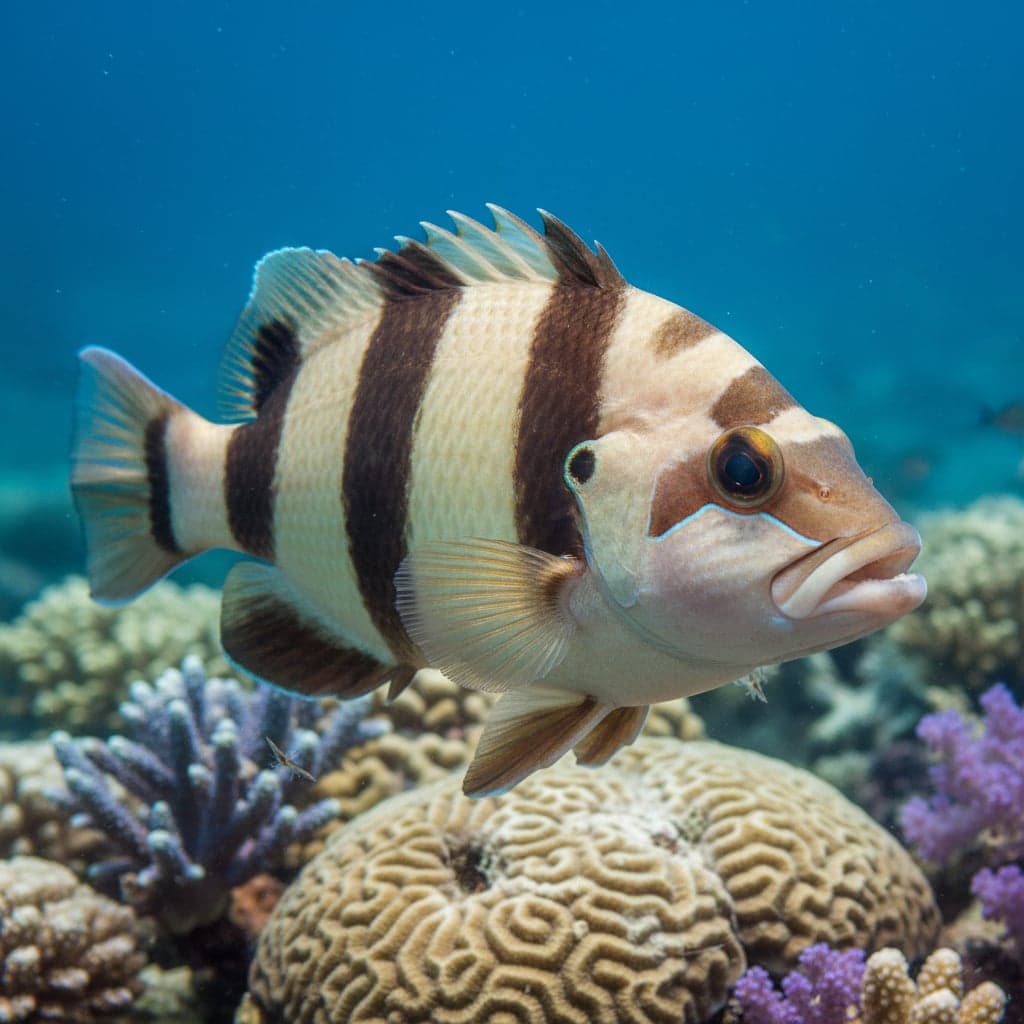
Mauritius Triggerfish
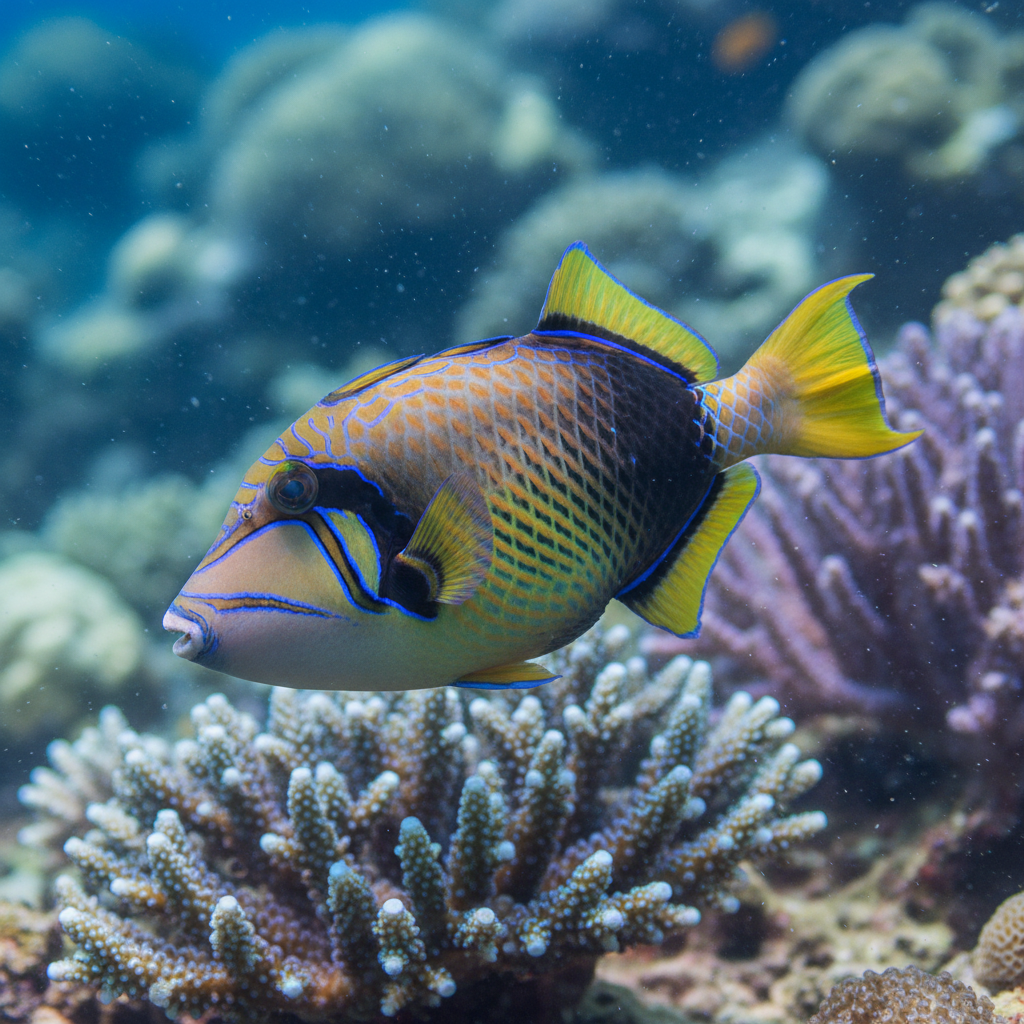
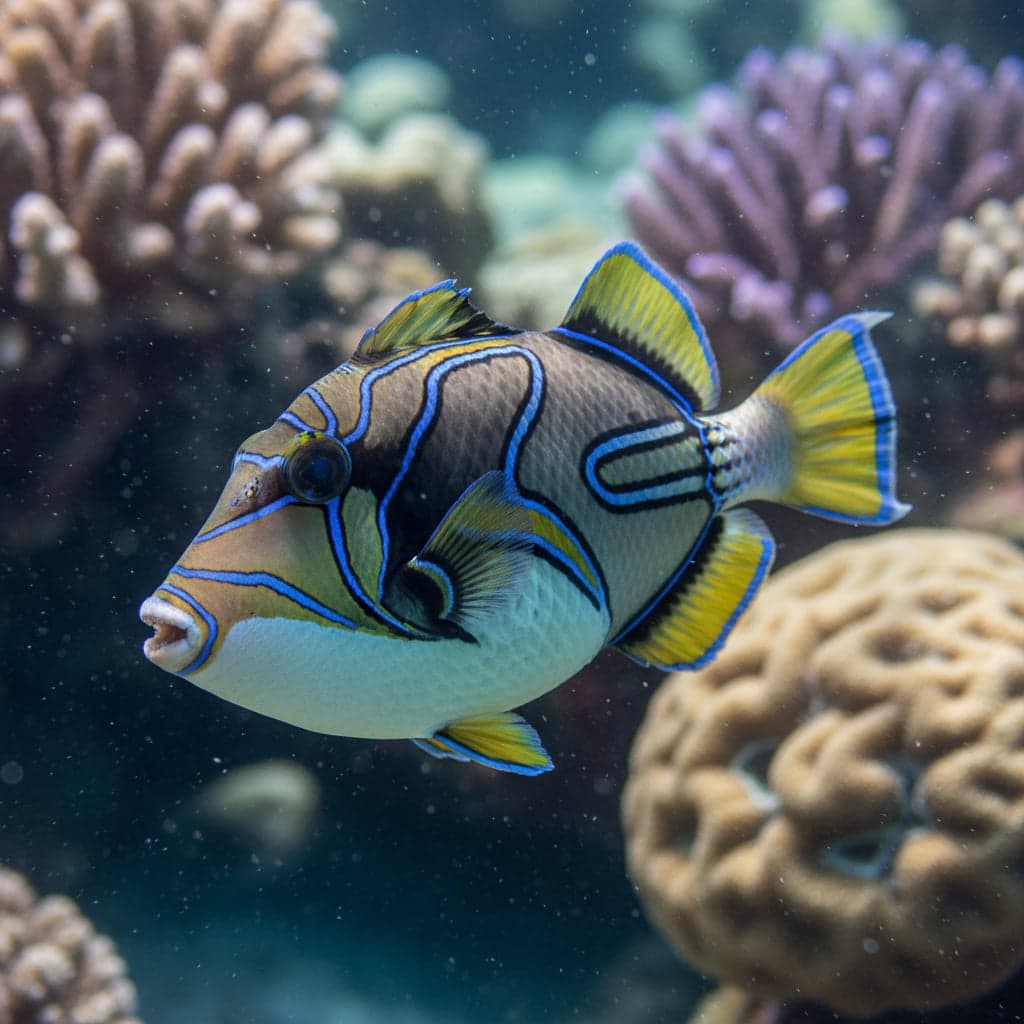
The Mauritius Triggerfish (Rhinecanthus cinereus) is a hardy, boldly patterned Indian Ocean trigger — a tough, characterful fish that is not reef-safe.
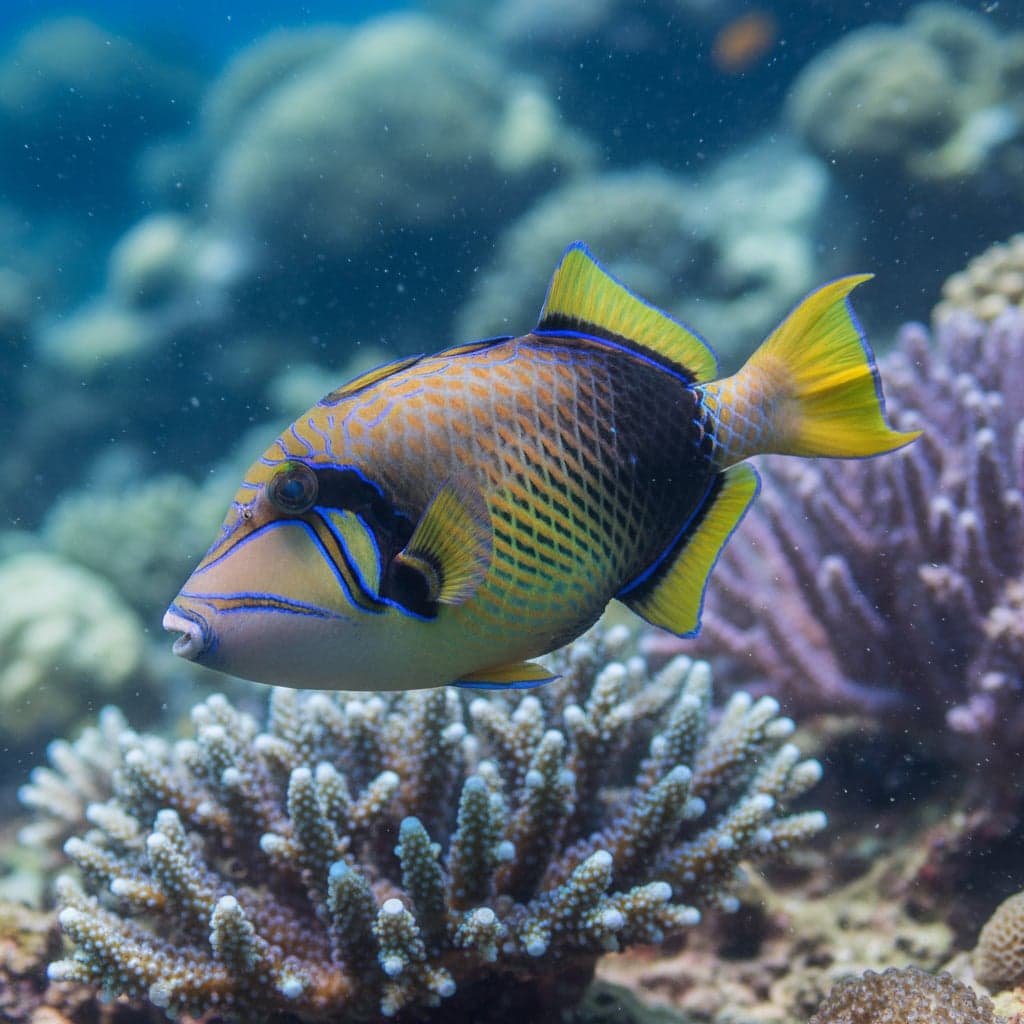
Mauritius Triggerfish
The Mauritius Triggerfish (Rhinecanthus cinereus) is the western Indian Ocean cousin of the better-known Picasso group — grey-brown armour, bold dark lines, and the same dense, purposeful swimming that makes Rhinecanthus triggers feel more like small dogs than ornamentals. It learns the keeper, begs at the glass, and rearranges whatever you thought was aquascaping. It is also a true trigger: powerful jaws, a locking dorsal spine, and an appetite that treats ornamental invertebrates as lunch.
This is a fish-only or FOWLR centrepiece, not a reef guest. If the tank plan includes shrimp, crabs, snails, urchins or delicate coral, choose another species. If the plan is a robust, characterful wet pet in a large, secure system, R. cinereus earns its keep.
Natural Habitat & Origin
Rhinecanthus cinereus is a western Indian Ocean fish, recorded from places such as Mauritius, Réunion and the Maldives, on coral and rocky reefs, rubble zones and outer slopes from very shallow water into tens of metres. Like other Picasso-type triggers it hunts hard-shelled prey — crustaceans, molluscs, urchins and similar — and wedges into holes and crevices at night or when threatened, locking the dorsal trigger spine so it cannot be pulled out cleanly.
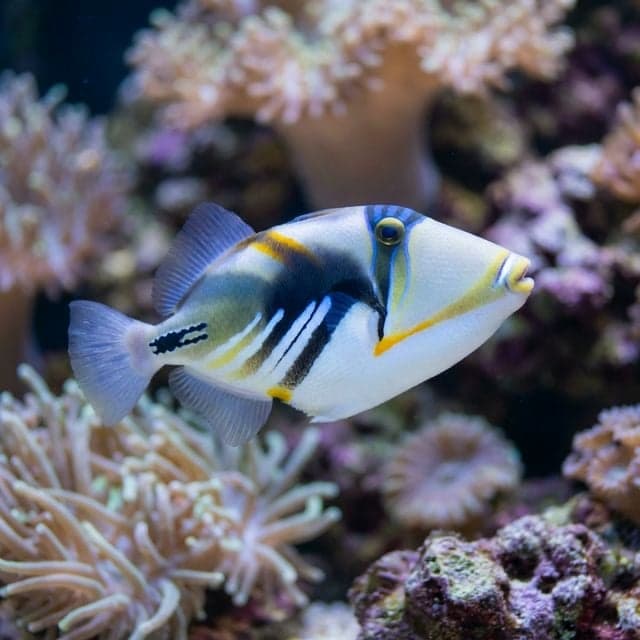
In the aquarium that biology translates directly: caves it can claim, open patrol space, a sand or rubble bed it will sort for food, and rockwork heavy enough that rearranging does not become a landslide. Compare the more familiar Picasso Triggerfish (Rhinecanthus aculeatus) for temperament and husbandry parallels; the Mauritius form is the same problem set with a narrower natural range and less common trade availability.
Care Requirements
Stable marine conditions: salinity around 1.024–1.026, pH 8.1–8.4, temperature 24–26°C (75–79°F). Triggers are hardy once established, but they are messy, high-biomass carnivores — filtration, skimming and export have to match the feeding rate, not the brochure picture of a “tough fish.”
Frontmatter puts adult size near 25 cm (about 10 inches) and a minimum volume around 450 litres (about 120 US gallons). That is a floor for a solitary fish with secure rock, not a licence to stack other large territorial species into the same footprint. Give length for swimming, caves that cannot collapse, and equipment in a sump or behind barriers triggers cannot chew. Rhinecanthus are famous for biting airlines, heater cords and hands that smell like food.
Rock must be on the glass or otherwise locked; sand beds will be excavated. A lid still helps — startled triggers can rocket upward. Quarantine new arrivals even though the species is tough; hardy is not immune, and a trigger that seeds marine ich into a big FOWLR is an expensive lesson. Follow a real quarantine protocol before display introduction.
Log salinity and nitrate in the Aquarium Tracker; heavy feeders push nutrients faster than most reef schedules assume.
Diet & Feeding
Carnivore built to crush. Offer shell-on shrimp, krill, mussel, clam, squid, chopped marine fish, and quality marine pellets or sticks as the daily scaffold. Hard items matter: trigger teeth grow continuously, and a soft-only diet leaves you with overgrown dentition and a fish that struggles to eat. Occasional urchin or crab pieces (never from a reef you care about) match the wild habit of flipping and crushing armoured prey.
Feed once or twice a day with portions the fish clears promptly. Obesity and water-quality spikes are the twin failure modes of “it always looks hungry” feeding. Variety beats volume. Colour can wash out on a monotonous diet; that is nutrition and enrichment, not a need for constant live feeders.
Do not hand-feed. Triggers mistake fingers for squid more often than keepers admit, and a Rhinecanthus bite is not a guppy nip.
Behavior & Temperament
Aggressive and territorial, especially as it matures. Frontmatter lists Solitary for good reason: one Mauritius Trigger per tank is the default, and “maybe a pair” is a large-system exception, not a starter plan. It will dominate smaller fish, harass timid mid-water species, and claim caves as exclusive property. Personality is real — many individuals become interactive and recognisable — but personality does not cancel jaw strength.
It rearranges rock and substrate as normal behaviour, not as spite. Secure the scape, accept that sand will move, and design caves that still exist after the fish has renovated. Toward the keeper it may spit water, beg, and watch maintenance; toward tank mates it ranks by what it can intimidate or eat.
Handle nets and hands with care. The trigger spine can lock in rock or in a net, and panicked thrashing injures fish and keepers alike.
Tank Mates
Only large, robust fish that hold their own: big tangs, large wrasses, certain other triggers in very large systems with broken sightlines, and similarly assertive FOWLR staples. Avoid small fish that fit in the mouth, slow fancy fish, angelfish that get cornered, and anything that needs to graze the same caves in peace.
Not reef-safe. Ornamental shrimp, crabs, snails, serpents stars, urchins and many corals are food or toys. Soft coral and LPS get bitten; rock-attached gear gets investigated. Keep this species in fish-only or fish-only-with-live-rock systems and choose invertebrates you are prepared to lose — which usually means none.
Breeding
Pelagic spawner; not a home-aquarium breeding project. Trade specimens are wild-collected. Sexing by casual colour alone is unreliable for most keepers; buy for temperament and size class, not for a planned pair unless you have space to separate failures.
Common Health Issues
Among the hardier marine fish when water is clean and diet is solid, still open to Cryptocaryon and Amyloodinium under shipping stress, and to bacterial infections on mouth or body after fights or rock abrasion. Quarantine, stable salinity, and secure rock prevent more losses than medication shelves do.
Watch for weight loss despite begging — sometimes a sign of dental overgrowth, internal issues, or simply losing food to faster tank mates. Watch for torn fins and cornered companions as the social cost of an undersized community. Given a 450 L-class FOWLR, secure caves, crushed prey in the diet, and no reef expectations, the Mauritius Triggerfish is a long-lived, intelligent, and genuinely entertaining Indian Ocean trigger — on its terms, not the reef’s.