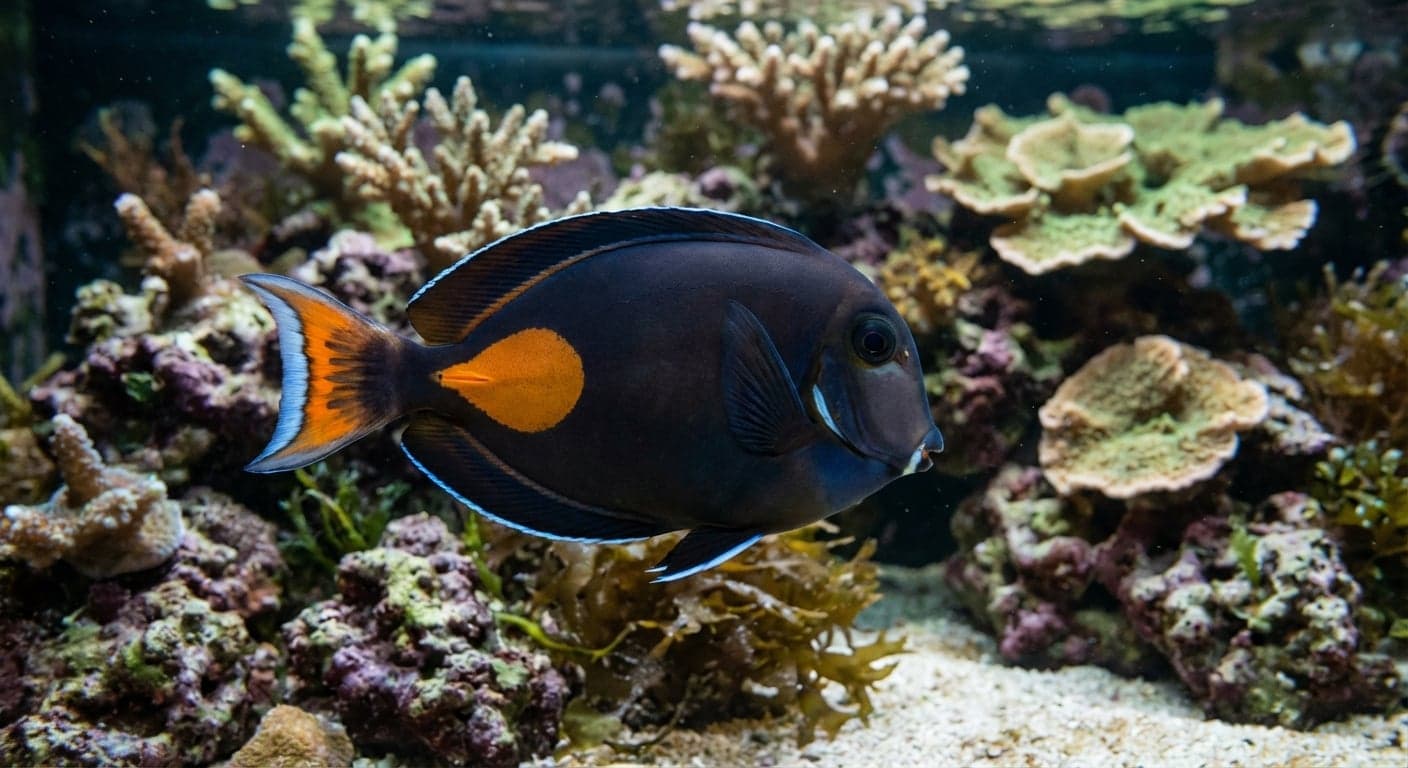
Orange Face Tang
The Orange Face Tang (Acanthurus bariene) is a large, handsome Indo-Pacific surgeonfish with a vivid orange mask — a hardy, reef-safe algae grazer for big tanks.
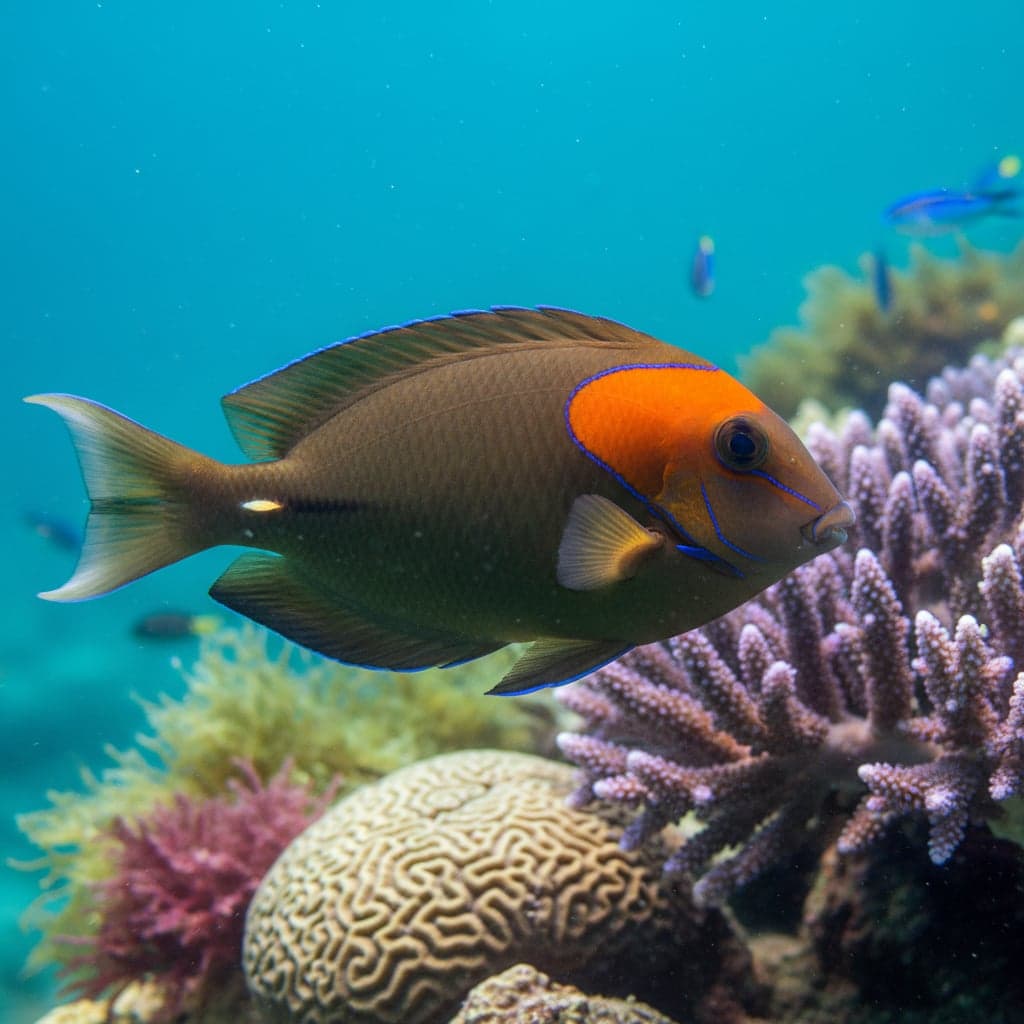
Orange Face Tang
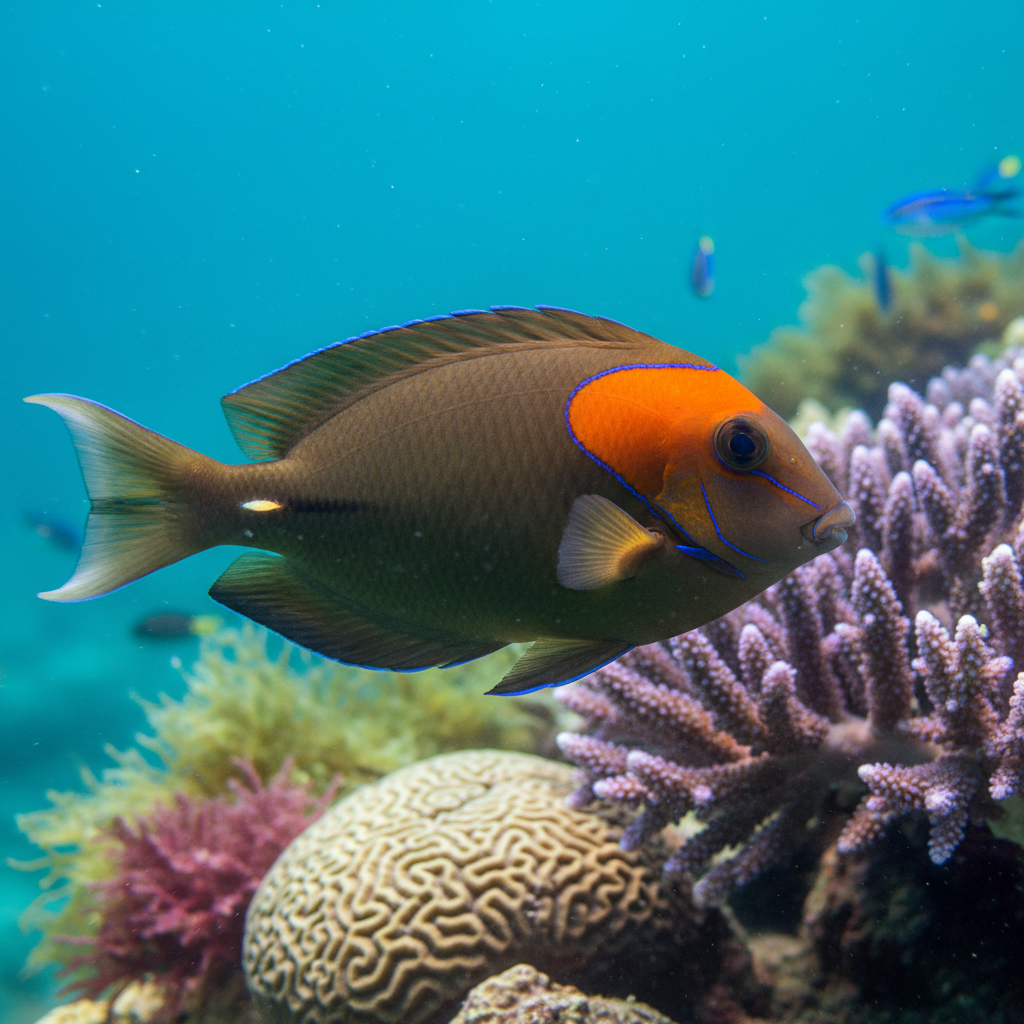
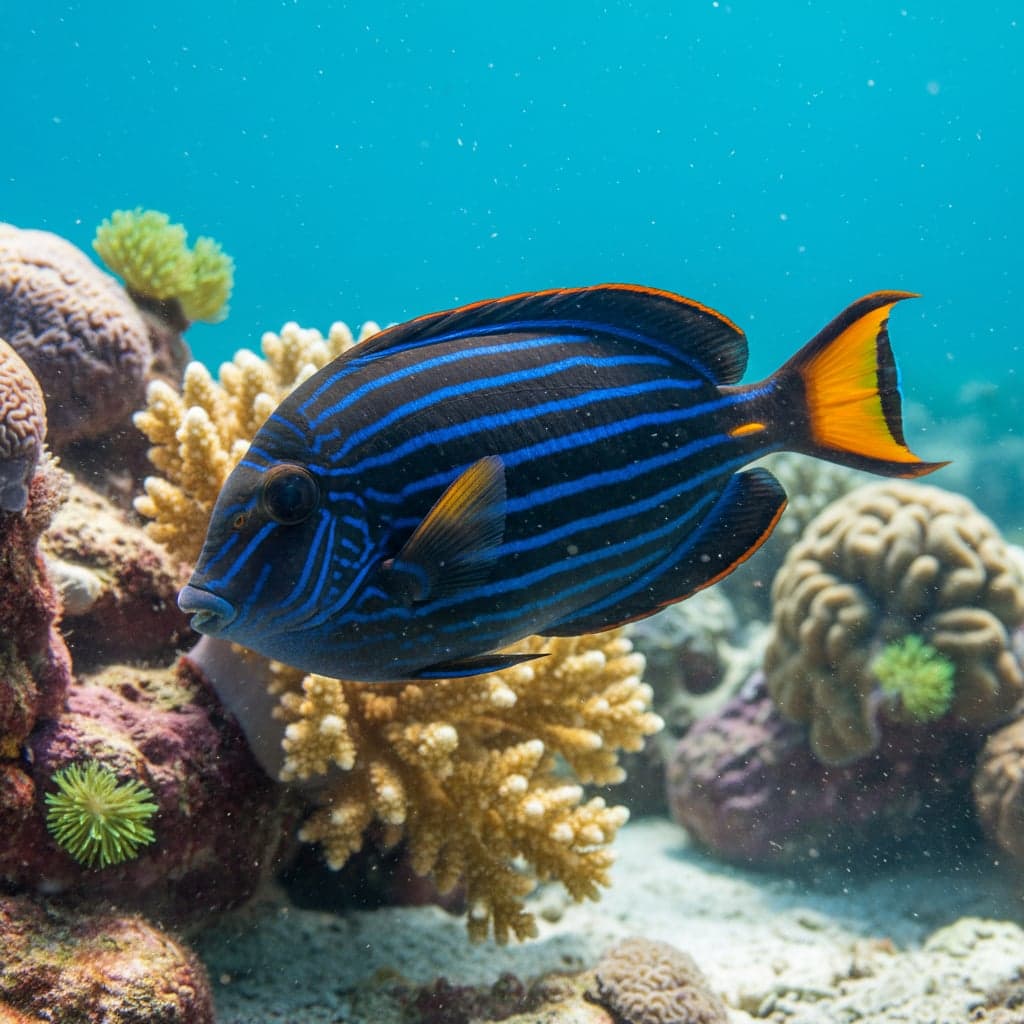
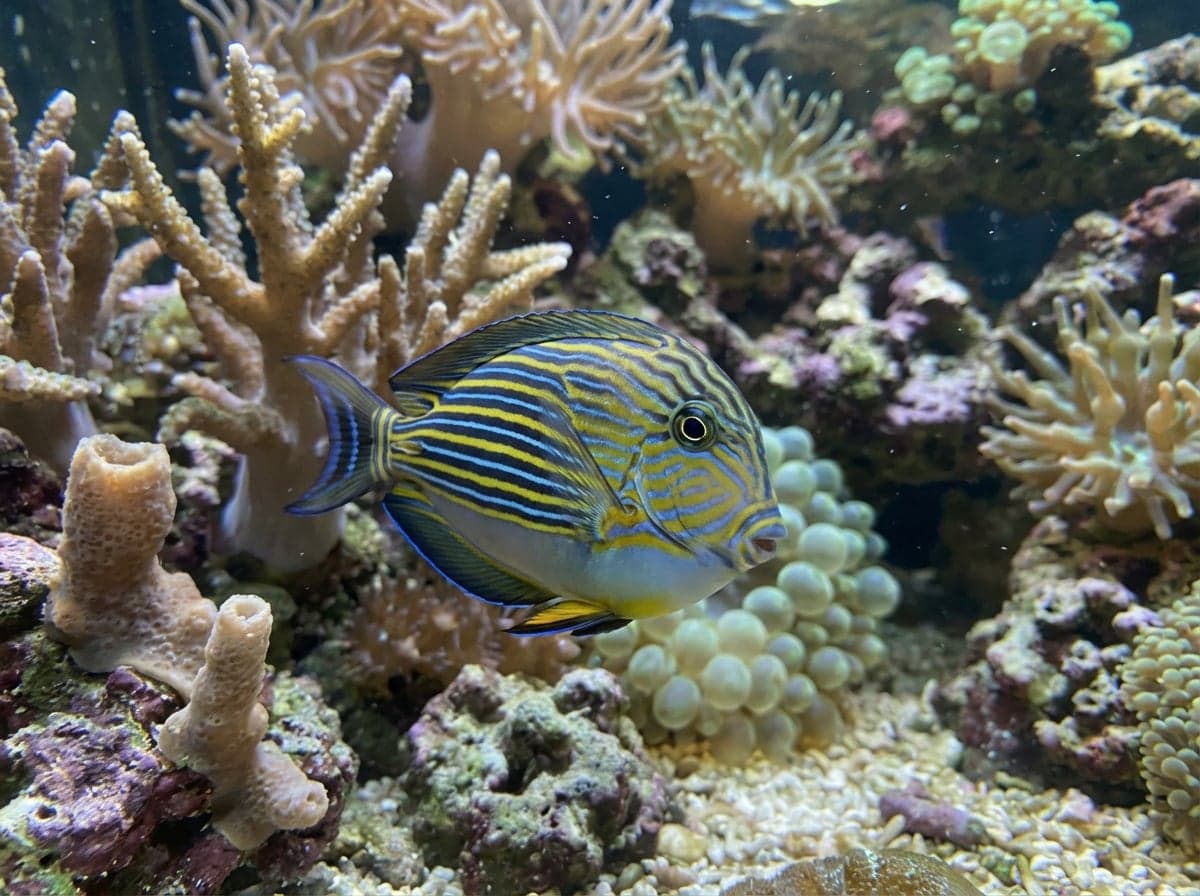
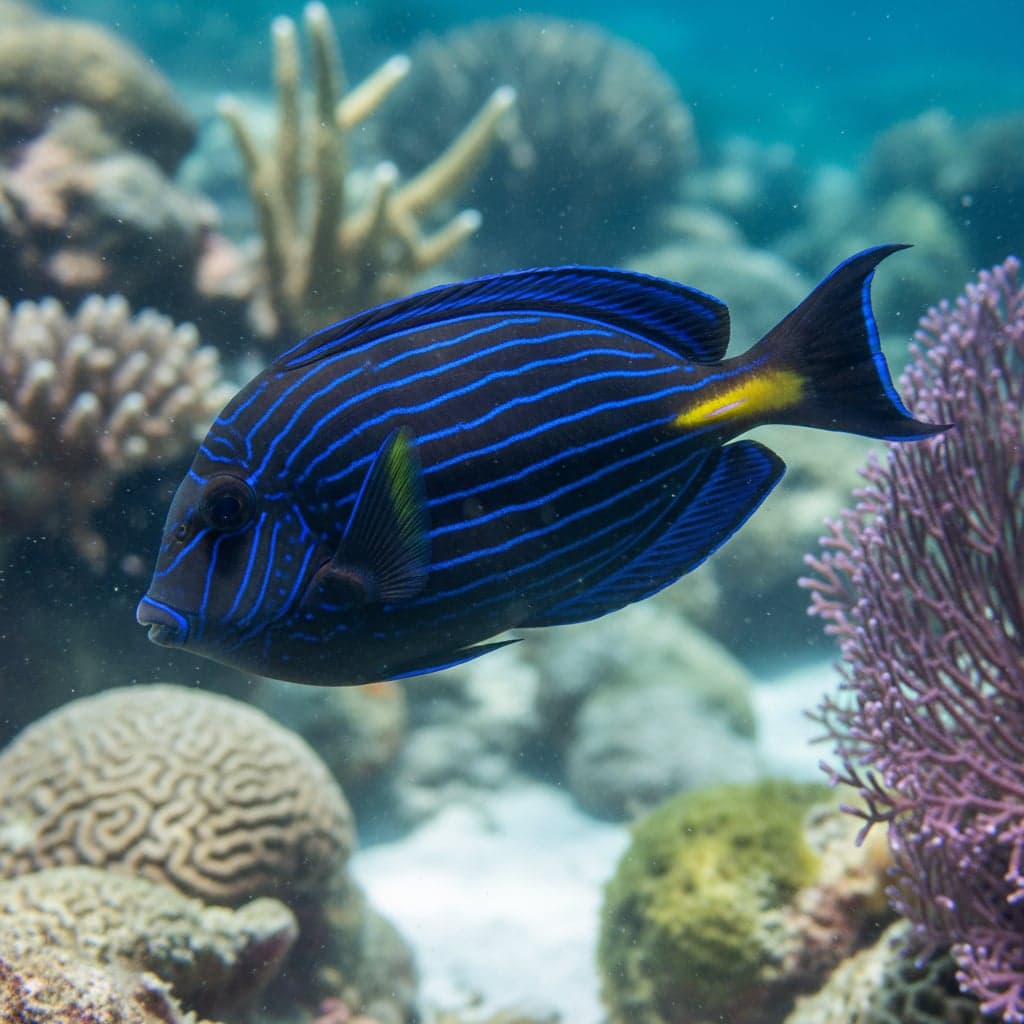
The Orange Face Tang (Acanthurus bariene) — also sold as bariene, blackspot, or roundspot surgeonfish — is a large Indo-Pacific tang with a vivid orange patch behind the eye, a dark spot associated with the caudal spine area, and a blue-grey to purplish body that can show fine lining as the fish settles in. It is handsome at juvenile sizes and imposing as an adult. It is also a serious swimming machine that outgrows the “nice large reef” many people imagine when they buy a hand-sized specimen.
If you cannot give open length, strong flow and a herbivore feeding programme, buy a smaller Acanthurus. This species rewards intermediate keepers with big systems; it punishes wishful stocking.
Natural Habitat & Origin
Acanthurus bariene ranges across the Indo-West Pacific, from East Africa and the islands of the western Indian Ocean out through Indonesia and into the western Pacific. Adults favour clear seaward reef slopes and outer walls, often deeper than the postcard shallows — commonly below about 15–30 m once grown — grazing algal film off rock rather than browsing big leafy macroalgae all day. Juveniles recruit shallower, in more protected reef structure, before moving into deeper slope life.
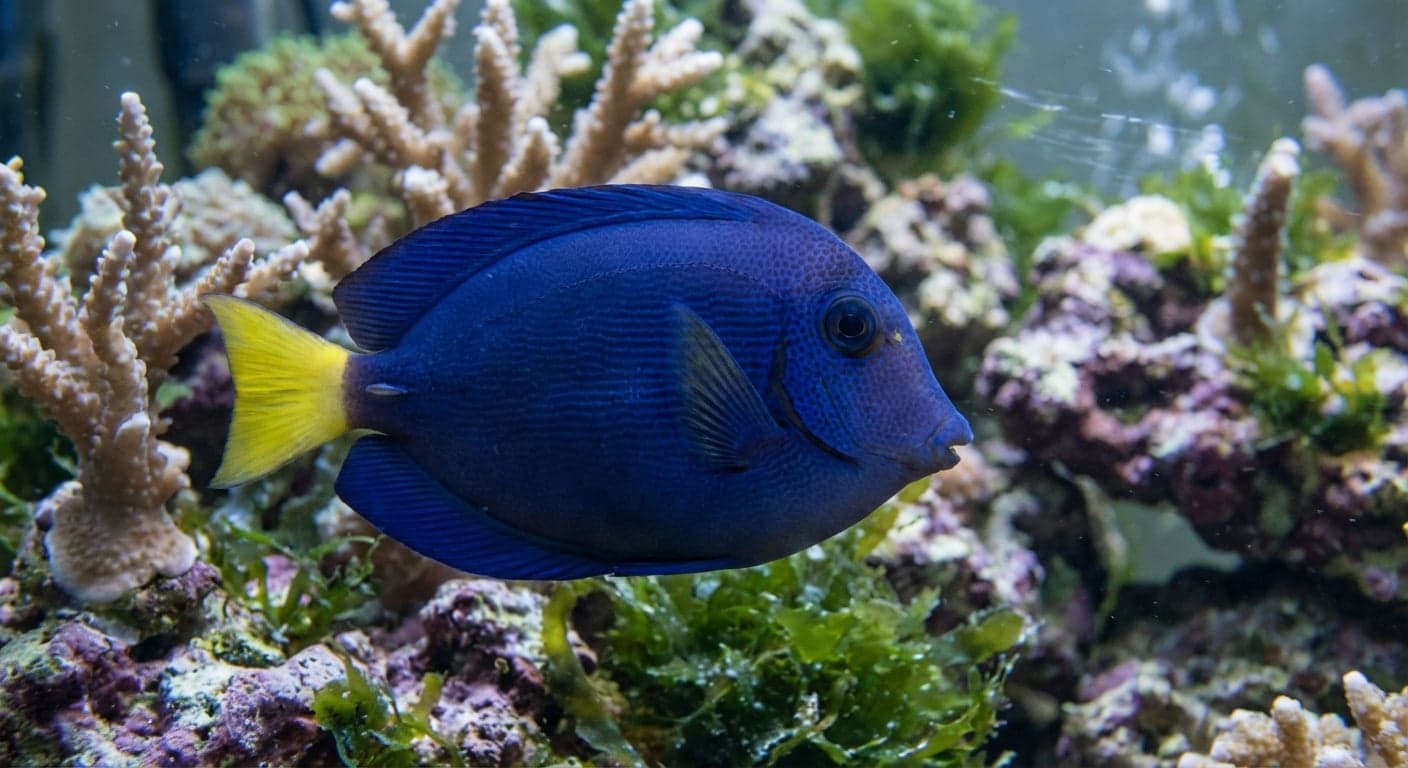
That adult habitat is the care brief: oxygen-rich water, room to cruise, and rock surfaces that actually grow film between cleanings. In the aquarium leave wide swimming lanes, stack rock as a ridge or peninsula rather than a solid mid-tank wall, and run flow that turns the whole water mass without creating a single dead corner. Compare space demands loosely with other big Acanthurus such as the Powder Blue Tang — different species, same lesson that adult surgeonfish are not nano fish.
Care Requirements
Salinity about 1.024–1.026, pH 8.1–8.4, temperature 24–26°C (75–79°F), with excellent oxygenation. Large tangs in warm, high-bioload tanks fail from low oxygen and dirty water as often as from primary disease. Skimming, export and water movement are part of the species requirements, not reef cosmetics.
Frontmatter lists adults around 40 cm (about 16 inches) and a minimum near 570 litres (about 150 US gallons). Treat 570 L as a starting floor for a single fish with real swimming length — a short tall tank at that volume is the wrong shape. Many keepers aiming for full adult comfort step higher still; do not stock this tang because the litres match if the footprint is a cube. Behaviour is Solitary: one Orange Face Tang per system unless you have a truly huge display and a plan for surgeonfish politics.
Live rock for grazing, open water for cruising, and a secure lid help. Tangs bolt when startled. Quarantine is mandatory for Acanthurus — marine ich and velvet hitchhike on newly imported surgeons with depressing reliability. Run a full quarantine protocol, preferably with a plan you can actually execute for ich, before the fish touches the display. Log temperature and salinity in the Aquarium Tracker; large herbivores advertise problems late if you only watch colour.
Diet & Feeding
Herbivore that rasps algal film in the wild. In captivity lead with dried marine algae (nori) on a clip, herbivore pellets and flakes with spirulina or similar, algae-based frozen foods, and whatever film your rock grows. Offer nori often enough that the sheet is worked down, not left to rot. Occasional meaty items are fine as a minority garnish; a meat-heavy menu is how tangs get fat, listless and organ-stressed.
Frequent small feeds beat one evening dump. Surgeonfish guts are built for near-continuous grazing. White stringy faeces, pinched bellies behind the pectorals, or obsessive glass-riding at feed time are diet and competition signals. In tanks with aggressive eaters, feed nori first, then broadcast other foods so the tang is already occupied.
Behavior & Temperament
Semi-aggressive and territorial toward other tangs and similarly shaped surgeonfish, more moderate toward unrelated fish in a big enough system. Add it with thought — often last among tangs, or as the only tang — and give it lanes so it patrols rather than corners neighbours. The caudal scalpel is a real weapon; net with care, never trap a thrashing tang in fine mesh against the spine, and keep hands out of disputes.
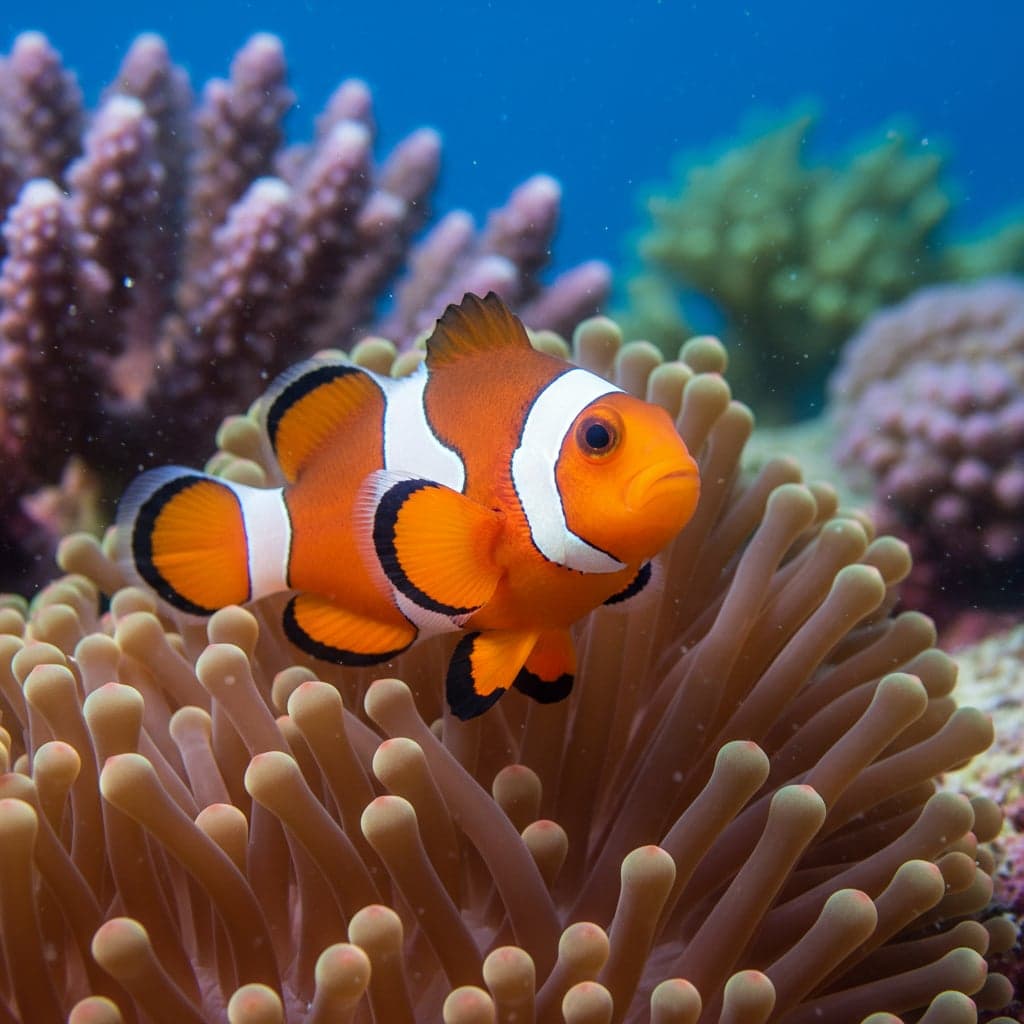
Toward wrasses, anthias, angels of different shape, and clownfish it is often manageable. Toward another Acanthurus in 570 L it is a coin flip that lands on stress. Personality varies; husbandry that assumes the worst aggression and is pleasantly surprised beats stocking for the best case.
Tank Mates
Robust fish in different niches: larger wrasses, angelfish that can take a chase, anthias in schools sized for the tank, gobies that stay out of the highway. Avoid multiple tangs unless the system is far above the minimum and sightlines are broken. Triggers and other heavy aggressors can reverse the problem and beat the tang down.
Reef-safe in the coral sense — it grazes algae and film, not polyps — so it suits large mixed reefs when space is honest. It may nip at some fleshy LPS or clam mantles on rare individuals; watch new introductions. Ornamental shrimp and cleaners are generally fine. The limiting factor is tank size and tang count, not coral chemistry.
Breeding
Pelagic spawner with planktonic larvae. Not bred as a home-aquarium project. Trade fish are wild-collected; captive-bred Acanthurus remain the exception in the wider trade, not the expectation for bariene. Buy for swimming room and diet, not for breeding.
Common Health Issues
Like other surgeonfish, highly exposed to Cryptocaryon and Amyloodinium around capture and shipping. A careful quarantine prevents most display-tank disasters. Head and lateral line erosion (HLLE), thinness, and secondary infections track poor diet, stray voltage debates, and chronic stress from undersized or bully-filled tanks more than mysterious curses.
Pristine water, strong flow, varied herbivorous food, and a peaceful enough community keep this fish in condition. Given a genuine large footprint at or above the 570 L class, one Orange Face Tang is a hardy, striking centrepiece for an intermediate marine keeper; given a crowded mixed-tang box, it is an expensive lesson about adult Acanthurus size.