Pinktail Triggerfish
The Pinktail Triggerfish (Melichthys vidua) is a hardy, handsome Indo-Pacific trigger — one of the more peaceful, reef-tolerant triggers, with caution.
Pinktail Triggerfish
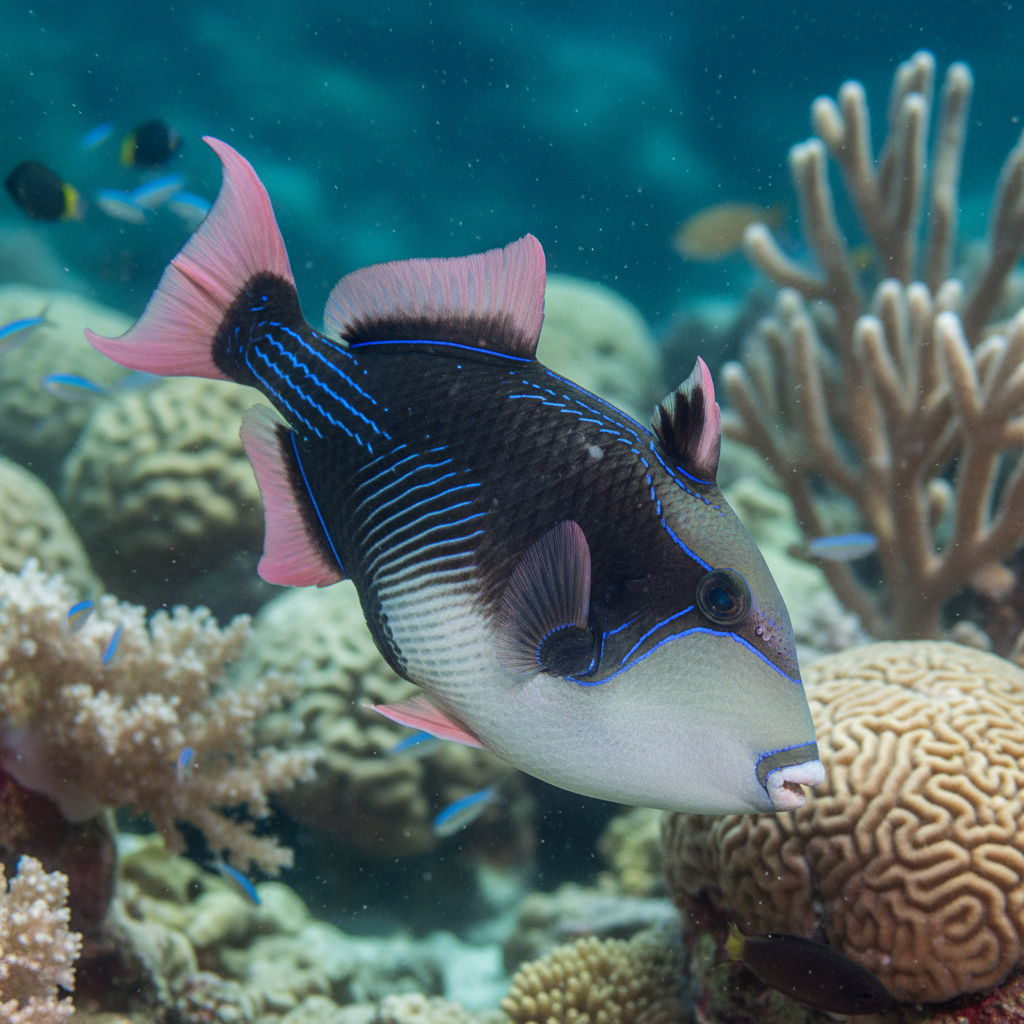
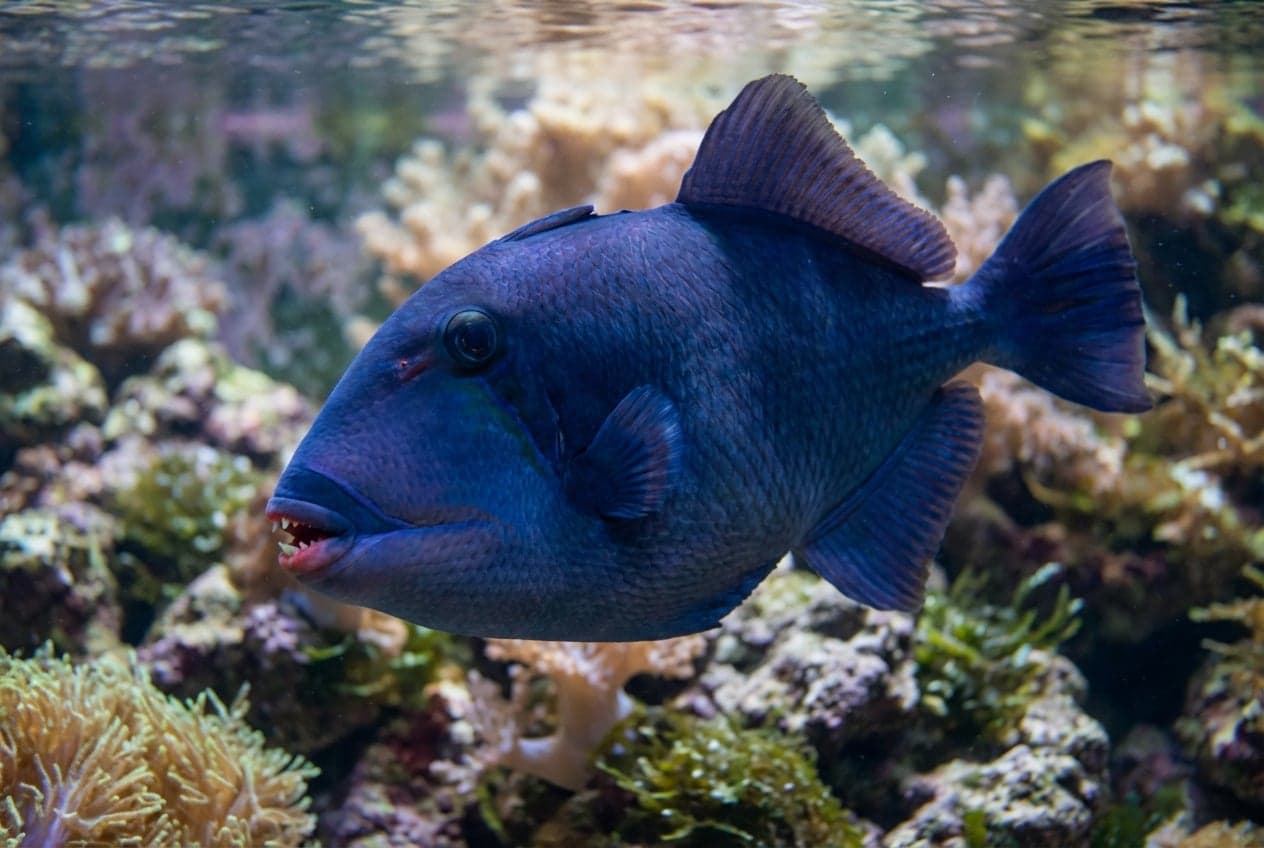
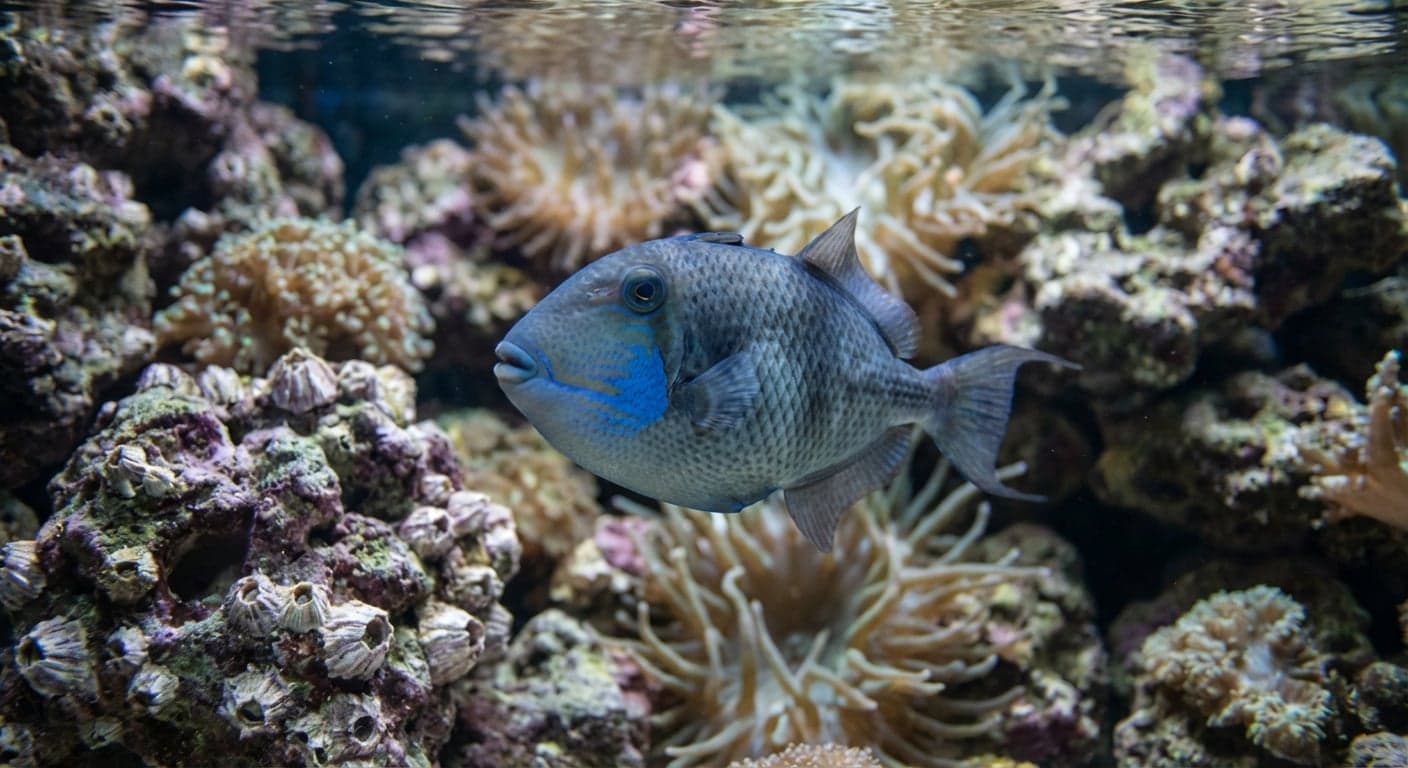
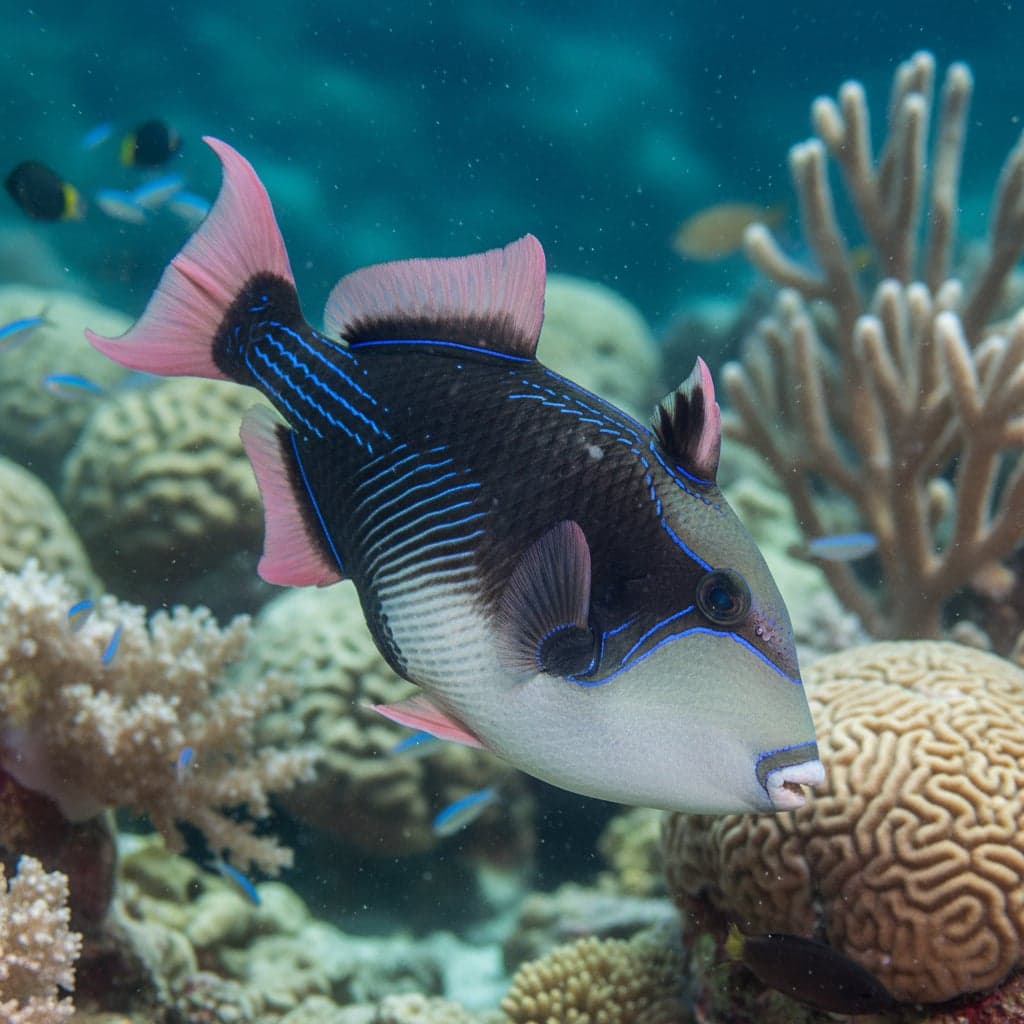
The Pinktail Triggerfish (Melichthys vidua) is the trigger people reach for when they want the family look without the clown-trigger chaos. The body runs deep olive to near-black; the dorsal and anal fins are crisp white; the caudal fin is a soft pink lyre. It swims with the deliberate, slightly undulating trigger gait and wedges into rock with the dorsal spine when spooked. Hardy and comparatively even-tempered for Balistidae, it is still a large, strong-jawed fish — “mild for a trigger” is not the same as peaceful community stock.
It eats more algae and less armour-crushing prey than many triggers, which is why its reef reputation is softer. That reputation still needs the word caution: corals may be ignored while shrimp, crabs and snails disappear.
Natural Habitat & Origin
Melichthys vidua ranges widely across the Indo-Pacific on outer reef slopes and channels. It takes a mixed diet of algae, detritus and small invertebrates, and shelters in holes and crevices, locking itself in with the trigger spine when threatened. That wild niche — grazer plus opportunist, hole-dweller plus patrol swimmer — is exactly what you must rebuild in glass.
In the aquarium it wants substantial, stable rockwork with real caves, plus open water to cruise. Loose aquascapes get rearranged; triggers are strong enough to lever rock and smart enough to try.
Care Requirements
Stable marine water with good flow: salinity about 1.024–1.026, pH 8.1–8.4, temperature 24–26°C (75–79°F). Adults reach about 35 cm (14 inches). The minimum of around 450 litres (about 120 US gallons) is not aspirational padding — a full-grown pinktail in anything smaller becomes a stressed, territorial problem with nowhere to patrol. Tank length and open swimming lanes matter as much as raw litres.
Secure rock to the glass or to a braced structure. A fish this size will test every loose piece. A tight lid helps; startled triggers can bolt and jump. Quarantine new arrivals before the display. Triggers are tough, but they still import Cryptocaryon and Amyloodinium from the chain, and treating ich on a reef full of inverts is how people lose both the cure and the livestock. Use a hospital or QT tank for copper or other protocols — medications.
Filtration and export have to match the appetite. A pinktail is a continuous bioload; skim hard, keep mechanical media clean, and do not treat a lightly filtered FOWLR like a nano reef. Water that looks clear while nitrates climb still costs you long-term health and aggression.
Log parameters in the Aquarium Tracker; large messy eaters reward early nitrate and salinity warnings.
Diet & Feeding
Omnivore with a real herbivorous streak. In the wild algae and detritus sit alongside small invertebrates. In captivity offer frozen mysis, krill, chopped seafood and quality marine pellets, plus marine algae sheets and herbivore preparations. Occasional hard-shelled items (chopped clam, snail meat with shell fragments as appropriate) help wear the beak-like teeth that otherwise overgrow.
Feed once or twice a day with portions the fish clears quickly. This is a hearty eater; overfeeding a 450 L system with a trigger is an easy way to drive nutrients into algae blooms. Variety matters more than volume — a pinktail on pellets alone loses the algae component that keeps it closer to its milder wild diet. If colours dull or the fish starts obsessively rearranging rock between meals, increase greens before you assume it “needs more meat.”
Behavior & Temperament
One of the milder triggers when young, and still best labelled semi-aggressive as an adult. Territoriality rises with size and with how long the fish has owned the rock. Provide enough space and caves that it can retreat rather than police the whole water column. It is less destructive than clown or undulate triggers but strong enough to move décor and intimidate timid fish.
Intelligence is part of the appeal and the management problem. Triggers learn feeding schedules, watch keepers and investigate anything new. That curiosity is why ornamental shrimp vanish and why equipment with dangling cables gets attention.
Tank Mates
Suitable companions are robust marine fish that hold their own: tangs, large wrasses, angelfish and other moderately assertive species in a large enough system. Avoid small, timid fish and anything soft enough to become a snack. Keep one pinktail unless you have a very large system and a clear plan; trigger conspecific aggression is not theoretical.
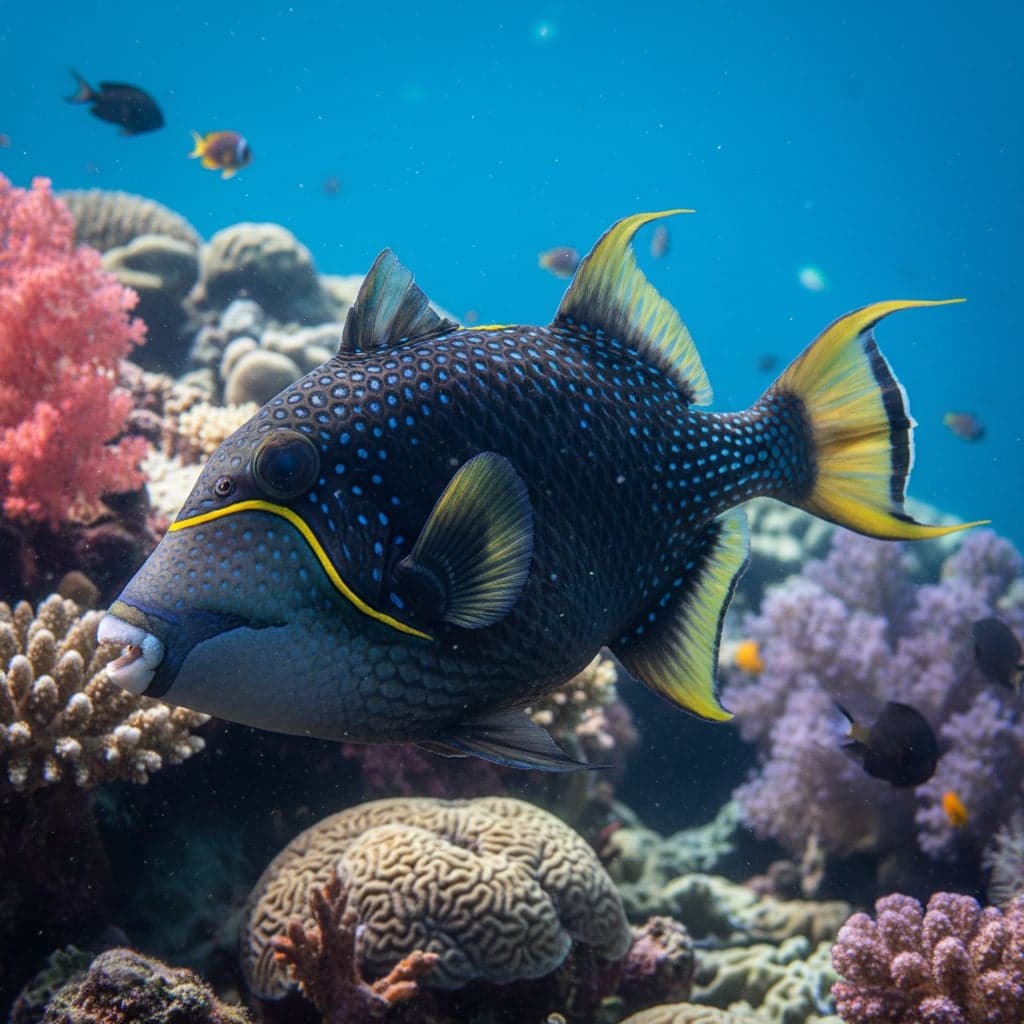
Reef tolerance is conditional. Many specimens largely ignore coral polyps, which is why the species is called reef-tolerant with caution. Mobile invertebrates are a different story: ornamental shrimp, small crabs and snails are often eaten. Hard clams and prized crustaceans do not belong with this fish. Soft sessile inverts that look like food — some zoanthids, feather dusters, exposed clam mantles — are individual roulette, not guaranteed safe. Fish-only with live rock, or a reef without valued mobile inverts, are the honest setups. Compare temperament with heavier triggers such as the clown triggerfish if you are deciding whether “mild for a trigger” is mild enough for your stocking list.
Breeding
Melichthys vidua is a pelagic spawner and is not bred in the home aquarium. Trade specimens are wild-collected. Do not buy on the promise of captive-bred availability that does not exist for this species at hobby scale.
Common Health Issues
Hardy, long-lived and still subject to marine ich (Cryptocaryon irritans) and marine velvet (Amyloodinium ocellatum) after stress. Quarantine, stable salinity and strong oxygenation after shipping matter more than fancy gadgets. Watch for weight loss if the algae portion of the diet is ignored, and for injury from rock falls or fights in undersized tanks.
Given the volume it needs, secure aquascaping and a mixed omnivore diet, the Pinktail Triggerfish is one of the more manageable large triggers for an intermediate marine keeper — elegant, hardy and only “reef-safe” in the narrow sense that corals may survive while the cleaning crew does not.