Pyjama Wrasse
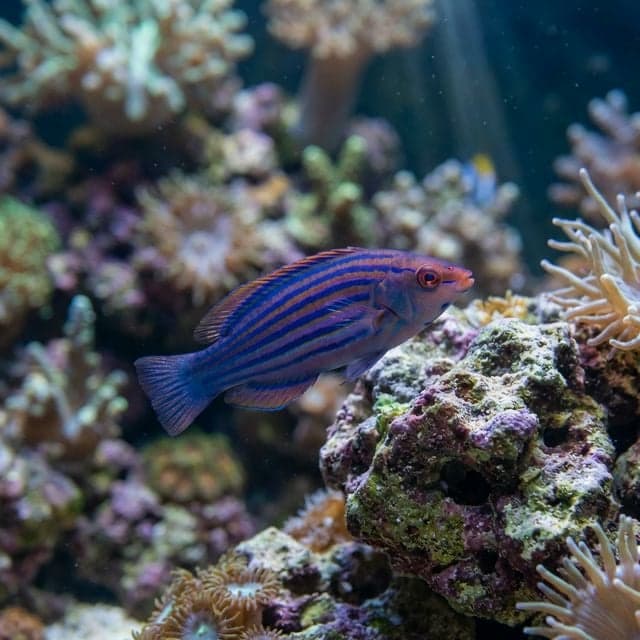
The Pyjama Wrasse (Pseudocheilinus hexataenia), or sixline wrasse, is a hardy, colourful reef wrasse — reef-safe and a useful pest-eater, but feisty.

Pyjama Wrasse
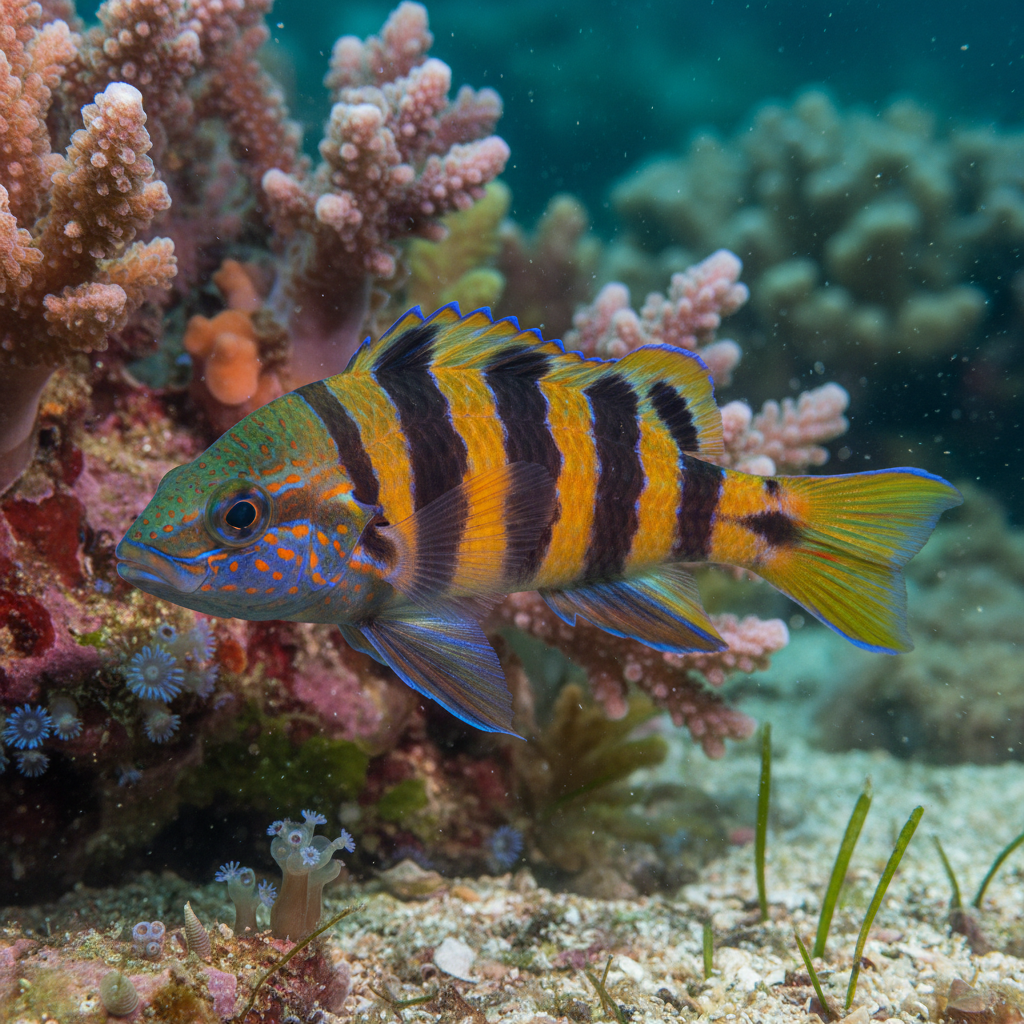
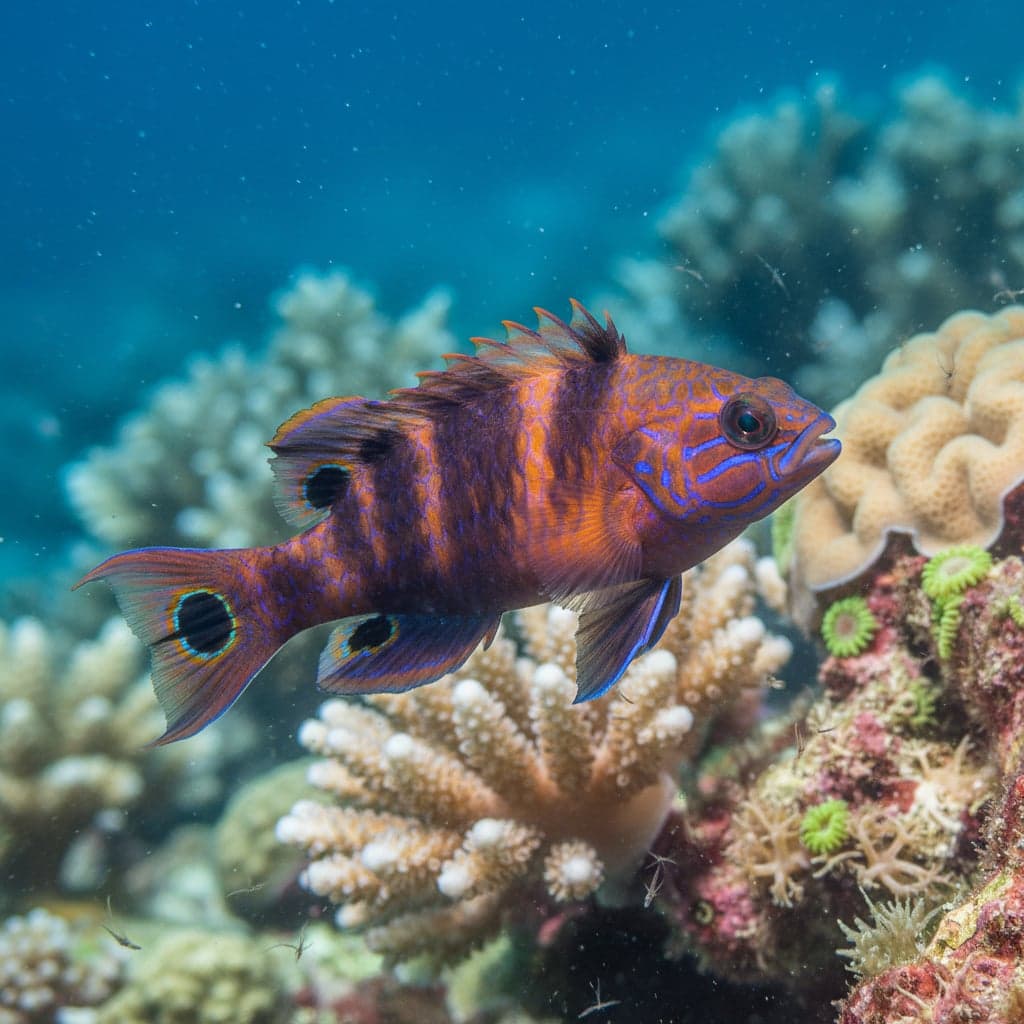
The Pyjama Wrasse (Pseudocheilinus hexataenia) — sold everywhere as the sixline wrasse — is a small purple torpedo with six orange stripes and a green-flecked tail. It is hardy, cheap, always moving, and one of the few livestock purchases that can earn its keep by hunting pests. It is also feisty out of proportion to its size. People buy it as “the helpful reef wrasse” and discover it is a semi-aggressive rock worker that may decide tiny shrimp and other small wrasses are part of the same job.
Same species as the site’s Six Line Wrasse profile; this page keeps the trade name many shops still use. Care is identical — do not stock both names thinking you have two different fish.
Natural Habitat & Origin
Pseudocheilinus hexataenia ranges widely across the Indo-Pacific, from the Red Sea and East Africa across to the central Pacific, on coral reefs and rocky rubble where it can dive into branches and crevices. It stays close to structure, darting out to snatch small crustaceans and other tiny invertebrates, then vanishing again. You rarely see a sixline loafing in open blue water the way chromis or anthias do.
In the aquarium that means abundant live rock with tight holes, overhangs and broken sightlines — not a sparse “island” scape in a bare tank. A mature system with natural microfauna gives it foraging between meals and softens the transition from wild hunting to prepared foods. Depth in the wild spans shallow reefs into deeper slopes; in glass, complexity matters more than imitating a particular metre mark.
Care Requirements
Salinity about 1.024–1.026, pH 8.1–8.4, temperature 24–26°C (75–79°F), with the usual marine demand for zero ammonia and nitrite. This is a beginner-tolerant wrasse chemically; it is not tolerant of jump gaps. Pseudocheilinus are chronic jumpers. A tight, gap-free lid or mesh cover is part of the husbandry, not an optional extra after the first overnight loss.
Adults reach about 8 cm (3 inches). Frontmatter sets a minimum around 75 litres (about 20 US gallons) with heavy rockwork. That volume can house one fish; it does not give you licence to add a second small wrasse or a colony of delicate sexy shrimp and call the aggression someone else’s problem. Longer footprints help more than tall ones. Add the sixline after peaceful residents are established if you can — “last in” reduces the chance it defines the whole rock stack as private property from day one.
Quarantine still pays. Hardy wrasses arrive with the same marine ich and velvet risks as everything else that crossed an airport. Quarantine protocol before the display. Use the Aquarium Tracker if you want salinity and temperature drift visible before the fish tells you the hard way.
Diet & Feeding
Carnivore focused on small invertebrates. In reefs it takes tiny crustaceans, and keepers value it for pyramidellid snails, small bristleworms, and — with very mixed reliability — flatworms. Pest control is a bonus, not a guarantee; some individuals ignore the pest you bought them for and still harass the shrimp you wanted to keep.
Feed frozen mysis, enriched brine, finely chopped seafood, copepod-style foods, and quality small marine pellets or granules once or twice a day. A sixline that only gets what it hunts in a polished SPS tank can thin out once the easy prey is gone. Watch body condition behind the pectoral fins, not just activity — these fish stay busy while quietly losing weight.
Behavior & Temperament
Semi-aggressive: peaceful enough toward clownfish, larger gobies, tangs and dissimilar wrasses in a roomy reef, assertive toward other Pseudocheilinus, flasher and fairy wrasses of similar size, and anything that looks like a food- sized shrimp. Frontmatter behaviour is Solitary — one small wrasse of this niche per typical tank. In very large systems with dense rock, some keepers succeed with more, but planning for one avoids most of the mailbag complaints.
Daytime behaviour is continuous rock inspection. It sleeps in crevices; it does not need a sand bed to bury in the way some Halichoeres wrasses do, though sand is fine for the rest of the tank. Flashing or chasing at lights-out can mean a neighbour is sharing a preferred hole — add rock complexity before you add medications.
Tank Mates
Works with a wide reef community: clownfish, gobies, blennies, larger peaceful wrasses, anthias, chromis, and tangs in tanks sized for the tang. Avoid other sixlines and most small Pseudocheilinus in anything near the 75 L minimum. Be cautious with expensive ornamental shrimp — many sixlines ignore adult cleaner shrimp and still pick off smaller species or juveniles.
Corals are generally left alone; this is one of the more reef-safe wrasses on coral. The reef risk is micro-fauna and tiny ornamental crustaceans, not SPS tips. If your clean-up crew is the point of the tank, buy pest control you can remove, or accept that “reef-safe” here means coral-safe more than shrimp-safe.
Breeding
Pelagic spawner with no practical home-aquarium rearing. Sex change dynamics exist in many wrasses; for the average keeper the relevant fact is simpler: trade fish are wild-collected, and you are buying a pest-hunting rock worker, not a breeding pair project.
Common Health Issues
Hardy when covered and fed, still liable to ich and velvet after shipping, and to jump deaths that get recorded as “mysterious disappearances.” Secure the lid before you diagnose disease. Thinness after the rock is picked clean is husbandry, not bad luck — increase feed frequency and enrichment.
Given rock to work, a sealed top, varied meaty foods, and no competing small wrasse, the Pyjama Wrasse is one of the better beginner reef fish available: colourful, active, useful, and honest about being feisty. Ignore the feisty part and it becomes the fish that rearranged your shrimp collection.