Redspotted Hawkfish
The Redspotted Hawkfish (Amblycirrhitus pinos) is a small, hardy Caribbean hawkfish — coral-safe and characterful, but a predator of small invertebrates.
Redspotted Hawkfish
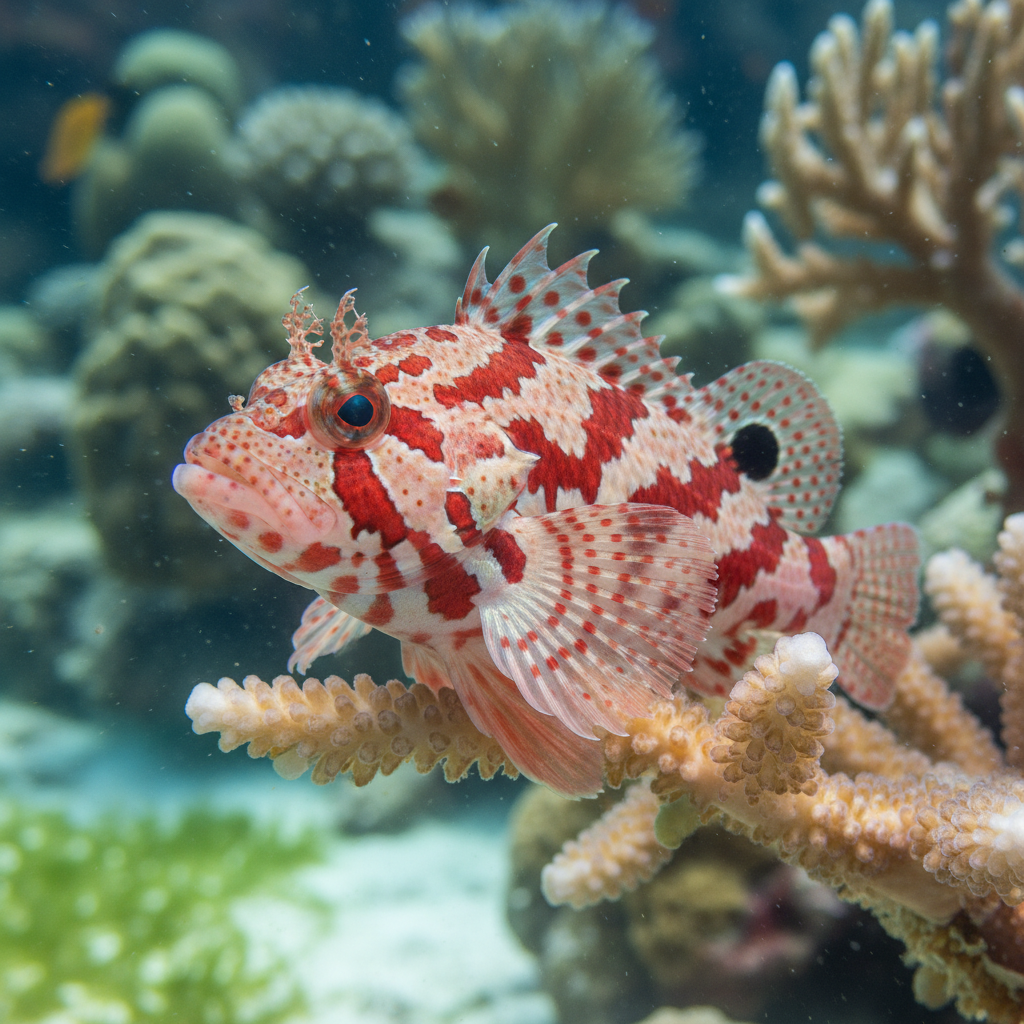
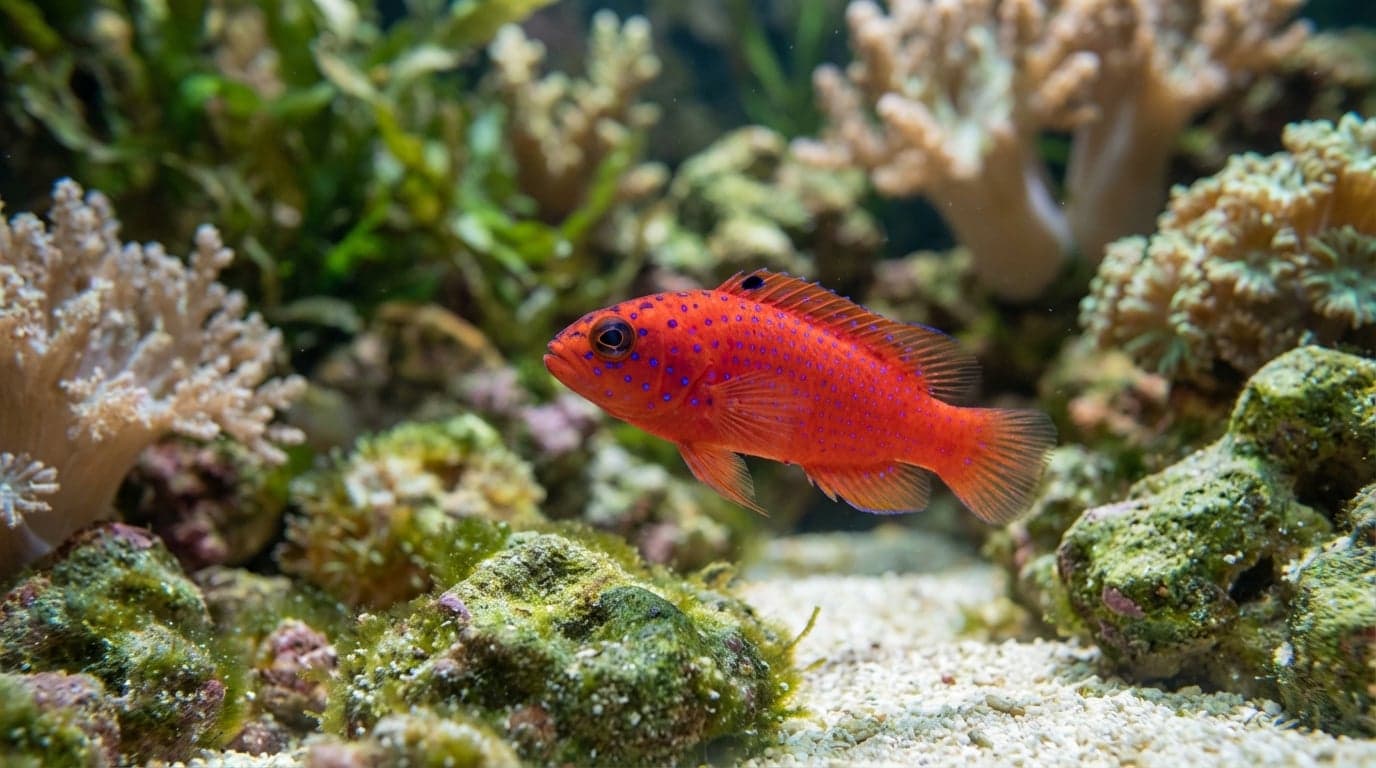
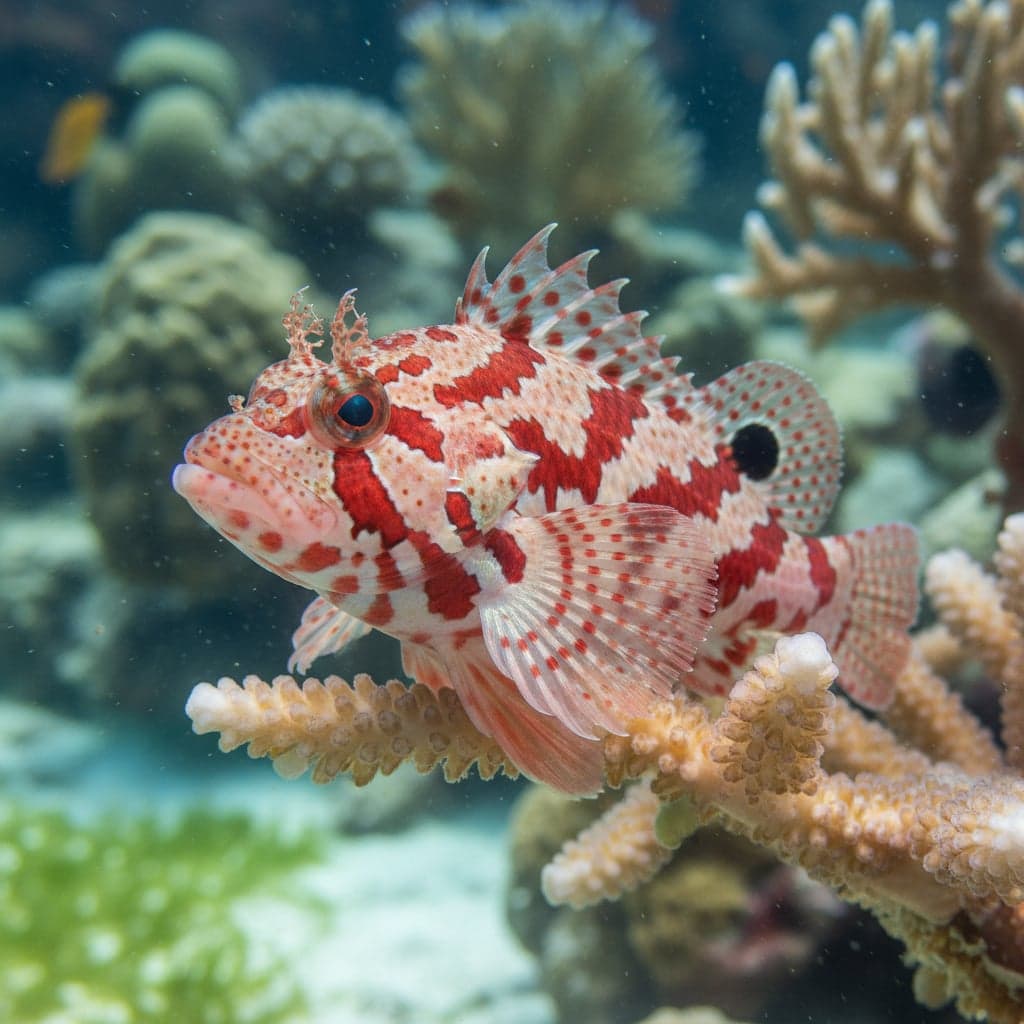
The Redspotted Hawkfish (Amblycirrhitus pinos) is the Caribbean hawkfish that spends its day looking like furniture and then ruins a cleaning crew in one dart. Rows of red-brown spots sit on a pale body, with a darker blotch near the tail. Like other hawkfish it has no swim bladder; thickened pectoral rays work as props, so it perches on rock and coral, eyes independent, waiting. Hardy, inexpensive and full of personality, it is an easy marine fish on chemistry and a dishonest one if you expected it to ignore shrimp.
The perching habit is the whole show. The appetite for small crustaceans is the whole constraint. Coral-safe is not invertebrate-safe — that distinction is the species in one line.
Natural Habitat & Origin
Amblycirrhitus pinos lives on Caribbean and western Atlantic reefs and rubble, perching among coral and rock and darting out for small invertebrates and zooplankton. It stays near a chosen lookout rather than roaming the reef like a tang. Depths are typically shallow reef and rubble zones where perch sites and passing prey overlap.
In the aquarium that means live rock with ledges, branching heads and clear sightlines — not a flat sand bed with one cave. A hawkfish without a perch is a stressed hawkfish that either jumps or hides.
Care Requirements
Stable marine conditions: salinity around 1.024–1.026, pH 8.1–8.4, temperature about 24–26°C (75–79°F). Adults reach roughly 9 cm (about 3.5 inches). Around 75 litres (20 US gallons) works for a single fish with serious rock structure; the need is footprint and perches more than pelagic swimming length. Larger is kinder once you add assertive tankmates.
A secure lid is not optional. Hawkfish jump when startled, when chasing prey at the surface, or at night. Mesh covers beat open-top “reef aesthetics” for this family. Leave no gap at overflows or cable cut-outs; a 9 cm fish only needs one mistake. Quarantine new arrivals anyway — hardy does not mean pathogen-free. Marine ich (Cryptocaryon irritans) and velvet (Amyloodinium ocellatum) ride in with wild Caribbean fish as readily as with Pacific stock. Treat in QT, not on the display; see medications.
Rock layout should give at least two or three elevated perches with different sightlines so the fish can rotate lookouts without owning the only high point in the tank. That small design detail cuts harassment of tankmates that share the same ledge.
Track salinity and temperature in the Aquarium Tracker so small systems do not silently drift while the hawkfish still looks fine on its perch.
Diet & Feeding
Strict carnivore in practice. Wild diet is small crustaceans and other invertebrates taken in ambush. In captivity it usually converts fast: frozen mysis, enriched brine shrimp, finely chopped seafood and quality marine pellets or frozen preparations. Feed once or twice a day. Watch the perch-and-pounce — offering food into light current so it can dash out is both enrichment and a health check.
A hawkfish that ignores prepared food for days after import may still be locked onto live prey memory; keep offering frozen in QT until it eats before you declare it display-ready. Enrich frozen foods with a marine vitamin soak if the fish arrived thin. Do not “train” it on your expensive cleaner shrimp — once that association forms, the reef cleaning crew is finished.
Behavior & Temperament
Semi-aggressive in the hawkfish sense: generally peaceful toward similar-sized fish, bold toward anything that fits in the mouth or that crowds the favourite perch. Keep one per tank in normal home systems; two hawkfish mean a dominance war over the best rock. It spends long stretches motionless, then moves in a short explosive line. That stillness is why people underestimate how much it notices — and eats.
Toward people it often becomes interactive, watching fingers and feeding tongs. That pet quality is real; so is the predation.
Tank Mates
Pair with robust fish of similar size: clownfish, dottybacks, hardy wrasses, tangs in larger systems, and other fish too big to swallow. Avoid tiny gobies, juvenile fish and anything that shares the exact perch microhabitat if you want peace.
It is coral-safe. Soft and stony corals are perches, not food; the fish may sit on a colony for hours without nipping tissue. It is not safe with ornamental shrimp, small crabs, small snails or other bite-sized mobile invertebrates. Peppermint shrimp, sexy shrimp and similar clean-up crew members are meals. Hermit crabs large enough to look like walking rocks sometimes survive; anything that fits the mouth eventually gets tested. Keep it in reefs without prized mobile inverts, or in fish-only with live rock. Compare the same rule on the longnose hawkfish and coral hawkfish — different oceans, same contract.
Breeding
Amblycirrhitus pinos is a pelagic spawner and is not commonly bred in the home aquarium; trade fish are wild-collected. Hawkfish are protogynous hermaphrodites: in a social situation a dominant individual can change sex to male. That is biologically interesting and practically irrelevant to most keepers who will never see a spawn.
Common Health Issues
Hardy once settled. Main risks are jumping injuries, marine ich and velvet after shipping, and internal parasites in wild fish that never show until stress hits. Quarantine, a lid, stable water and a meaty diet cover most of it.
Secondary problems come from bad tankmate planning: constant harassment in either direction, or a display reef gutted of shrimp while the owner wonders why the hawkfish looks so healthy. Mind the invertebrate appetite and this Caribbean percher is exactly what the beginner marine shelf promises — tough, cheap and characterful — without pretending it is reef-community polite.