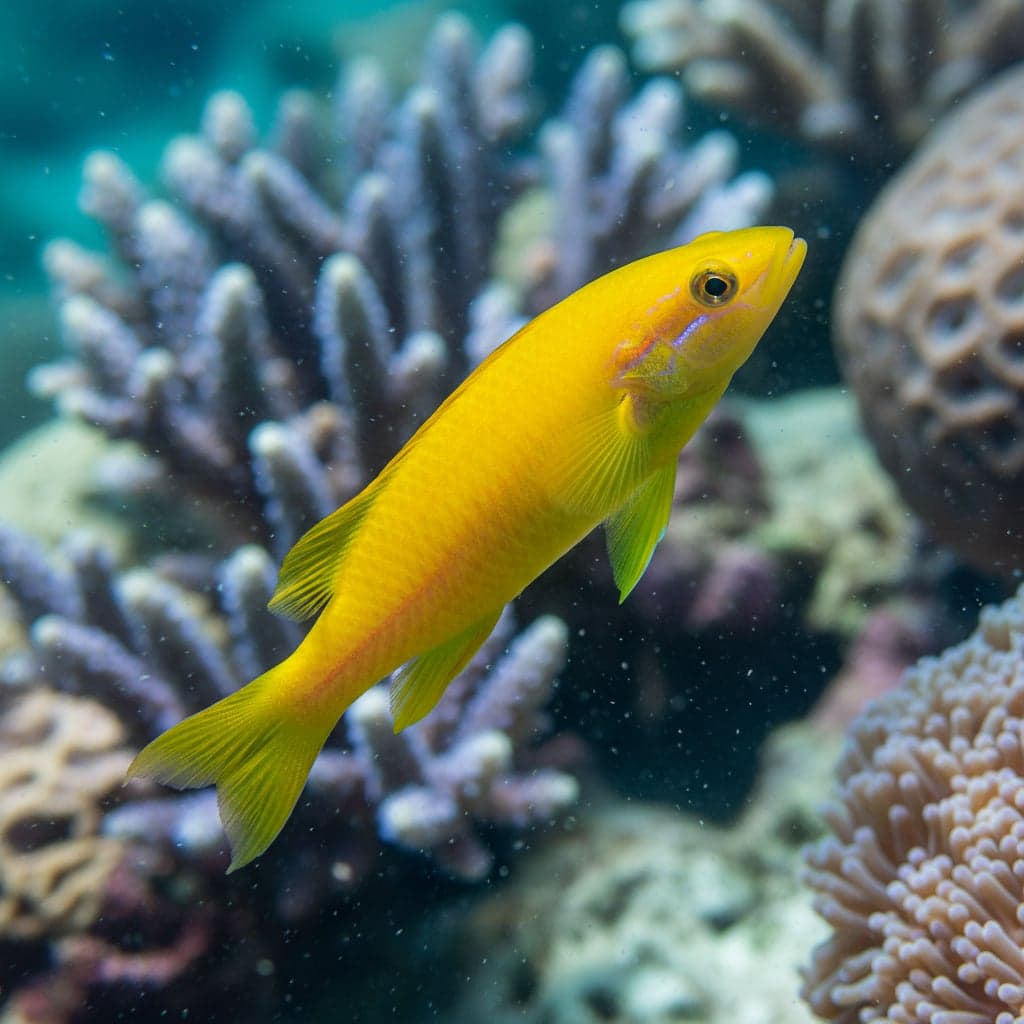
Silver Belly Wrasse
The Silver Belly Wrasse (Halichoeres leucoxanthus) is a hardy, two-tone yellow-and-white reef wrasse — reef-safe, active and a useful pest-eater.
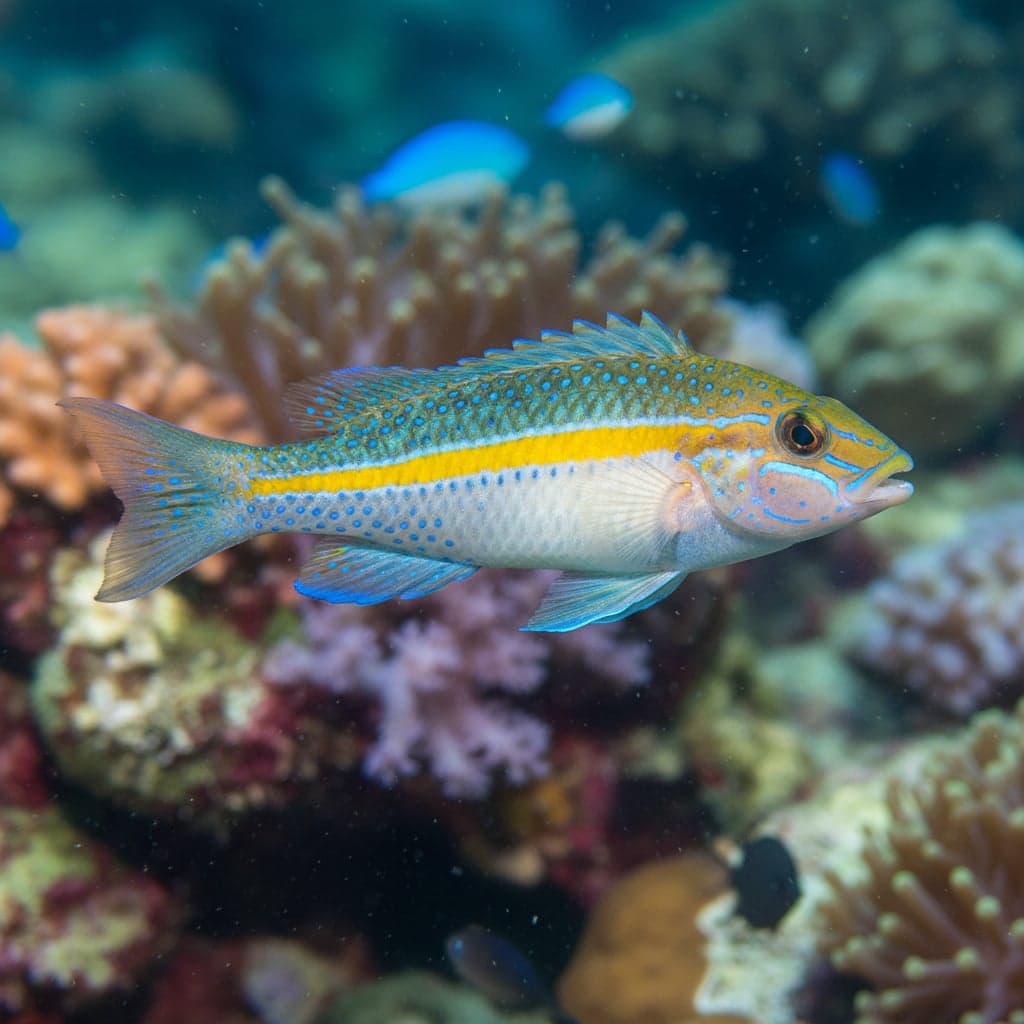
Silver Belly Wrasse
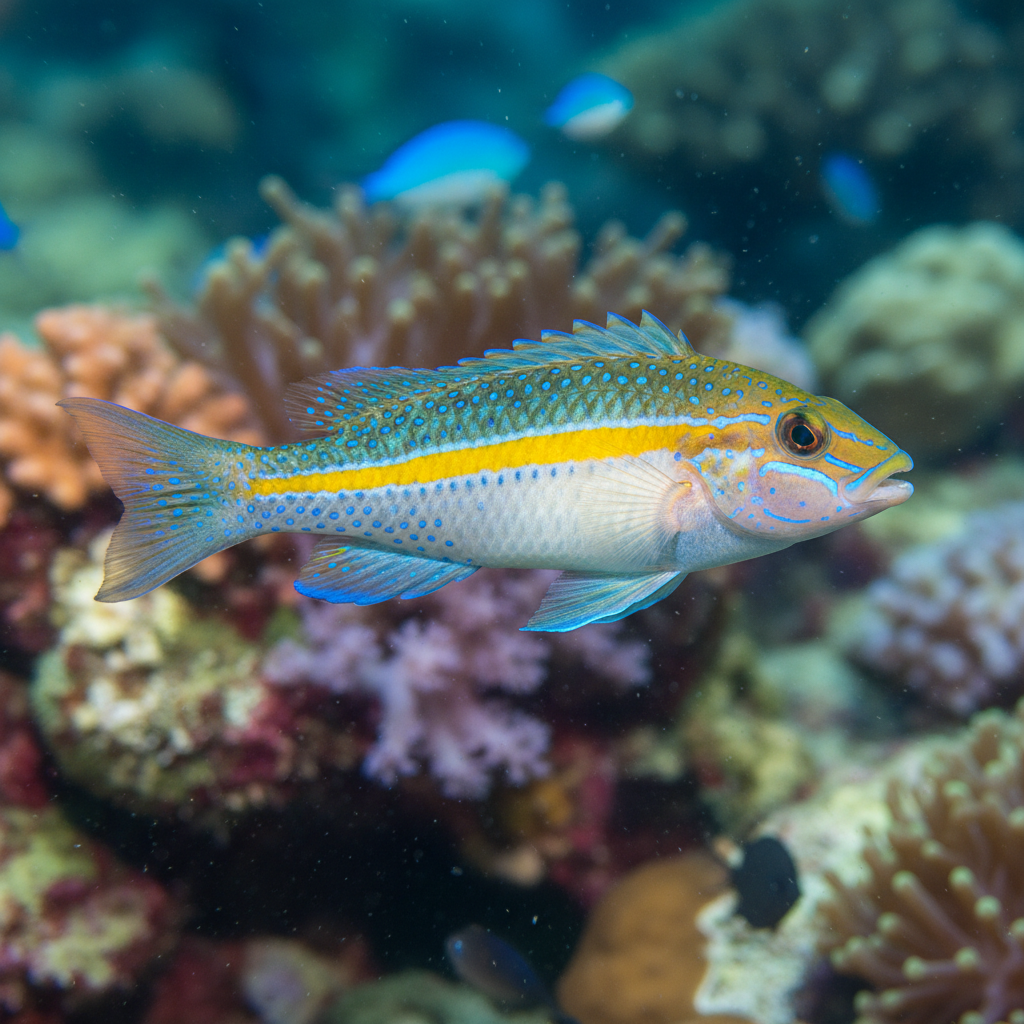
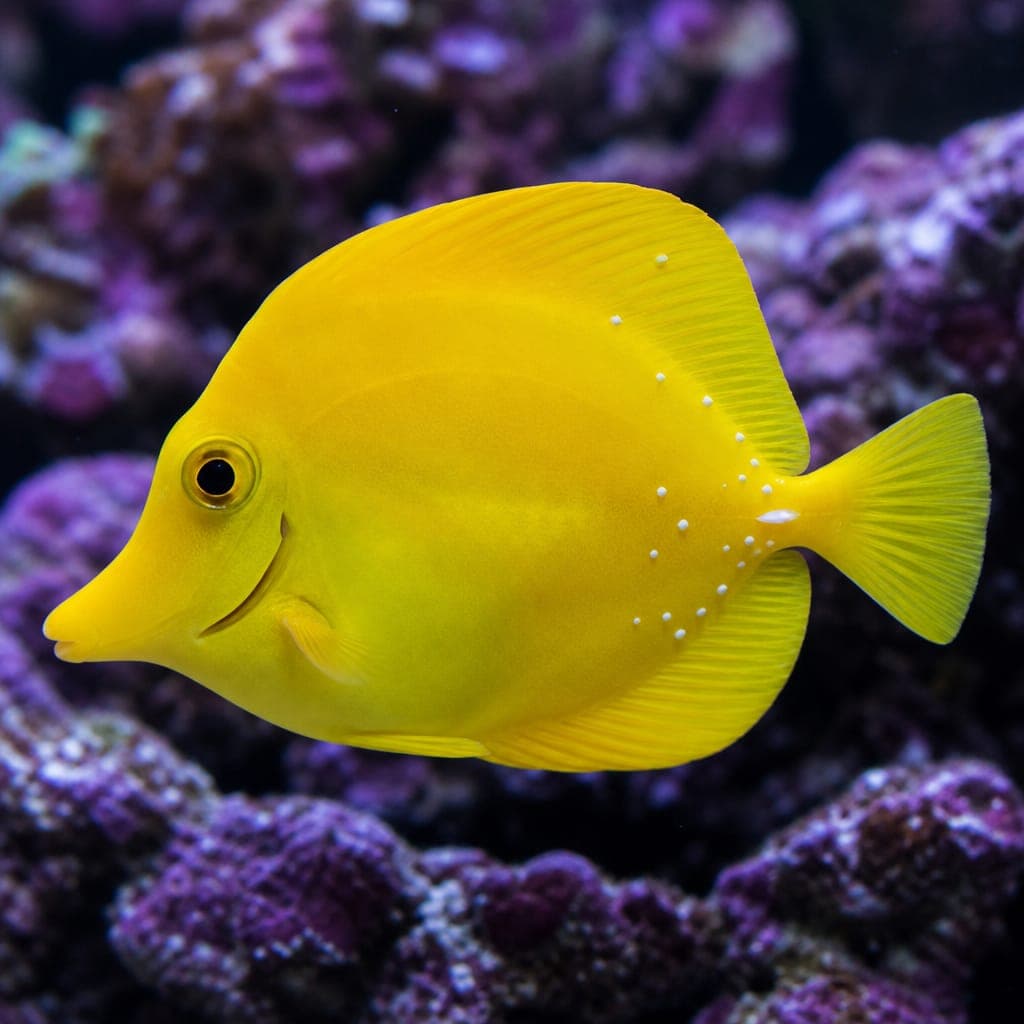
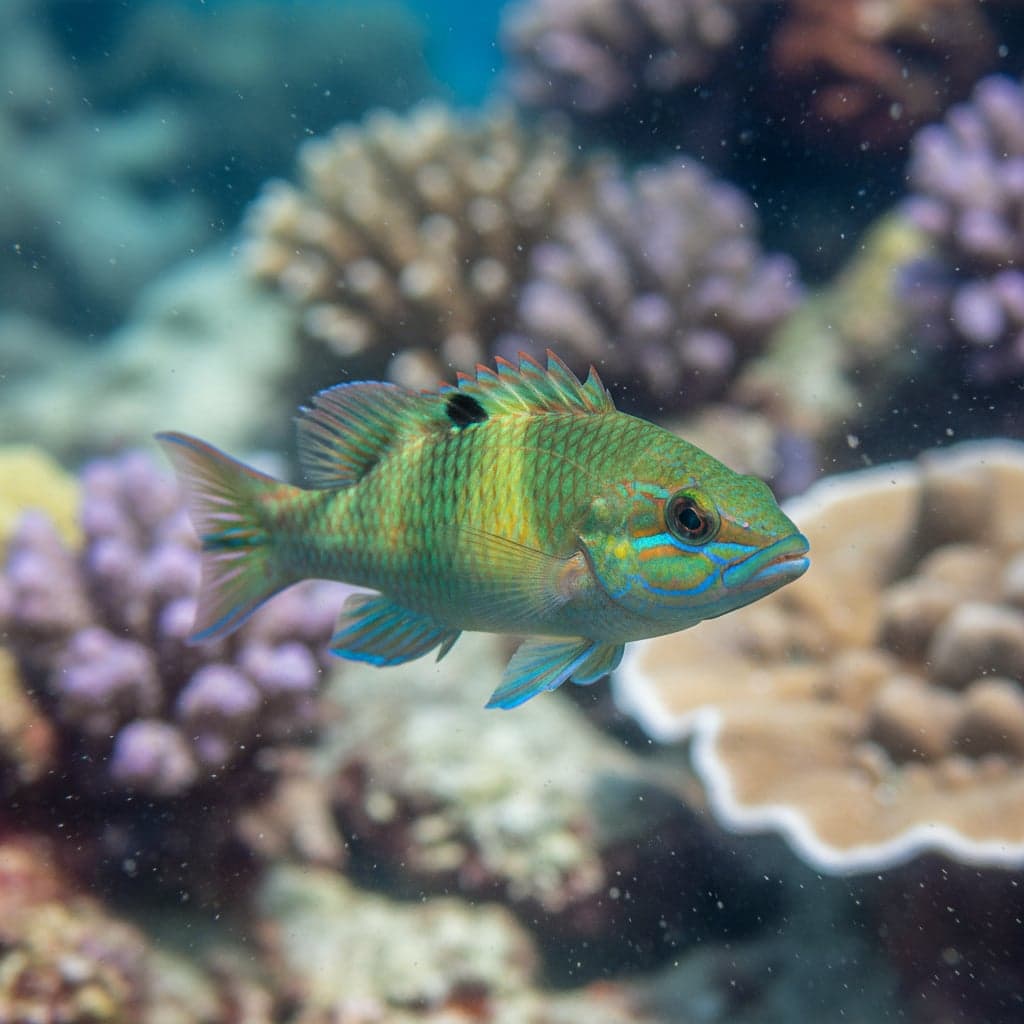
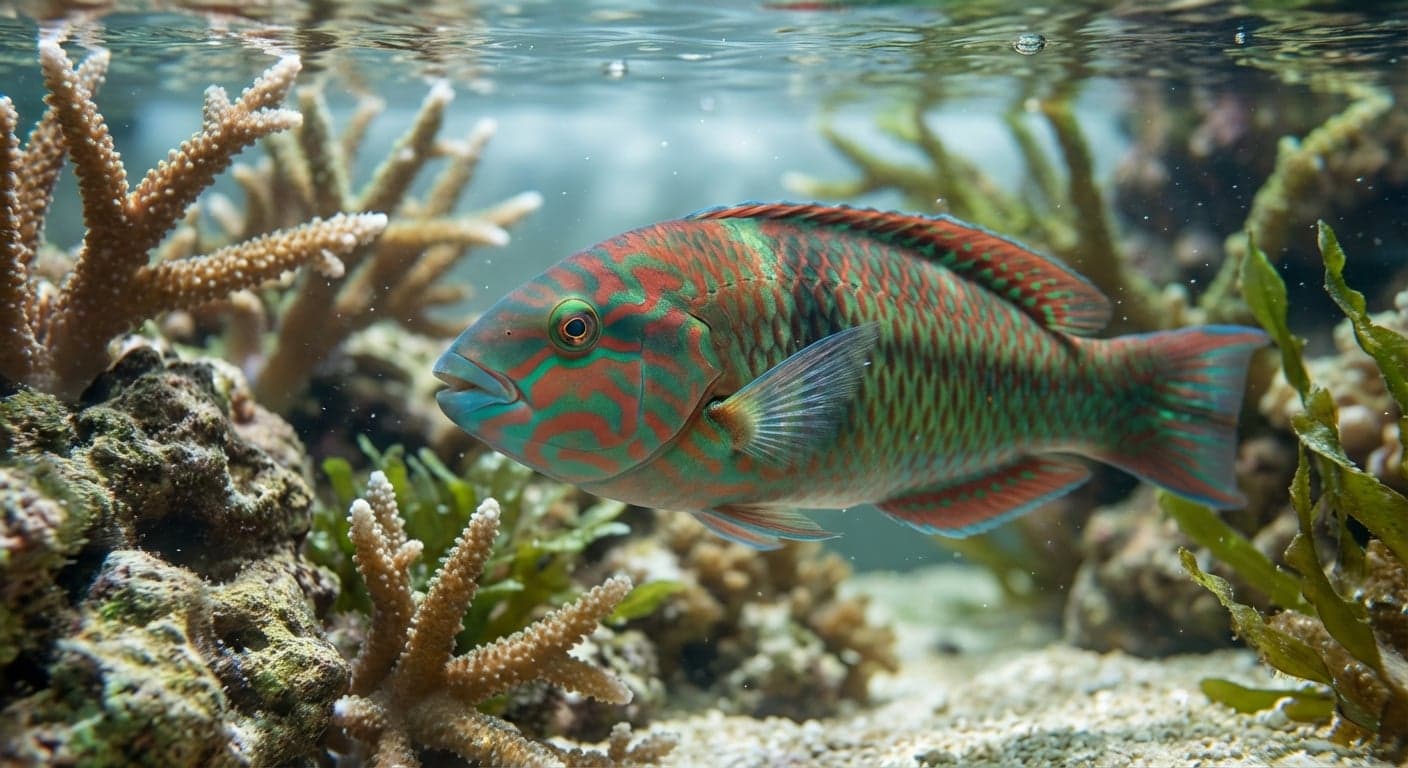
The Silver Belly Wrasse (Halichoeres leucoxanthus), also called the canary-top or yellow-back wrasse, is a hardy and attractive reef fish — bright yellow along the upper body and clean white to silver below, with fine markings around the face. Active and constantly on the move, it is one of the easier Halichoeres wrasses for community reefs, combining good looks with the genus’s useful habit of hunting pest invertebrates on rock and sand.
Like other Halichoeres, it dives into the sand to sleep and to escape danger, so a soft sand bed is part of its care, not optional décor. Frontmatter lists solitary because captive fish are usually kept as one adult; wild aggregations do not mean stuffing multiples into 115 litres without a plan.
Natural Habitat & Origin
Halichoeres leucoxanthus occurs in the Indian Ocean and adjacent western Pacific, ranging actively over reefs and sandy areas while hunting small invertebrates over and within the substrate. It buries in the sand at night and when threatened — a behaviour that looks alarming the first time a new keeper sees an empty tank at lights-out, then finds the fish again at dawn.
In the aquarium it wants open swimming space, live rock with crevices, and a fine sand bed deep enough to dive into (typically several centimetres of soft sand, not a thin dusting over bare glass). Crushed coral or sharp gravel is the wrong substrate for a sand-sleeping wrasse.
Care Requirements
Stable marine water: salinity about 1.024–1.026, pH 8.1–8.4, temperature 24–26°C (75–79°F). Adults reach about 10 cm (4 inches). The listed minimum of around 115 litres (30 US gallons) works for a single fish with swimming length and a proper sand bed; prefer a longer footprint over a tall nano.
A secure, gap-free lid is essential. Halichoeres wrasses are accomplished jumpers — startled by lights-out, a chase, or a net near the surface — and a fish on the floor is a common loss mode. Screen overflow boxes and intakes so a diving wrasse cannot wedge into a sump overnight.
Quarantine new arrivals even though the species is beginner-friendly on feeding and chemistry. Marine ich (Cryptocaryon irritans) and velvet (Amyloodinium ocellatum) still hitchhike with imports. Run a quarantine protocol before the display; medications belong in hospital tanks, not on sessile inverts.
Use the Aquarium Tracker to log salinity and temperature. Chronic nitrate creep shows up as dull yellow and clamped fins long before this busy forager stops hunting the sand.
Diet & Feeding
Carnivore. Wild fish take small crustaceans and other invertebrates — including pest species such as pyramidellid snails and many bristleworms — which is why the genus earns “useful” status on reefs. Offer a varied diet of frozen mysis and enriched brine shrimp, finely chopped seafood, and quality marine pellets, fed once or twice a day. It is an active, enthusiastic feeder once settled.
Do not rely on pests alone as the diet. A sterile new tank with no pods and a keeper who forgets frozen meals produces a thin wrasse that still rushes the glass. Prove feeding in QT; then let hunting supplement prepared foods on the display. Marine diets and feeding schedules help keep active sand-foragers thick without overfeeding.
Behavior & Temperament
Generally peaceful and active. It mixes well in a community, though it is a busy swimmer that can outpace shy tankmates at feeding time — target-feed timid fish if needed. Keep it singly unless the tank is large and you are introducing dissimilar wrasses with care; same-genus squabbles are less dramatic than in Thalassoma, but space still matters.
By day it ranges over rocks and sand in search of food; at night it sleeps buried. That sand dive is normal, not disease. Avoid coarse substrate and sudden deep sand-stirring that traps or injures a buried fish.
Tank Mates
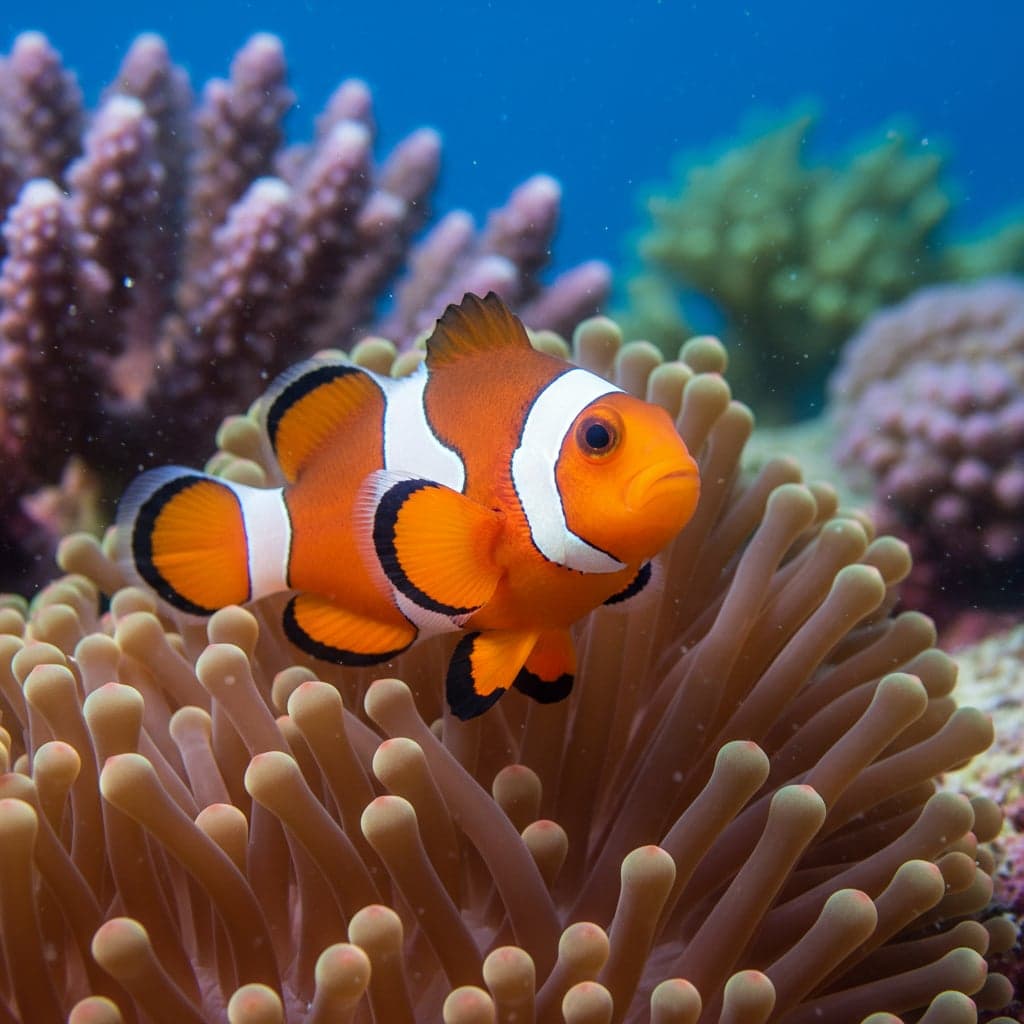
Good companions are a wide range of peaceful to semi-aggressive reef fish — common clownfish, tangs in adequate volume, gobies, other dissimilar wrasses and similar community stock. It is reef-safe with corals and most ornamental invertebrates, though as a small predator it may eat tiny shrimp along with pest species such as bristleworms and pyramidellid snails — often a welcome trait, occasionally a surprise if you stock expensive micro-crustaceans.
Avoid pairing it with large predators or with hyper-aggressive wrasses that will pin it out of the sand bed. Compared with a mature lyretail wrasse, the silver belly is a gentler reef citizen — still a hunter of small inverts, not a mid-tank bully.
Breeding
Halichoeres leucoxanthus is a protogynous hermaphrodite and pelagic spawner. Courtship may be seen in large systems; rearing the planktonic larvae is beyond the home aquarium. Trade specimens are wild-collected. Captive breeding is not a reliable pipeline that removes quarantine duty.
Common Health Issues
Hardy but not parasite-proof. Ich and velvet follow shipping stress and poor oxygen. Jumping and substrate mistakes are the other common killers — seal the lid, use fine sand, and do not vacuum a buried wrasse into a siphon. Quarantine every arrival and keep water quality stable.
Given a sand bed, a sealed canopy and regular meaty meals, the silver belly wrasse is a hardy, active and useful beginner reef wrasse — yellow-and-white motion that earns its keep hunting pests without the aggression profile of larger labrids.