Spotted Boxfish
The Spotted Boxfish (Ostracion meleagris) is a charming, polka-dotted reef fish — peaceful and engaging, but it can release a toxin when stressed.
Spotted Boxfish
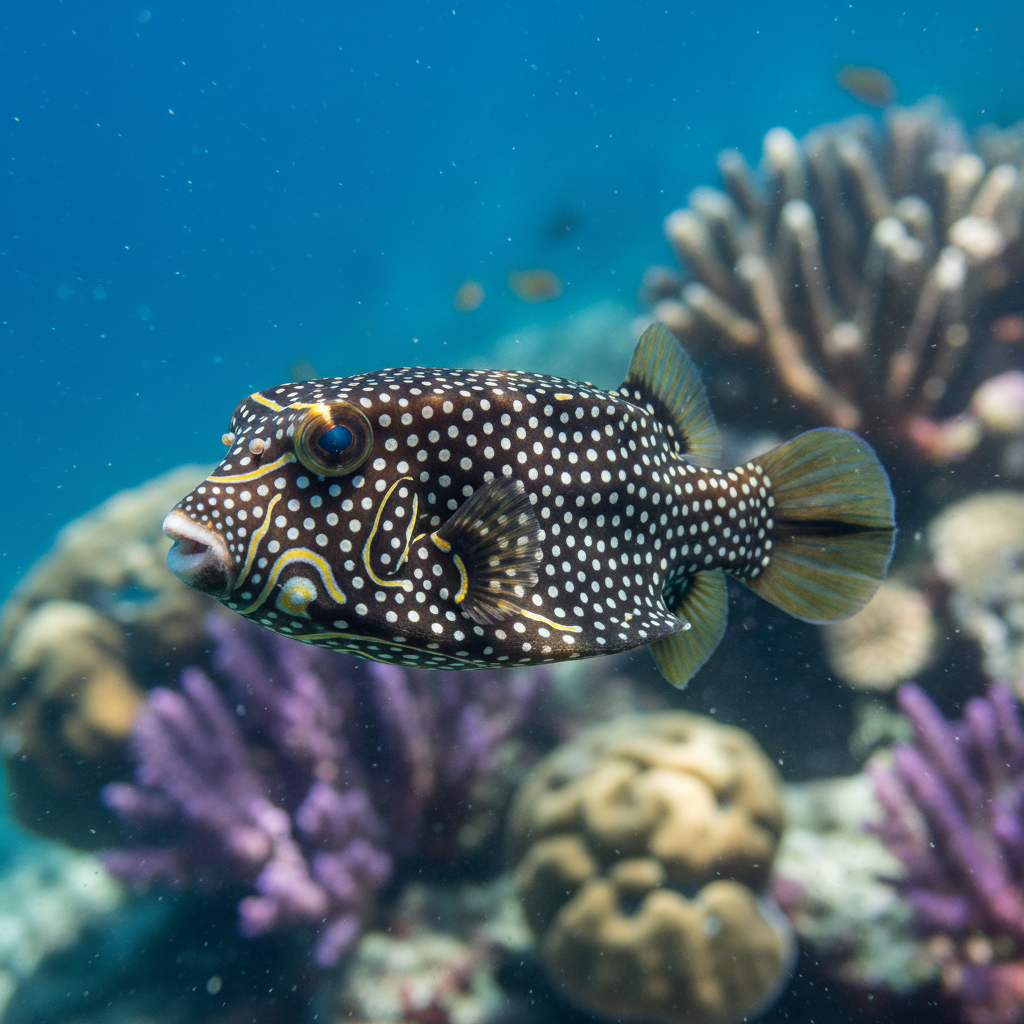
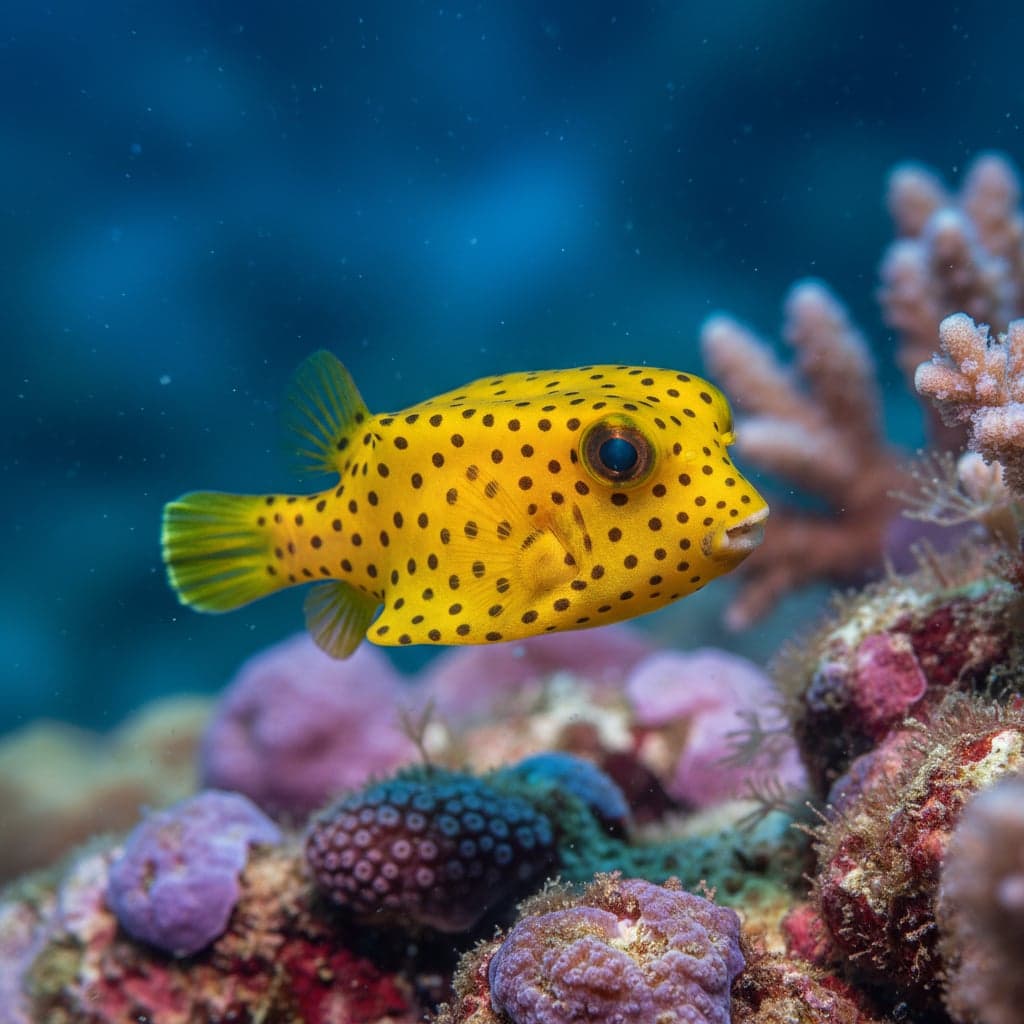
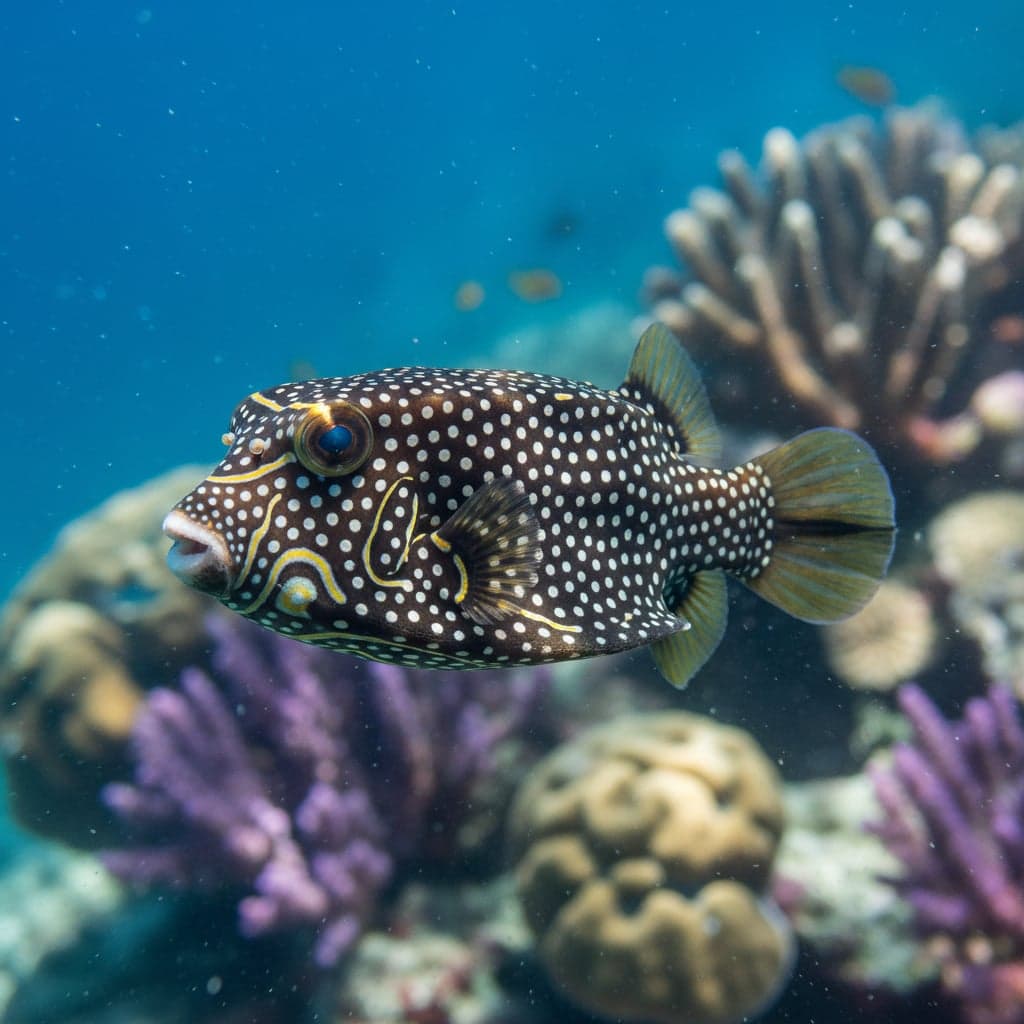
The Spotted Boxfish (Ostracion meleagris) is one of the reef's most endearing oddities — a rigid, box-shaped little fish that sculls about on whirring fins, peering at its surroundings with bright eyes. Males are spectacular, with a deep blue body, black back covered in white spots, and golden-spotted flanks; females are dark brown with white dots. Charming and full of character, it is, however, a fish for the experienced keeper, because boxfish can release a potent toxin (ostracitoxin) when severely stressed or dying — capable of wiping out a tank.
That risk, plus a somewhat specialised diet, places it firmly in the expert category despite its placid nature.
Natural Habitat & Origin
Ostracion meleagris is found across the Indo-Pacific, where it pootles slowly over coral and rocky reefs, picking at a range of small invertebrates, algae and other matter. Its boxy, armoured body and toxic skin protect this slow swimmer from most predators.
In the aquarium it appreciates live rock with grazing surfaces and shelter, in a calm community where its unhurried pace is not disturbed.
Care Requirements
Maintain stable marine conditions: salinity around 1.024–1.026, pH 8.1–8.4, and a temperature of about 24–26°C (75–79°F). Reaching about 16 cm (6 inches), it is best given a tank of around 280 litres (about 75 US gallons) or more. Critically, keep it in a calm, stable, stress-free environment: harassment, poor water quality or a difficult acclimation can prompt it to release its toxin, endangering the whole tank.
Diet & Feeding
The Spotted Boxfish is an omnivore that grazes a varied diet of small invertebrates, algae and other matter in the wild. In the aquarium it needs a varied diet of meaty marine foods — frozen mysis, enriched brine shrimp, chopped seafood — along with marine algae and grazing on live rock. Feed several small meals a day; a steady, varied diet keeps it healthy and calm.
Behavior & Temperament
This is a peaceful, slow, curious fish that bothers no one. Its very placidity is part of the management challenge: it is easily bullied and stressed by faster or aggressive tankmates, which is exactly the situation that can trigger toxin release. Keep it in a calm community where it can graze and explore at its own pace.
Tank Mates
Pair it only with peaceful, non-aggressive fish — other calm community species that won't harass it. Avoid nippy, fast or aggressive fish. It is reef-safe in the sense that it won't attack corals or large invertebrates, though it may pick at very small ones; the bigger consideration is keeping it unstressed for the safety of the whole system.
Breeding
Ostracion meleagris is a pelagic spawner and is not bred in the home aquarium; trade specimens are wild-collected.
Common Health Issues
Beyond the toxin risk, the Spotted Boxfish is sensitive during acclimation and to poor water quality, and like all marine fish it can be affected by marine ich (Cryptocaryon irritans) and marine velvet (Amyloodinium ocellatum). It can also be a finicky feeder at first. Quarantine carefully, keep water quality pristine and stable, choose peaceful tankmates, and minimise stress at all times — do that, and this charming, characterful boxfish can do well in the hands of an experienced keeper.