Sunrise Dottyback
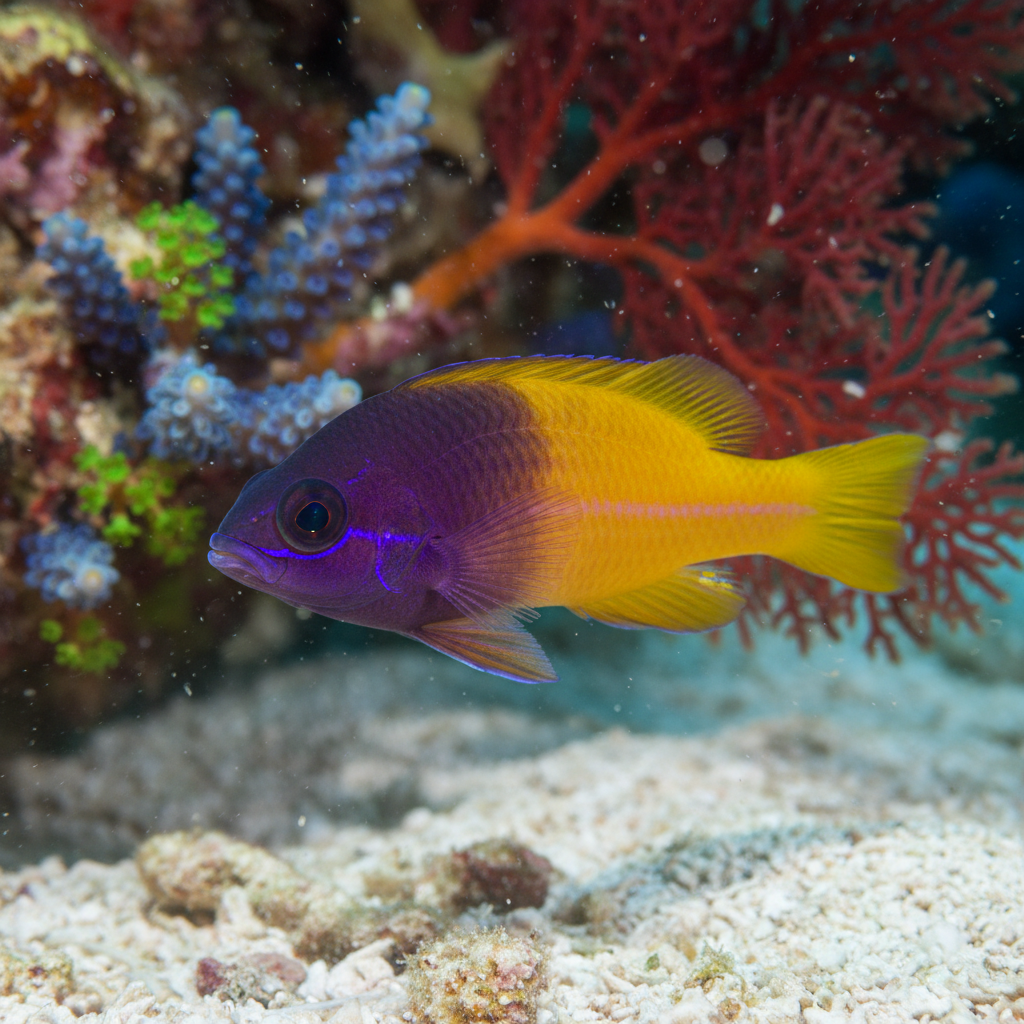
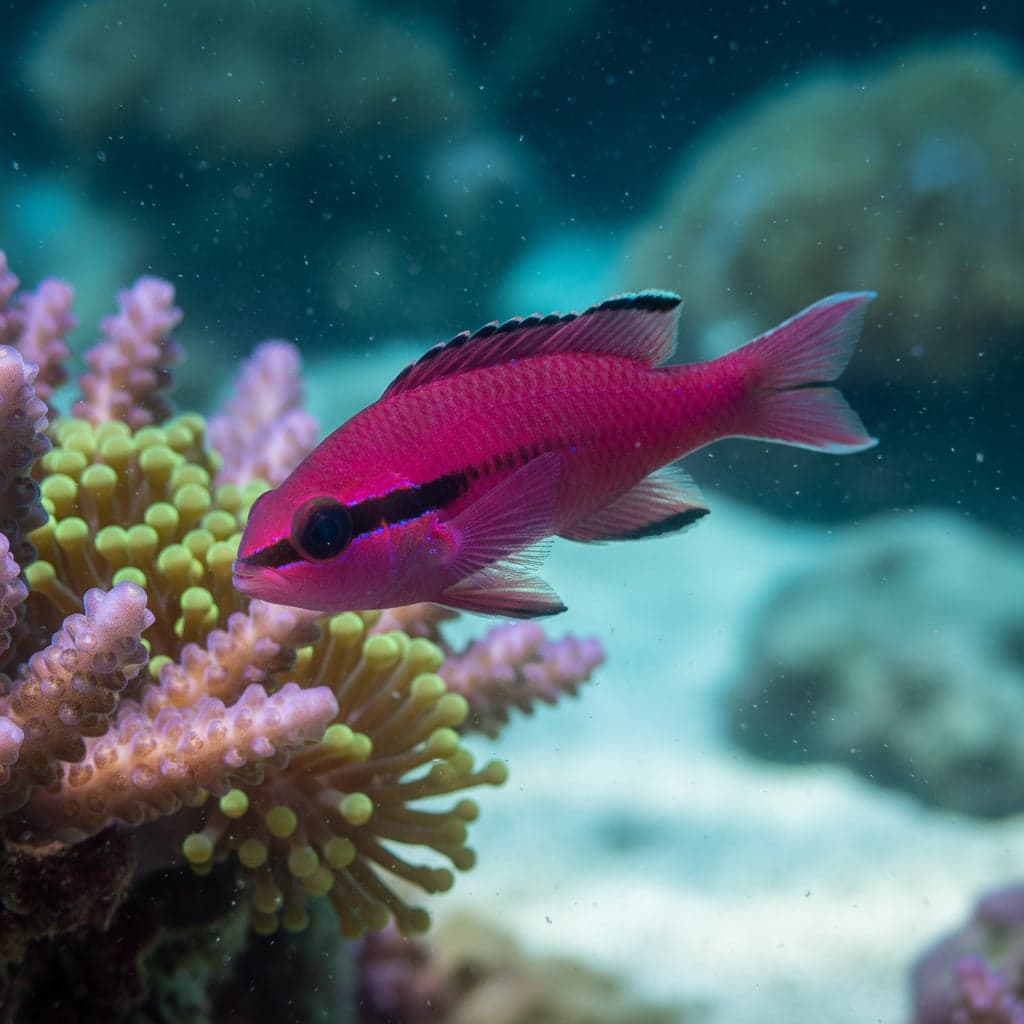
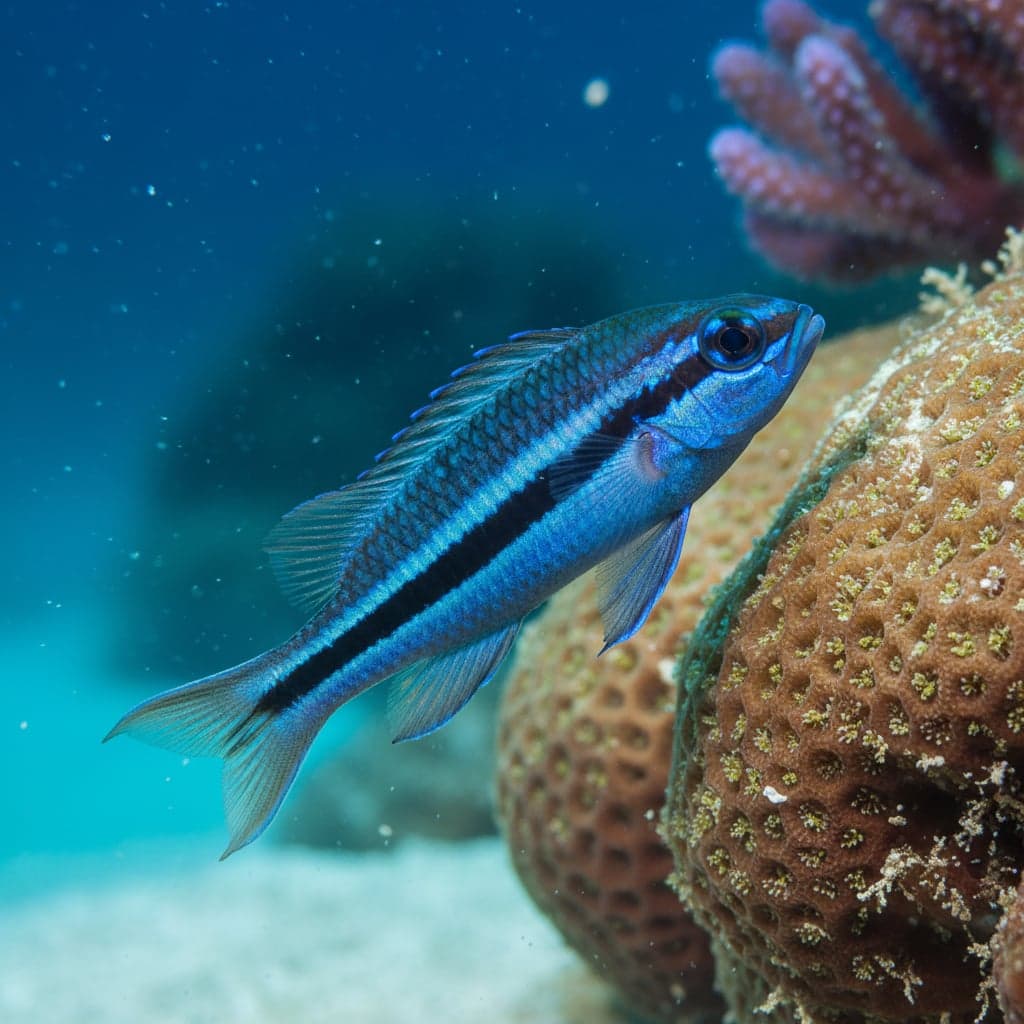
The Sunrise Dottyback (Pseudochromis flavivertex) is a small, vivid blue-and-yellow reef fish — hardy and reef-safe, and one of the more peaceable dottybacks.

Sunrise Dottyback
The Sunrise Dottyback (Pseudochromis flavivertex), also called the yellow-blue or sunrise dottyback, is a small, beautifully coloured reef fish — a bright blue body topped with a sunrise-yellow stripe along the back. Hardy, inexpensive and dazzling, it brings a jewel-like accent to nano and small reef aquariums. Helpfully, it tends to be a little more even-tempered than some of the feistier dottybacks, though it still has a bold streak and will defend a rock claim.
Its colour and toughness make it an easy, rewarding fish for newer marine keepers who stock thoughtfully — not a license to ignore territory or lids.
Rock caves are the real price of admission. Temperament toward similar small fish is the second. Frontmatter lists solitary because in a 75-litre reef that is the honest plan: one sunrise, abundant cover, and tankmates that will not fold under a short chase.
Natural Habitat & Origin
Pseudochromis flavivertex is found in the Red Sea and western Indian Ocean, living close to the reef, sheltering among rock, rubble and crevices and darting out to feed. It is a secretive fish that retreats into cover when disturbed — behaviour that looks like shyness until it decides a cave is its cave.
In the aquarium it wants exactly that: plenty of live rock with holes and caves to claim as territory and shelter. A bare open-sand nano with one ornament will not give it the structure it needs to settle without harassing everything else.
Care Requirements
Stable marine conditions: salinity about 1.024–1.026, pH 8.1–8.4, temperature 24–26°C (75–79°F). Adults reach only about 7 cm (3 inches). Tanks around 75 litres (20 US gallons) and up work when rockwork is abundant. A secure lid is wise — dottybacks can jump when startled or chasing.
It is hardy and tolerant of typical reef conditions. Still quarantine new arrivals: marine ich (Cryptocaryon irritans) and marine velvet (Amyloodinium ocellatum) do not care that the fish is beginner-rated. Medications belong in hospital tanks if the display holds corals. Captive-bred specimens, when available, often settle faster and skip some shipping stress that wild fish carry.
Use the Aquarium Tracker to log salinity and temperature; small systems drift while the fish still looks fine, and nano reefs punish slow corrections.
Diet & Feeding
Carnivore. Wild fish take small crustaceans and zooplankton. In the aquarium it eagerly accepts meaty foods: frozen mysis and enriched brine shrimp, finely chopped seafood, and quality marine pellets and flakes. Feed once or twice a day; it is an easy, enthusiastic feeder that rarely needs coaxing.
Target feed if aggressive mid-water fish are stealing every morsel before it leaves its cave. Variety keeps colour and condition up; a pellet-only diet for months is unnecessary when frozen meaty foods are available. Do not expect it to replace a dedicated cleaner crew — it may eat tiny crustaceans and bristleworms opportunistically, which some keepers like and shrimp keepers do not.
Behavior & Temperament
Semi-aggressive but comparatively even-tempered among Pseudochromis. It will defend a territory and can squabble with similar fish, yet it is generally less belligerent than many royal or neon-type dottybacks. Best added later in a stocking plan so it cannot claim the entire rockscape on day one. Keep a single specimen in smaller systems; pairs or groups need more volume and cover than most nano reefs provide.
It spends its time patrolling and defending its patch. Toward clownfish and other robust small fish it is usually manageable; toward tiny, shy gobies or firefish in a cramped tank it can be a bully. “More peaceable” is relative to other dottybacks, not a promise of community saintliness.
Tank Mates
Pair with robust tankmates that can hold their own — common clownfish, damsels, larger wrasses and similar — rather than very shy or tiny fish. It is reef-safe with corals. As a small predator it may eat ornamental shrimp, tiny crustaceans and bristleworms; plan shrimp stocking accordingly or skip ornamental shrimp.
Avoid housing it with other similarly sized, similarly aggressive cave fish in a small box. Give each assertive species visual breaks in the aquascape if the system is large enough to try mixed territory holders.
Breeding
Dottybacks such as Pseudochromis flavivertex are increasingly captive-bred, and tank-raised specimens — hardy and well-adjusted — are sometimes available. Males guard a clutch of eggs in a crevice; rearing the larvae requires dedicated effort but is achievable for committed breeders with rotifers and a larval setup. Home spawning is more realistic here than with pelagic reef giants, but larval rearing is still a project, not a side effect of a community tank.
Common Health Issues
Hardy and not especially disease-prone, but still able to contract ich or velvet under stress. Quarantine new arrivals, keep water quality stable, and secure the lid against jumping. Watch for persistent chasing that keeps tankmates pinned in corners — that is a stocking or aquascape problem, not a mystery illness.
Mindful of temperament when choosing tankmates, the sunrise dottyback is otherwise an easy, brilliantly coloured and rewarding fish — a striking splash of blue and gold for a small reef when rock, lid and companions are planned honestly.