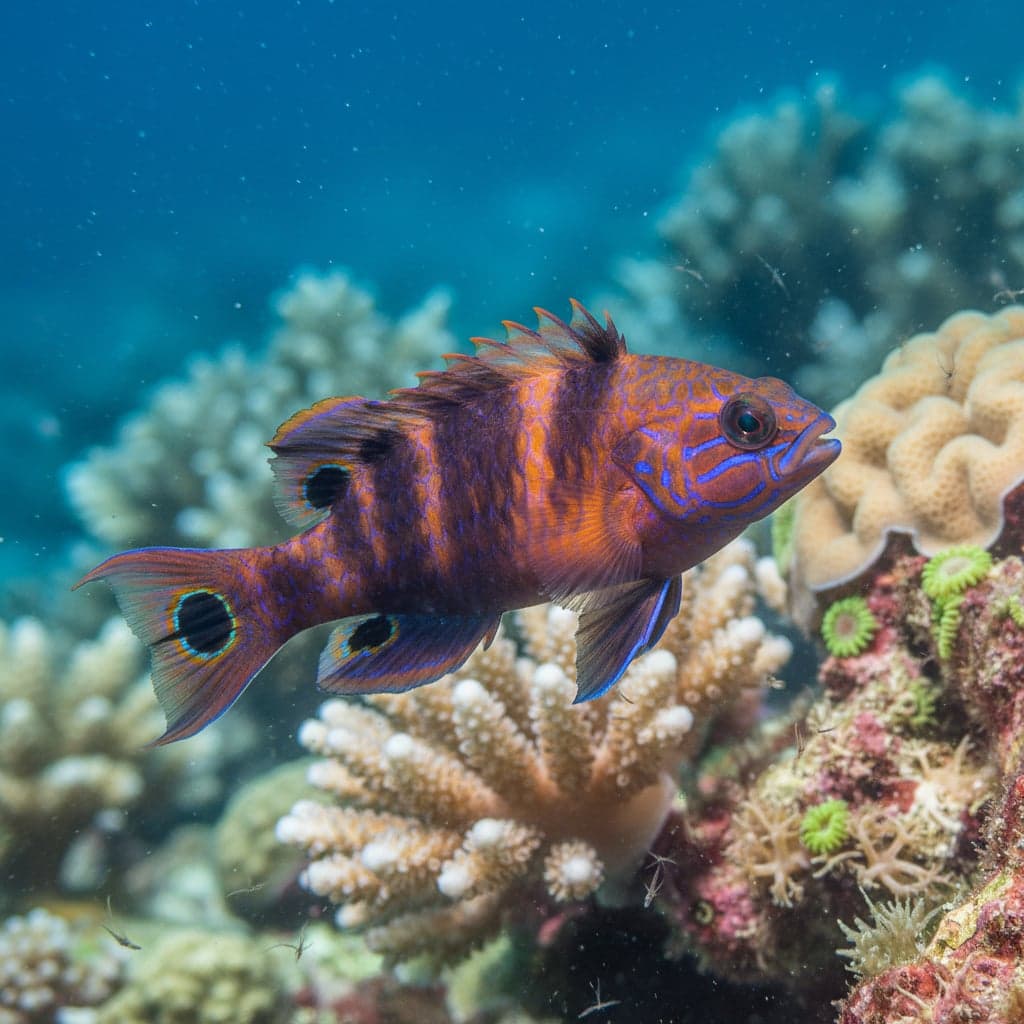
Tobacco Basslet
The Tobacco Basslet (Serranus tabacarius) is a hardy, active Caribbean sea bass — easy to keep, but a predator of small fish and shrimp.
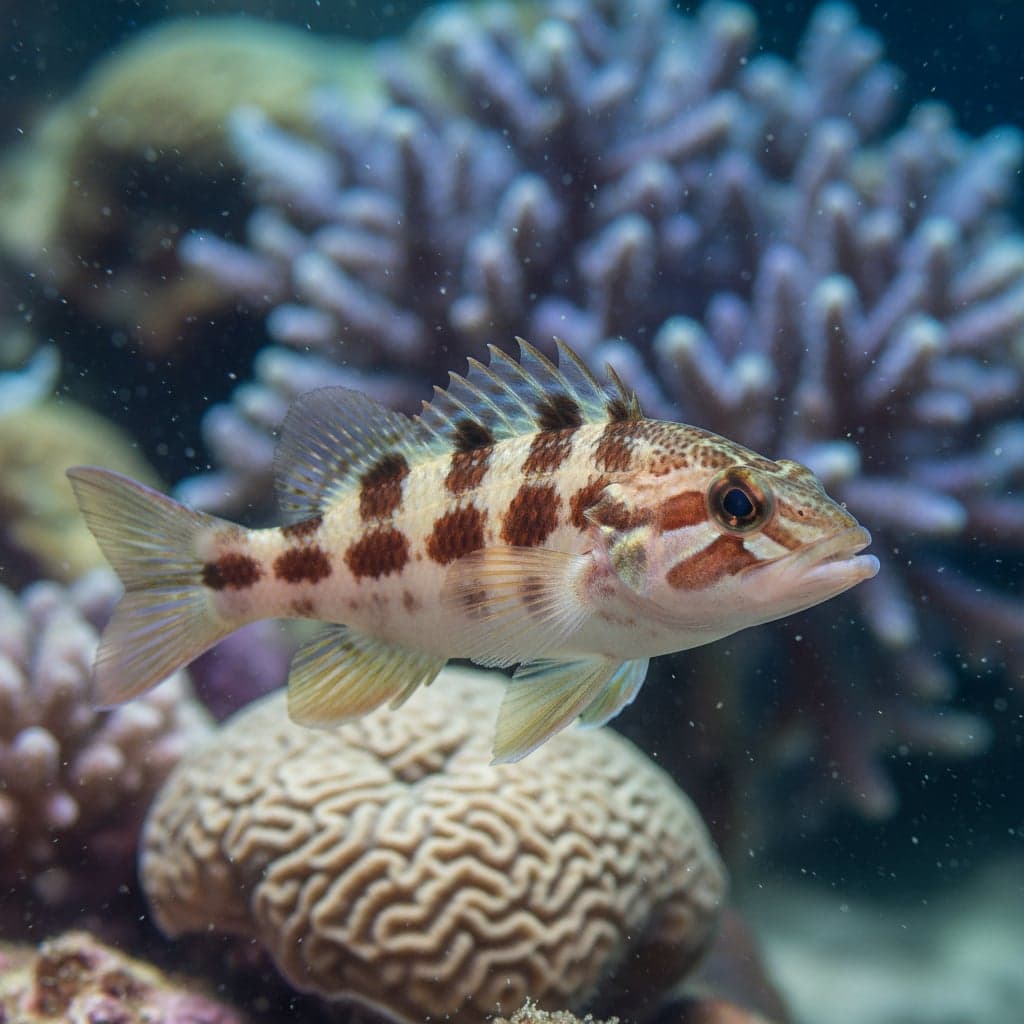
Tobacco Basslet
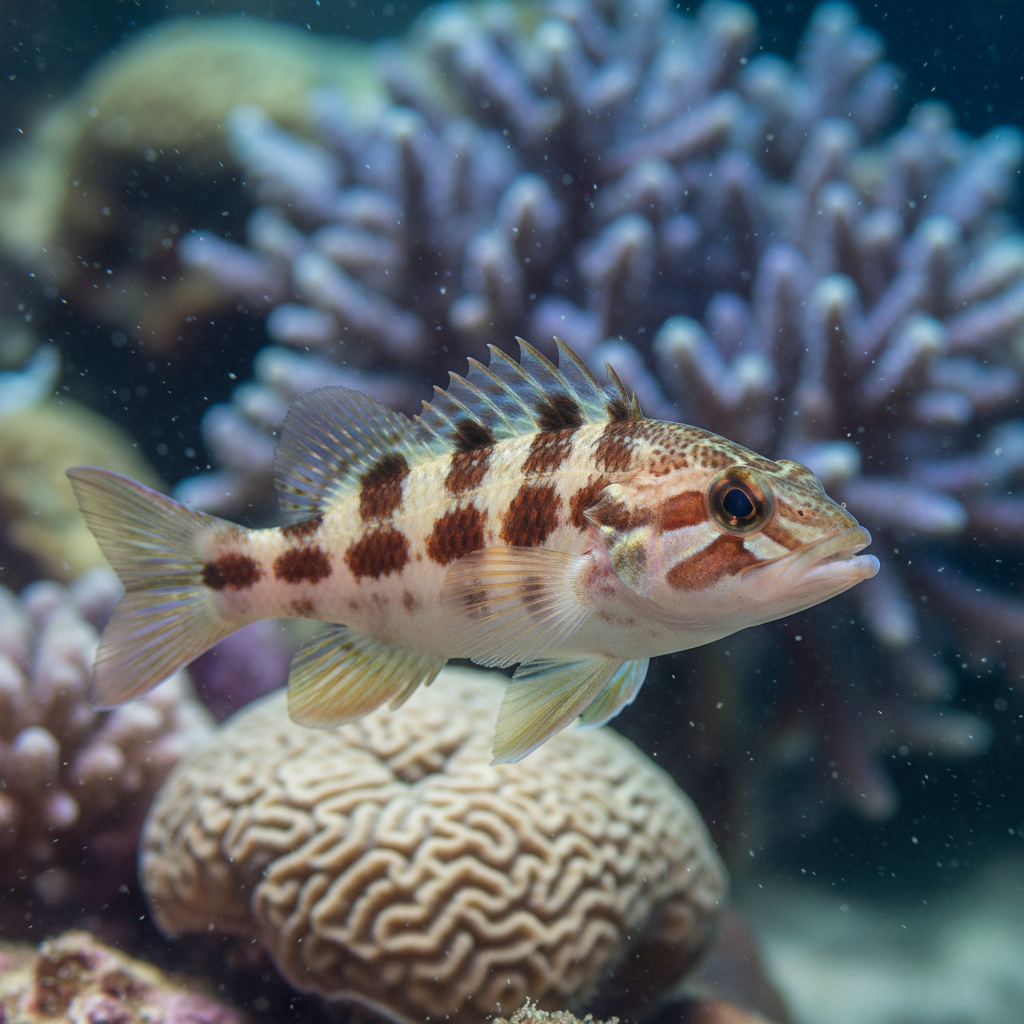
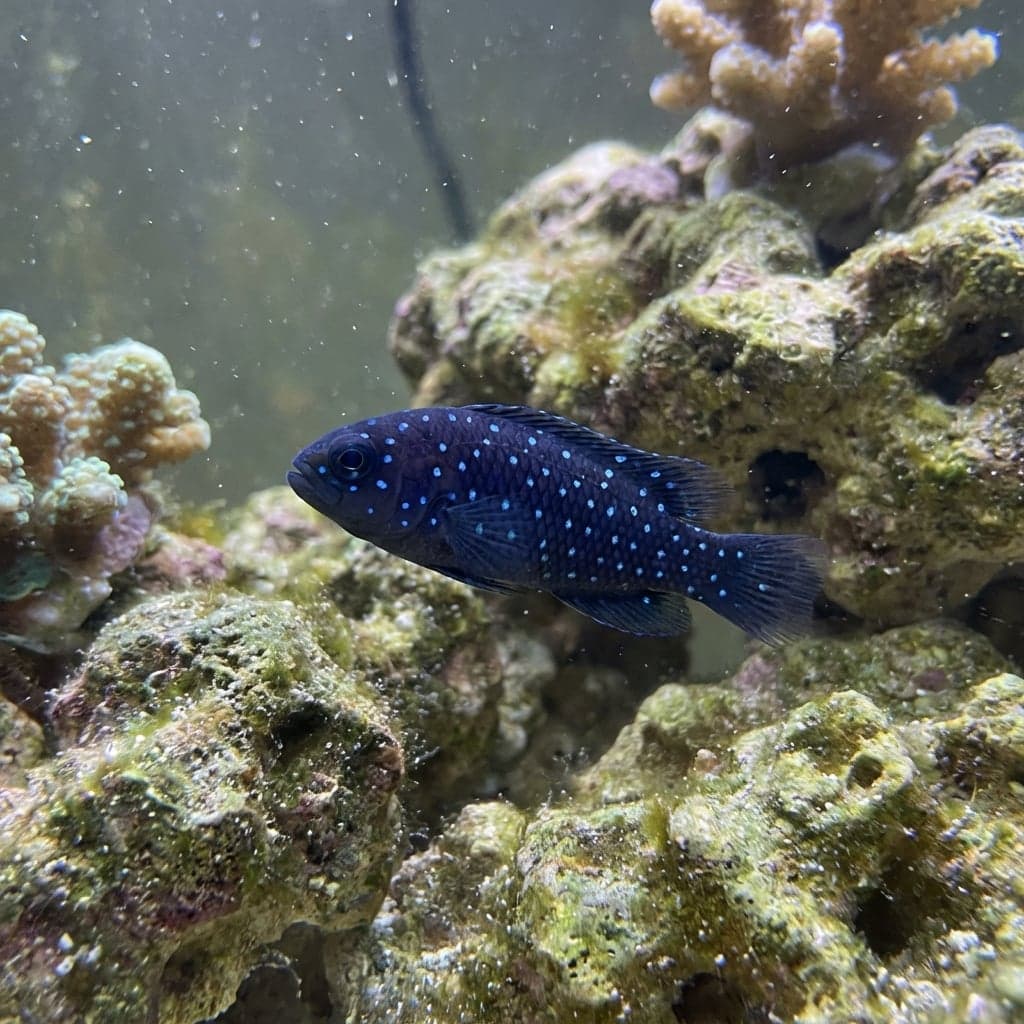
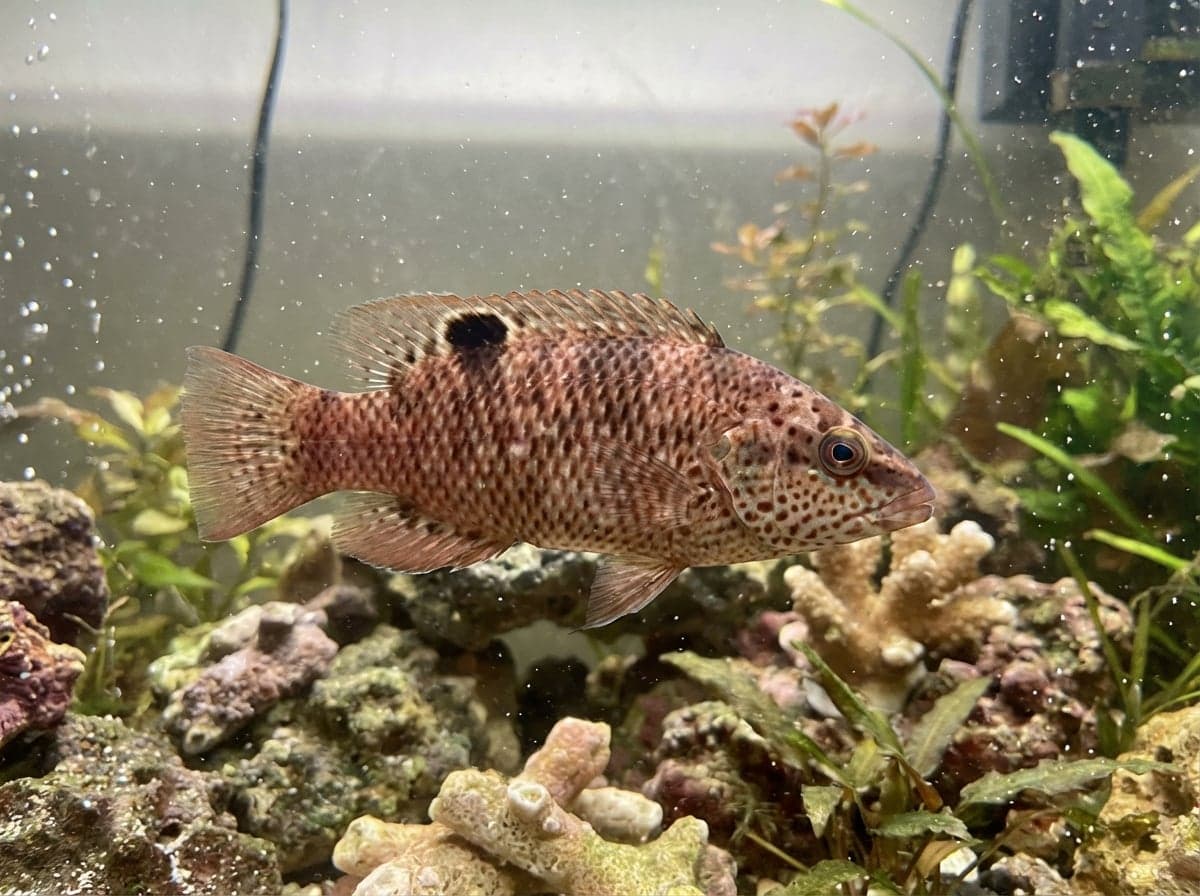
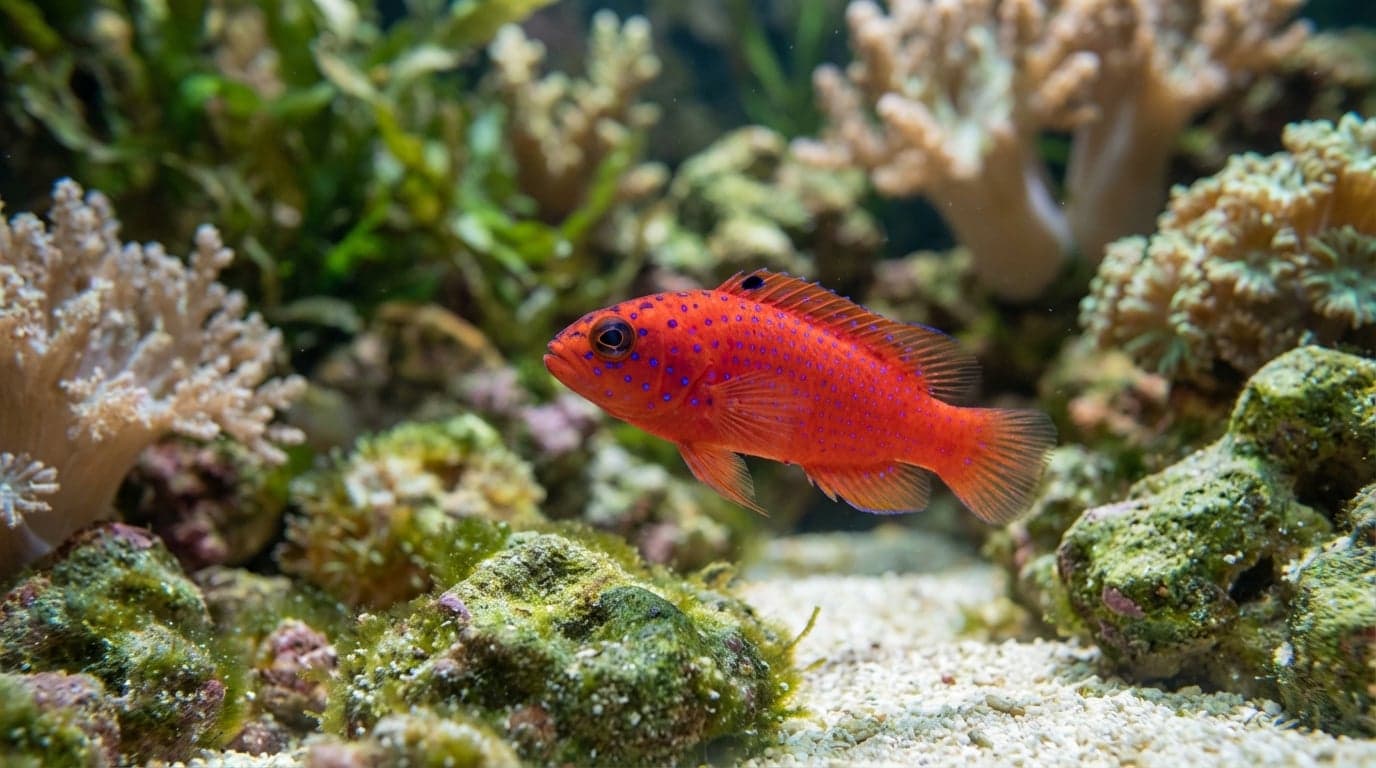
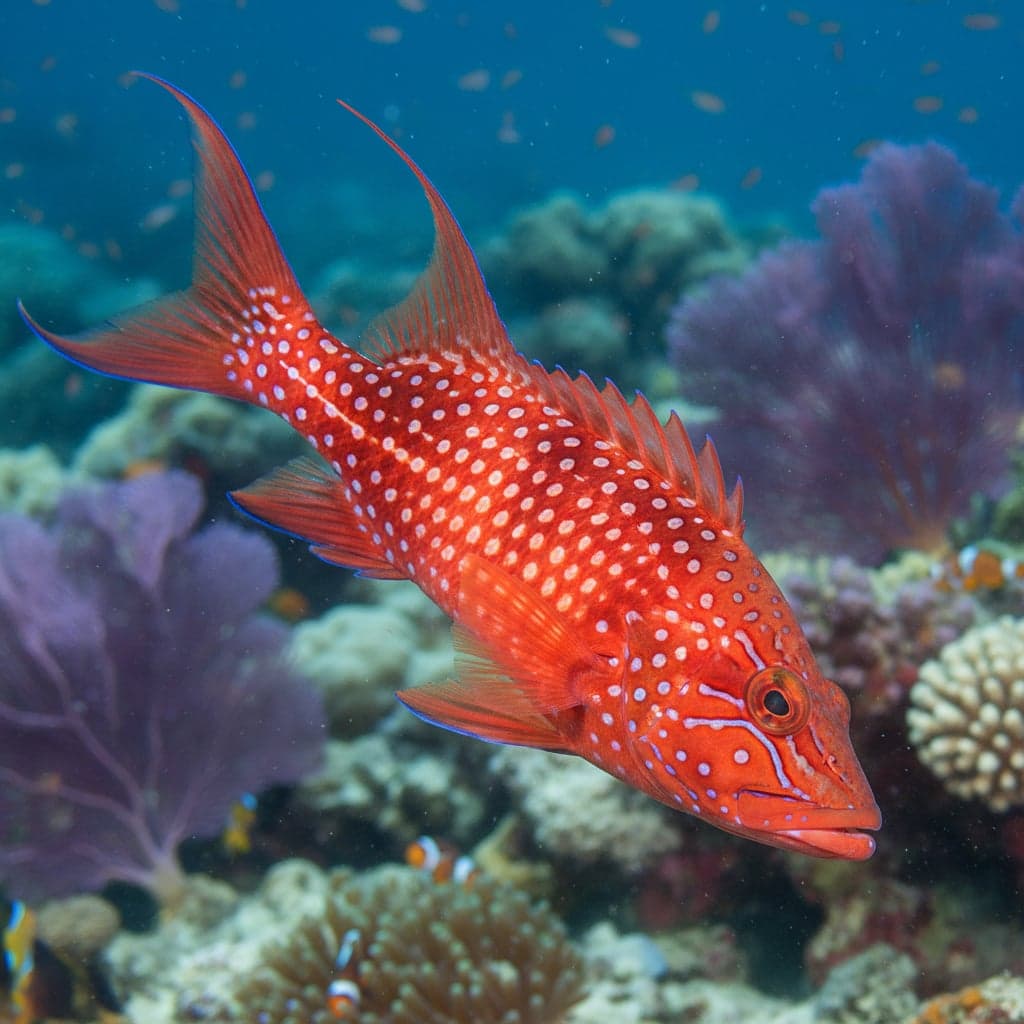
The Tobacco Basslet (Serranus tabacarius), or tobaccofish, is a Caribbean sea bass with a tan-to-yellow body broken by darker saddles and a warm overall cast. It is bold, hardy and easy to feed — the kind of marine fish that makes beginners look competent. It is also a predator with a mouth sized for the ornamental shrimp and small gobies people casually stock beside it.
"Basslet" in the trade softens expectations. This is still a Serranus: an active hunter that hovers above rubble, watches the water column, and swallows anything that fits. Keep that mechanism in mind and it is an excellent fish. Ignore it and you will watch your cleaner shrimp disappear one night and blame "jumping."
Natural Habitat & Origin
S. tabacarius ranges through the Caribbean and western Atlantic over rubble, sand and rocky ground near reefs. It hangs in open water just above structure, darting out to seize passing crustaceans and small fish, then returning to the shelter of rock and debris.
That hunting style explains the aquarium layout that works. Open water above the rock for hovering and patrol, with caves and rubble to retreat into — not a solid reef wall with no column, and not a bare box with nowhere to bolt. In the wild it stays near cover even while acting bold; in a tank the same fish will use a ledge as a watch post for hours.
Care Requirements
Standard Caribbean reef chemistry: salinity around 1.024–1.026, pH 8.1–8.4, temperature about 24–26°C (75–79°F). Adults reach about 18 cm (7 inches) per the listed maximum. A minimum around 200 litres (about 55 US gallons) suits a single fish with room to patrol; undersizing does not usually kill this species outright, but it concentrates waste from a messy carnivore and amplifies territorial behaviour.
A secure lid matters more than people expect. Basslets and small groupers jump when startled or when chasing food at the surface. An open-top display is how healthy fish end up on the floor.
Hardiness is genuine. This is one of the more forgiving marine predators for someone who already understands cycling, salinity and quarantine. Beginner difficulty assumes you accept its diet and its prey drive — not that you can ignore marine basics. Track parameters in the Aquarium Tracker if you want early warning of the nitrate climb that follows heavy meaty feeding.
Diet & Feeding
Wild diet is small fish and crustaceans. In captivity it is an eager, reliable carnivore: frozen mysis, enriched brine, chopped seafood, krill and quality marine pellets all work. Feed once or twice a day what it will clear quickly. Leftover shrimp on the sand is an ammonia plan, not generosity.
Variety beats a single frozen block forever. A fish that only ever sees one food item can become a picky tyrant later, and fatty, monotonous feeding does not help long-term condition. Occasional whole frozen enrichment items keep the hunting response sharp without requiring live feeders.
Do not use live feeder fish as a staple. They are a disease vector and a habit that makes the basslet more interested in tankmates. Frozen meaty foods are enough.
Behavior & Temperament
Semi-aggressive here means calm toward fish too large to eat and lethal toward anything that fits in the mouth. It is typically fine with similarly sized or larger companions, and it will eat ornamental shrimp, small gobies, firefish and juvenile wrasses without drama or warning.
Best kept singly. Pairs or multiples of Serranus in ordinary tanks often end in dominance fights. It spends the day hovering and patrolling — alert, interactive, and quick to learn feeding routines. That boldness is why people like it; it is also why shy tankmates stay hidden.
It is not a shoaling fish. Buying three "for a group" misunderstands the biology.
Tank Mates
Choose robust marine fish of similar or larger adult size: tangs in adequately large systems, larger wrasses, dottybacks that can hold their own, and other community fish that will not be inhaled. Avoid nano gobies, small firefish, ornamental shrimp and anything sold as a "cleanup crew" member small enough to swallow.
Reef-safe with corals is accurate. The Tobacco Basslet does not browse polyps or clam mantles; its interest is mobile prey. Soft corals, LPS and SPS are generally safe. Shrimp, crabs small enough to eat and tiny fish are not. "Reef-safe" on a carnivorous bass is about sessile invertebrates, not a promise to your cleaner shrimp.
Breeding
Serranus tabacarius is a simultaneous hermaphrodite — each individual carries male and female function — and pairs spawn by releasing pelagic eggs into the water column. Spawning can occur in aquaria when two compatible fish are housed together in a large enough system. Rearing the planktonic larvae is difficult and rarely accomplished at home.
Trade specimens are wild-collected. Hermaphroditism does not mean one fish breeds with itself in a useful aquarium sense; you still need a pair and you still will not raise the fry without specialist larval culture.
Common Health Issues
Among marine fish this is a tough one. It still contracts marine ich (Cryptocaryon irritans) and marine velvet (Amyloodinium ocellatum) when stressed or newly imported, so quarantine remains worth doing — especially because a basslet that looks bulletproof can seed a display that is not.
Jumping, overfeeding-related water quality hits, and predation on expensive tankmates are the practical failure modes more often than obscure pathogens. Secure the lid, feed meaty foods without turning the sandbed into a compost heap, and stock as if anything smaller than the basslet's head is food. Given that honesty, it is a hardy, characterful resident for a fish-focused or shrimp-free reef community.