Tricolour Damselfish
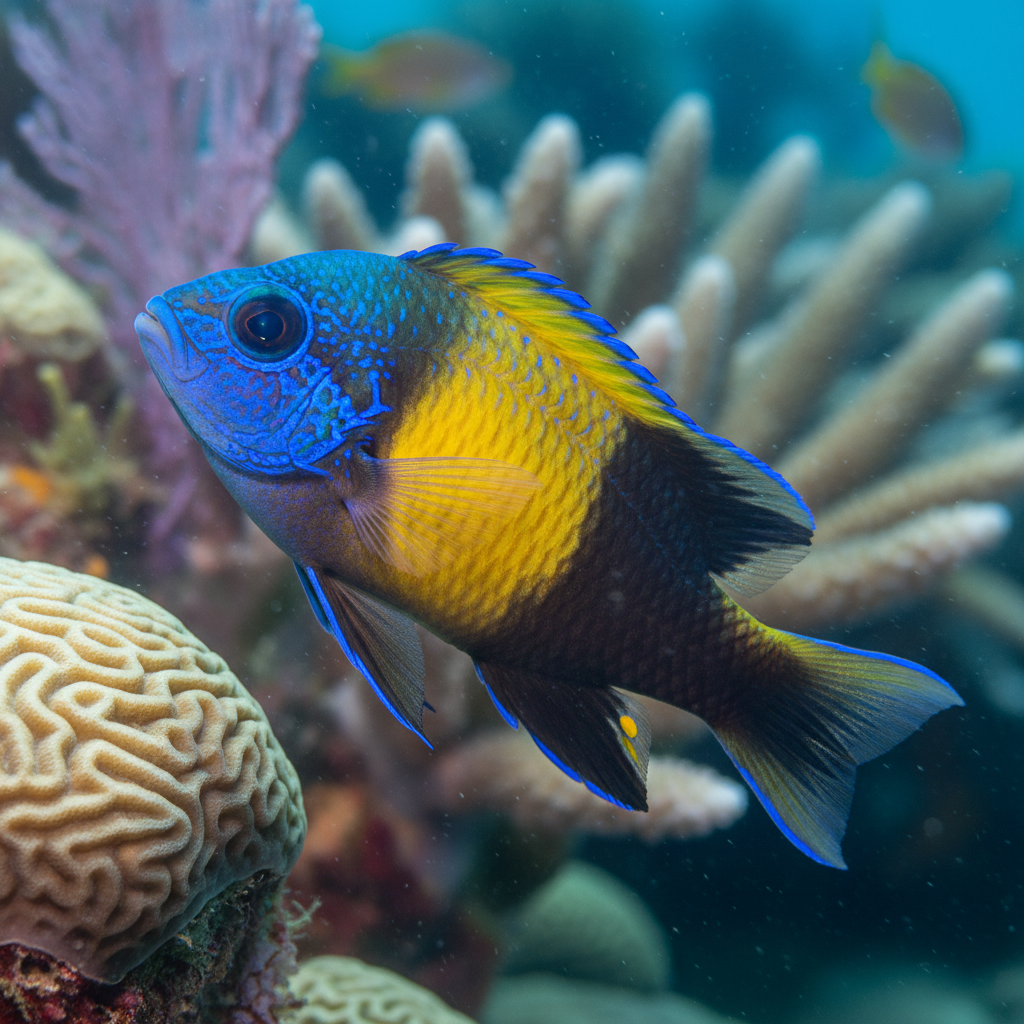
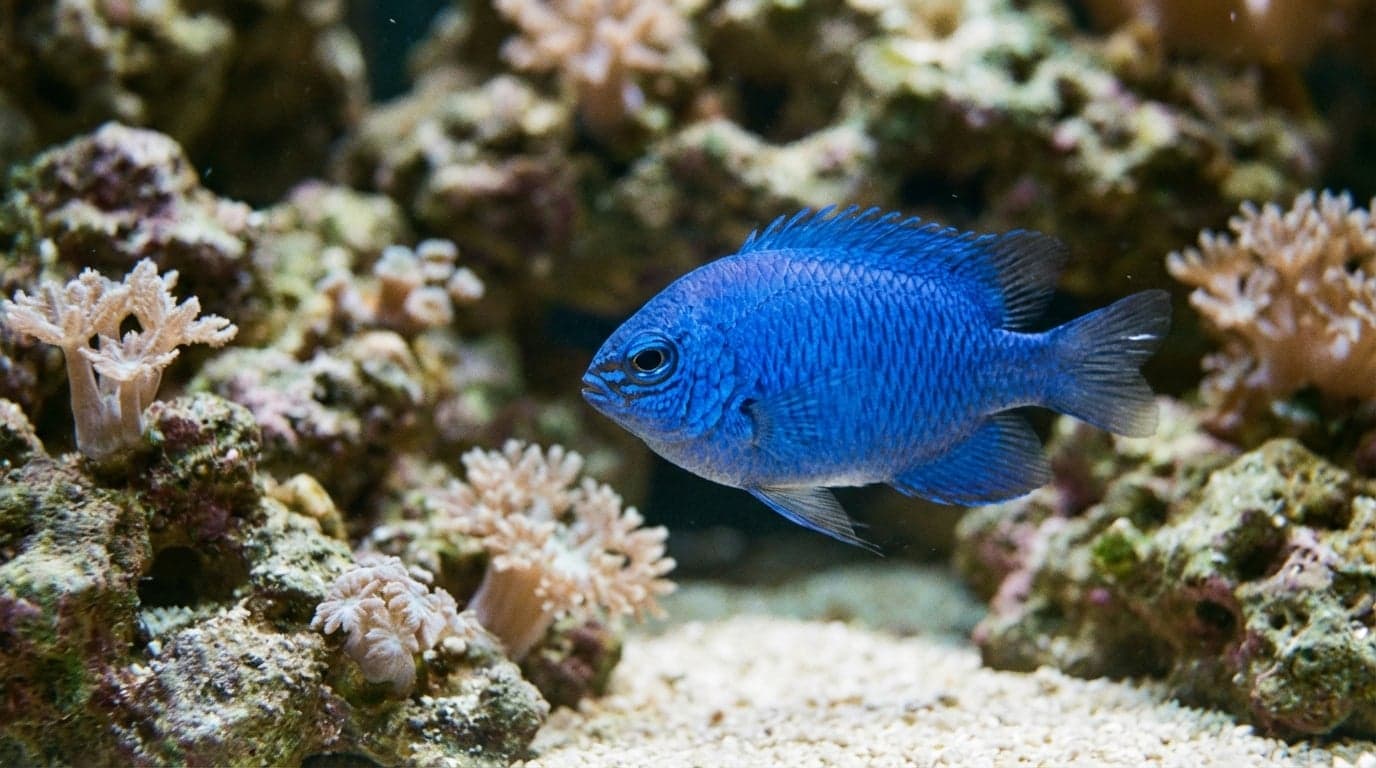
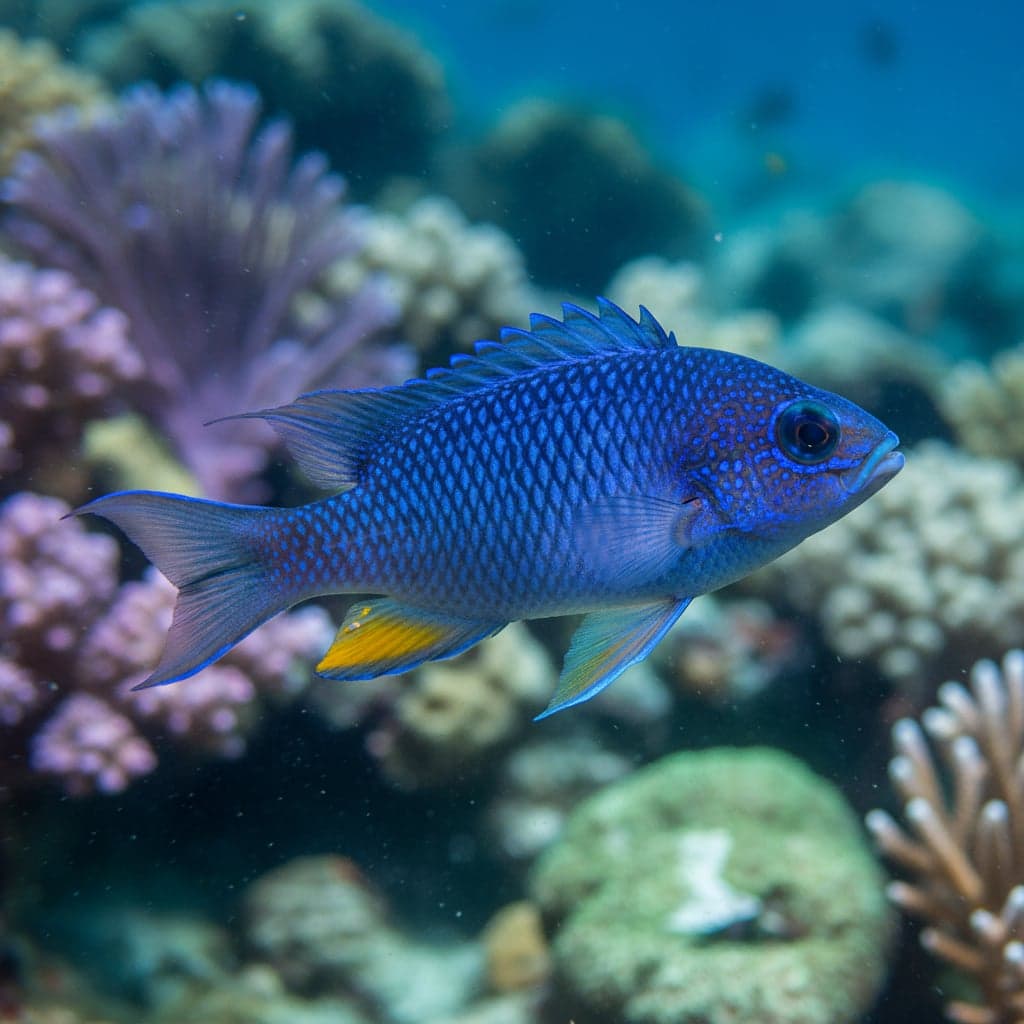
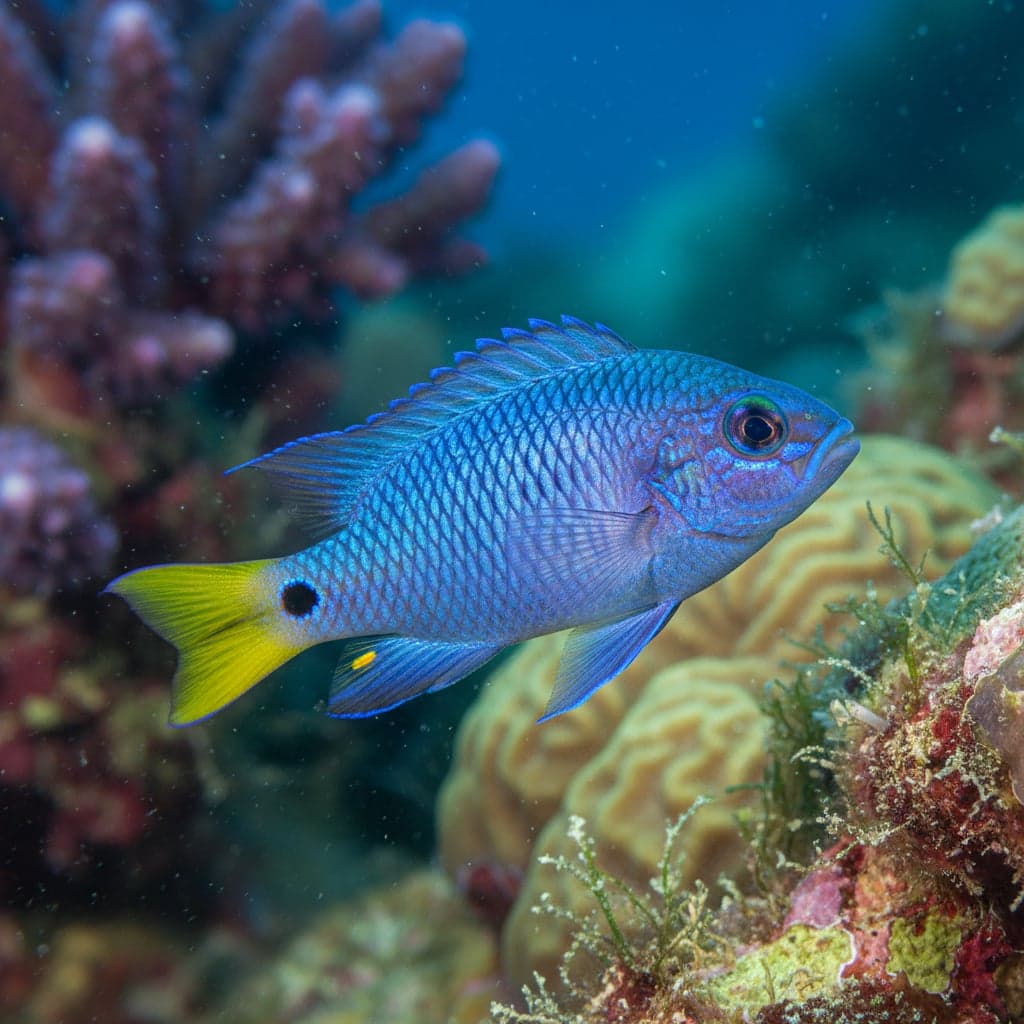
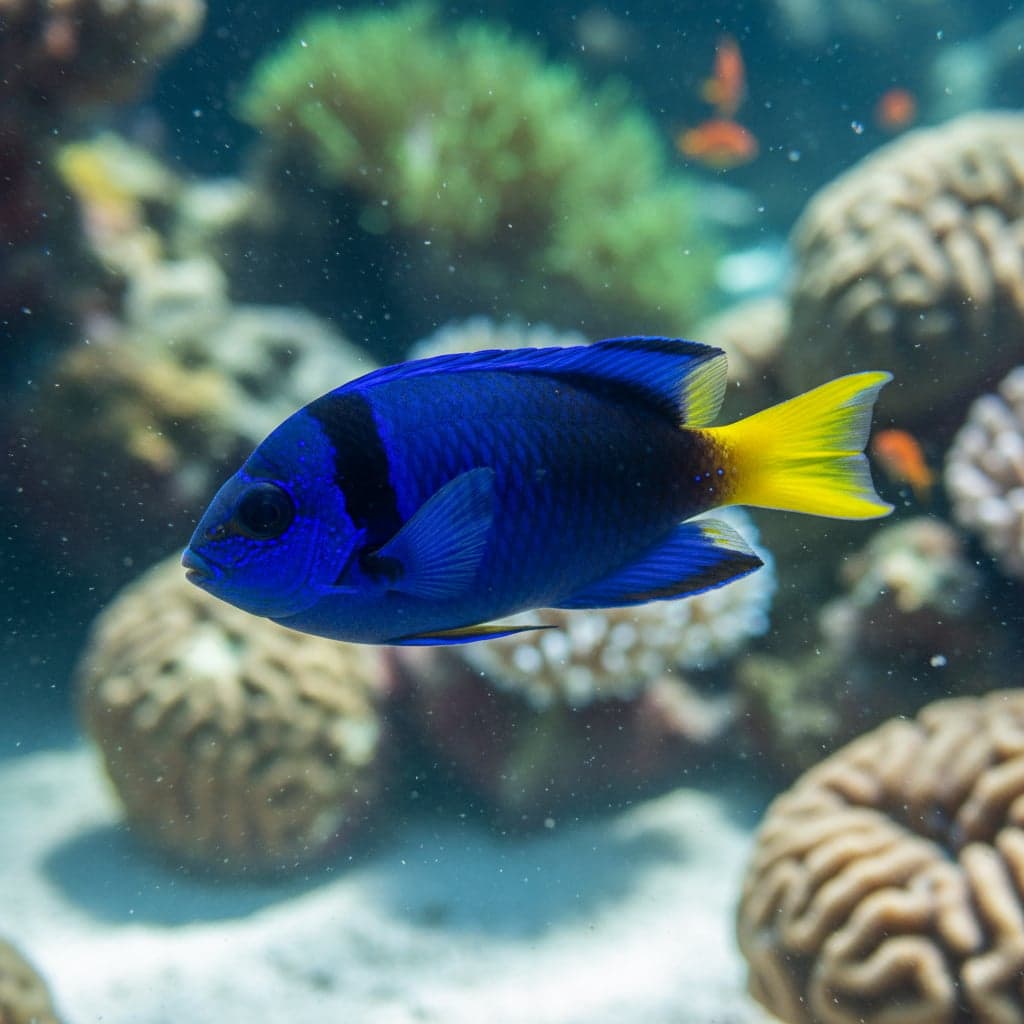
A 6cm damsel banded blue, black and white. One of the more peaceful damsels and reef safe, though still territorial around its rock.
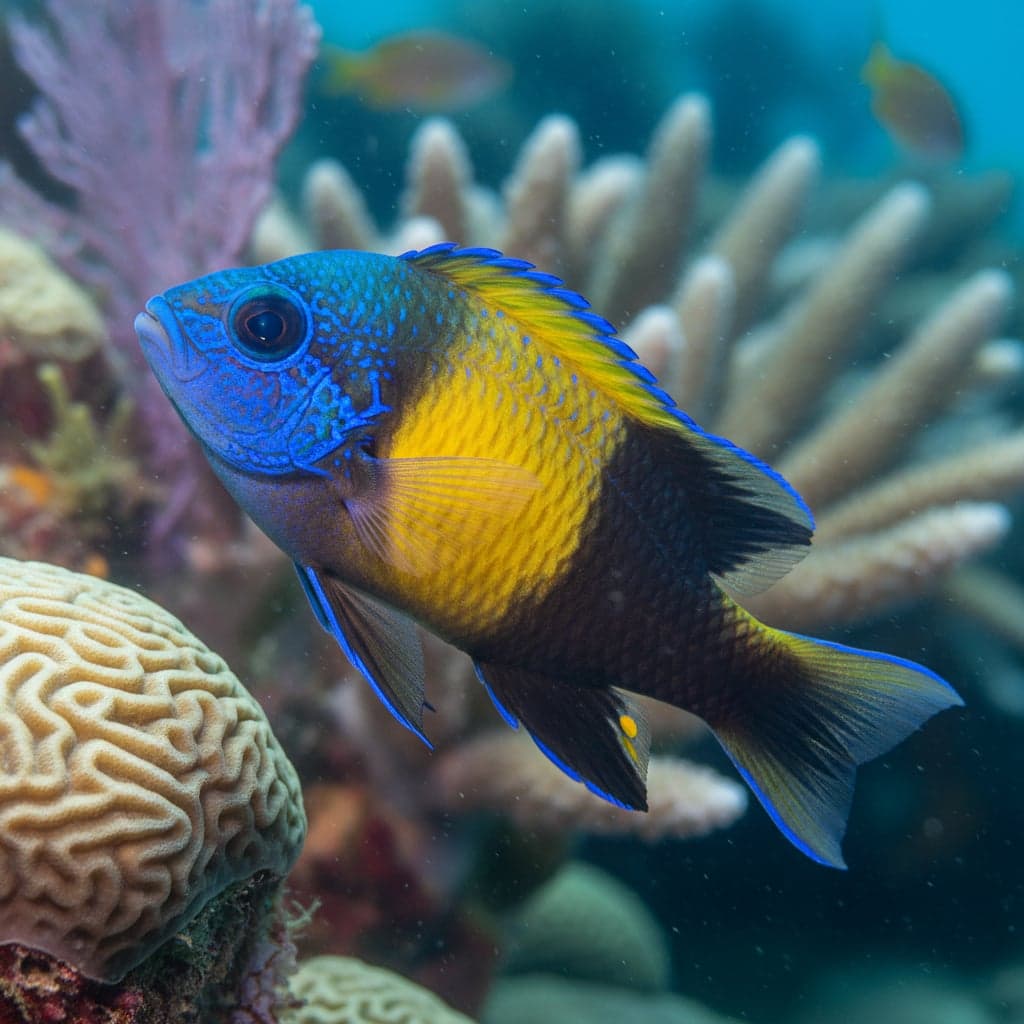
Tricolour Damselfish
The Tricolour Damselfish, scientifically known as Chromis viridis, is a vibrant and eye-catching species known for its striking appearance, which features a combination of blue, yellow, and black hues. These brilliant colors make them a popular choice among marine aquarium enthusiasts, enhancing the visual appeal of any underwater display. The fish typically measures around 3 to 4 inches in length, allowing them to adapt well to various aquarium sizes. Beyond their aesthetic charm, Tricolour Damselfish are significant in the aquarium hobby for their resilience and hardiness, making them suitable for both novice and expert aquarists alike.
In addition to their beauty, Tricolour Damselfish are characterized by their lively and curious nature. They are known for their playful behaviors, darting around the tank and exploring their environment. Their adaptability to different water conditions and relatively low care requirements further cement their value in the aquarium trade. As a staple of many marine setups, these fish not only bring color and vibrancy but also serve as teaching specimens for understanding marine ecosystems, making them a meaningful addition to any aquatic collection.
Natural Habitat & Origin
The Tricolour Damselfish originates from the coral reefs of the Indo-Pacific region, particularly in areas surrounding the Great Barrier Reef, the Solomon Islands, and the Red Sea. These fish typically inhabit shallow waters rich in coral and rocky crevices, thriving in both pristine reef environments and slightly disturbed areas. The water in these habitats is predominantly clear, allowing sunlight to penetrate and support the growth of essential algae and zooplankton, which form the base of their diet.
Environmentally, the habitats of Tricolour Damselfish are characterized by stable water temperatures and specific chemical parameters. The temperature generally ranges from 24°C to 28°C (75°F to 82°F), while the salinity is key to their health, hovering around 1.020 to 1.025 specific gravity. Understanding this natural habitat is crucial for recreating the ideal conditions within a home aquarium setting.
Care Requirements
To successfully maintain Tricolour Damselfish in an aquarium, it is essential to emulate their natural conditions as closely as possible. The ideal water parameters include a pH level between 8.1 and 8.4, a temperature range of 24°C to 28°C (75°F to 82°F), and a hardness of 8 to 12 dGH. These conditions will promote good health and vibrant coloration in these fish.
When setting up your tank, a minimum size of 120 litres (32 gallons) is recommended for this peaceful 6cm Chrysiptera rollandi — enough swimming space without forcing constant territorial conflict. The substrate can vary, but a sandy bottom mimics their natural environment well. Coral reefs and live rock structures should be included in the décor to provide hiding spots and territories. Lighting should be moderate to high, promoting photosynthesis for necessary algae growth. Incorporating low to moderate illumination will help maintain a balanced environment for both the fish and any plants or corals included in the setup.
Diet & Feeding
Tricolour Damselfish are omnivorous and require a varied diet to ensure optimal health and coloration. In their natural habitat, they consume a mix of algae, zooplankton, and small invertebrates. In an aquarium setting, it's advisable to provide a balanced diet that includes high-quality flake foods, pellet formulas, and frozen or live food such as brine shrimp or spirulina. This variety will help mimic their natural feeding habits and promote robust growth and development.
To ensure these fish thrive, aim to feed them small amounts multiple times a day, providing a mix of foods that caters to their omnivorous nature. Avoid overfeeding, as this can lead to water quality issues and health problems. Regular feeding not only supports their dietary needs but also enhances their vibrant colors and energetic behavior.
Behavior & Temperament
The Tricolour Damselfish is generally known for its lively and curious behavior. They are social creatures, often forming small groups or schools, especially when introduced into a new aquarium environment. However, they can exhibit territorial aggression, particularly towards other damselfish or fish of similar body shapes. It's essential to provide ample space and hiding spots to minimize conflicts and stress among tank inhabitants.
In terms of vertical placement, Tricolour Damselfish are often seen in mid to upper water columns, where they can actively engage with their surroundings. Their dynamic swimming patterns and tendency to explore various areas of the tank make them a captivating addition to any marine aquarium.
Tank Mates
When selecting tank mates for the Tricolour Damselfish, consider species that are similarly sized and non-aggressive in nature. Suitable companions include small wrasses, other damselfish like the Blue Dottyback, gobies, and clownfish. These species generally maintain a peaceful coexistence, balancing the aquarium's social dynamics.
On the contrary, avoid housing them with overly aggressive fish or larger predatory species, such as lionfish or larger groupers, which may pose threats. Additionally, pairing them with delicate species or shy fish may lead to stress or aggression, resulting in an unbalanced tank environment. It's crucial to carefully plan the community to promote a harmonious aquarium ecosystem.
Breeding
Breeding the Tricolour Damselfish in captivity can be a rewarding experience for aquarists. These fish are known to form monogamous pairs, and successful spawning often occurs when provided with adequate space and suitable conditions. The ideal spawning setup includes a flat, smooth surface such as a rock or shell, as the female lays her eggs here, usually consisting of up to 200-400 eggs at a time.
To encourage breeding, maintain slightly elevated water temperatures and ensure excellent water quality with stable parameters. After fertilization by the male, he will guard the eggs, providing essential care until the hatchlings emerge after about 6 to 8 days. Providing a separate breeding tank may be beneficial to protect the fry from potential predation by other inhabitants in the main aquarium.
Common Health Issues
Tricolour Damselfish are generally hardy, but they can be prone to specific diseases, particularly if stressed or kept in suboptimal conditions. Common ailments include ich (Ichthyophthirius multifiliis), marine velvet disease, and fin rot. Monitoring water quality and maintaining stable conditions are crucial in preventing these issues.
To minimize health risks, regularly perform water changes and maintain proper filtration systems. Quarantining new additions before introducing them to the main tank can also prevent the introduction of diseases. Observing your fish for signs of stress or illness, such as changes in behavior or appearance, will help address potential health concerns early on.