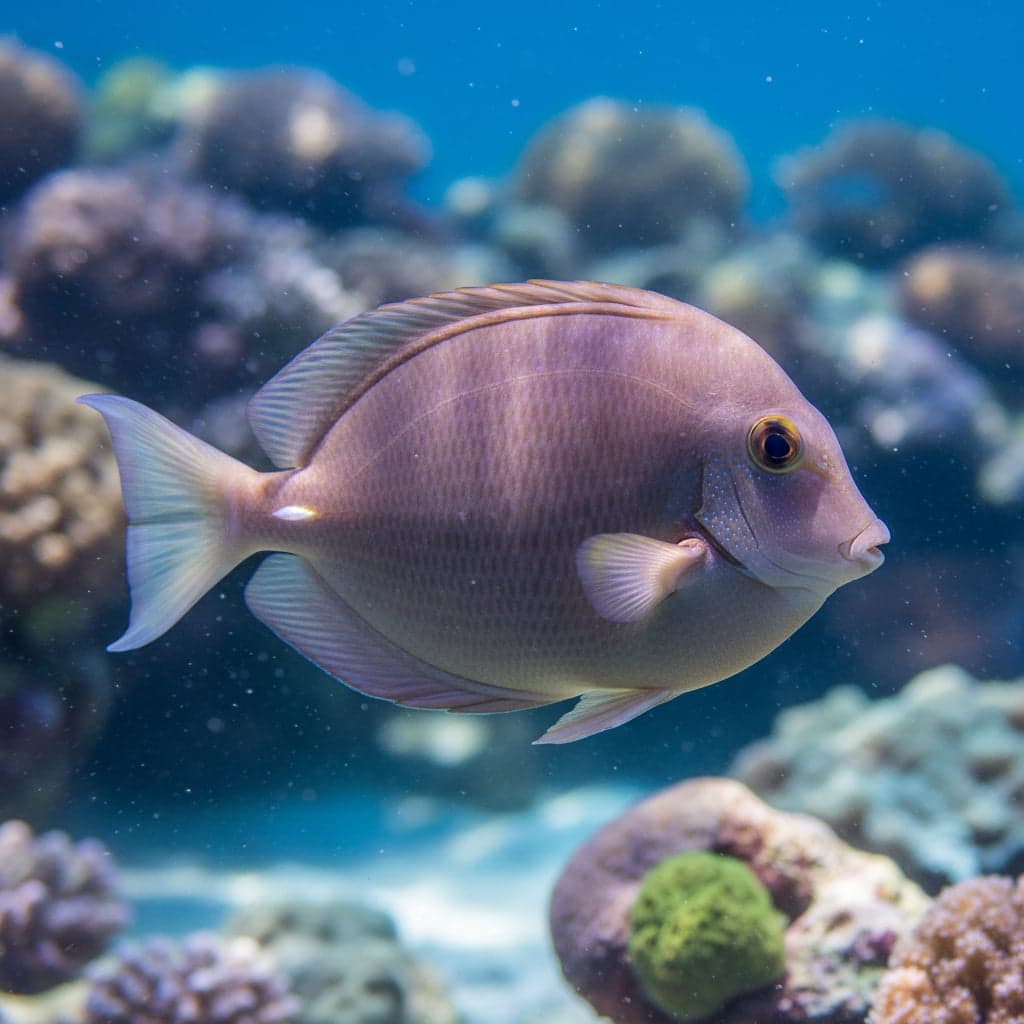
Vampire Tang
The Vampire Tang (Acanthurus tennentii) is a handsome Indian Ocean surgeonfish with bold shoulder marks — a hardy, reef-safe algae grazer for large tanks.
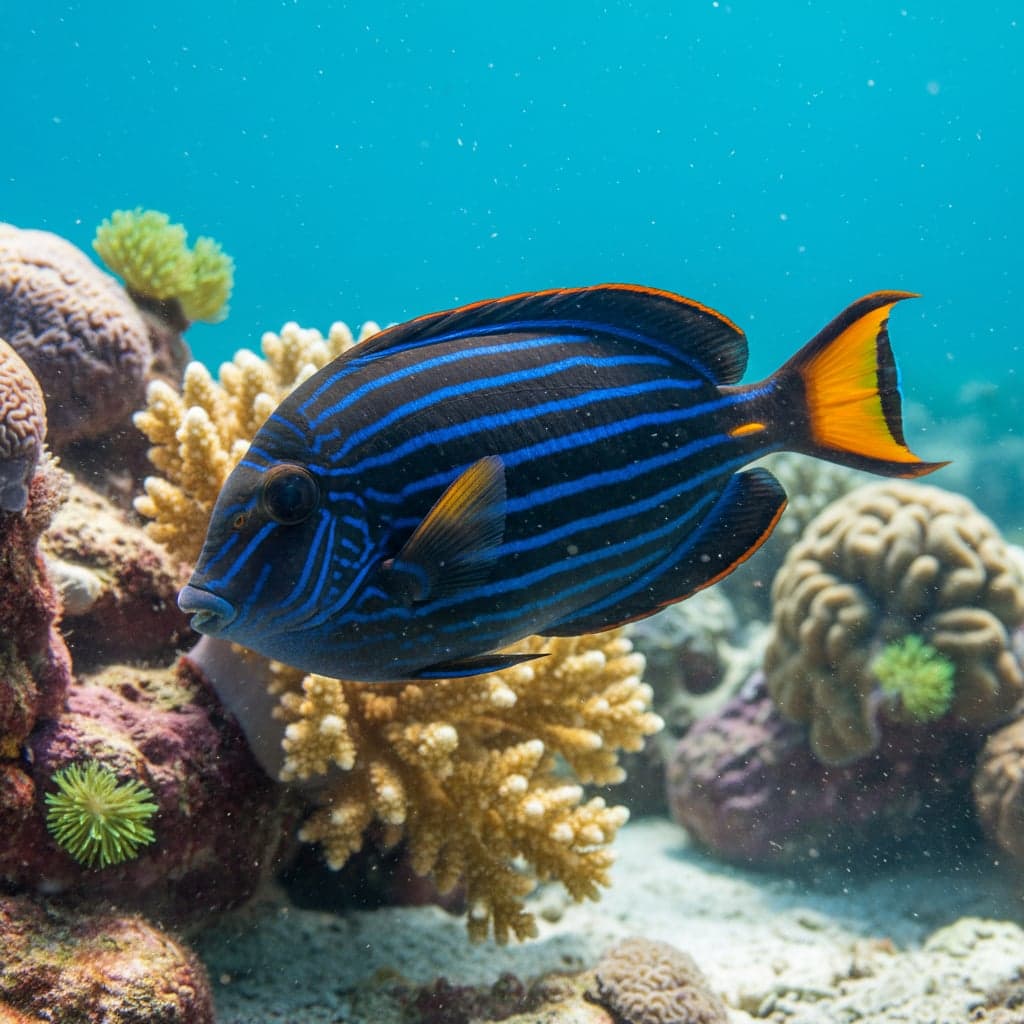
Vampire Tang
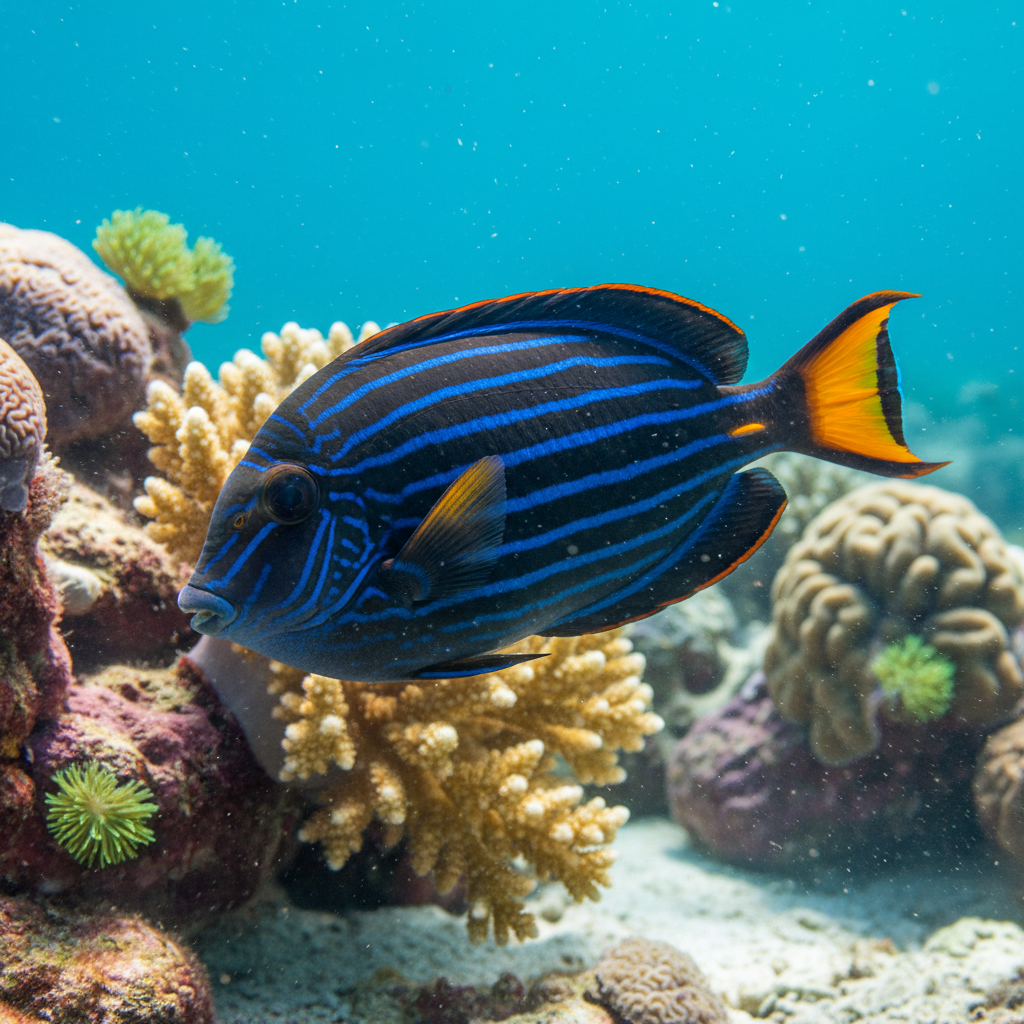
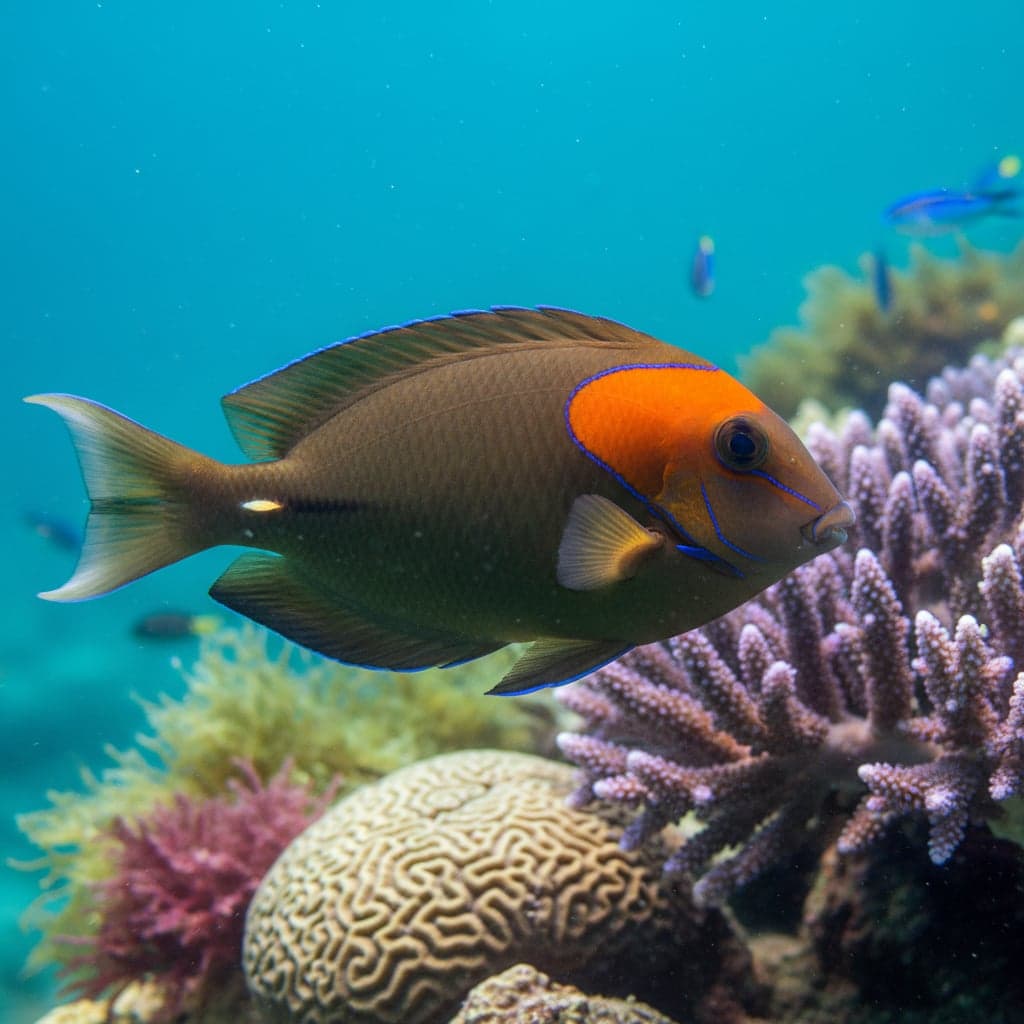
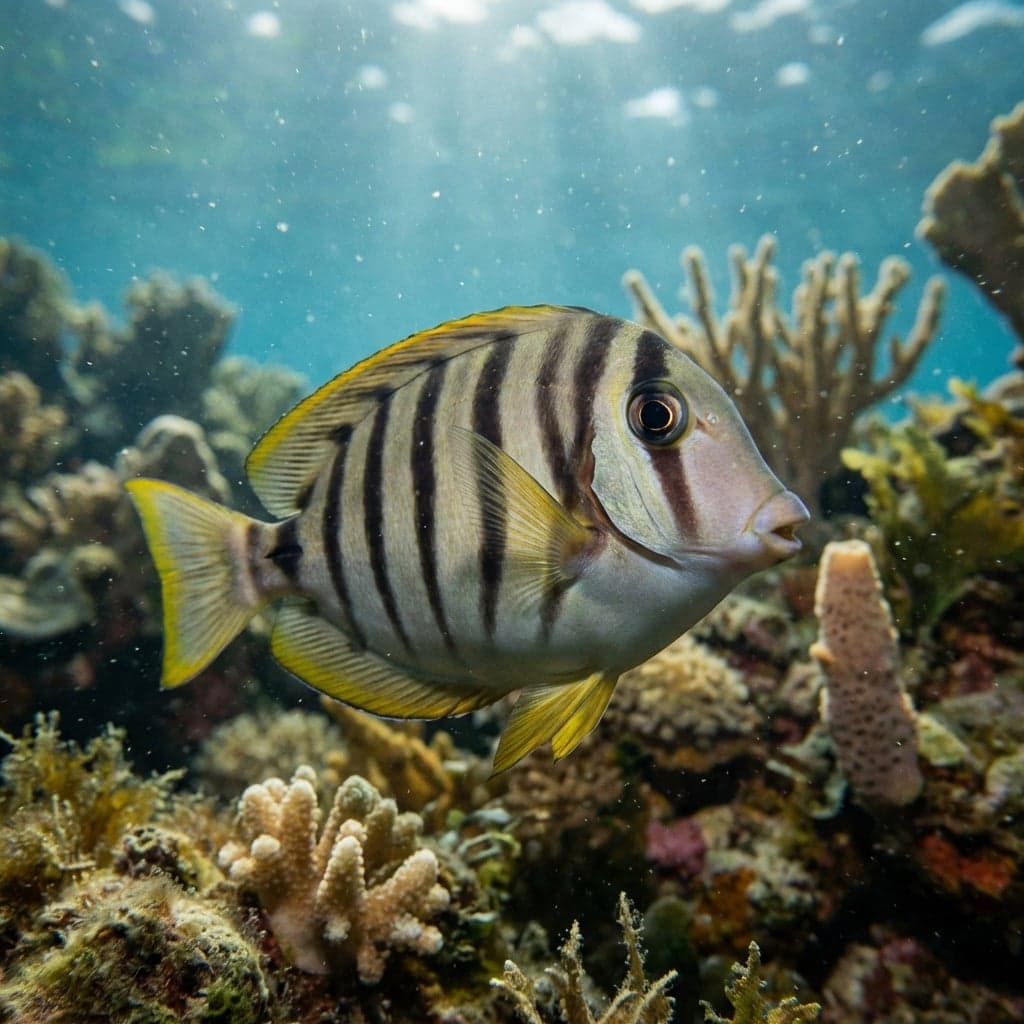
The Vampire Tang (Acanthurus tennentii), also called the doubleband or lieutenant surgeonfish, earns the common name from two curved black marks behind the eye that read like fangs on a blue-grey oval body, with a yellow-edged caudal spine to finish the threat display. It is an Indian Ocean surgeonfish with real presence — adults approach 30 cm (12 inches) — and a reputation as one of the more manageable large Acanthurus if the tank is honestly large enough. Handsome is the easy part. The hard part is matching tank length and grazing surface to a fish that swam reef slopes for a living.
At 450 litres (around 120 US gallons) the listed minimum is not a dealer upsell. A 30 cm tang in 300 litres paces, scrapes tankmates and arrives at ich the long way around. Buy this fish for a large reef or large fish-only system, or buy a smaller species.
Natural Habitat & Origin
Acanthurus tennentii is native to the Indian Ocean, where adults graze algae over coral and rocky reefs and reef slopes. They are active, wide-ranging swimmers rather than crevice-bound dwarfs. That ecology sets the aquarium priorities in order: open water to cruise, rock surface to graze, and flow that keeps oxygen high and detritus off the sand.
Indian Ocean collection and shipping routes vary in quality. A fish that looks perfect after a long transit can still be incubating marine ich; assume nothing from a clear bag photo. Quarantine is part of acquisition cost, not an optional upgrade.
Care Requirements
Hold specific gravity near 1.024–1.026, pH 8.1–8.4, temperature 24–26°C (75–79°F). Prioritise stability, strong turbulent flow and gas exchange at the surface. Large tangs fail in warm, still, nitrate-heavy water even when the test kit numbers look "acceptable" on a chart.
Size versus tank: 30 cm of adult A. tennentii needs roughly 450 L as a floor, with length mattering more than height. A long 450 L tank beats a tall 500 L box. Rock should leave swimming lanes — a solid wall of aquascape turns a grazing athlete into a cornered territorial problem. One Vampire Tang per system is the default; multiple tangs belong only in truly large volumes with different body shapes and staggered introductions.
Established live rock with film algae is ongoing nutrition. A newly started tank with sterile rock forces 100% of intake onto clips and frozen cubes, which is how keepers discover that "I feed every day" still underfeeds a continuous grazer.
Diet & Feeding
Wild diet is algal grazing across reef surfaces — turf, film and associated organic material. Captive diet must stay plant-first or the fish slowly loses the gut throughput and body condition tangs need.
Offer dried marine algae (nori) on a clip daily or near-daily, herbivore and spirulina preparations, and algae-based frozen foods. Occasional meaty foods are a supplement, not the staple. Multiple small feedings beat one large evening meal. If the nori is gone in minutes and the fish then patrols aimlessly picking at bare rock, you are underfeeding volume even if the schedule looks responsible on paper.
Wild-versus-captivity mismatch shows up as aggression and thin profiles. Hunger makes a semi-aggressive tang more interested in chasing tankmates away from rock faces. A well-fed Vampire Tang still claims space, but it spends more of the day grazing than policing. Macroalgae in a refugium can supply backup grazing; macros in the display may be eaten — plan accordingly.
Behavior & Temperament
Semi-aggressive, especially toward other surgeonfish. Same-genus, similar- shaped tangs are the worst match. Toward wrasses, angels, anthias and clownfish it is usually workable in a large tank. Introduce it with thought: a resident Vampire Tang that has owned the rock for a year will punish a newly added lookalike.
The caudal spine is sharp. Handle with nets and caution; never trap the fish in a corner with bare hands. Night-time sleeping spots among rock are normal. Daytime behaviour should be active swimming and grazing — sitting in a corner clamped is illness or bullying until proven otherwise.
Tank Mates
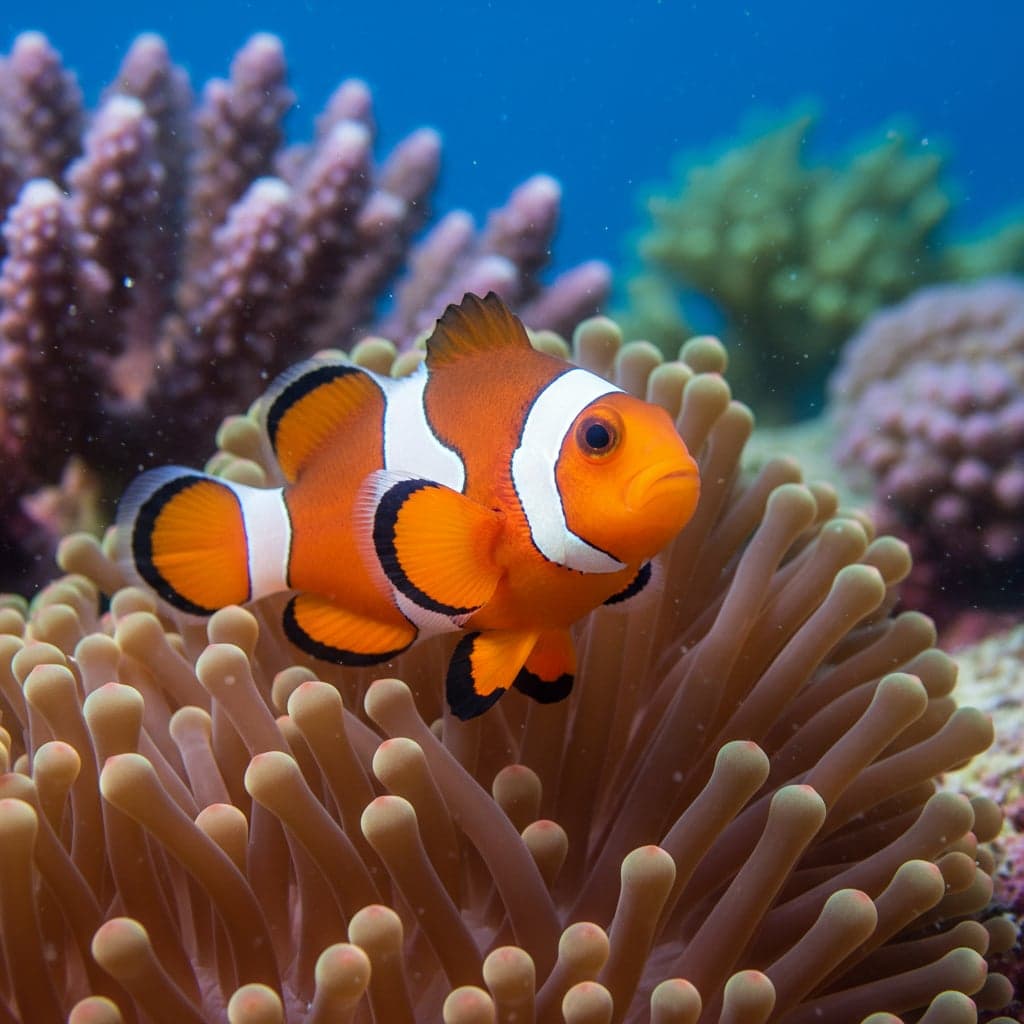
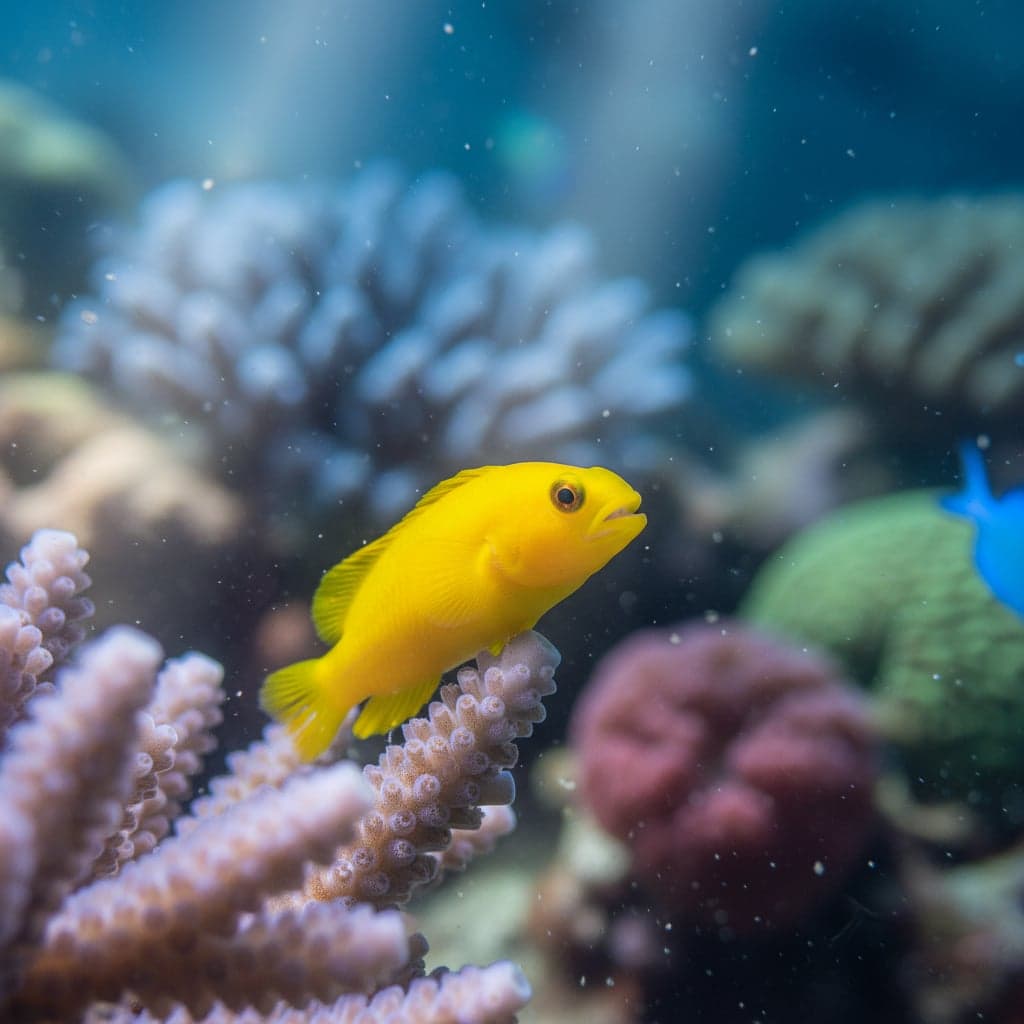
Robust marine fish in different niches in a tank large enough to dilute territorial pressure: wrasses, larger gobies, angelfish, anthias, clownfish. Skip other tangs unless the system is very large. Skip passive species that cannot compete at feeding stations.
Reef safety is genuine for coral. A. tennentii grazes algae, not polyps, and does not have the sessile-invertebrate picking behaviour of many dwarf angels. That is the mechanism behind the reef-safe label — diet and jaw use, not a personality trait. It may eat desirable macroalgae and may knock loose frags while turning in tight rockwork, but it is not a coral predator. Ornamental shrimp and snails are typically left alone. Fish-only systems also suit it if you want the look without reef husbandry.
Breeding
Pelagic spawner with planktonic larvae. Not a home-aquarium breeding project. Specimens in the trade are wild-collected. Select fish that are already eating greens in the dealer's system, with clear eyes and no obvious flashing or spots. A bargain thin tang is rarely a bargain after quarantine medication, food and time.
Common Health Issues
Large Acanthurus share the family's vulnerability to marine ich (Cryptocaryon irritans) and velvet (Amyloodinium ocellatum), especially after capture and shipping stress. The Vampire Tang is often described as hardier than powder blues; hardier still means you quarantine, not that you skip it. A four-week quarantine protocol in a bare hospital tank lets you observe and treat without dosing copper through a reef's rock and sand. Display outbreaks of Cryptocaryon in systems full of live rock are slow, expensive and demoralising — prevent them at the door.
Once established, keep stress low: correct tank size, strong flow, stable salinity, and a herbivore diet that does not leave the fish empty for half the day. HLLE can appear with poor nutrition and chronic water-quality neglect; fix those before chasing supplements. Flashing, heavy respiration, white spots or a dusty sheen mean hospital treatment now, not "watch for a few more days" in the show tank.
Head and lateral line erosion is the slow failure mode when greens are an afterthought and organics climb for months. Correct the diet and the water before dosing additives at a fish that is simply underfed and overstressed.
In a genuinely large, oxygen-rich system with continuous greens and a clean quarantine exit, A. tennentii is a striking, reef-safe centrepiece — fangs included, coral colonies usually not.