Whitecheek Tang
The Whitecheek Tang (Acanthurus nigricans) is a striking black surgeonfish with a white cheek patch — a reef-safe algae grazer that can be ich-prone, for experienced keepers.

Whitecheek Tang
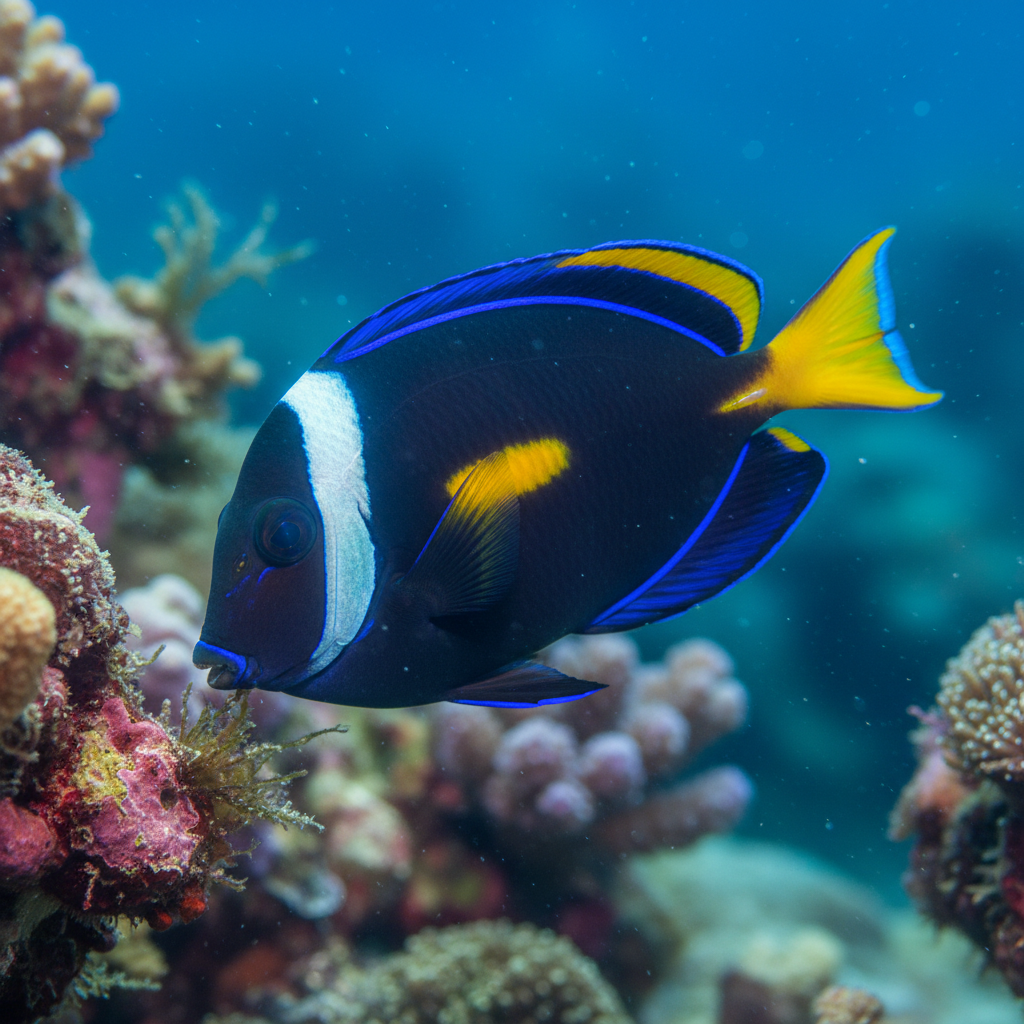
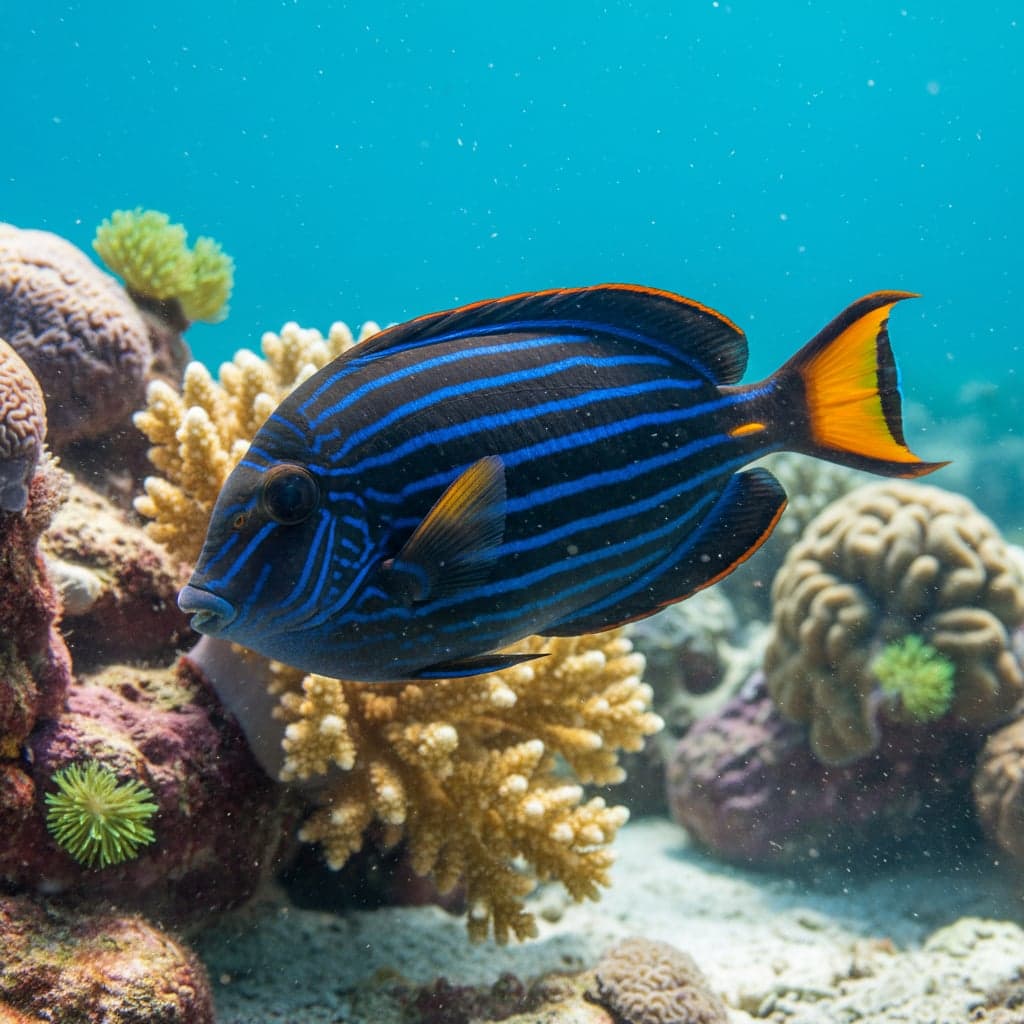
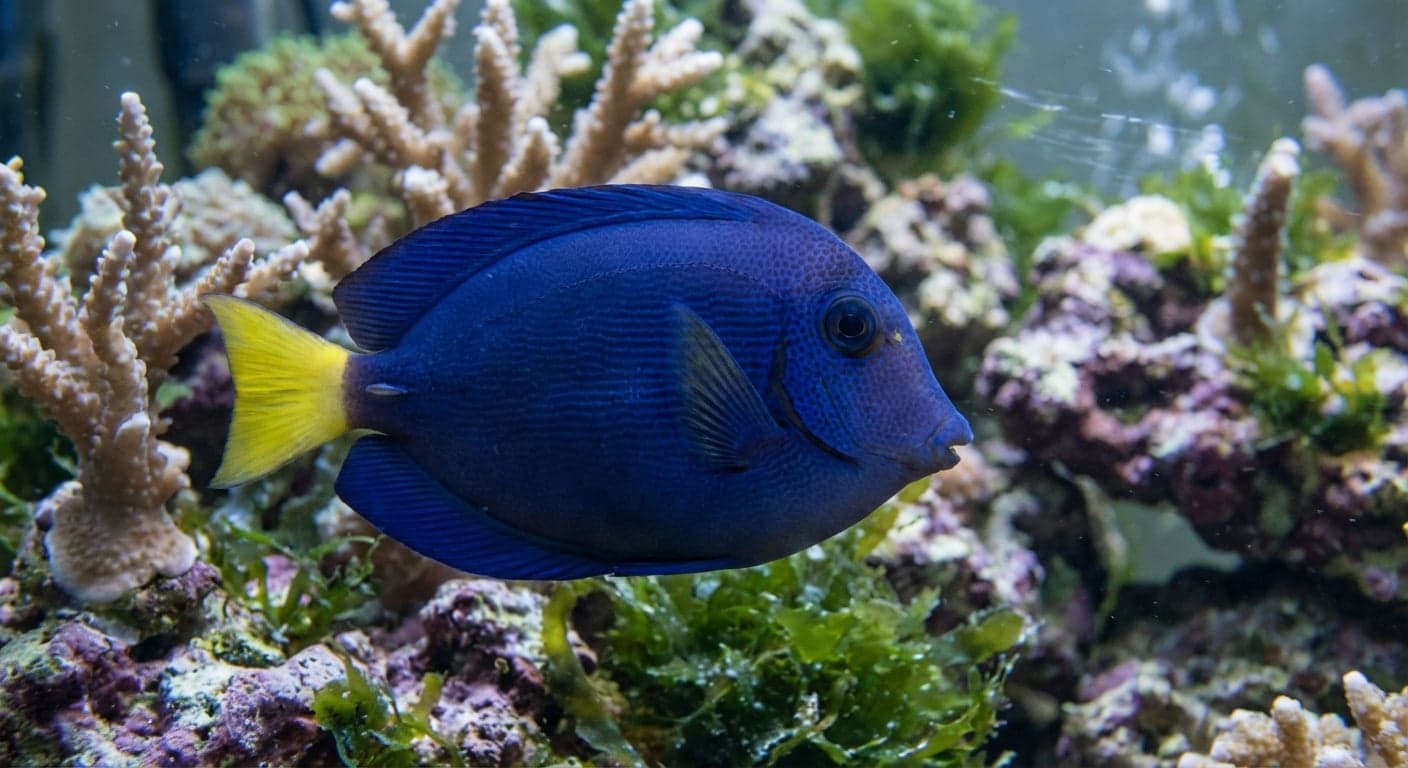
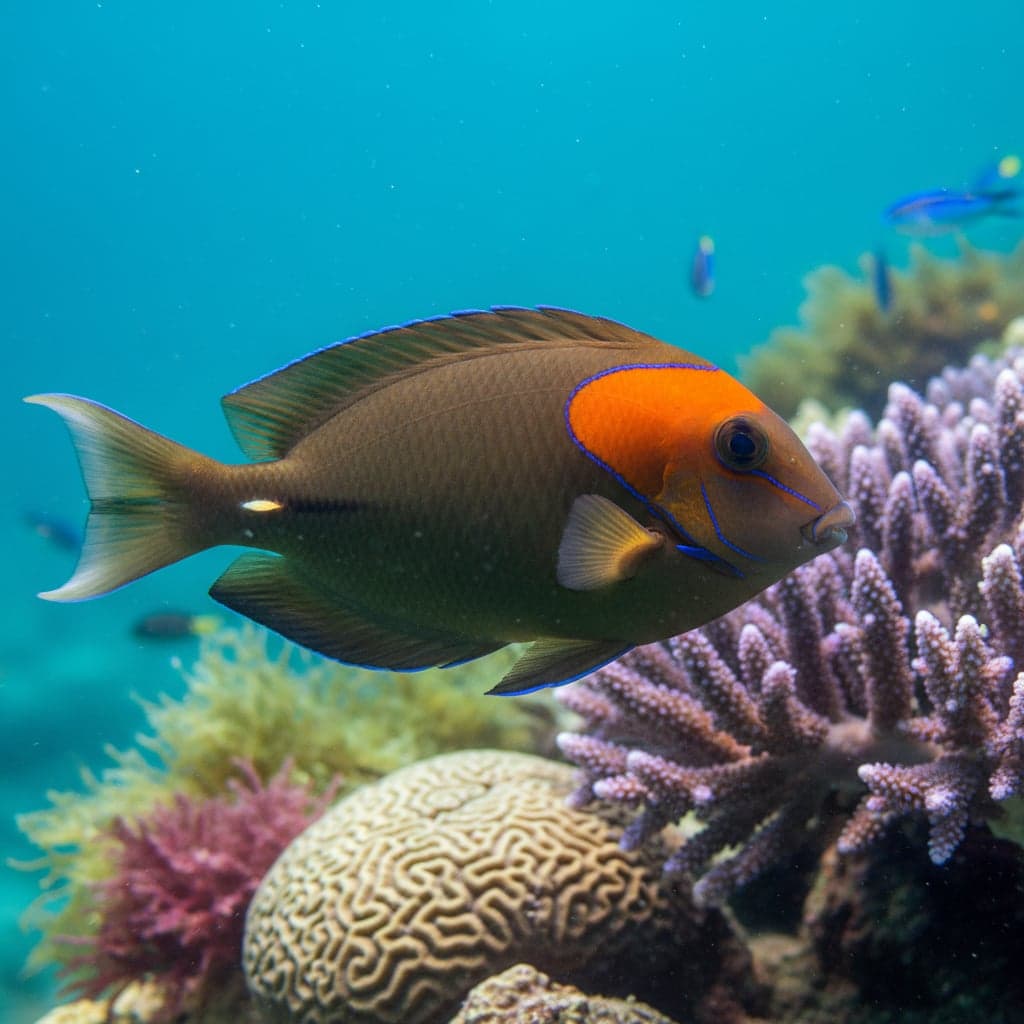
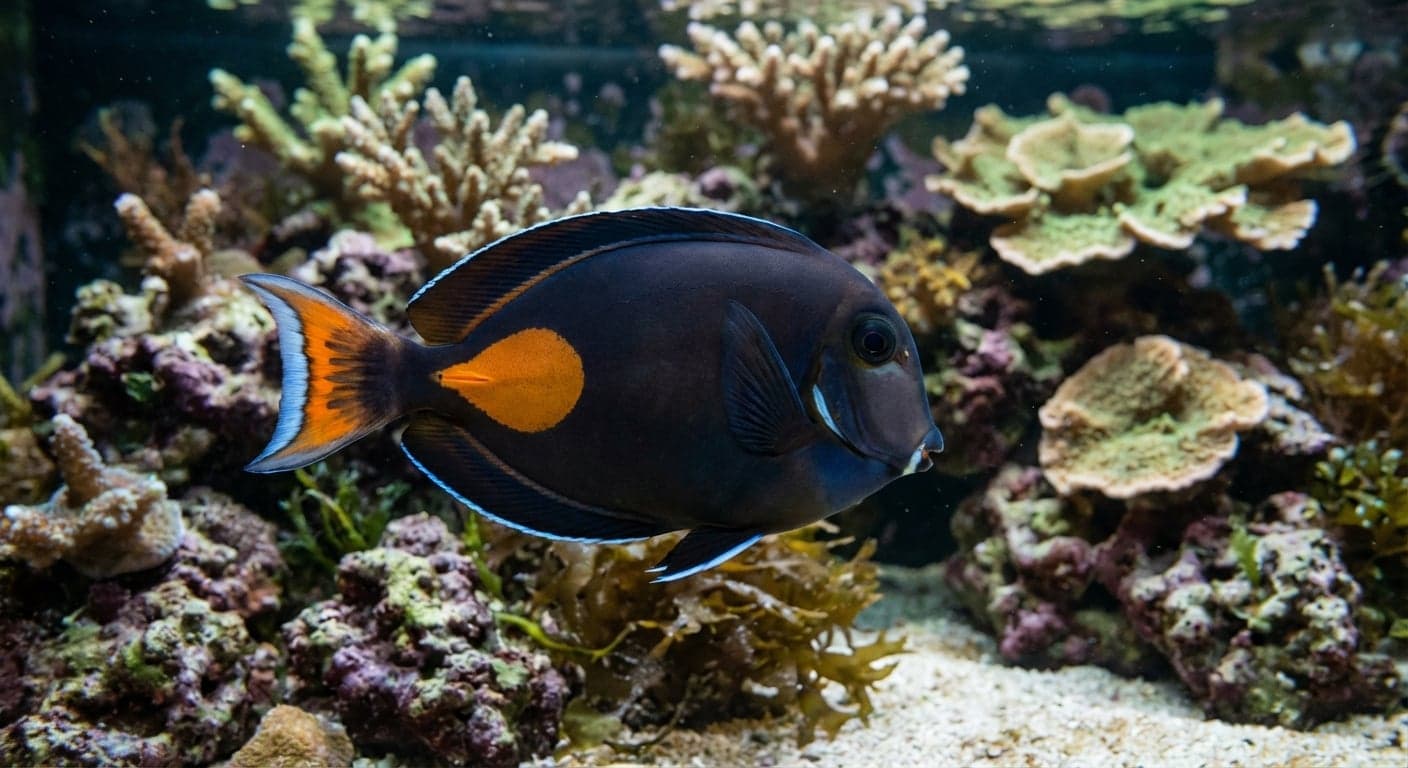
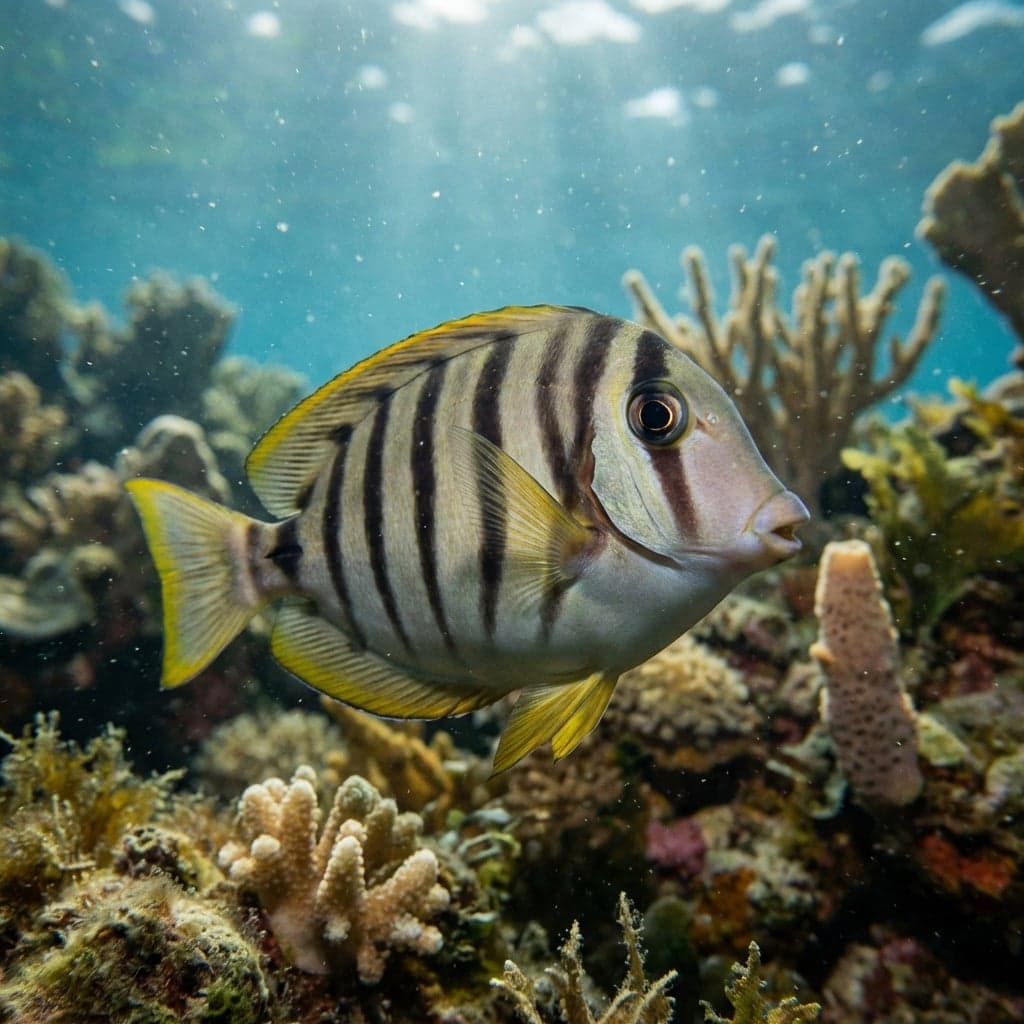
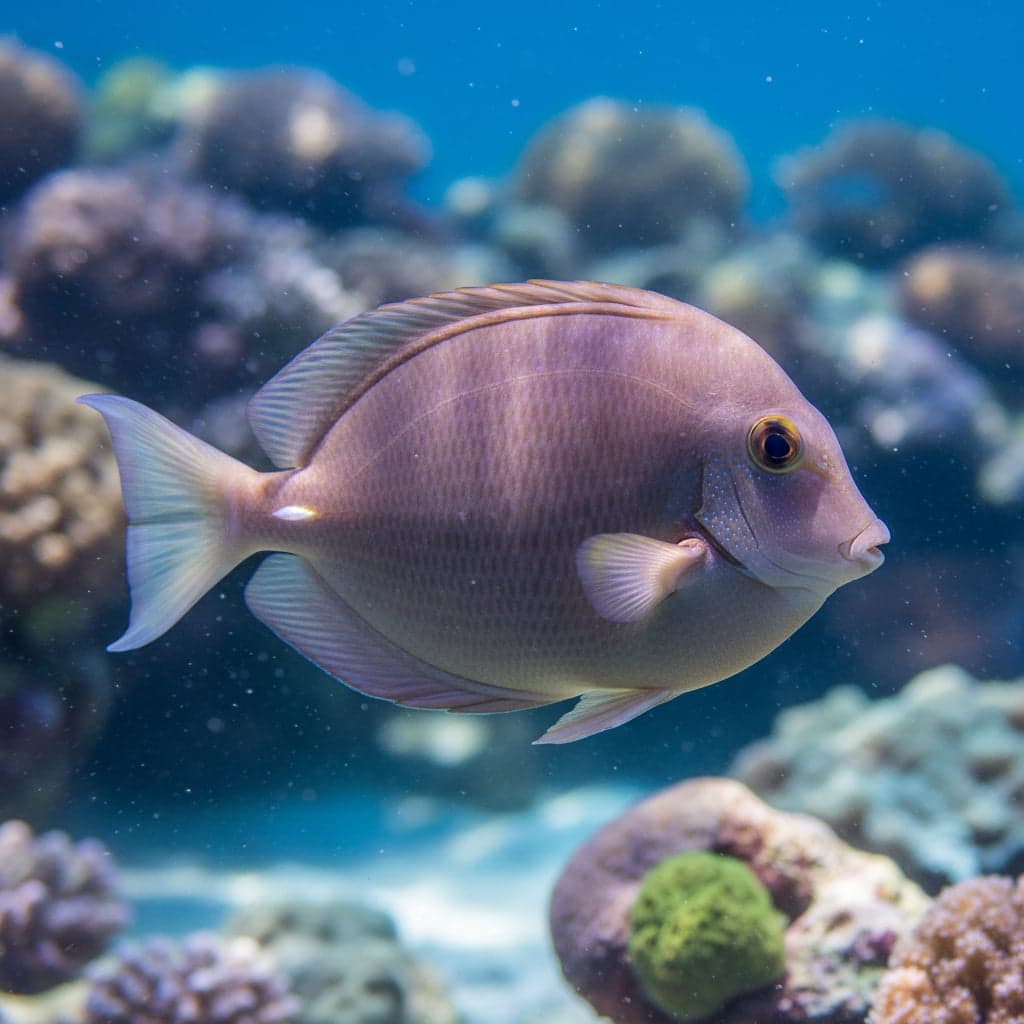
The Whitecheek Tang (Acanthurus nigricans), also sold as the gold-rim or powder-black surgeonfish, is a dark-bodied Pacific acanthurid marked by a bright white patch beneath the eye, yellow margins on the dorsal and anal fins, and a yellow-flushed caudal spine. Adults reach about 21 cm (8 inches). It is an active, reef-safe algae grazer — and it has a fair reputation for shipping stress and ich susceptibility, which is why frontmatter places it at Intermediate rather than among the easiest tangs.
Shop labels sometimes blur this fish with Acanthurus japonicus (another “goldrim / whitecheek” common-name cluster). Confirm the species by the solid dark body and discrete white cheek blotch of A. nigricans before you plan husbandry around the wrong fish.
As with all tangs, swimming length and grazing surface are the real price of admission. Temperament toward other surgeonfish is the second price. Frontmatter lists solitary for good reason: one whitecheek per system is the default outside very large reefs.
Natural Habitat & Origin
Acanthurus nigricans ranges widely across the tropical Pacific and into parts of the Indian Ocean, grazing algae on clear outer reefs and reef crests with strong water movement and high oxygen. It works rock faces and rubble as a roaming herbivore, not a cave specialist.
In the aquarium recreate grazing surface and open water: abundant mature live rock, strong chaotic flow, high oxygenation and uninterrupted swimming lanes. A short, tall nano with no straight run produces a paced, stressed surgeonfish — the classic setup that turns an ich-prone species into a spot-covered story.
Care Requirements
Stable marine water with serious turnover: salinity about 1.024–1.026, pH 8.1–8.4, temperature 24–26°C (75–79°F). Plan on about 340 litres (around 90 US gallons) or more, and prefer tanks that are long, not just tall. Volume without length still fails an active acanthurid.
Strong flow and surface agitation matter. Tangs are high-oxygen fish; warm, stagnant corners invite disease. Aim for turbulent, well-aerated water rather than a single gentle gyre that leaves dead spots behind rock. Zero ammonia and nitrite, nitrates kept reasonable — see ammonia and nitrite and nitrate.
Quarantine is mandatory for this family. Surgeonfish are among the most reliable importers of marine ich (Cryptocaryon irritans) and marine velvet (Amyloodinium ocellatum). This species ships and acclimates less forgivingly than some harder tangs; a proper QT period with observation or prophylactic treatment before the display saves reefs from copper emergencies later — medications belong in hospital tanks, not on sessile inverts. Follow a quarantine protocol.
Use the Aquarium Tracker to log salinity, temperature and your change schedule; chronic nitrate and oxygen neglect show up as dull colour and HLLE risk long before the fish stops swimming.
Diet & Feeding
Herbivore first. Wild fish spend the day rasping algae. In captivity the staple is dried marine algae (nori) on a clip, spirulina and herbivore pellets or flakes, and algae-based frozen foods. Occasional meaty items are fine as a supplement; they are not a substitute for greens. Frequent small offerings suit continuous grazers better than one large feed.
Mature live rock with natural film algae between meals is part of the diet, not decoration. A sterile, over-cleaned tank forces the tang onto prepared foods alone and raises the odds of weight loss and lateral line issues. Leave a back pane or rock face lightly filmed rather than scraping every surface weekly. If the rock is bare and the nori is ignored, solve feeding in QT or hospital before display life gets harder. Body shape tells the truth: a pinched dorsal profile is an emergency diet problem, not a “lean look.”
Marine diets and feeding schedules expand on timing for grazers.
Behavior & Temperament
Semi-aggressive and territorial toward other tangs, especially other Acanthurus. In anything but a very large system, keep it as the only surgeonfish. Introduce thoughtfully — last among similarly assertive fish often works better than first. The caudal spine is a real defensive weapon; net and handle with clear awareness of that yellow scalpel.
Toward unrelated fish it is usually manageable if space and food are adequate. Hunger and crowding turn mild pacing into chasing. Solitary behaviour in frontmatter does not mean the fish is shy — it means do not stock a tang community in a standard reef and hope charts make it peaceful.
Tank Mates
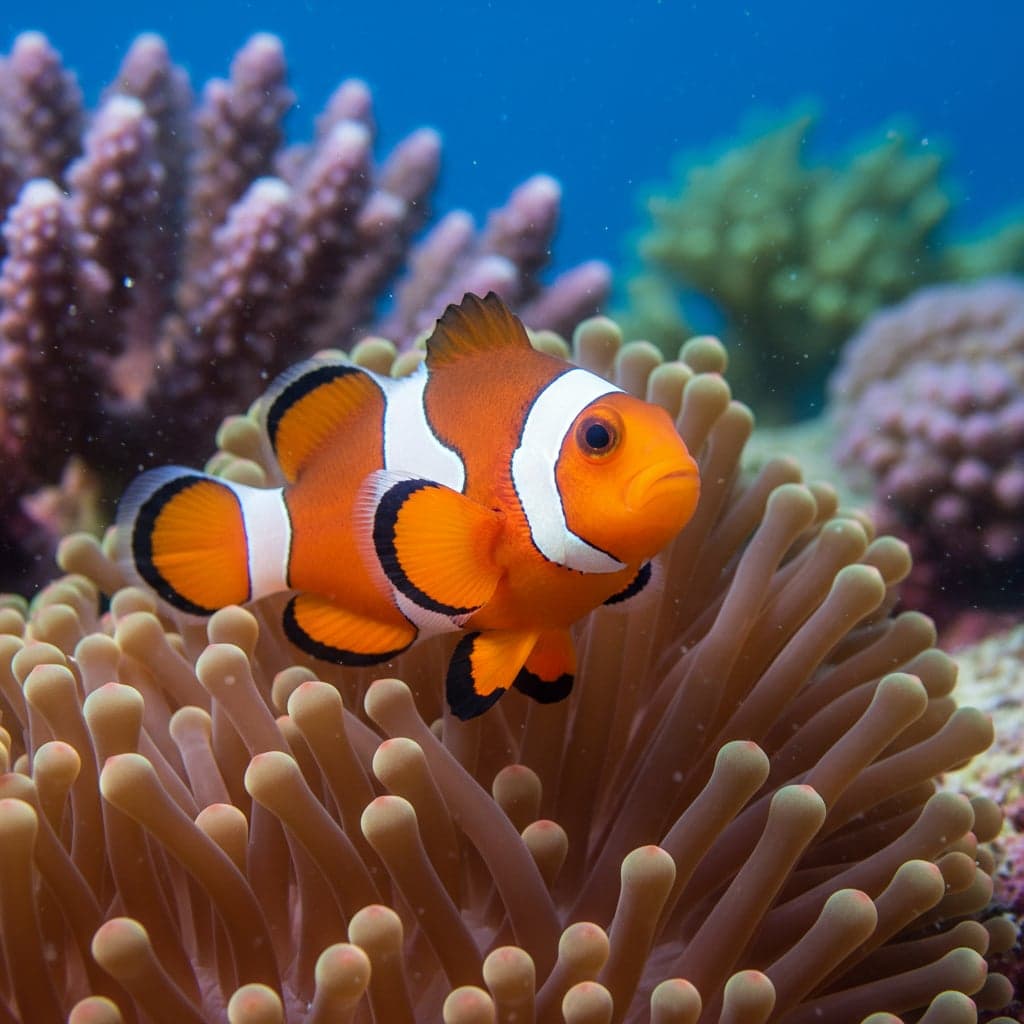
House with robust fish in different niches: wrasses, angelfish, larger gobies, anthias, common clownfish and similar in a tank large enough to dilute disputes. Avoid other tangs — yellow tang, kole, Caribbean blue tang and similar — unless the system is truly large and grazing territory is split by aquascape.
It is reef-safe with corals and sessile inverts — it grazes algae, not polyps — which makes it a strong large-reef herbivore when the volume and quarantine are honest.
Breeding
Acanthurus nigricans is a pelagic spawner with a long planktonic larval stage and is not bred in the home aquarium. Trade specimens are wild-collected. Captive-breeding breakthroughs in surgeonfish remain specialist territory, not shop-floor normal for this species. Wild collection plus ich risk is exactly why QT is not optional.
Common Health Issues
Notably susceptible to marine ich and velvet when stressed by capture, shipping or poor oxygen. Head and lateral line erosion (HLLE) tracks vitamin-poor diets, stray voltage and chronic dirty water. Quarantine every fish. Keep flow high, greens constant and nitrates in check.
Choose a specimen already eating nori or herbivore preparations when possible. A thin, clamped whitecheek rushed onto a show reef is how copper ends up dumped on inverts. Prove feeding and parasite status in QT, give the adult the swimming room the 21 cm body requires, and this gold-rimmed dark tang is a rewarding reef-safe grazer for intermediate keepers with large, stable systems. Undersize the tank or skip quarantine and it becomes another paced, spot-covered tang story.