Yellow Teardrop Butterflyfish
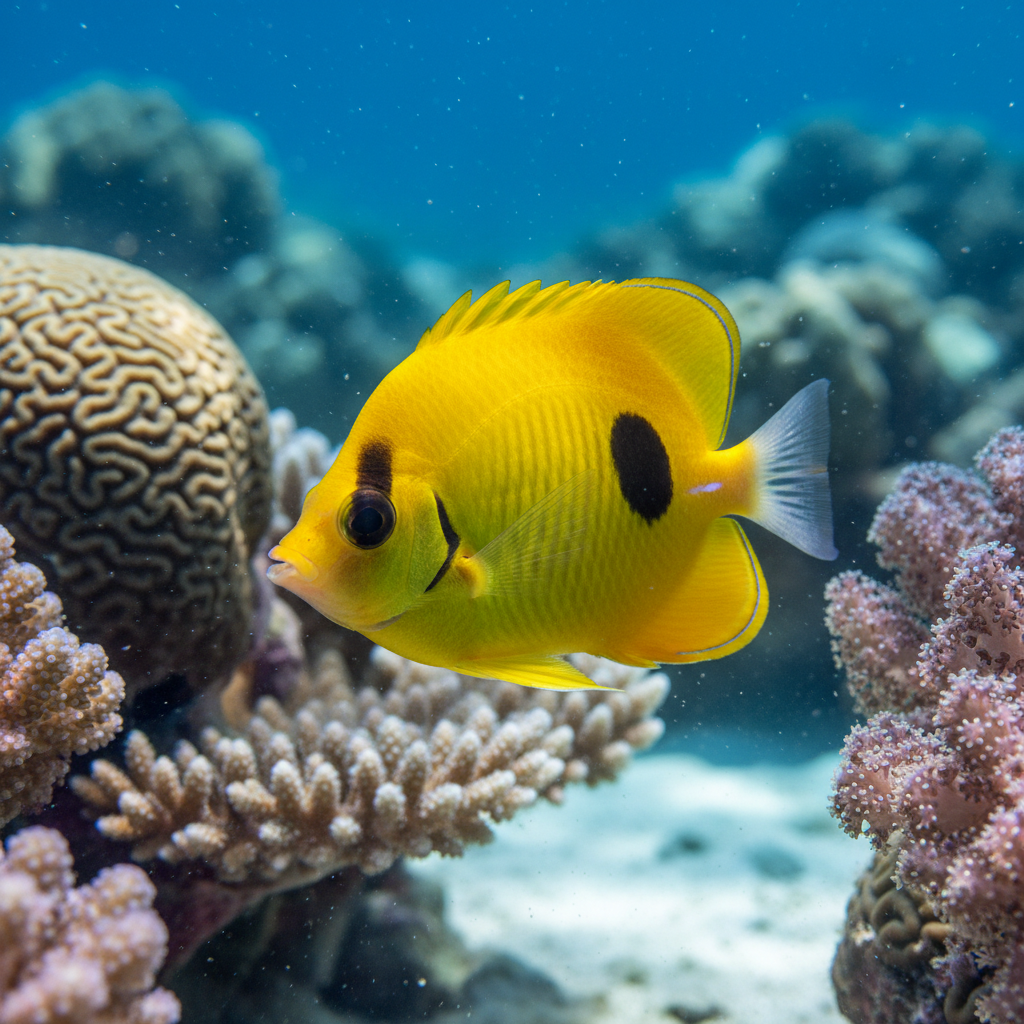
The Yellow Teardrop Butterflyfish (Chaetodon interruptus) is a bright golden Indian Ocean butterflyfish — an omnivore best kept with reef caution by experienced keepers.

Yellow Teardrop Butterflyfish
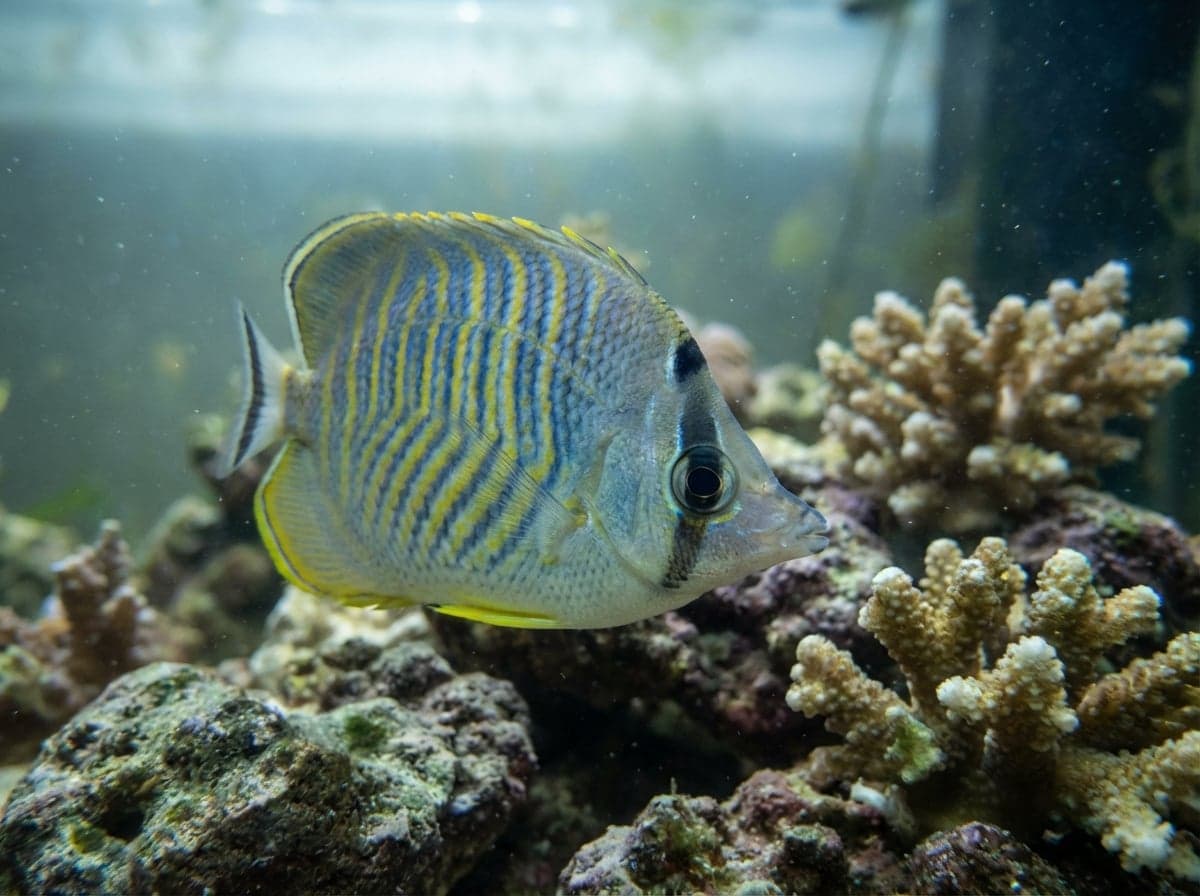
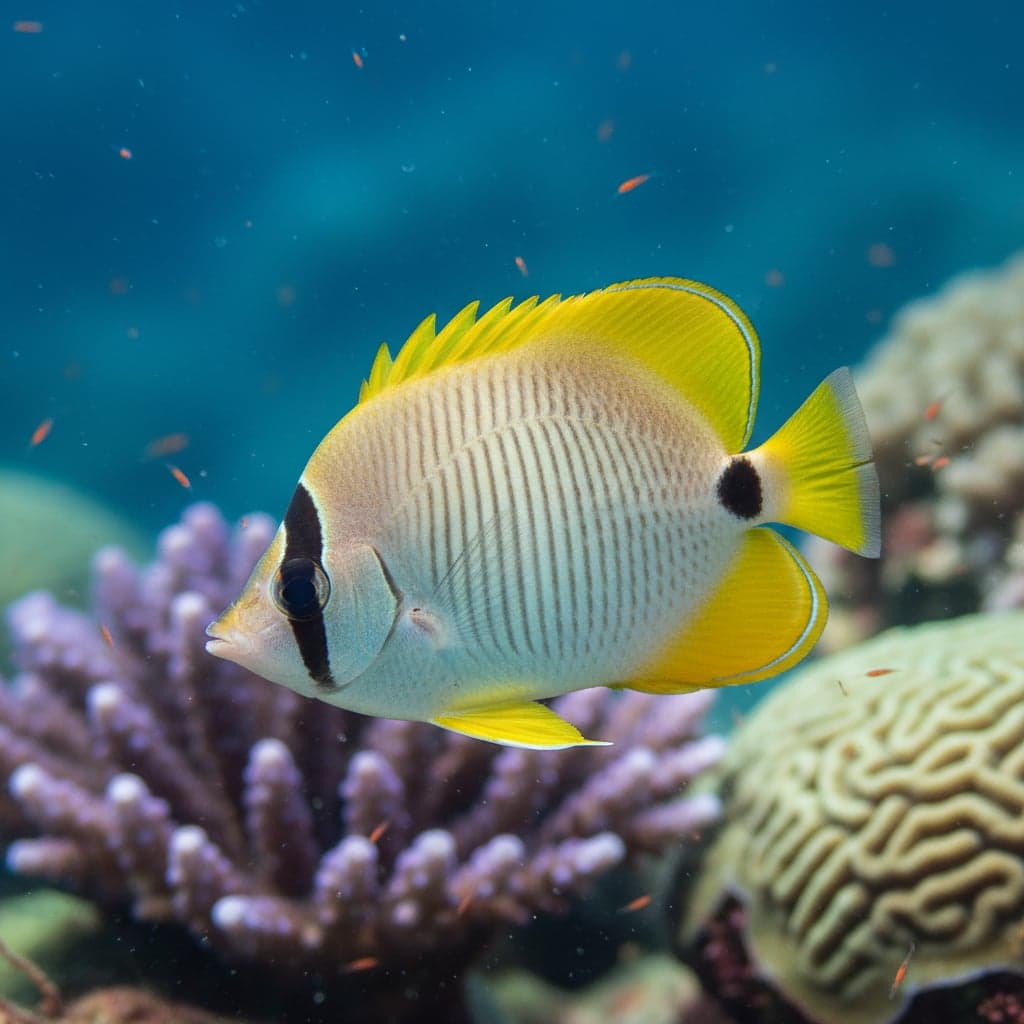
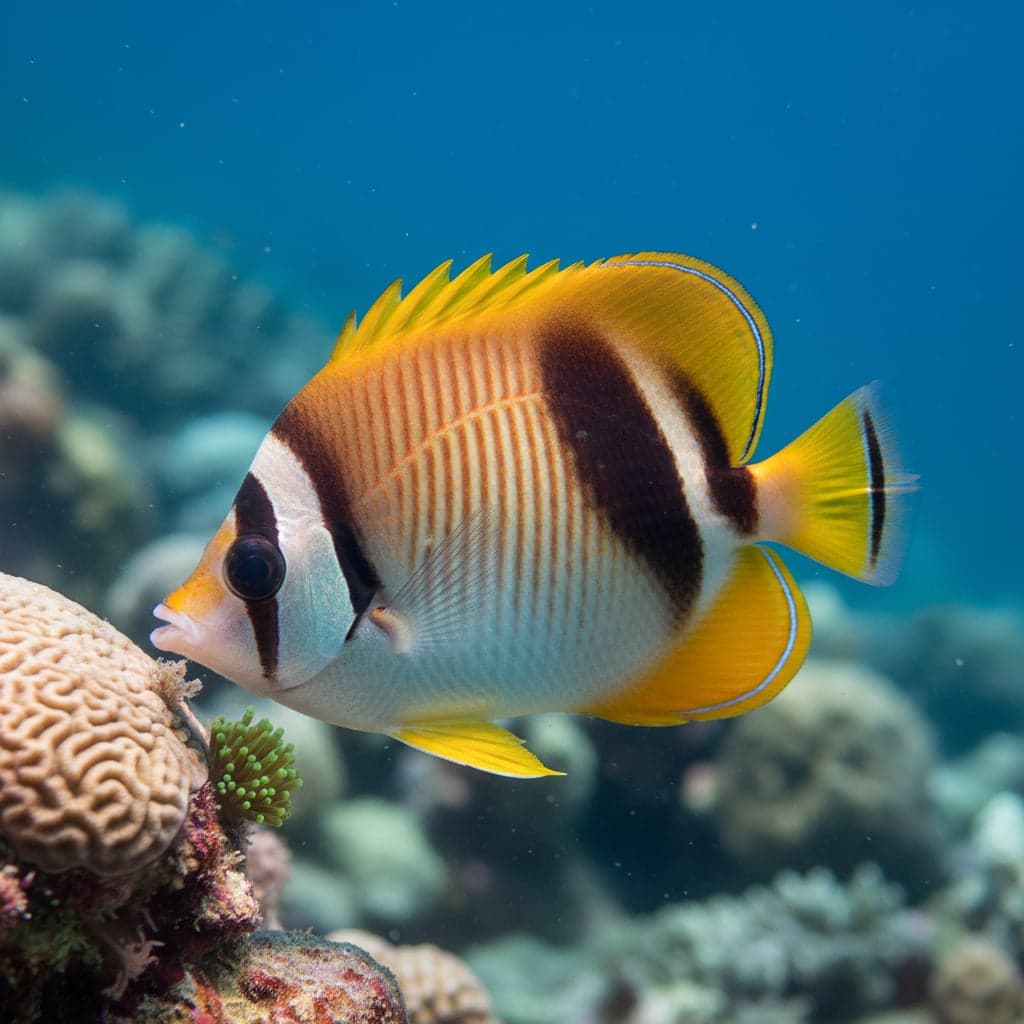
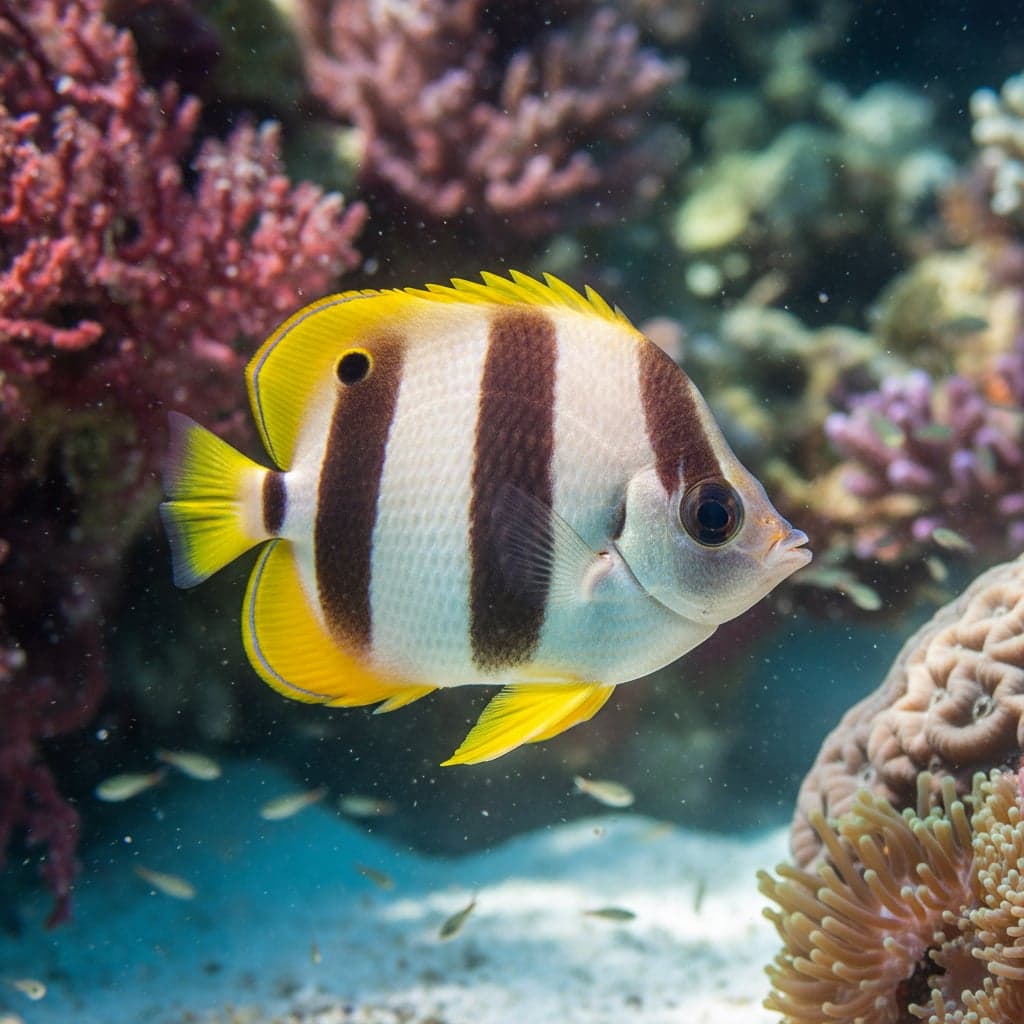
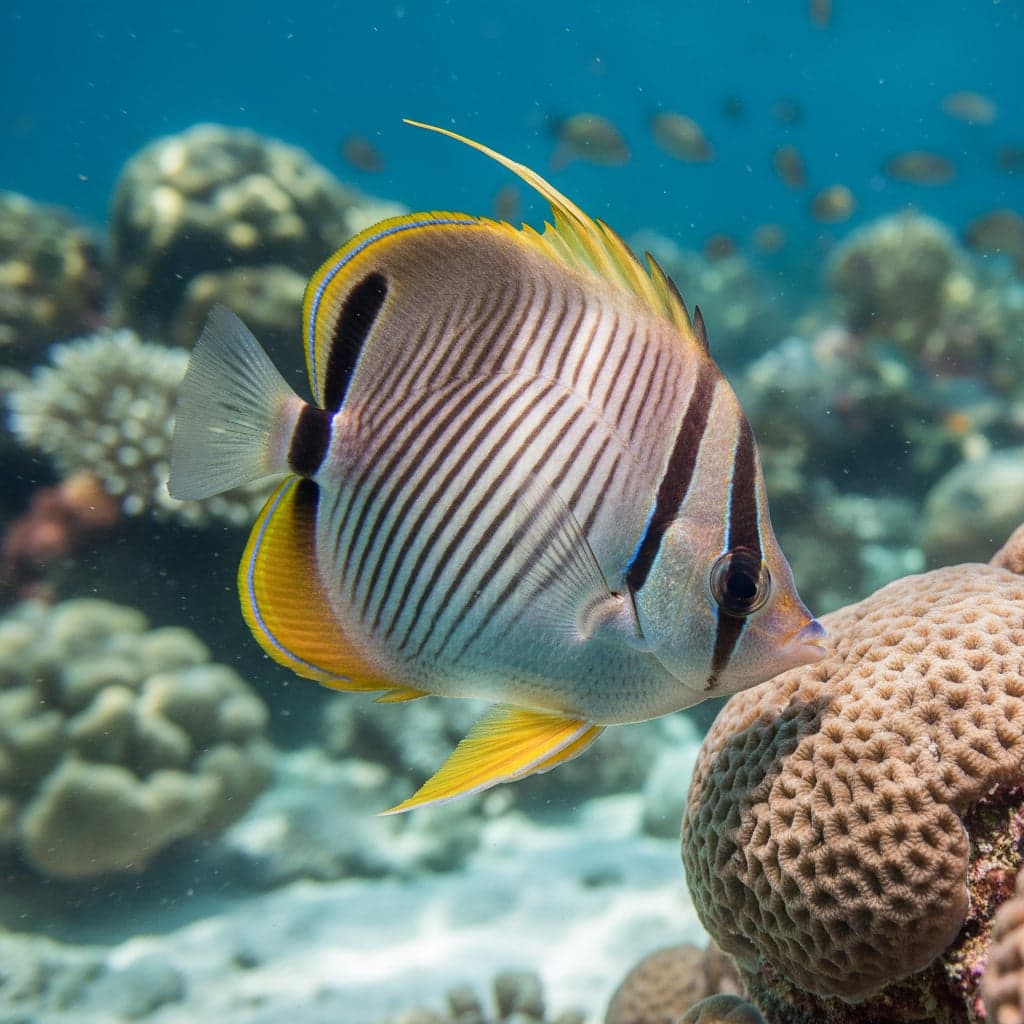
The Yellow Teardrop Butterflyfish (Chaetodon interruptus) is the Indian Ocean's bright, golden answer to the Pacific teardrop — a clean yellow body, a black eye-band, and a single bold black teardrop high on the flank. It looks simple until you watch it work a rock face: the narrow snout and continuous picking are the whole story. Handsome and reasonably hardy for a butterflyfish, it is still a chaetodon first — an omnivore whose wild menu includes coral polyps — so reef keepers should treat every coral as provisional until that individual proves otherwise.
Buy it for a fish-focused system or a reef you are willing to edit. Do not buy it because the colour photograph looked peaceful next to a table Acropora.
Natural Habitat & Origin
Chaetodon interruptus ranges across the western and central Indian Ocean east toward Sumatra, on coral-rich reef flats, slopes and lagoons roughly from a couple of metres down into the mid-tens. Adults are usually seen in pairs, and sometimes in small loose groups, foraging over live coral and mixed rubble rather than hanging in open water. The diet in the wild is a working mix of coral polyps, small benthic invertebrates, worms and filamentous algae — not a specialist obligate corallivore in the sense of some Chaetodon that starve without live polyp tissue, but not a plankton picker either.
That mixed foraging is why aquarium success hinges on a mature rockscape with something left to pick at, not on a bare glass box and a once-daily pellet. In the tank it wants live rock with crevices and overhangs, calm neighbours, and enough open mid-water to patrol between grazing stops. A thin sand bed is fine; the fish is not a burrower, but it does work the rock–sand interface for small prey.
Care Requirements
Hold stable marine chemistry: salinity about 1.024–1.026, pH 8.1–8.4, and temperature 24–26°C (75–79°F). Ammonia and nitrite at zero, nitrate kept modest, and alkalinity steady matter more than chasing a perfect number on any one day. Butterflyfish punish parameter swings and dirty shipping water long before they punish a slightly imperfect décor.
Frontmatter sizes this species around 12 cm (about 5 inches) with a minimum system of roughly 280 litres (about 75 US gallons). That volume only works if the footprint gives real swimming length and the rockwork is not a solid wall from glass to glass. A long 280 L beats a tall cube of the same litres. More space helps when you keep a bonded pair — the behaviour field is Pair for a reason — and when you want several peaceful mid-water fish alongside it.
Quarantine is not optional. New Indian Ocean chaetodons arrive stressed, often thin, and frequently carrying marine ich or velvet. Run a proper quarantine protocol, confirm solid feeding for at least two weeks, then move the fish. Skipping QT to “get it into the display faster” is how a pretty yellow butterflyfish takes down a whole reef community.
Use the Aquarium Tracker to log salinity, temperature and nitrate against your own readings — drift shows up in the log before it shows up as clamped fins.
Diet & Feeding
This is an omnivore that must be weaned onto prepared foods. In the wild the menu includes coral tissue; in glass the job is to replace that with frozen mysis, enriched brine, finely chopped seafood, quality marine angel or butterfly preparations, and foods with real marine algae or spirulina content. Feed several small meals a day. A butterflyfish that grazes continuously on the reef does poorly on one large evening dump that other fish clear first.
Establishing appetite is the make-or-break week. Choose a specimen already eating at the shop if you can. In a new tank, lean on a mature, microfauna-rich system so there is something to pick between meals. Live blackworms or live brine can bridge a stubborn new arrival onto frozen, then drop the live foods once the fish hits prepared diets reliably. Refusal lasting more than a few days in QT is an emergency, not a personality quirk — chaetodons go downhill fast once body condition slips.
Do not expect nori alone to carry it, and do not expect a “reef-safe butterflyfish gel” label to stop polyp nipping. Feeding well reduces boredom nipping; it does not rewrite the species.
Behavior & Temperament
Peaceful toward unrelated fish in a calm community. It spends the day working rock faces, hovering under ledges, and following a pair partner if one is present. Aggression is usually reserved for other butterflyfish of similar shape and colour, especially other teardrop-patterned chaetodons. In modest tanks keep one individual or a known pair; do not mix a crowd of lookalikes and hope territory dissolves.
It is easily bullied by damsels, triggers, large angels and pushy wrasses that claim the same rock real estate. A hidden butterflyfish is often a starving butterflyfish — watch whether it reaches food in the first thirty seconds of a feed, not only whether food entered the tank.
Tank Mates
Good company is other peaceful marine fish that do not compete face-on for the same crevices: anthias, cardinalfish, peaceful wrasses that stay off its foraging lines, clownfish that keep to anemones or host substitutes, and calm tangs in tanks large enough for both. Avoid aggressive damsels, large triggers, and other butterflyfish unless the system is big and the pair bond is already settled.
Reef status is the honest friction point. Because the wild diet includes coral polyps and small invertebrates, treat this fish as reef-safe with caution at best. LPS, zoanthids, soft corals, feather dusters and ornamental shrimp are the usual casualties. Hardy softies and a fish-only-with-live-rock layout are safer bets than a mixed SPS show tank. If you will not accept coral loss, pick a different centrepiece.
Breeding
Chaetodon interruptus is a pelagic broadcast spawner. Pairs may court and release eggs into the water column; the larvae are planktonic and are not reared in home aquaria. Trade fish are wild-collected. Pair behaviour in the display is worth having for temperament and confidence, not as a breeding project.
Common Health Issues
Moderately hardy for a butterflyfish, still vulnerable to Cryptocaryon irritans and Amyloodinium ocellatum after collection and shipping. Thin fish, rapid breathing, scratching, or peppering on the fins are reasons to treat in isolation, not to dose a reef and hope. Bacterial issues follow starvation and shipping damage more often than they appear out of clean water.
The practical health programme is dull and effective: quarantine, stable salinity, frequent varied feeds, and tank mates that let it eat. A well-fed Yellow Teardrop in a peaceful 280 L-class system is a bright, active Indian Ocean butterflyfish; a stressed, outcompeted one is a slow decline with excellent colouration until it is not.