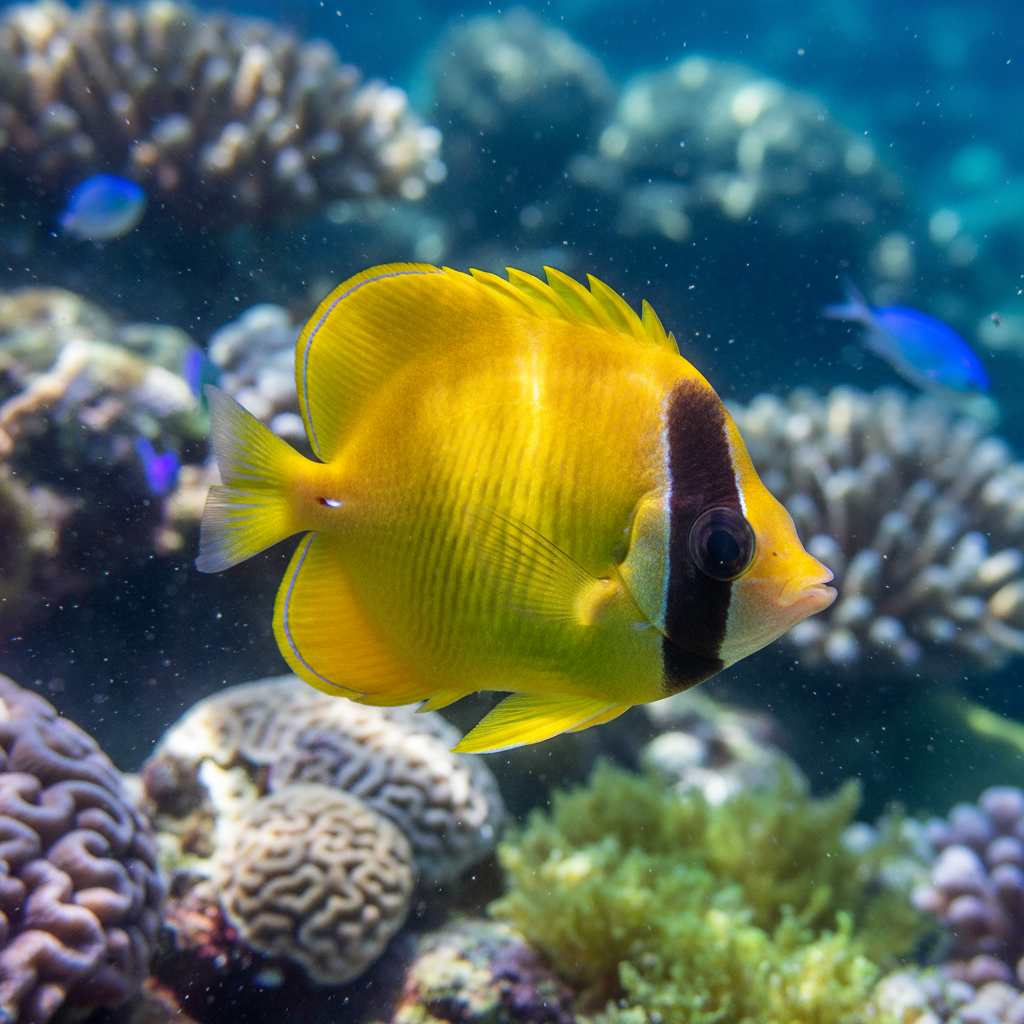
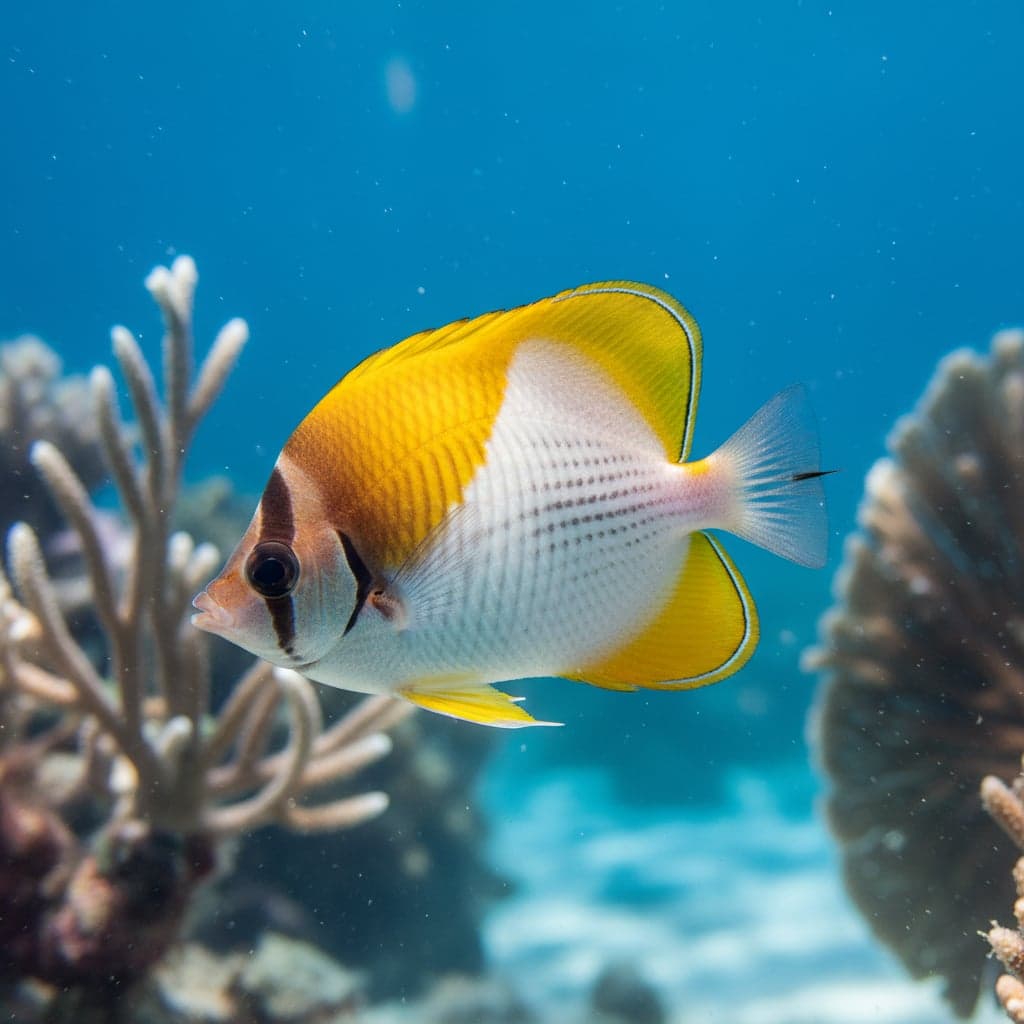
Zoster Butterflyfish
The Zoster Butterflyfish (Hemitaurichthys zoster) is a hardy, plankton-feeding pyramid butterflyfish — peaceful, reef-safe and one of the few coral-safe butterflyfish.

Zoster Butterflyfish
The Zoster Butterflyfish (Hemitaurichthys zoster), also called the brown-and-white or black pyramid butterflyfish, is a wonderful exception to the usual butterflyfish rules. Boldly marked with a broad white wedge across a dark brown-to-black body, it is a mid-water plankton feeder rather than a coral-grazer — which makes it both hardy and, crucially, reef-safe. Peaceful and happiest in a group, a small shoal drifting and feeding above the rockwork is a striking sight in a reef aquarium.
For keepers who want a butterflyfish that can be trusted with corals, this is one of the very best choices — provided quarantine is treated as seriously as it is for tangs.
Open water and frequent plankton-style feeds are the price of admission. Frontmatter lists shoaling because wild fish aggregate; in a home aquarium that means one fish, a pair, or a small group in a tank large enough to support mid-water schooling — not five butterflies stuffed into a short reef.
Natural Habitat & Origin
Hemitaurichthys zoster is found in the Indian Ocean, gathering in aggregations over current-swept outer reef slopes and hovering in open water to feed on zooplankton drifting past. It is a social fish that lives and feeds in groups. That planktivore lifestyle is why it leaves corals alone when many Chaetodon butterflies do not.
In the aquarium it wants open swimming space above the rock, good flow to bring food particles through the water column, and ideally the company of its own kind. A heavily aquascaped box with no mid-water lane wastes what this fish does best.
Care Requirements
Stable marine conditions: salinity about 1.024–1.026, pH 8.1–8.4, temperature 24–26°C (75–79°F), with good flow. Adults reach about 16 cm (6 inches). Kept singly or in a small group, it suits a tank of around 340 litres (about 90 US gallons) or more with open water to school. It is hardier than most butterflyfish and usually settles well into a mature system — hardier is not the same as immune.
Quarantine is mandatory. Butterflyfishes, like surgeonfish, are frequent importers of marine ich (Cryptocaryon irritans) and marine velvet (Amyloodinium ocellatum). A proper QT period with observation or prophylactic treatment before the display saves reefs from copper emergencies later — medications belong in hospital tanks, not dumped on sessile inverts after white spots appear. Hypersalinity, hyposalinity and copper each have a place in QT design; none belong as panic doses on a mixed reef. Prove feeding in QT: a pyramid butterfly that ignores frozen foods is a problem to solve before it becomes the “reef-safe showpiece” on a display you cannot treat.
Use the Aquarium Tracker to log salinity, temperature and feeding frequency; chronic underfeeding shows up as a pinched look long before the fish stops schooling.
Diet & Feeding
Planktivorous carnivore. Wild fish take zooplankton in the water column — which is exactly why they leave corals alone. In captivity they usually accept foods readily: frequent small meals of frozen mysis and enriched brine shrimp, finely chopped seafood, and quality marine preparations with some algae content. Feed several small meals a day to suit mid-water grazing rather than one evening dump.
Broadcast or target feeds into the flow so the shoal can pick particles as they would on a current-swept slope. Competition with aggressive mid-water feeders can leave a polite butterfly thin; watch individuals, not just whether “the cube vanished.” Variety keeps condition up; a single frozen item forever is lazy husbandry for a fish that should look solid through the white wedge.
Behavior & Temperament
Peaceful and sociable; mixes well in a calm community. Keep singly, as a pair, or in a small group in a large tank, where shoaling behaviour shows to best effect. It rarely troubles other fish and spends much of its time feeding in open water. Shyness usually means flow, food or bullying is wrong — not that the species is naturally reclusive once settled.
Avoid reading “shoaling” as a requirement to buy six for a 340-litre tank. Start with what the volume and your QT capacity can support honestly.
Tank Mates
Good companions are other peaceful marine fish — tangs, peaceful wrasses, anthias, fairy wrasses, cardinalfish and similar. Avoid aggressive species that will bully a mid-water school. Unusually for a butterflyfish, it is reef-safe: as a plankton feeder it leaves corals and ornamental invertebrates alone, making it one of the few butterflyfish suitable for a full reef.
Do not confuse it with coral-nipping Chaetodon species on a compatibility chart that only says “butterflyfish.” Pyramid butterflies earn their reef reputation; many other butterflies do not. Species like the sunburst / Klein's butterflyfish have different diets and different coral risk.
Breeding
Hemitaurichthys zoster is a pelagic spawner with planktonic larvae and is not bred in the home aquarium. Trade specimens are wild-collected from the Indian Ocean. Captive breeding remains outside normal hobby practice for this species.
Common Health Issues
Among the hardier butterflyfish, but still susceptible to marine ich and marine velvet when stressed or newly imported — treat quarantine with the same seriousness you would for a tang. Poor appetite after shipping is a red flag; solve it in QT. Keep water quality stable, provide good flow, and feed frequently once established.
Given a peaceful tank, a mature system and a completed quarantine, the zoster butterflyfish is one of the most approachable, reef-safe and rewarding butterflies for an intermediate keeper. Skip QT or starve the mid-water feeding schedule, and even this hardy exception becomes another spot-covered butterfly story.