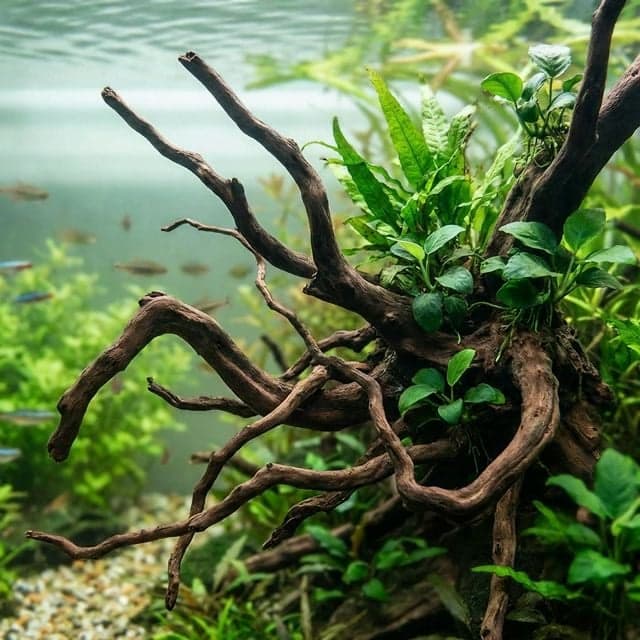
Horn Wood: The Dark Iron
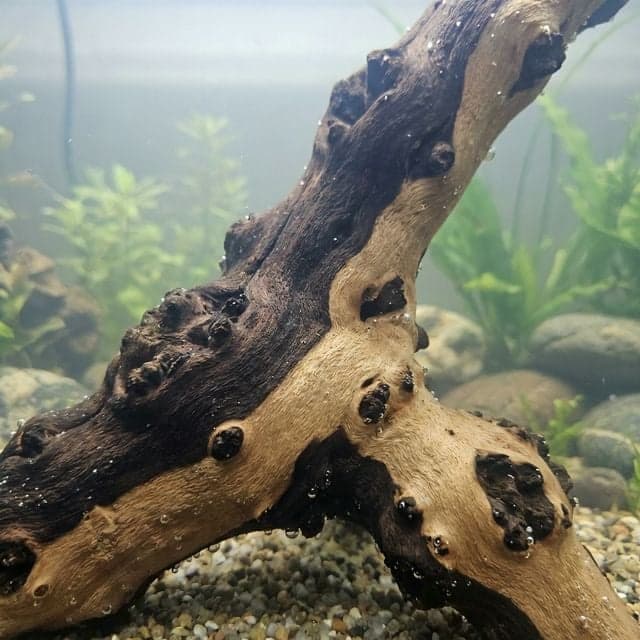
Horn Wood (Iron Wood) is a dense, heavy driftwood that sinks instantly. Perfect for creating dramatic, dark skeletons in planted tanks.
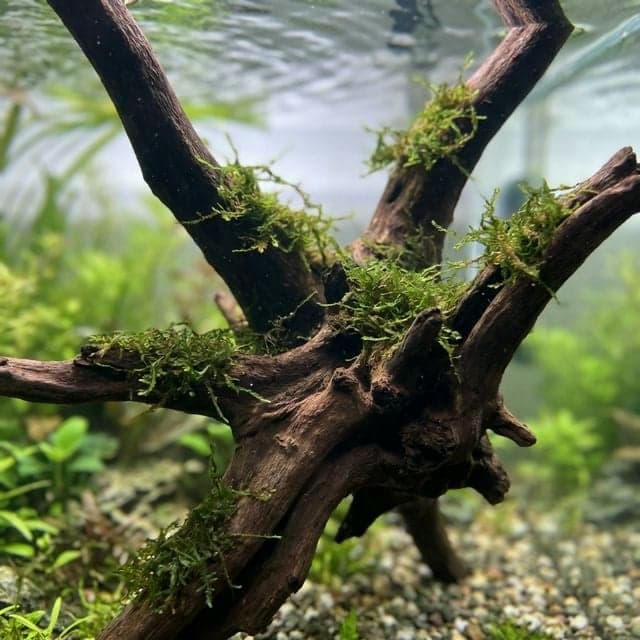
Horn Wood
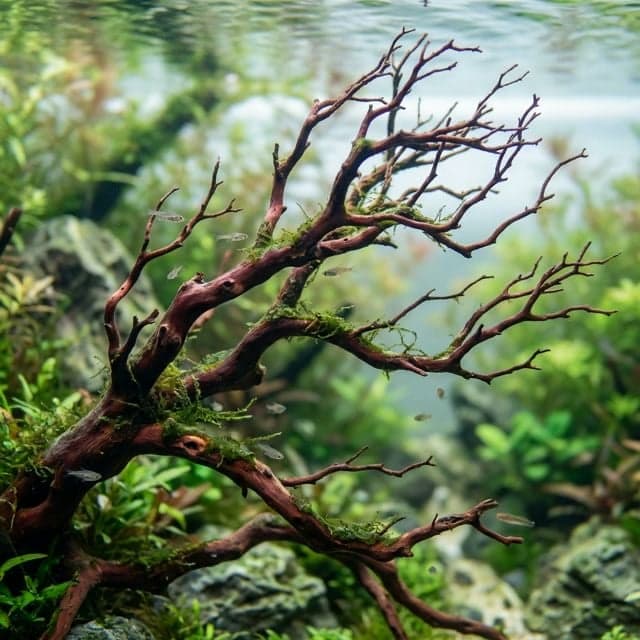
Horn Wood, often known as "Dark Iron," is a striking and unique hardscape material commonly used in freshwater aquariums. Characterized by its dark hues, twisted forms, and intricate textures, this wood comes from the roots of trees that have naturally aged and been submerged, resulting in a distinctive appearance that adds depth and contrast to aquascapes. Its natural finish allows for the creation of stunning focal points in any tank, where the deep, rich coloration interacts beautifully with aquatic plants and vibrant fish. The aesthetic qualities of Horn Wood make it a preferred choice among aquascaping enthusiasts, as it not only enhances visual appeal but also provides a natural habitat for fish and invertebrates.
The popularity of Horn Wood in the aquarium hobby can be attributed to its versatility and ability to blend with various aquascaping styles. Its robust structure allows for creative freedom in layout design, whether used as a central piece or integrated into a larger collection of hardscape materials. Its organic shapes mimic the natural environments found in streams and rivers, making it ideal for those seeking a realistic biotope setting. Additionally, as more aquascapers gravitate towards using natural materials, Horn Wood's unique qualities and dark coloration make it stand out in any collection.
Usage Guide
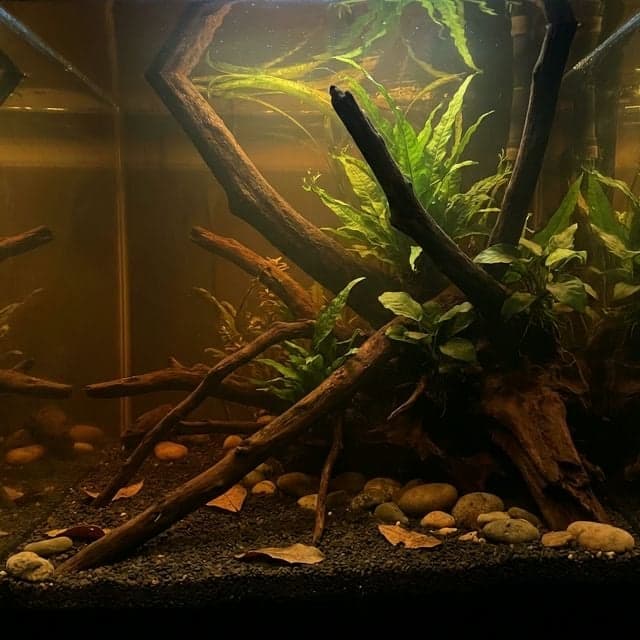
When incorporating Horn Wood into your aquarium layout, consider its shape and texture to create visually appealing compositions. Placing taller pieces of Horn Wood vertically against the backdrop can establish a sense of height in the aquascape, while smaller, shorter pieces can be arranged to create layers and depth. Stacking pieces in a slightly staggered fashion can enhance the natural look, as it resembles the way wood would be found in nature, with different planes and angles.
Pairing Horn Wood with other materials such as rocks, gravel, or substrate is an effective way to add complexity to your design. Smooth stones can complement the rough textures of the wood, while fine gravel can provide stability at the base of the structure. It is also beneficial to integrate live plants around and on the wood, as their lacing growth patterns will help unify the entire design. Be mindful of the scale of your piece relative to the tank; larger tanks can handle more substantial Horn Wood structures without overwhelming the space.
Cleaning & Preparation
Proper preparation of Horn Wood is essential to ensure it is safe and suitable for aquarium use. Follow these steps for effective cleaning:
-
Initial Inspection: Carefully inspect the piece for remaining bark, dust, or unwanted organic matter.
-
Boiling: Place the Horn Wood in a large pot of boiling water for about 1-2 hours. This process helps eliminate bacteria and parasites and also aids in softening the wood, which can facilitate bending if needed.
-
Scrubbing: After boiling, use a stiff brush to scrub away any remaining debris or dirt. Pay attention to crevices where particles may be trapped.
-
Acid Washing (Optional): If you want to ensure a more thorough clean, you can use a diluted solution of vinegar (one part vinegar to four parts water) to wash the wood. Rinse thoroughly with freshwater afterward to remove any acid residue.
-
Soaking: Finally, soak the wood in freshwater for an extended period, preferably 24-48 hours. This not only helps remove any lingering tannins but also prepares the wood for its eventual placement in the aquarium.
By following these steps, Horn Wood becomes a healthy and beautiful addition to your aquatic environment.
Impact on Water Chemistry
Horn Wood is known to leach tannins into the water, especially when first introduced into an aquarium. This process can tint the water with a natural, tea-like color, which is often appreciated by many aquascapers for its aesthetic appeal and for simulating natural habitats. In terms of water chemistry, tannins can slightly lower the pH of the water and contribute to lower general hardness (GH) and carbonate hardness (KH) levels.
While the impact on pH, GH, and KH varies by the specific piece of wood and how long it has been submerged, it is essential to monitor these parameters, especially in tanks with sensitive species. Regular water changes and using activated carbon can help manage this leaching effect over time. If you desire a neutral or alkaline environment, test the water chemistry regularly and adjust as needed.
Aquascaping Styles
Horn Wood's natural and dramatic appearance makes it suitable for various aquascaping styles. It excels in the Iwagumi style, often serving as the central focal point due to its unique shape, guiding the viewer's eye across the tank. In a Nature Aquarium setup, it can beautifully mimic the organic grace of a natural ecosystem, pairing well with both foreground and mid-ground plants to create a balanced look.
Additionally, for biotope aquariums, Horn Wood fits seamlessly into submerged environments resembling riverbeds and swamps found in tropical regions. Its dark coloration can provide an ideal backdrop for bright and vibrant fish, enhancing their overall appearance. Lastly, Horn Wood can also be utilized creatively in Scapes focusing on abstract art, allowing for the construction of dramatic, stylized arrangements that captivate and inspire.