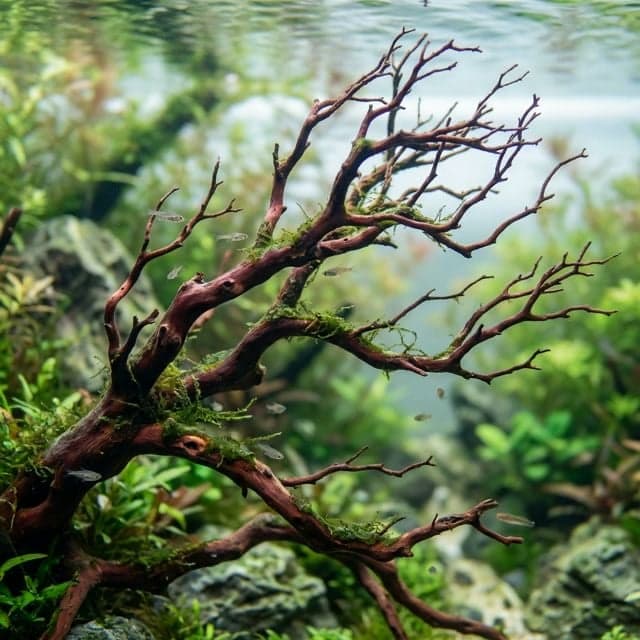
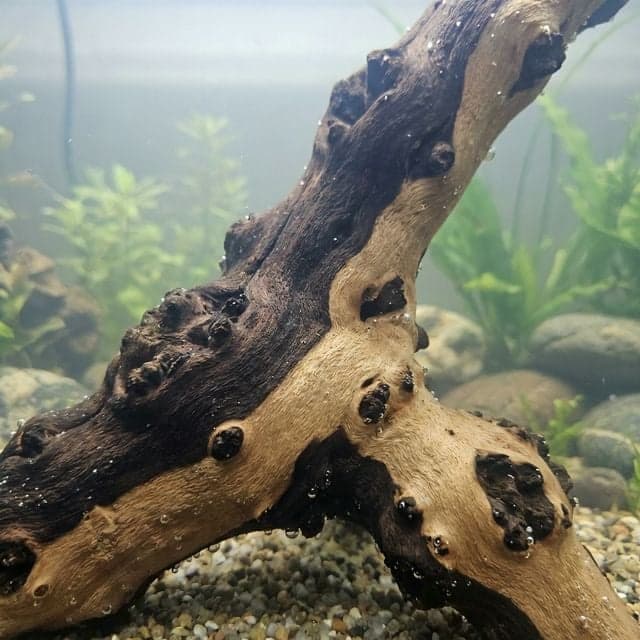
Tiger Wood: Branching Detail
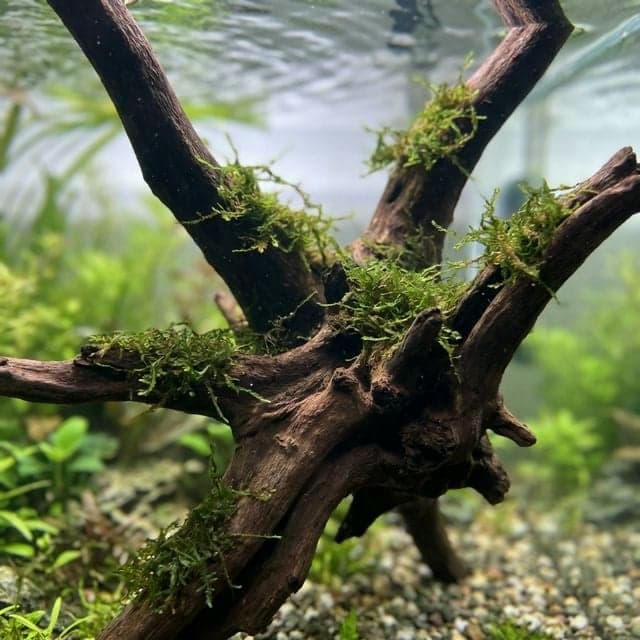
A heavily branched wood often used as an alternative to Spider Wood. Pale color with darker knots.
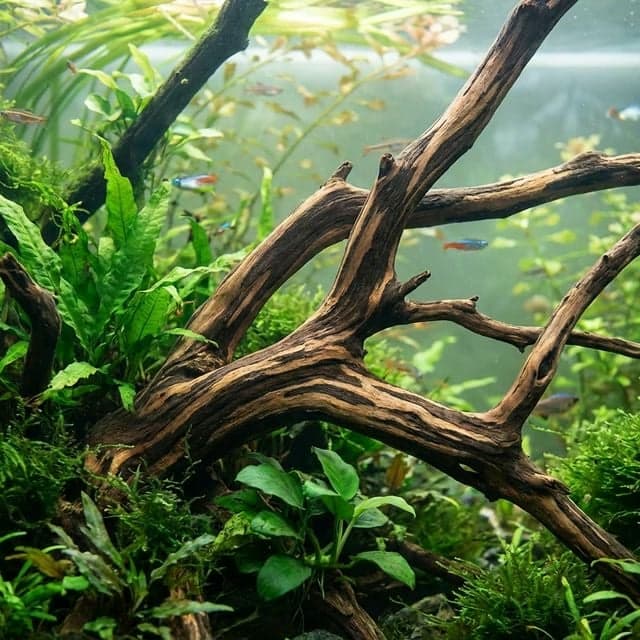
Tiger Wood
Tiger Wood, scientifically known as Lophira alata, is a distinguished hardscape material in the aquarium hobby, prized for its unique branching structure and stunning aesthetic qualities. This type of wood features intricate patterns and a rich, dynamic color palette that ranges from deep browns to golden hues, making it highly desirable for aquascapers looking to create visually striking layouts. The natural twists and turns of Tiger Wood mimic the look of underwater trees, creating a sense of depth and organic beauty in the aquarium environment. Its textured surface provides excellent opportunities for the attachment of mosses and other epiphytic plants, enhancing not only the visual appeal but also the natural habitat for aquatic life.
The popularity of Tiger Wood in the aquascaping community can be attributed to its versatility and enchanting appearance. It is particularly favored for its ability to blend seamlessly with a variety of plant species and other hardscape elements, such as rocks and substrates. Aquascapers appreciate its ability to evoke a sense of realism and serenity in aquariums, making it suitable for both minimalist designs and more elaborate, biodiverse setups. Its unique form and rich coloration also offer inspiration for those creating aquascapes that echo natural ecosystems, particularly in biotope aquariums.
Usage Guide
When incorporating Tiger Wood into an aquarium layout, the placement and stacking of the material are essential for achieving balance and visual impact. Start by selecting a dominant piece that serves as the focal point. Position this piece slightly off-center to create interest, allowing for the natural flow of the aquarium's design. Supplement this with smaller branches to create hierarchy; ensure that they vary in height and texture to prevent a uniform look. Using Tiger Wood's intricate branching patterns, you can guide the viewer's eye through the tank, leading towards focal plantings or other hardscape elements.
Stacking tips involve a careful placement of pieces to ensure stability. Avoid overly high stacks, which can appear unnatural and may topple. Instead, create a stable base with larger, heavier pieces and layer smaller limbs on top. Pairing Tiger Wood with other materials like smooth stones or gravel can enhance its natural appearance; the contrast of textures will add depth to your layout. Additionally, consider incorporating mosses like Java Moss or Christmas Moss, which can be attached to the wood to further unify the aquascape and promote a more naturalistic look.
Cleaning & Preparation
Preparing Tiger Wood for your aquarium is crucial for maintaining a healthy aquatic environment. Follow these steps to ensure the material is clean and ready for use:
-
Initial Rinse: Start by rinsing the wood under tap water to remove any surface dirt or debris. Use a stiff brush if necessary to scrub off stubborn particles.
-
Boiling: If the wood is sizeable and manageable, boil it in a large pot of water for around 1-2 hours. This process not only cleans the wood further but also helps to eliminate any potential pests and leaches out tannins, which can stain the water.
-
Scrubbing: After boiling, gently scrub the wood again with a brush to remove any remaining residues. This helps to ensure that the hardscape material is free from contaminants.
-
Acid Washing (Optional): For those concerned about the presence of unwanted residues or to enhance color, a vinegar bath (mixing one part vinegar with four parts water) can be used. Soak the wood for about 30 minutes, then rinse thoroughly.
-
Soaking: Finally, soak the wood in a large bucket or tub of water for a few days before adding it to your aquarium. This process helps to continue leaching tannins and prepares the wood for its new environment.
Impact on Water Chemistry
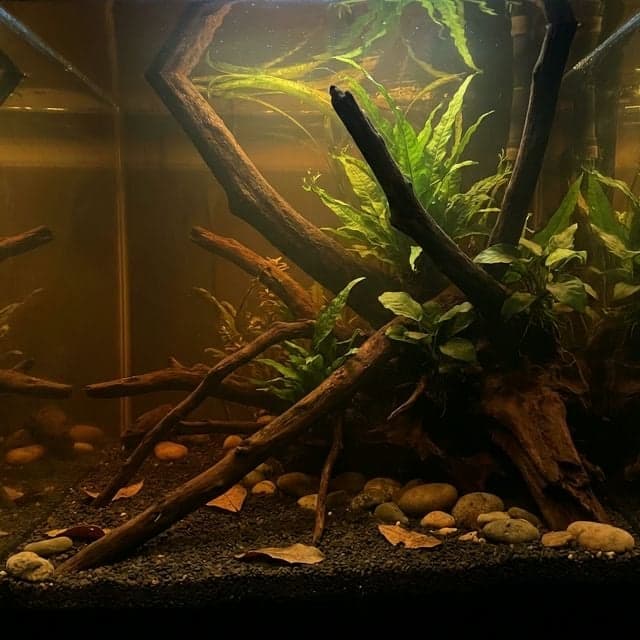
Tiger Wood is known to leach tannins into the water, which can influence water chemistry. As it decomposes, it can cause slight yellowing of the water, which is often desired in aquascaping as it can create a more natural appearance reminiscent of peat swamps. The wood is generally considered inert regarding calcium and magnesium, having minimal impact on General Hardness (GH) and Carbonate Hardness (KH). However, due to the release of tannins, it can lower pH levels slightly, particularly in softer water setups.
For most freshwater aquariums, the influence on pH will be moderate, typically maintaining a range of 6.0 to 7.5, depending on the overall setup and other materials used. It is advisable to monitor the water parameters regularly, especially if you are maintaining sensitive species, as fluctuations in pH can affect their wellbeing. In addition to its aesthetic qualities, understanding the impact of Tiger Wood on water chemistry allows aquascapers to harness its properties to support the biome of their aquariums.
Aquascaping Styles
Tiger Wood's versatile nature makes it suitable for a variety of aquascaping styles. It is particularly well-suited for Nature Aquariums, where organic forms and natural aesthetics are paramount. The twisting branches of Tiger Wood create movement and mimic the natural rivers and streams that many aquatic plants thrive in. This material also works remarkably well in Biotope Aquariums, where replicating specific natural habitats is critical; for instance, it can mimic the submerged trees in slowly flowing waters of the Amazon.
Moreover, Tiger Wood can effectively enhance Iwagumi-style aquascapes, where its form can contrast beautifully with strategically placed stonework, creating a harmonious balance of negative space and natural beauty. In more elaborate designs, such as Scape aquariums, combining Tiger Wood with various plant groups can create diverse layers and focal points, capturing the essence of nature's complexity. Regardless of the style chosen, Tiger Wood adds depth, texture, and an organic look that is indispensable for creating stunning aquatic landscapes.