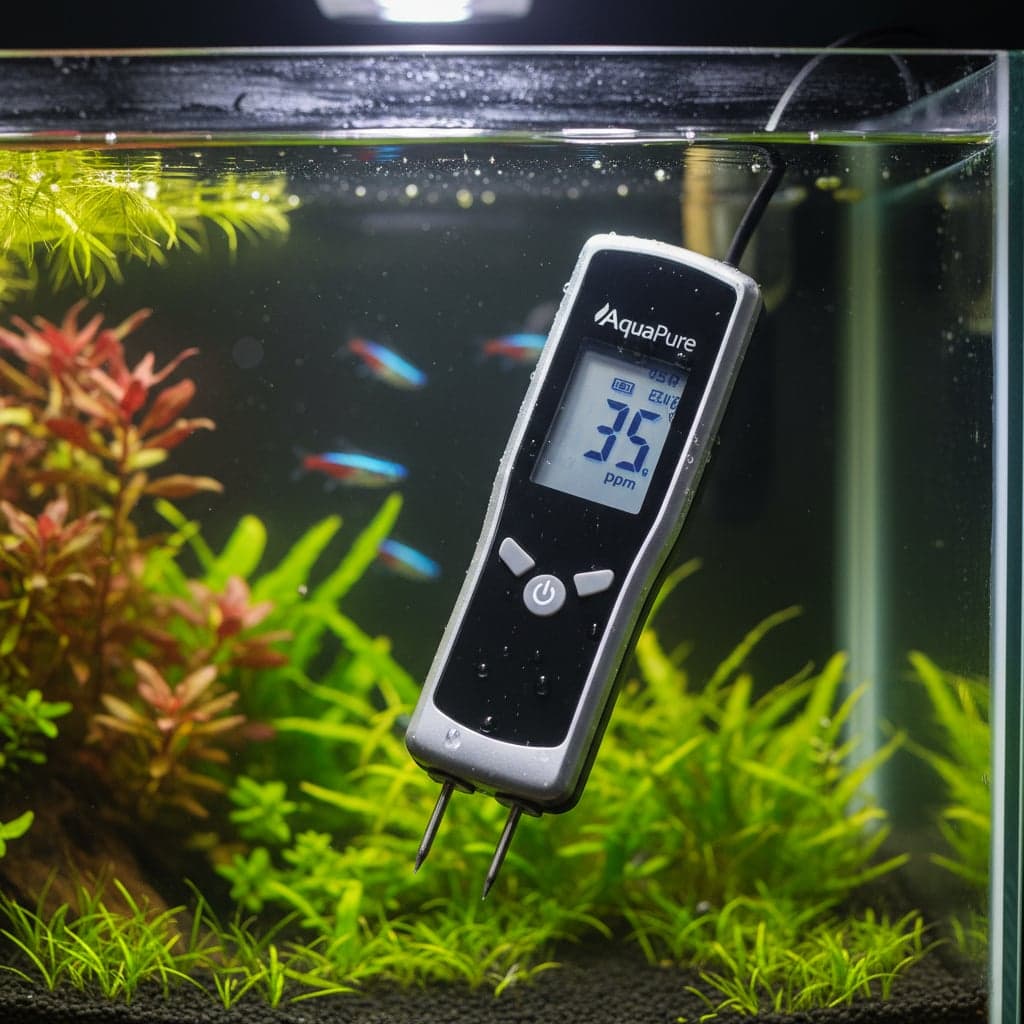
pH Meter
Precision pH monitoring: A guide to digital aquarium meters. Master calibration, probe care, and the pH/KH/CO2 relationship for a healthier planted tank.
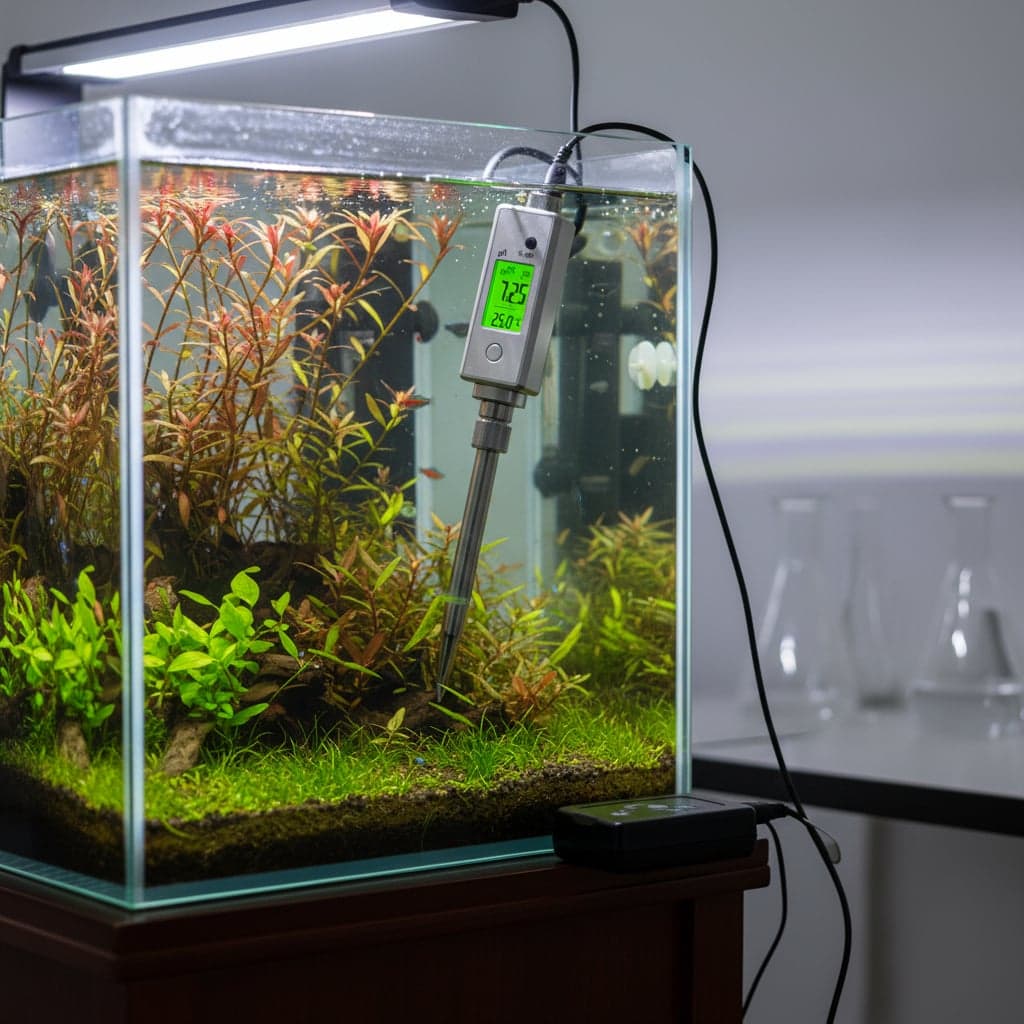
pH Meter
A digital pH meter is a precision instrument that measures the hydrogen ion concentration in water, expressing it as a value on the pH scale (0–14). For aquascapers, accurate pH readings are critical for plant health, CO2 monitoring, livestock safety, and understanding the relationship between pH and KH.
Why pH Matters in Aquascaping
Plant Health
Most aquatic plants thrive in a pH range of 6.0–7.5. At extreme pH values, nutrient uptake is impaired — key elements like iron, manganese, and phosphorus become chemically unavailable to plants.
CO2 Relationship
pH and CO2 are directly linked through the pH/KH/CO2 relationship table. When you know your KH and pH, you can calculate your dissolved CO2 concentration without a separate CO2 test. In a stable KH of 4 dKH:
- pH 7.0 = ~12 ppm CO2
- pH 6.6 = ~30 ppm CO2 (ideal target)
- pH 6.0 = ~120 ppm CO2 (dangerous)
This makes a pH meter an indirect but highly accurate CO2 monitor.
Livestock Safety
Fish and invertebrates have specific pH requirements. Sudden swings of more than 0.5 pH in a short period can cause pH shock — a potentially fatal condition.
Digital pH Meter vs. Liquid Test Kits
| Feature | Digital pH Meter | Liquid Test Kit |
|---|---|---|
| Accuracy | ±0.01 pH | ±0.2–0.5 pH |
| Speed | 5 seconds | 5 minutes |
| Precision | 0.01 increments | Colour-matched ranges |
| Cost | $15–80 | $5–15 per kit |
| Calibration | Required (buffer solutions) | Not needed |
| Shelf Life | Years (with probe care) | Reagents expire |
How to Use
- Calibrate: Use pH 4.0 and pH 7.0 buffer solutions. A two-point calibration ensures accuracy across the range you'll be measuring.
- Submerge: Dip the glass electrode into the water sample.
- Wait: Allow the reading to stabilise (10–20 seconds for most meters).
- Read: Note the pH value on the LCD display.
- Rinse: Rinse the electrode with distilled water after each use.
- Store: Keep the electrode in storage solution or pH 4.0 buffer to prevent it from drying out. Never store dry.
Probe Care
The glass electrode is the heart of a pH meter. Proper care dramatically extends its lifespan:
- Always store wet: A dried-out probe will give inaccurate readings and may be unrecoverable.
- Clean regularly: Soak in probe cleaning solution monthly to remove biofilm and mineral deposits.
- Handle gently: The glass bulb is fragile — avoid touching or scratching it.
- Replace the probe: Most probes last 1–2 years with proper care. Budget for replacement.
Trusted Brands
- Apera Instruments: Excellent accuracy and build quality, the PH20 is a hobbyist favourite.
- Milwaukee Instruments: Professional-grade, excellent for continuous monitoring.
- Bluelab: Premium, lab-quality probes.
- Dr.meter: Budget-friendly, good for beginners.
Pros & Cons
Advantages
- Precision: 0.01 pH resolution far surpasses colour-based test kits.
- Speed: Results in seconds.
- CO2 monitoring: Combined with KH, gives accurate dissolved CO2 readings.
- Reusable: No consumable reagents.
Considerations
- Calibration: Must calibrate regularly for accurate results.
- Probe maintenance: Requires cleaning solution and proper storage.
- Cost: Higher upfront cost than liquid test kits.
- Fragile probe: Glass electrode can break if mishandled.