Wave Maker
Mastering aquarium flow: Wave makers and powerheads guide. Learn how to create natural current patterns to eliminate dead zones and feed your plants.
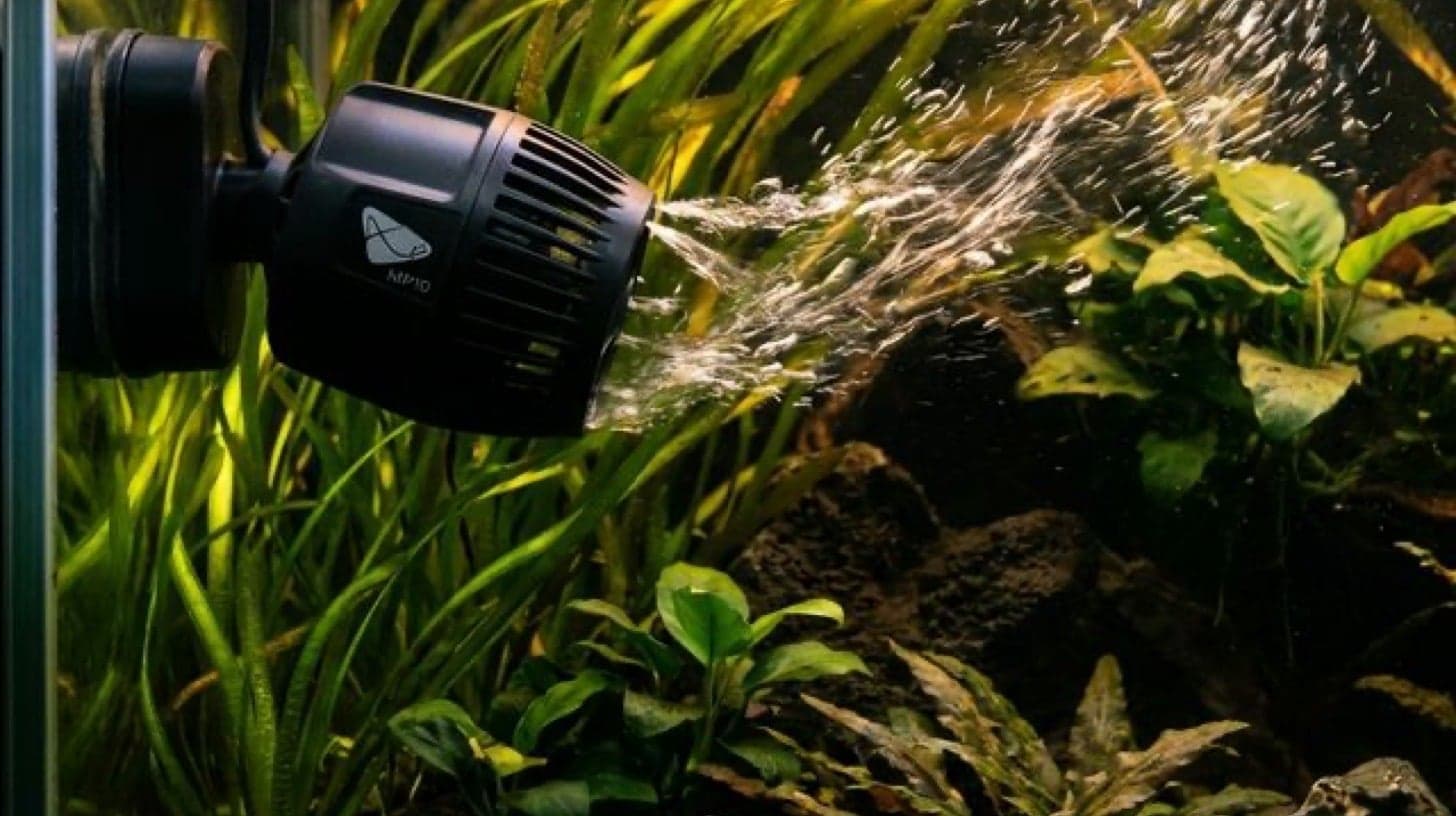
Wave Maker
A wave maker (or powerhead/circulation pump) is a submersible pump that creates water movement inside your aquarium. Proper water flow is essential for distributing nutrients, CO2, and heat evenly throughout the tank, while also preventing the formation of stagnant dead zones where algae thrives and debris accumulates.
Why Flow Matters
In nature, rivers, streams, and ocean currents keep water moving constantly. In a closed aquarium:
- Nutrient Distribution: Water flow carries fertilisers and CO2 from injection points to every plant in the tank.
- Plant Health: Gentle current strengthens plant cell walls and prevents staghorn and BBA algae on leaves.
- Detritus Suspension: Flow keeps waste particles suspended so the filter can capture them, rather than settling in corners.
- Temperature Equalisation: Prevents thermal layering where warm water rises and cold sinks.
- Gas Exchange: Surface agitation promotes oxygen absorption.
Types of Flow Devices
Powerhead
A simple, constant-flow pump. Produces a steady, unidirectional current.
- Best for: Freshwater planted tanks needing consistent flow.
- Examples: Hydor Koralia, Eheim StreamOn.
Wave Maker
An advanced pump with programmable flow modes — wave, pulse, alternating, random — that simulate natural water movement.
- Best for: Reef tanks, large planted tanks, and setups requiring varied flow patterns.
- Examples: Jebao SLW/SOW series, AI Nero, EcoTech Vortech.
Circulation Fan
A low-profile, propeller-driven pump designed for gentle, widespread flow.
- Best for: Nano tanks and setups requiring very soft flow.
- Examples: Newa Wave, Sicce Voyager Nano.
Placement Guidelines
- Position the pump near the top of the tank, angled slightly downward, on the opposite wall from the filter outflow.
- Aim for circular flow: Water should travel across the surface, down the opposite wall, across the substrate, and back up — a "gyre" pattern.
- Avoid: Pointing flow directly at delicate plants or moss, which can detach.
- Multiple Pumps: In large tanks (120cm+), use two opposing pumps for even circulation.
Flow Rate Guidelines
| Tank Type | Recommended Turnover |
|---|---|
| Low-Tech Planted | 5–10x per hour |
| High-Tech Planted | 10–15x per hour |
| Reef Tank | 20–50x per hour |
For a 100L high-tech tank, aim for 1000–1500 L/hr of combined flow (filter + wave maker).
Trusted Brands
- Jebao: Affordable, feature-rich wave makers with app control (SLW, SOW, MLW series).
- EcoTech: VorTech and Nero series — premium, ultra-quiet, wireless control.
- Hydor: Koralia series — simple, reliable, affordable powerheads.
- Sicce: Voyager series — compact, strong flow, good for freshwater.
Pros & Cons
Advantages
- Healthier Plants: Even nutrient and CO2 distribution.
- Algae Prevention: Eliminates dead zones.
- Cleaner Tank: Keeps detritus in suspension for filter capture.
- Programmable: Advanced models simulate natural wave patterns.
Considerations
- Aesthetics: Visible inside the tank (though modern models are compact).
- Noise: Cheap models can vibrate and hum.
- Too Much Flow: Excessive current stresses fish and uproots delicate plants.
- Power Consumption: Runs 24/7.