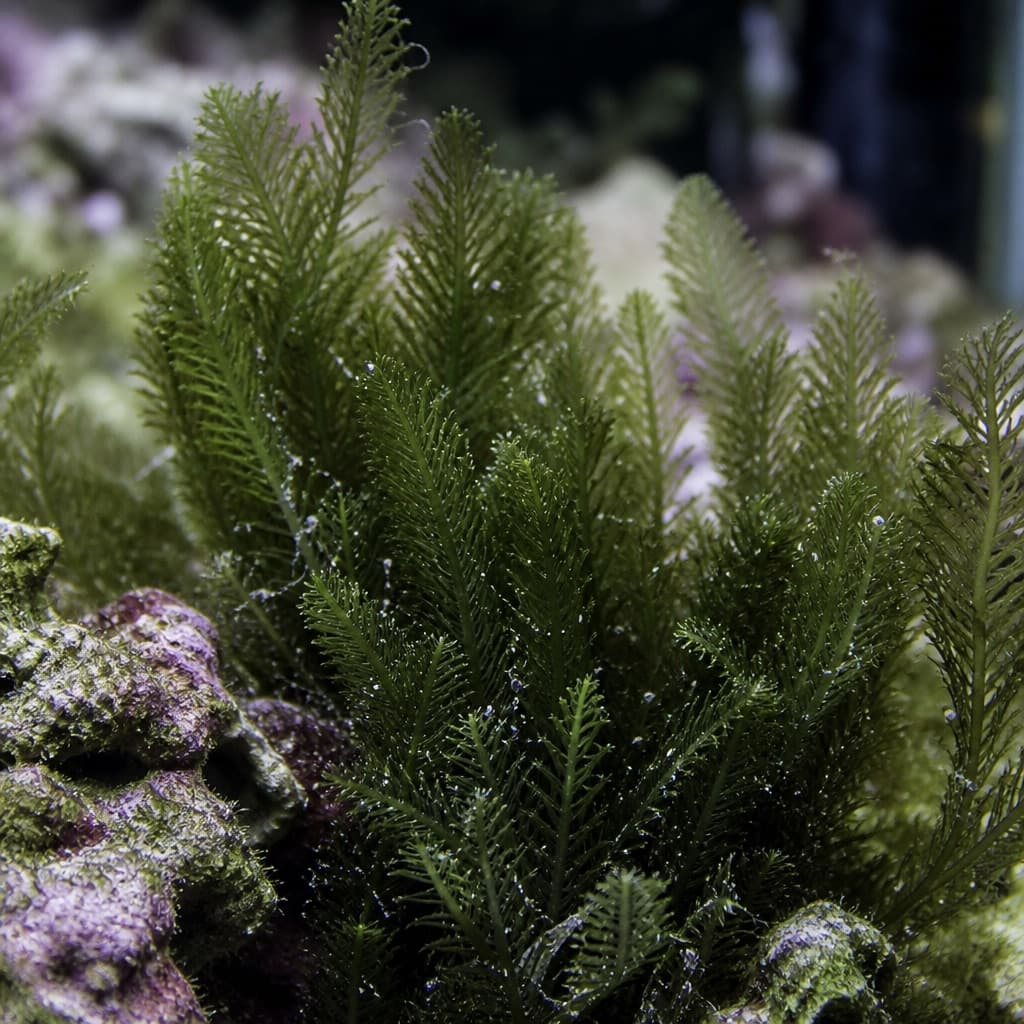
Grünwasser: Bestimmung & Behandlung
Das Wasser trübt sich grün ein — frei schwebende Algen (oft Chlorella oder Ähnliches) in der Wassersäule.
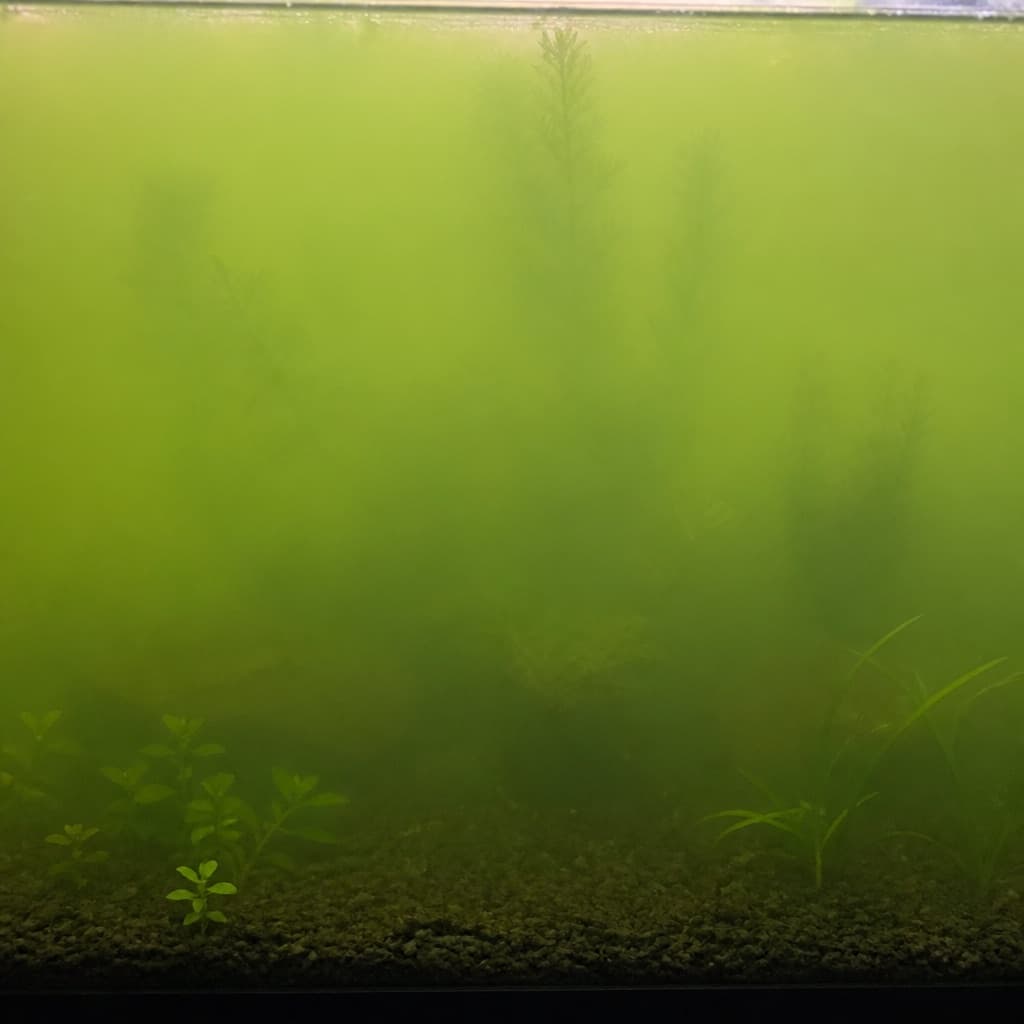
Grünwasser
Grünwasser: Studio Scaped führt diesen Algentyp für Süßwasseraquarien. Dieser Ratgeber zeigt, wie du ihn von den Typen unterscheidest, mit denen er am häufigsten verwechselt wird, welche Bedingungen ihn auslösen, welche Werte du vor einer Behandlung messen solltest und wie du sein Wiederkommen verhinderst. In den meisten Becken ist der entscheidende Faktor das Licht im Verhältnis zu dem, was deine Pflanzen tatsächlich verwerten können.
So erkennst du grünwasser
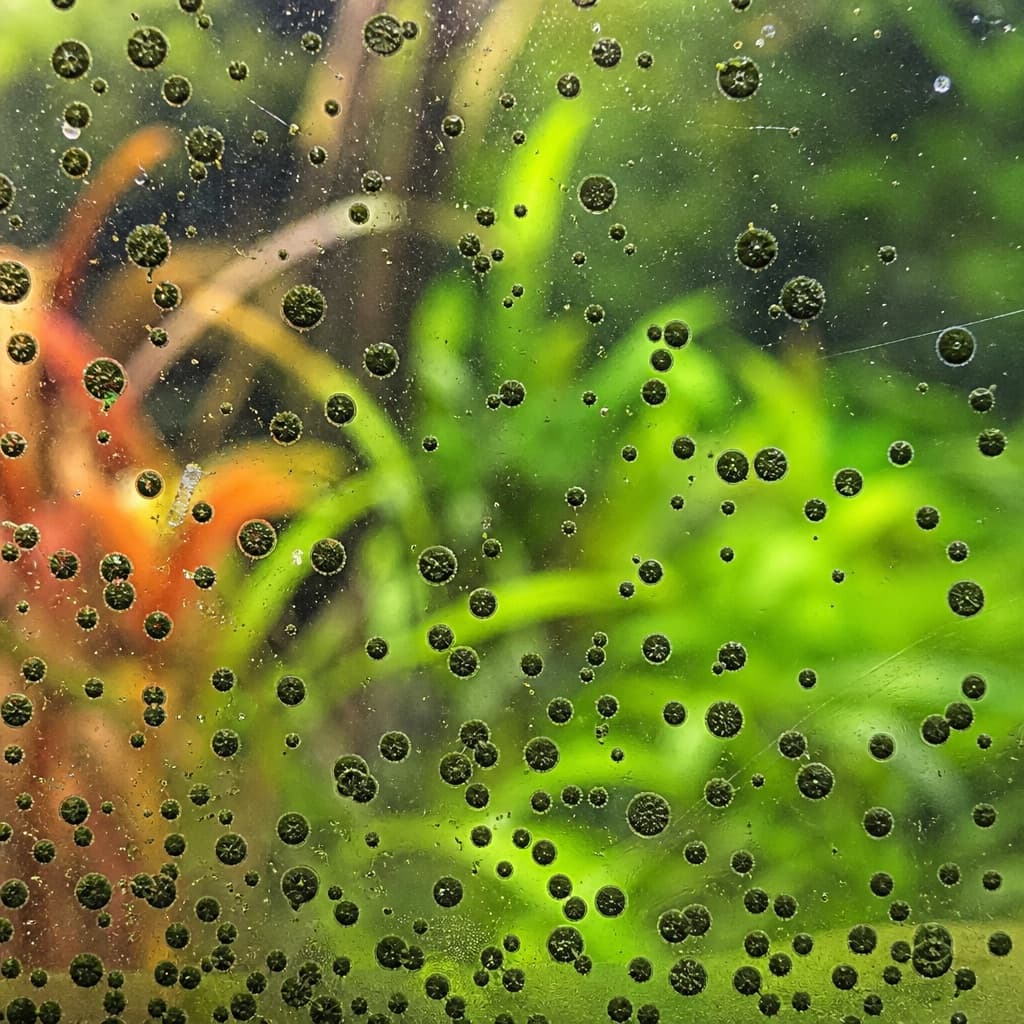
Das Wasser trübt sich grün ein — frei schwebende Algen (oft Chlorella oder Ähnliches) in der Wassersäule.
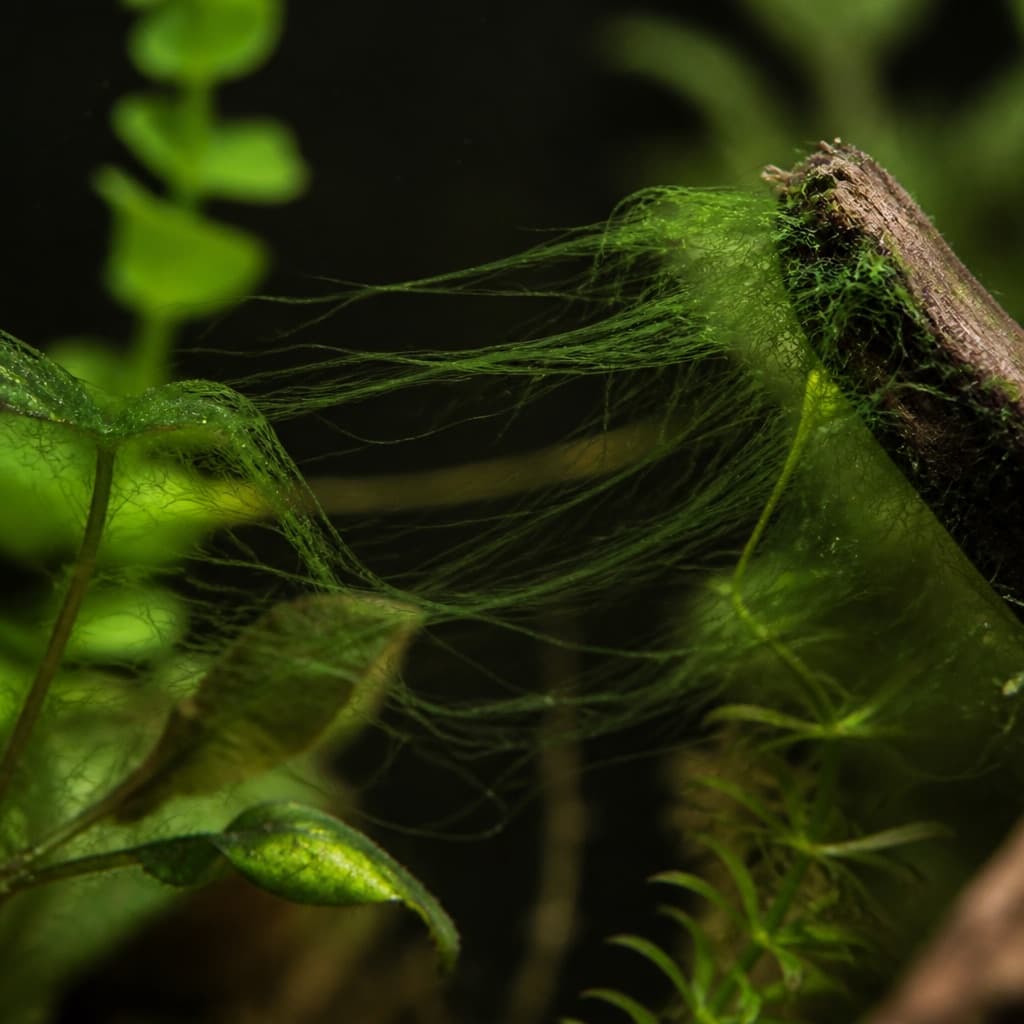
Vergleiche das Foto oben mit deinem eigenen Becken, bevor du behandelst: Mehrere Algentypen sehen auf den ersten Blick ähnlich aus, brauchen aber völlig unterschiedliche Korrekturen, und den falschen zu behandeln kostet Wochen. Wenn du unsicher bist, stellt der vollständige Bestimmungsratgeber die gängigen Typen nebeneinander.
Warum sie auftreten
Algen sind ein Symptom, nicht die Krankheit. Der übliche Auslöser ist hier nährstoffüberschuss (Nitrat und Phosphat) durch Fütterung, Fischausscheidungen oder zu wenig Austrag. Die vollständige Liste der Ursachen, die du ausschließen solltest:
- Nährstoffüberschuss (Nitrat und Phosphat) durch Fütterung, Fischausscheidungen oder zu wenig Austrag
- Zu lange Beleuchtungsdauer oder Becken in direkter Sonne
- Überbesatz oder starke Fütterung im Verhältnis zur Filterung
- Zu seltene Wasserwechsel nach einem Nährstoffanstieg
Was du messen solltest und was die Werte bedeuten
| Was messen | Üblicher Zielwert | Worauf ein abweichender Wert hindeutet |
|---|---|---|
| Nitrat (NO₃⁻) | 5–20 ppm bepflanzt · unter 10 ppm im Riff | Steigendes Nitrat zeigt, dass mehr Abfall hineingeht, als Wasserwechsel und Pflanzen austragen. Nahe null hungern die Pflanzen im Pflanzenbecken zuerst und Algen bekommen den Vorteil. |
| Phosphat (PO₄³⁻) | 0,5–1,5 ppm bepflanzt · unter 0,1 ppm im Riff | Wird oft für Algen verantwortlich gemacht, aber es auf null zu ziehen geht meist nach hinten los: die Pflanzen stocken zuerst und die Alge nimmt den Platz. |
| Lichtintensität und Beleuchtungsdauer | 6–8 Stunden für die meisten Pflanzenbecken | Licht über das hinaus, was deine Pflanzen verwerten können, bleibt für die Algen übrig. Reduziere die Dauer vor der Intensität — sie lässt sich leichter steuern. |
| Bioload | innerhalb der Planungskapazität des Beckens | Mehr Fische bedeuten mehr Abfall, den Filterung und Wasserwechsel austragen müssen. Nutze den Besatzrechner, um zu sehen, wo du stehst. |
| Futtermenge und -häufigkeit | in 2–3 Minuten gefressen, keine Reste | Nicht gefressenes Futter ist die häufigste versteckte Nährstoffquelle. Es zersetzt sich unsichtbar im Bodengrund und in den Filtermedien. |
| Filterung und Strömung | keine toten Zonen; Medien nach Plan gereinigt | Bereiche mit wenig Strömung sammeln Mulm, und genau dort fangen viele Probleme an. Zugesetzte Filtermedien senken die reale Förderleistung lange bevor sie schmutzig aussehen. |
Nimm diese Messwerte, bevor du irgendetwas änderst. Ohne Ausgangswerte lässt sich hinterher nicht sagen, welche Korrektur gewirkt hat, und Algenprobleme haben meist mehr als eine Ursache.
Behandlung und Gegenmaßnahmen
- Dunkelkur über 2–3 Tage, Filterung und Belüftung dabei weiterlaufen lassen
- Tägliche Beleuchtung um 1–2 Stunden kürzen und direkte Sonne vermeiden
- Wasserwechsel erhöhen und Fütterung überprüfen — Futterreste innerhalb von Minuten entfernen
- Nitrat und Phosphat prüfen; die Nährstoffquelle abstellen, bevor die Blüte zurückkommt
- Ein UV-Klärer hilft bei frei schwebenden Algen, behebt aber das zugrunde liegende Ungleichgewicht nicht
So kommen sie nicht wieder
- Reduziere die Beleuchtungsdauer vor der Intensität; Licht, das deine Pflanzen nicht nutzen können, bleibt den Algen
- Sorge dafür, dass die Strömung das ganze Becken erreicht — an toten Zonen setzt sich das zuerst fest
- Füttere nur, was in zwei bis drei Minuten gefressen wird; Reste zersetzen sich unsichtbar
- Dünge nach deiner Pflanzenmasse, nicht auf null — wer das Becken aushungert, hungert zuerst die Pflanzen aus
- Setze neue Pflanzen und neues Hardscape in Quarantäne — so gelangen die meisten Algen überhaupt erst ins Becken
Ist die Ursache behoben, rechne mit zwei bis vier Wochen bis zum sichtbaren Rückgang — vorhandener Bewuchs verschwindet nicht mit der Ursache. Entferne also von Hand, was geht, und beurteile den Erfolg daran, ob neuer Bewuchs auftritt.
Verwandte Ratgeber
- Kieselalgen — wird häufig mit diesem Typ verwechselt
- Blaugrüner Schleim — wird häufig mit diesem Typ verwechselt
- Alle Algentypen im Vergleich — zur Bestimmung
- Beleuchtung und Spektrum
Häufige Fragen
Grünwasser: Wie lange dauert es, bis das Problem verschwindet?
Rechne mit zwei bis vier Wochen, nachdem die Ursache behoben ist. Dunkelkur über 2–3 Tage, Filterung und Belüftung dabei weiterlaufen lassen Vorhandener Bewuchs muss in der Regel von Hand entfernt werden — die Bedingungen zu korrigieren stoppt die Ausbreitung, löst aber nicht auf, was schon da ist.
Erledigen das die Algenfresser für mich?
Weidegänger halten ein bereits korrigiertes Becken sauber; ein unkorrigiertes retten sie selten. Kein Weidegänger klärt eine Grünwasserblüte — die Alge schwebt in der Wassersäule. Ein UV-Entkeimer oder eine Dunkelkur ist die praktische Antwort.
Soll ich die Nährstoffe entziehen, um sie auszuhungern?
Das geht meist nach hinten los. Pflanzen stocken früher als Algen, und die Nährstoffe, die sie dann nicht mehr verbrauchen, stehen genau der Alge zur Verfügung. Bringe Licht, CO₂ und Düngung mit deiner Pflanzenmasse in Einklang, statt die Düngung auf null zu fahren.