Caracol nerita tigre: Vittina semiconica
Concha ámbar bandeada con rayas oscuras de tigre. Un pastador de algas incansable que no puede reproducirse en agua dulce, así que la población nunca se te escapa.
También conocido como: Tiger Snail · Vittina semiconica · Neritina turrita
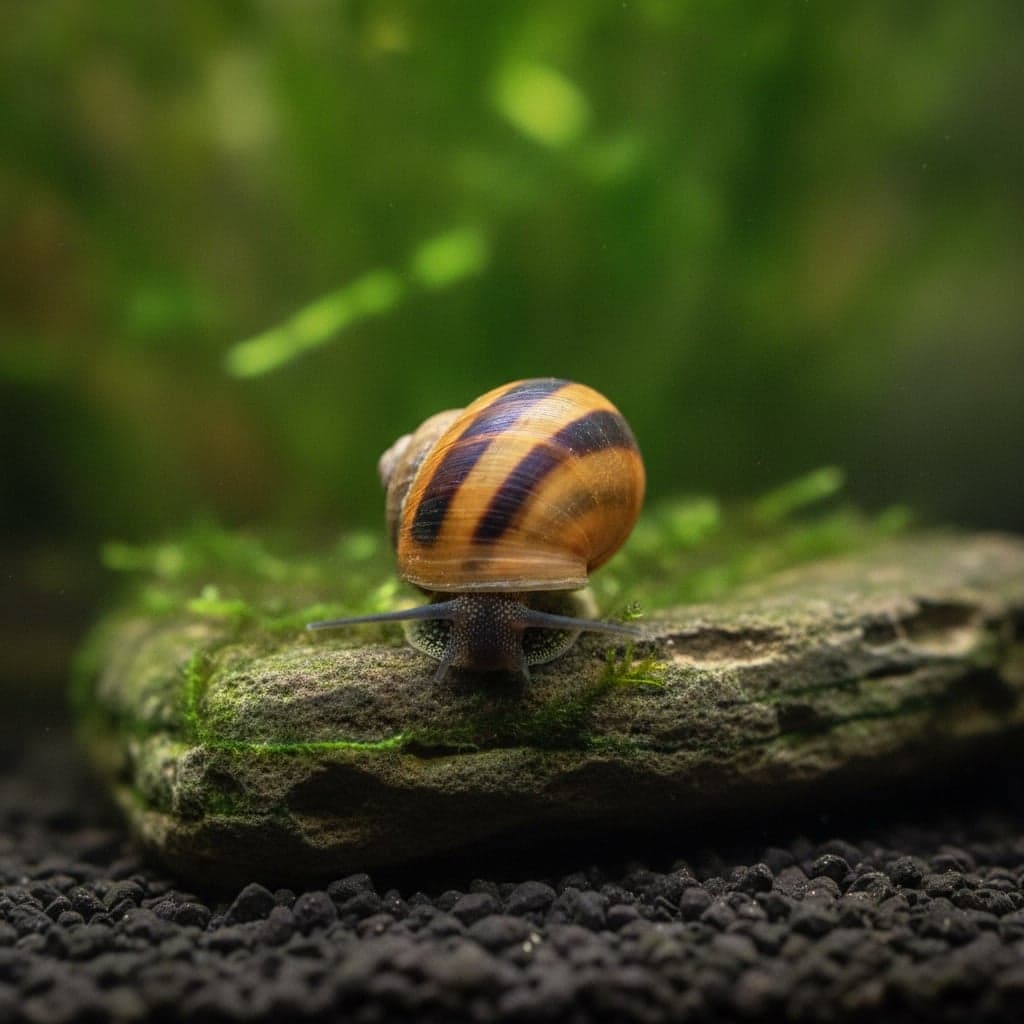
Caracol nerita tigre
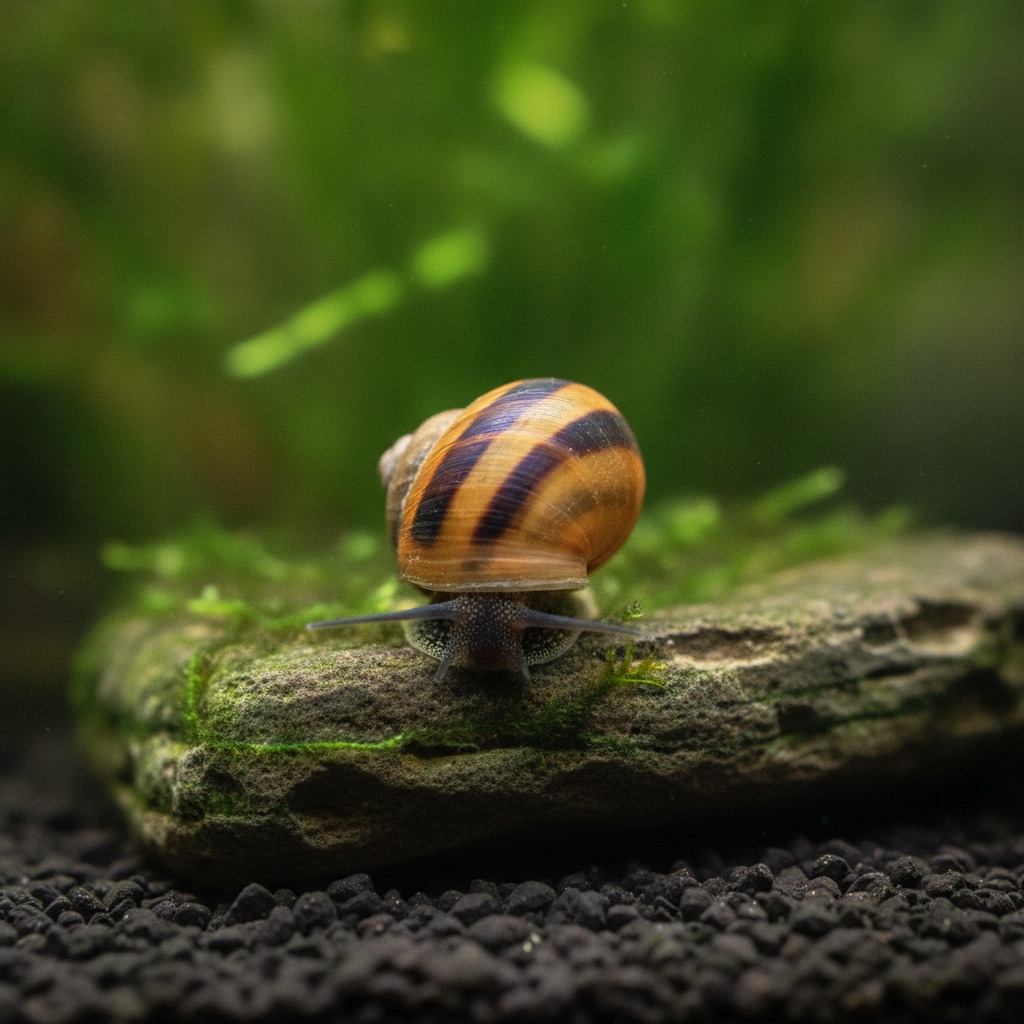
El nerita tigre es el que la gente compra a primera vista. Donde el oliva es una cúpula verde plana y el cebra lleva barras negras anchas sobre oro, el tigre tiene un fondo ámbar cálido atravesado por un rayado oscuro fino e irregular que corre con las líneas de crecimiento más que a través de ellas. No hay dos conchas iguales, y el patrón se profundiza a medida que el caracol deposita nuevo crecimiento en el labio.
También es el nerita que más a menudo se vende como otra cosa. «Nerita tigre» y «nerita cebra» se usan de forma intercambiable en muchas tiendas, y los dos son genuinamente fáciles de confundir en un acuario de stock mixto. La señal fiable es el rayado: las bandas de un cebra son anchas, regulares y casi negras sobre fondo amarillo, mientras que las de un tigre son más estrechas, más numerosas y a menudo se rompen en guiones sobre una concha naranja-ámbar. La taxonomía no ha ayudado: este animal ha sido Neritina turrita y Vittina turrita en el comercio y ahora suele situarse como Vittina semiconica.
Nada de eso cambia cómo lo mantienes. Cada nerita del comercio quiere la misma agua, come las mismas cosas y falla del mismo modo, así que la elección entre ellos es una elección de patrón de concha y nada más. Lo que sigue aplica por igual al tigre, al cebra y al oliva.
Hábitat natural y origen
Vittina semiconica proviene de los estuarios y tramos bajos de ríos de África Oriental y el sudeste asiático, en el tramo donde un río sigue siendo dulce pero la marea llega lo bastante lejos para importar. Los adultos viven corriente arriba en agua dulce, agarrando roca, madera sumergida y tallos de juncos en una corriente lo bastante fuerte para mantener las superficies raspadas e iluminadas.
Esa geografía explica lo raro de la biología de los neritas. Son anfidromos: la vida adulta ocurre en agua dulce, pero las larvas necesitan sal. Los huevos puestos corriente arriba liberan larvas velígeras nadadoras que derivan hacia el estuario, se alimentan en el plancton durante varias semanas, se asientan como caracoles del tamaño de una cabeza de alfiler y luego trepan de vuelta río arriba. Un acuario no tiene corriente abajo, ni plancton ni agua salobre, así que el ciclo se detiene en el primer paso — aunque, como abajo, los huevos se siguen poniendo.
Requisitos de cuidado
La temperatura es la parte fácil. Cualquier punto de la banda 22-28°C conviene a un nerita tigre y no se quejará de los extremos. El contenido mineral es donde realmente son exigentes, y es donde la mayoría mueren.
La concha es carbonato de calcio, y en agua blanda o ácida el agua la disuelve más rápido de lo que el caracol puede reconstruirla. El daño llega en un orden reconocible: parches blancos yesosos en la espira donde la concha es más vieja y fina, luego picaduras visibles, luego una concha translúcida que se astilla en la abertura y se agrieta bajo su propio peso. La alimentación no lo arregla, porque el calcio que un caracol usa para el mantenimiento de la concha se toma en gran parte del agua más que de la comida.
Objetivo GH 6-12 y suficiente KH para mantener el pH estable por encima de 7.0. En agua del grifo blanda la respuesta es coral triturado en el filtro, o un aditivo mineral adecuado — no un químico que ajuste el pH, que mueve el número sin añadir los minerales que importan. Ver GH, KH y dureza para por qué son problemas distintos. Un hueso de jibia flotando es un refuerzo barato.
Dos detalles mecánicos causan más pérdidas de las que deberían. Los neritas pastan justo hasta la línea de agua y siguen por encima del borde, así que un acuario de techo abierto pierde caracoles hacia el suelo de forma constante — pon una tapa. Y un caracol que se desprende del cristal sobre arena plana boca arriba no siempre puede enderezarse; si encuentras uno de espaldas, dale la vuelta en lugar de esperar a ver qué pasa.
Usa el Aquarium Tracker para registrar estos parámetros frente a tus propias lecturas: marca una deriva antes de que se convierta en problema.
Dieta y alimentación
Un nerita pasta con una rádula, una cinta dentada que raspa limpia una superficie más que recoger comida de ella. Ese mecanismo decide lo que puede y no puede comer. Las películas duras, mineralizadas y de bajo crecimiento se desprenden bien: el alga de puntos verdes, el polvo verde y las diatomeas se manejan con facilidad. Las molestias filamentosas rápidas no: un nerita tigre no tocará de forma útil el alga filamentosa ni el alga barba negra, y comprar uno para resolver cualquiera es dinero tirado.
El corolario es lo que vale planificar. Unos pocos neritas vaciarán un acuario pequeño de película pastable en un par de semanas y luego no tendrán nada, y la inanición lenta es la causa de muerte más común en esta especie por un margen amplio — muy por delante de cualquier enfermedad. Una vez el cristal está limpio tienes que alimentarlos: pastillas de algas, calabacín o espinaca blanqueados, o simplemente un trozo de tronco o piedra dejado en un sitio iluminado para crecer biofilm.
La señal de infraalimentación es la concha más que el comportamiento. Un nerita hambriento deposita una banda fina, pálida y mal mineralizada de crecimiento nuevo en el labio de la concha, y deja de moverse mucho: un caracol aparcado en el mismo sitio durante días suele tener hambre, no estar contento. Alimentación de invertebrados cubre el horario.
Comportamiento y temperamento
Pacífico hasta el punto de ser decorado. Los neritas tigre no interactúan con peces, no compiten con gambas por la comida y no dañan plantas sanas: la rádula no puede romper una cutícula foliar intacta, aunque limpiará el biofilm de una hoja que ya está muriendo y luego se le echará la culpa de matarla.
La mayor parte del pastoreo ocurre tras el anochecer. Un acuario que parece intocado por la tarde a menudo está visiblemente más limpio por la mañana, por lo que un grupo pequeño suele hacer más de lo que parece. Durante el día tienden a sentarse a la sombra, bajo la madera o en el cristal trasero.
Compañeros de acuario
Cualquier cosa pacífica. Conviene especialmente a un acuario de gambas: la gamba cherry y sus líneas de color quieren la misma agua dura y alcalina y toman el biofilm más blando que dejan los caracoles.
Evita los comedores de caracoles. Peces globo guisante, lochas payaso, lochas yoyo y caracoles asesinos tratan a los neritas como comida. Una locha grande puede no poder sacar a un adulto de su concha, pero picoteará la abertura hasta que el caracol muera del daño, que es un resultado más lento y peor. Los cíclidos grandes y los peces globo son la misma historia.
Reproducción
Un nerita tigre no puede completar su ciclo de vida en agua dulce, y pone huevos de todos modos. Las hembras cementan cápsulas blancas duras — óvalos planos de unos un milímetro de largo, muy como semillas de sésamo — sobre cristal, madera, roca, tomas de filtro y conchas de otros caracoles. Cada cápsula contiene docenas de embriones bajo una costra calcificada casi imposible de quitar limpia: una cuchilla de afeitar las levanta del cristal, pero en madera y hardscape son efectivamente permanentes.
Nunca eclosionarán. En agua dulce las velígeras o no emergen o mueren en días, así que las cápsulas simplemente se quedan y blanquean. Esta es la única queja real que la gente tiene sobre los neritas, y vale saberla antes de comprar más que después. Mantener un solo caracol lo evita por completo: la especie no se autofecunda.
Elegir entre variedades de nerita
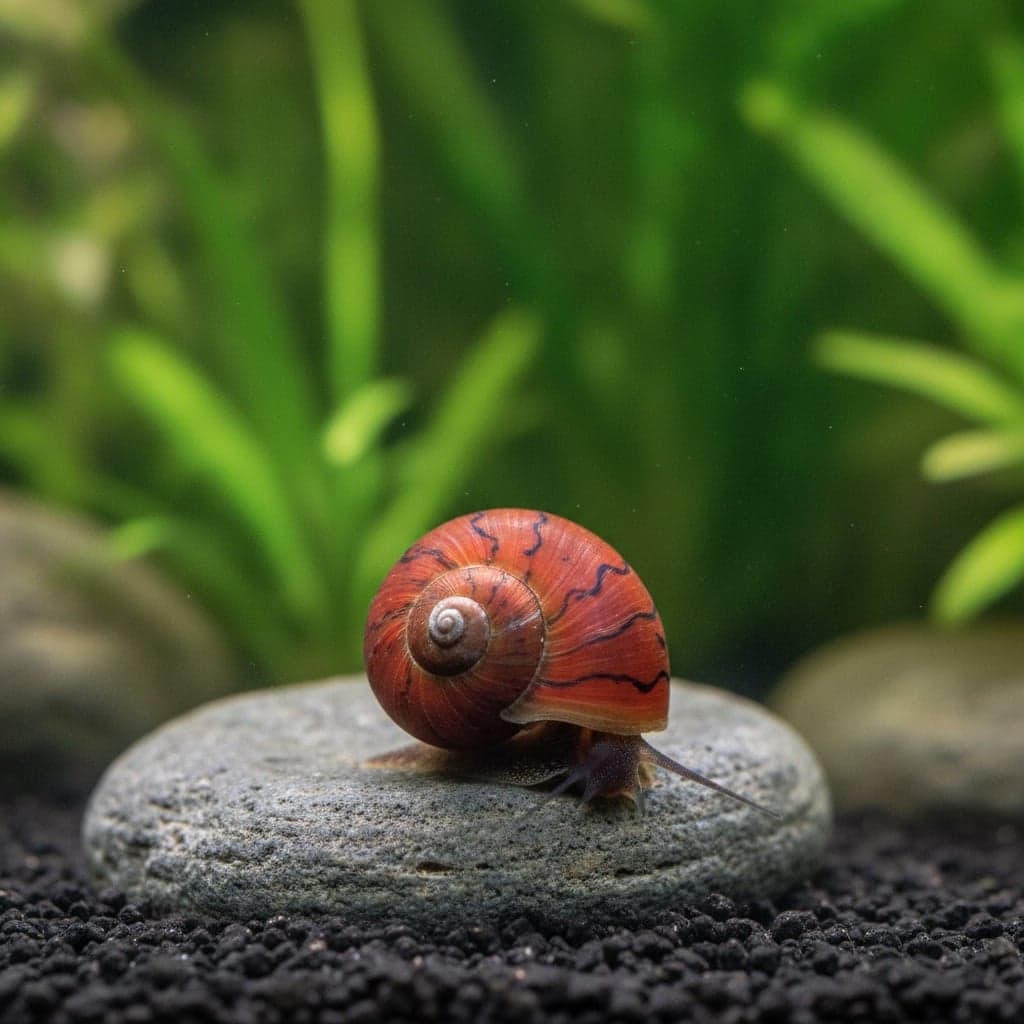
Todos los neritas comparten los mismos requisitos de cuidado, así que la elección se reduce a patrón de concha y tamaño. El oliva es el más barato y el mejor en alga de puntos verdes; el tigre y el cebra son los que se compran por la apariencia. Ver la guía comparativa de caracoles nerita para toda la gama lado a lado.
Problemas de salud frecuentes
La erosión de la concha es el problema principal y es química del agua, no enfermedad. Una vez una concha está picada el daño no se invierte — corregir la dureza detiene que empeore, y el nuevo crecimiento en el labio llega bien, pero el daño viejo se queda.
El cobre es el otro asesino y es menos indulgente de lo que la mayoría espera. Los moluscos transportan oxígeno en hemocianina a base de cobre más que en hemoglobina a base de hierro, pero los iones de cobre libres en el agua siguen siendo una potente toxina branquial y nerviosa a concentraciones muy por debajo de 0.2 ppm. Los tratamientos de ich y caracoles a base de cobre matarán a todo invertebrado del acuario, y el cobre luego se une a sustrato, roca y silicona y lixivia de vuelta durante meses: dosificar un acuario de caracoles con cobre contamina el acuario, no solo el agua de esa semana. Trata los peces en un acuario hospital separado; ver medicamentos y metales pesados.
Las caídas bruscas de pH y los cambios grandes de agua no emparejados hacen que los caracoles se sellen y se caigan del cristal. Uno que permanece sellado y desprendido más de un día o dos suele estar muerto, y el olor lo confirma de inmediato. Un caracol muerto en un acuario pequeño es un evento serio de amoníaco, así que revisa más que asumas.