The Nature Aquarium
The Nature Aquarium masterclass: Exploring Takashi Amano's philosophy, the Wabi-Sabi aesthetic, and the critical use of negative space in aquascaping.

The Nature Aquarium Style
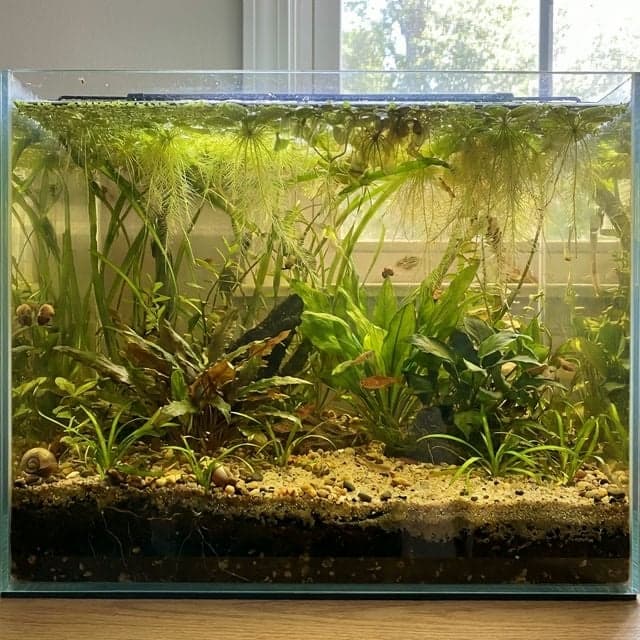
Pioneered by the late, legendary photographer and aquarist Takashi Amano, the Nature Aquarium style revolutionized the hobby in the 1990s. Before Amano, most planted tanks looked like underwater Dutch gardens—neat rows of plants organized by color and height.
Amano changed everything by asking: “What if the aquarium didn't look like a garden, but like a slice of wild nature?”
Core Philosophy: Learning from Nature
The goal of the Nature Aquarium is not to strictly replicate a specific biotope (like a specific Amazonian riverbank). Instead, it aims to capture the essence and emotional impact of a natural landscape—be it a mountain range, a dense forest, or a rolling meadow—and recreate that feeling underwater.
Wabi-Sabi
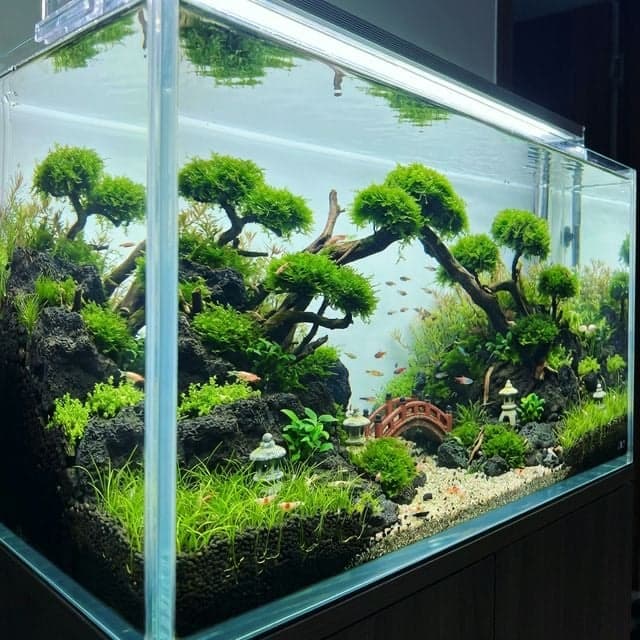
At its heart, this style embraces the Japanese aesthetic of Wabi-Sabi: favorable appreciation of the imperfection, impermanence, and incompleteness of nature. A perfectly symmetrical, manicured tank feels artificial. A tank with weathered stones, twisting wood, and slightly wild plant growth feels alive.
Key Design Principles
1. The Rule of Thirds (Golden Ratio)
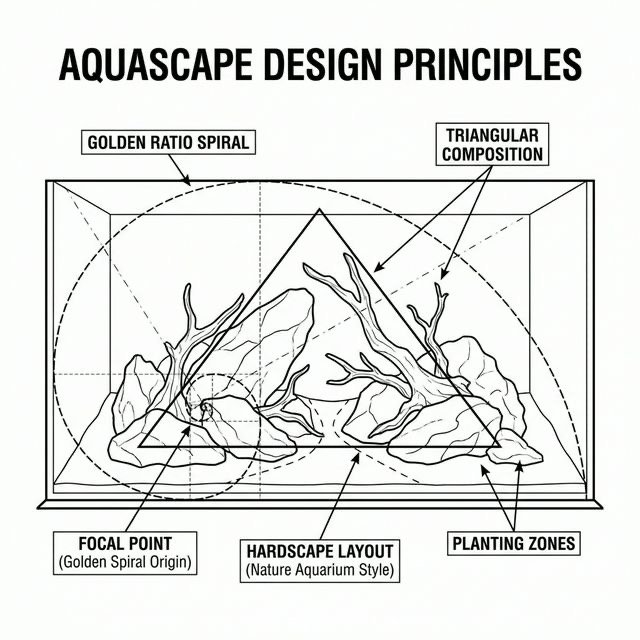 To create a natural-looking composition, the focal point (the main stone or wood cluster) is never placed in the dead center. It is offset to one side (approx. 1:1.618 ratio). This creates tension and visual interest.
2. Negative Space
Empty space is just as important as the hardscape.
- Open Water: Represents the sky.
- Open Sand: Represents a path or clearing. By leaving areas empty, you give the viewer's eye a place to rest and make the planted areas feel more dense and significant.
3. Asymmetry
Nature is rarely symmetrical. Avoid placing matching stones on either side of the tank. Use odd numbers of rocks (3, 5, 7) to prevent the brain from subconsciously pairing them up.
The Three Main Layouts
- Triangular: The hardscape is high on one side and slopes down to zero on the other. Good for corner placement.
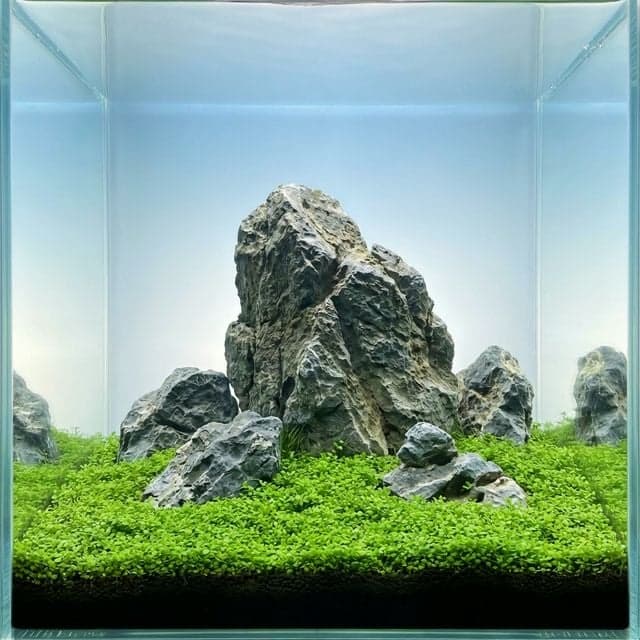
- Convex (Island): Hardscape is in the middle, surrounded by open space. Great for viewing from multiple angles.
- Concave (U-Shape): High on both sides, low in the middle. This creates a "valley" effect that draws the eye deep into the tank.
Typical Flora and Fauna
Fauna
Fish in a Nature Aquarium are usually small, schooling species that act like a flock of birds flying over a landscape.
- Rasboras (Harlequin, Chili)
- Tetras (Green Neon, Rummy Nose)
- Amano Shrimp: The tireless workers, introduced by Amano himself to control algae.
Flora
Plants are chosen for their leaf texture and color harmony rather than botanical rarity.
- Foreground: Glossostigma, Hairgrass, Monte Carlo.
- Epiphytes: Java Fern, Anubias, Mosses attached to wood/rock.
Conclusion
The Nature Aquarium style is an art form. It requires patience and observation. But when done right, it creates a living painting that brings a profound sense of peace and wilderness into your home.