The Walstad Method
Ecology over technology: The Walstad Method for low-tech aquariums. Learn to build self-sustaining ecosystems using organic potting soil and natural processes.
The Walstad Method
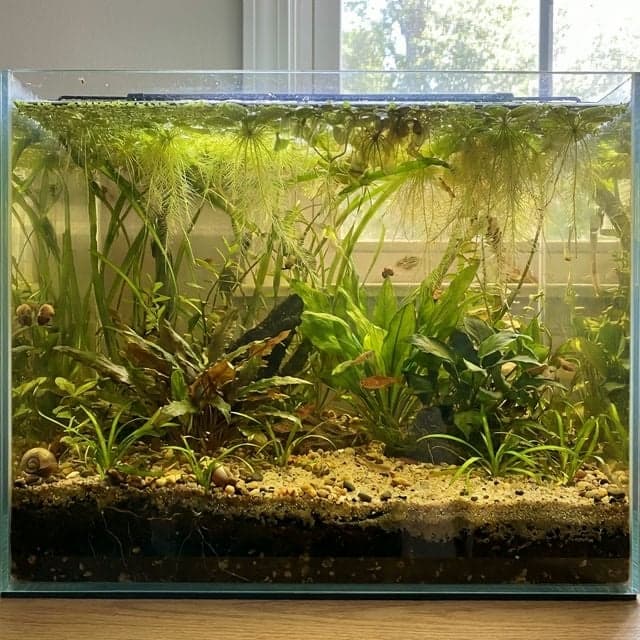
The Walstad Method is not just a visual style, but a scientific approach to keeping aquariums. developed by ecologist Diana Walstad (author of Ecology of the Planted Aquarium), it prioritizes biological stability and low maintenance over manicured aesthetics.
History & Philosophy
Diana Walstad argued that modern high-tech tanks (with CO2 injection and expensive fertilizers) were unnecessary for healthy plant growth. successfully demonstrating that a natural balance could be achieved using ordinary potting soil and natural processes.
Key Design Principles
1. The Soil Layer
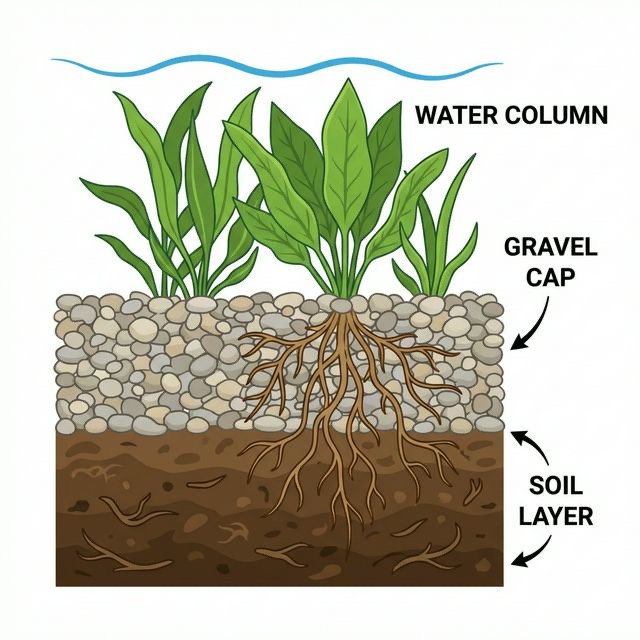 The foundation of a Walstad tank is a layer of organic potting soil (about 1 inch) capped with gravel or sand. The soil provides carbon and nutrients to the plants naturally as it decomposes.
2. The "Aerial" Advantage
Walstad encourages the use of floating plants and emergent growth (plants growing out of the water). These plants have access to atmospheric CO2, allowing them to grow fast and outcompete algae.
3. Low Tech
- No CO2 Injection: Carbon comes from the soil and fish respiration.
- Low Filtration: The plants themselves act as the primary biological filter. Water movement is still needed, but heavy mechanical filtration is often skipped.
- Fewer Water Changes: A balanced Walstad tank requires far fewer water changes than a high-tech setup.
Hardscape Materials
Function over form. Wood and rocks are used, but they are secondary to the soil and plant mass.
Typical Flora and Fauna
Fauna
Hardy, community fish that contribute to the bioload without destroying plants.
- Livebearers: Guppies, Platies (their waste is excellent fertilizer).
- Gouramis
- Corydoras
Flora
Fast-growing plants are critical to absorb toxic nitrogen compounds.
- Floating Plants: Duckweed, Frogbit, Red Root Floaters.
- Stem Plants: Rotala rotundifolia, Ludwigia repens.
- Root Feeders: Cryptocoryne, Echinodorus (Swords) love the dirt layer.
Challenges
- Messy Substrate: If you uproot a large plant, you risk pulling up the dirt layer and clouding the water.
- Patience: Growth is slower than in CO2-injected tanks.