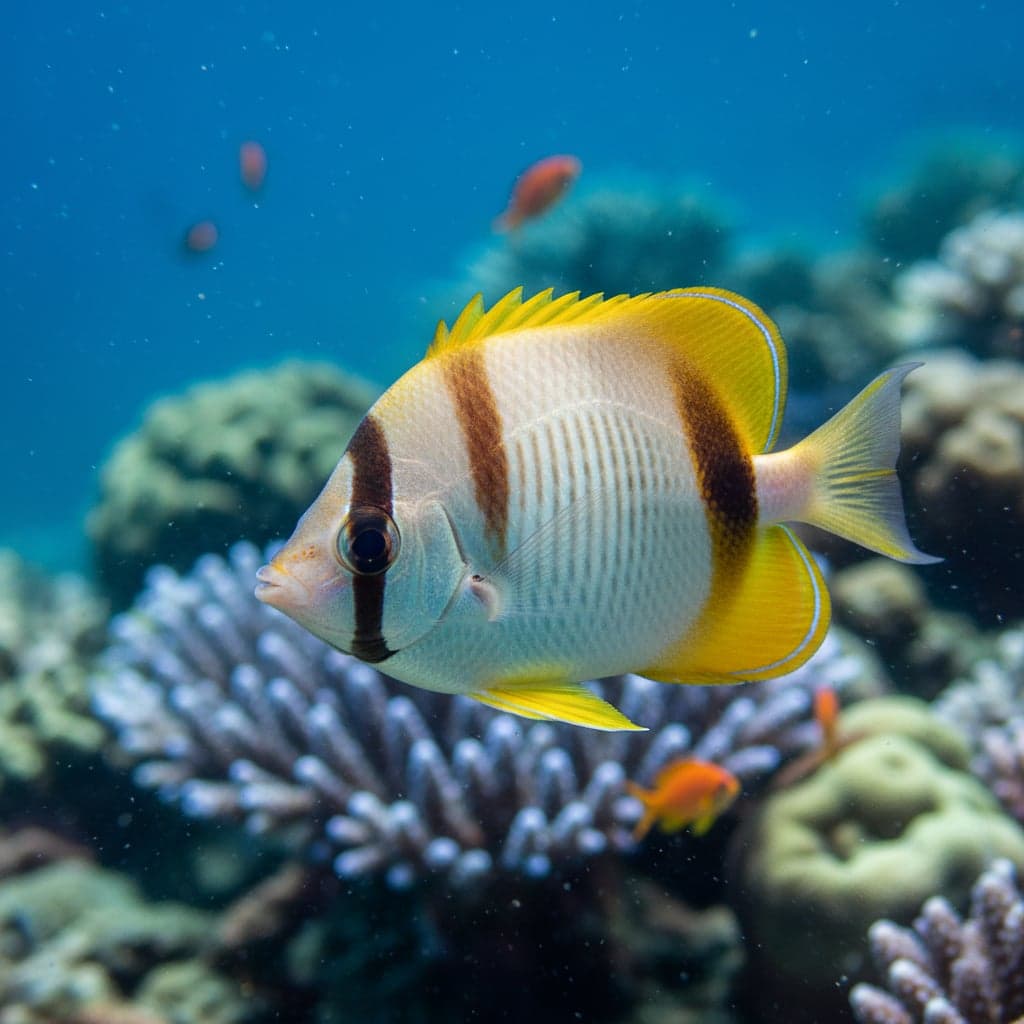
Bellus Angelfish
The Bellus Angelfish (Genicanthus bellus) is a deep-water swallowtail angel — a peaceful, planktivorous and genuinely reef-safe marine angelfish.

Bellus Angelfish
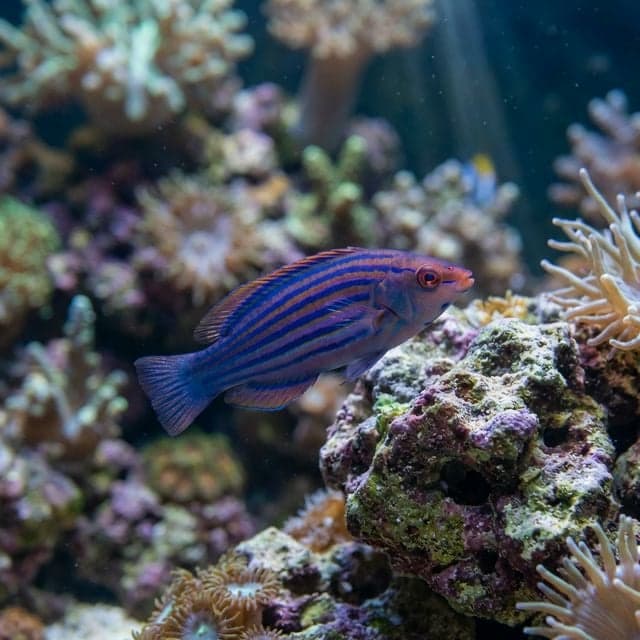
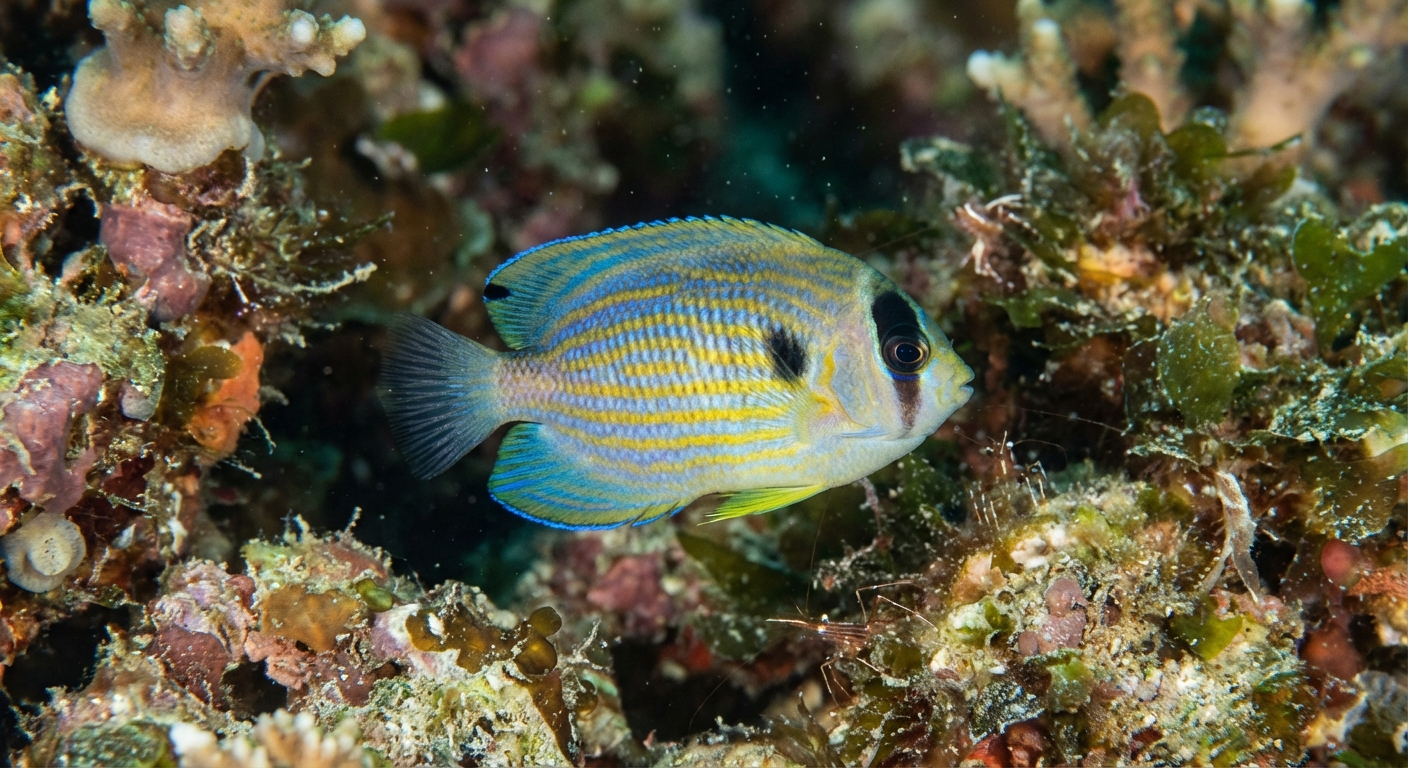
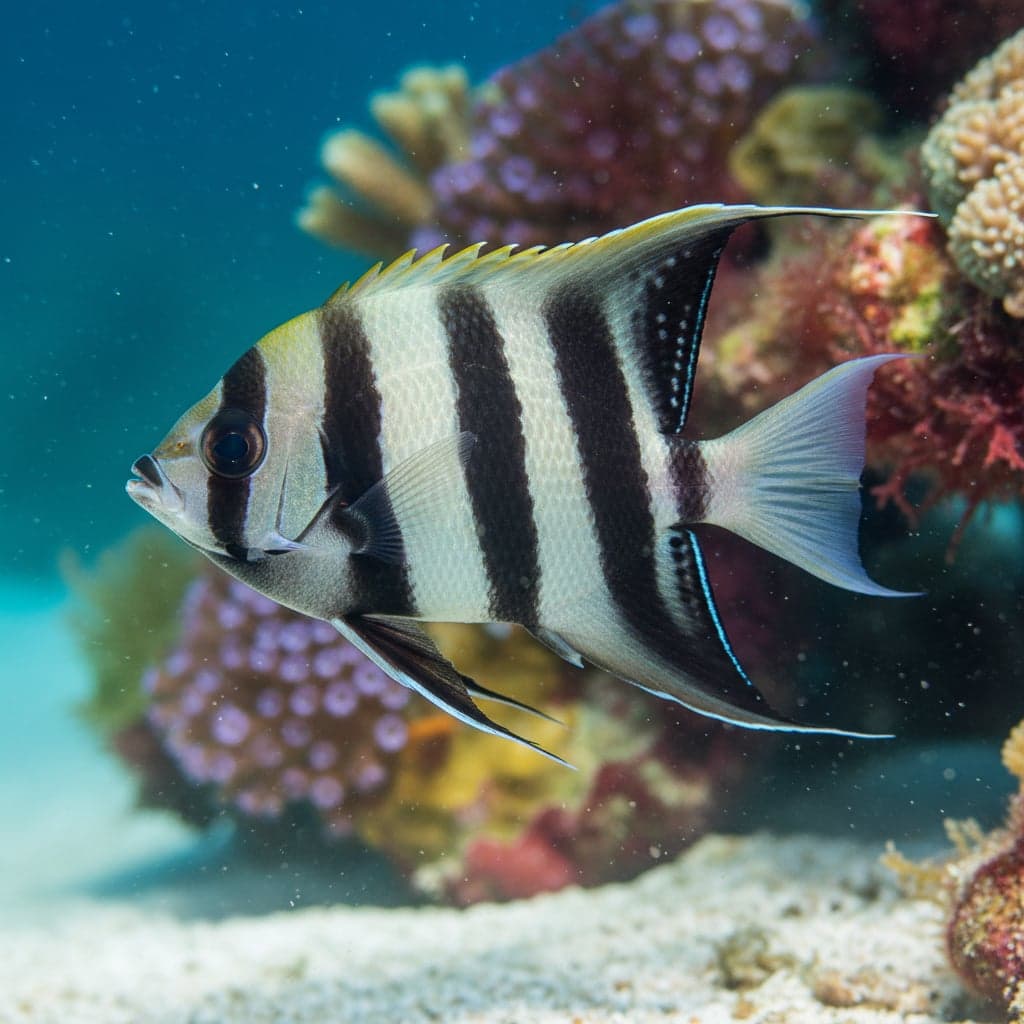
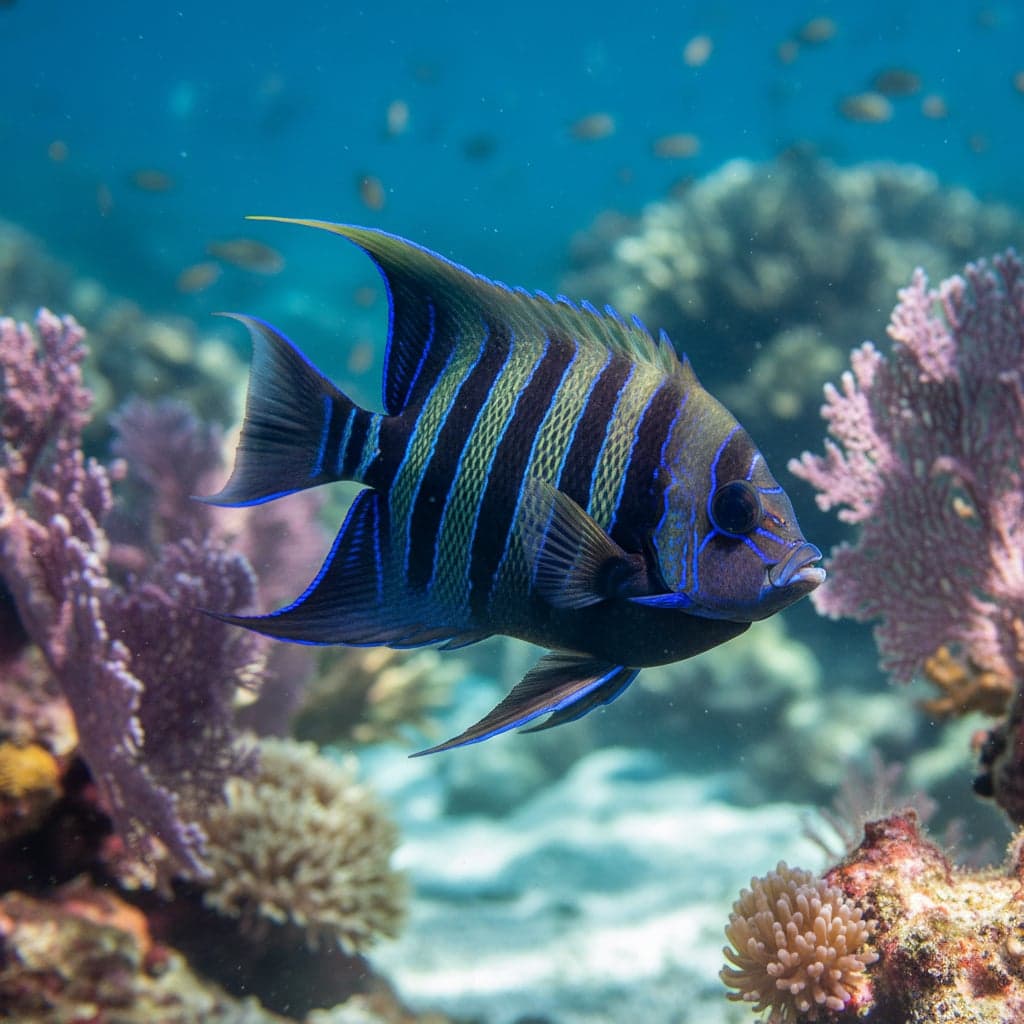
The Bellus Angelfish (Genicanthus bellus), also sold as the ornate or swallowtail angelfish, is one of the few marine angels that is genuinely reef-safe. Unlike Centropyge dwarfs and the big sponge-grazers, Genicanthus species are mid-water planktivores: they cruise open water for zooplankton instead of picking polyps and clam mantles. That habit — plus a peaceful temperament and strong sexual dimorphism — makes G. bellus a prized reef angel rather than a fish-only compromise.
Males and females wear different patterns, so a true pair is a display in its own right. Frontmatter lists Pair because that is how most aquarists keep them; wild fish form harems of one male with several females, and a large system can support that too.
Room to swim and frequent plankton-style feeds are the real price of admission. Depth-collected fish and a high price tag are the second. This is not a nano angel and not a beginner first angel — it is an intermediate reef mid-water fish that rewards careful acclimation.
Natural Habitat & Origin
Genicanthus bellus ranges across the tropical Indo-Pacific, from Indonesia and the Philippines out toward Tahiti and the Cook Islands. It is a deep-water species, typically on current-swept outer slopes and drop-offs from roughly 25–100 metres (about 80–330 feet), where it hangs in midwater schools and harems rather than grazing the reef face like a pygmy angel.
Deep origin shapes husbandry. Bright, shallow-reef lighting and a bare midwater column fight the fish. Recreate open swimming lanes above substantial live rock, steady flow that delivers food into the water column, and the option to keep lights softer during the first weeks after import. A maze of rock with no open run wastes what this genus actually does all day: cruise and pick plankton.
Care Requirements
Stable marine water with serious turnover: salinity about 1.024–1.026, pH 8.1–8.4, temperature 24–26°C (75–79°F). Adults reach around 18 cm (7 inches). Plan on about 280 litres (around 75 US gallons) or more — and prefer tanks that are long enough for sustained mid-water swimming, not just tall cubes stuffed with rock.
Strong, even flow helps. Deep-water Genicanthus are used to current and high oxygen; warm, stagnant corners and a single weak return leave a paced fish that never settles. Quarantine is mandatory. Depth collection and long shipping make this family a reliable importer of marine ich (Cryptocaryon irritans) and marine velvet (Amyloodinium ocellatum). A proper QT period with observation — and treatment when needed — before the display saves reefs from copper emergencies later. Medications belong in hospital tanks, not dumped on sessile inverts after spots appear.
Subdued lighting during acclimation is not optional theatre. Many specimens arrive from depth and bolt or freeze under intense LEDs. Ramp intensity over days to weeks once the fish is eating in QT or the display. Use the Aquarium Tracker to log salinity, temperature and feeding frequency; skipped plankton meals show up as a thinning mid-water angel long before colour fades.
Diet & Feeding
Planktivore first, omnivore in the broad sense. Wild fish spend the day picking zooplankton and some benthic invertebrates, with incidental algae. In captivity the staple is frequent small offerings of frozen mysis, enriched brine, copepod-style foods, quality marine angel preparations and foods with marine algae or spirulina content. Continuous grazers in open water do poorly on one large evening feed.
Prove feeding in quarantine before the reef. An expensive deep-water angel that ignores prepared foods is not “settling in” — it is a starvation risk. Offer variety in QT until the fish rushes food, then keep that schedule in the display. Mature systems with natural pod populations help between meals; a sterile, over-cleaned tank forces the fish onto prepared foods alone and raises the odds of weight loss.
Body shape tells the truth: a pinched belly on a newly imported male is an emergency diet problem, not a colour-phase quirk. Keep greens and meaty plankton items both in rotation so the omnivore label on the label matches what the fish actually gets.
Behavior & Temperament
Peaceful for an angelfish — not the territorial rock bully many reef keepers expect from the family. It spends its time in open water rather than staking a cave and charging neighbours. Keep singly, as a male–female pair, or as a male with several females in a large system. Multiple males in anything but a very large tank usually means chasing and a stressed subordinate.
Toward unrelated peaceful fish it is usually manageable if space and food are adequate. Hunger and crowding turn mild mid-water pacing into nipping. Do not confuse “peaceful angel” with “put it in a nano with shy gobies and hope” — volume and open water still matter at 18 cm.
Tank Mates
House with calm reef fish in different niches: anthias, wrasses, gobies, clownfish, peaceful tangs and similar in a tank large enough that mid-water traffic does not feel like a traffic jam. It generally coexists with other peaceful Genicanthus when space is honest. Avoid aggressive damsels, large triggers and boisterous predators that will pin a shy deep-water import in the rock forever.
Reef safety is the headline: G. bellus is reef-safe with corals and sessile inverts because it is a planktivore, not a sponge-and-polyp grazer. That is the whole point of the genus for reef aquarists. Do not assume every “angelfish” chart applies — lumping this species with Pomacanthus or hungry Centropyge is how reefs lose polyps.
Breeding
Genicanthus bellus is a protogynous hermaphrodite that forms harems; a dominant female can change sex to male when the male is lost. It is a pelagic spawner with a planktonic larval stage and is not a practical home-aquarium breeding project. Trade specimens are wild-collected from deep reefs — another reason to demand a feeding fish and a proper QT.
Common Health Issues
Like other marine angels, prone to marine ich and marine velvet when stressed by collection, shipping or poor oxygen. Deep-water origin raises the odds of a rough first fortnight: refuse food, hide constantly, or flash against rock under harsh light. Quarantine every fish. Keep flow high, feeds frequent and nitrates in check.
A Bellus that will not eat plankton foods is not “picky and elegant” — it is a fish at risk. Prove feeding in QT, give the adult the open water the 18 cm body and mid-water habit require, and this dimorphic swallowtail is a hardy, genuinely reef-safe angel for intermediate keepers with roomy reefs. Undersize the system or skip acclimation and it becomes another expensive, faded deep-water story.