Bicolour Chromis
The Bicolour Chromis (Pycnochromis margaritifer) is a small, striking black-and-white Indo-Pacific damselfish — hardy, reef-safe and best kept in a group.
Bicolour Chromis
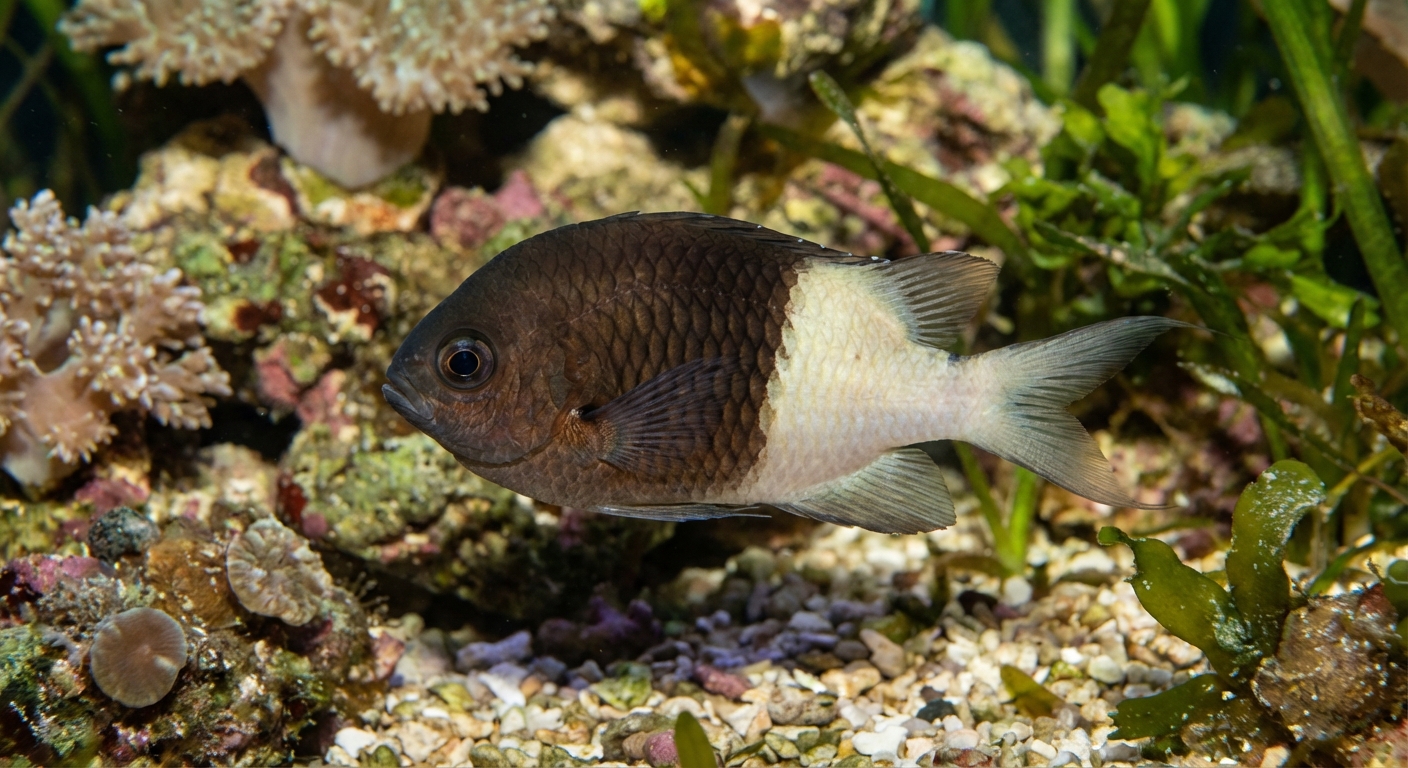
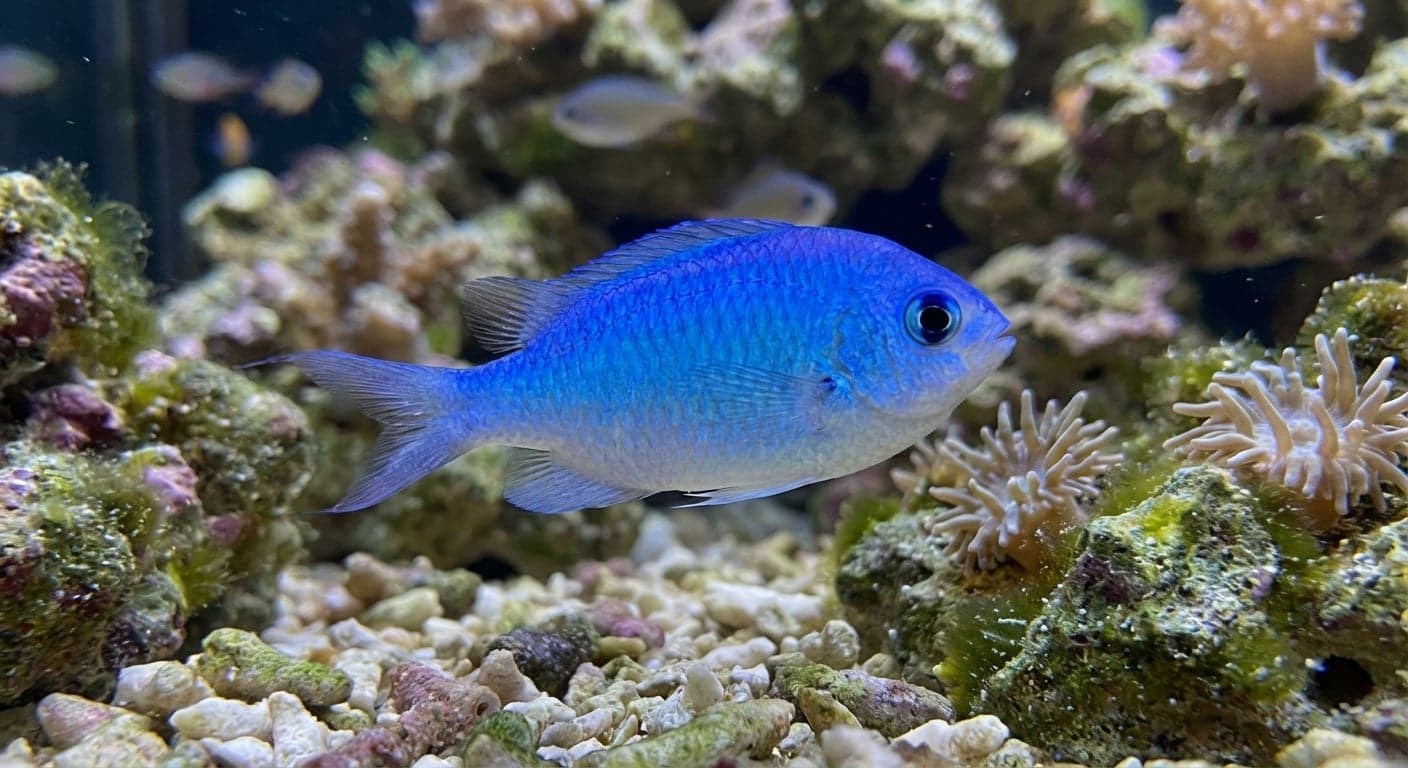
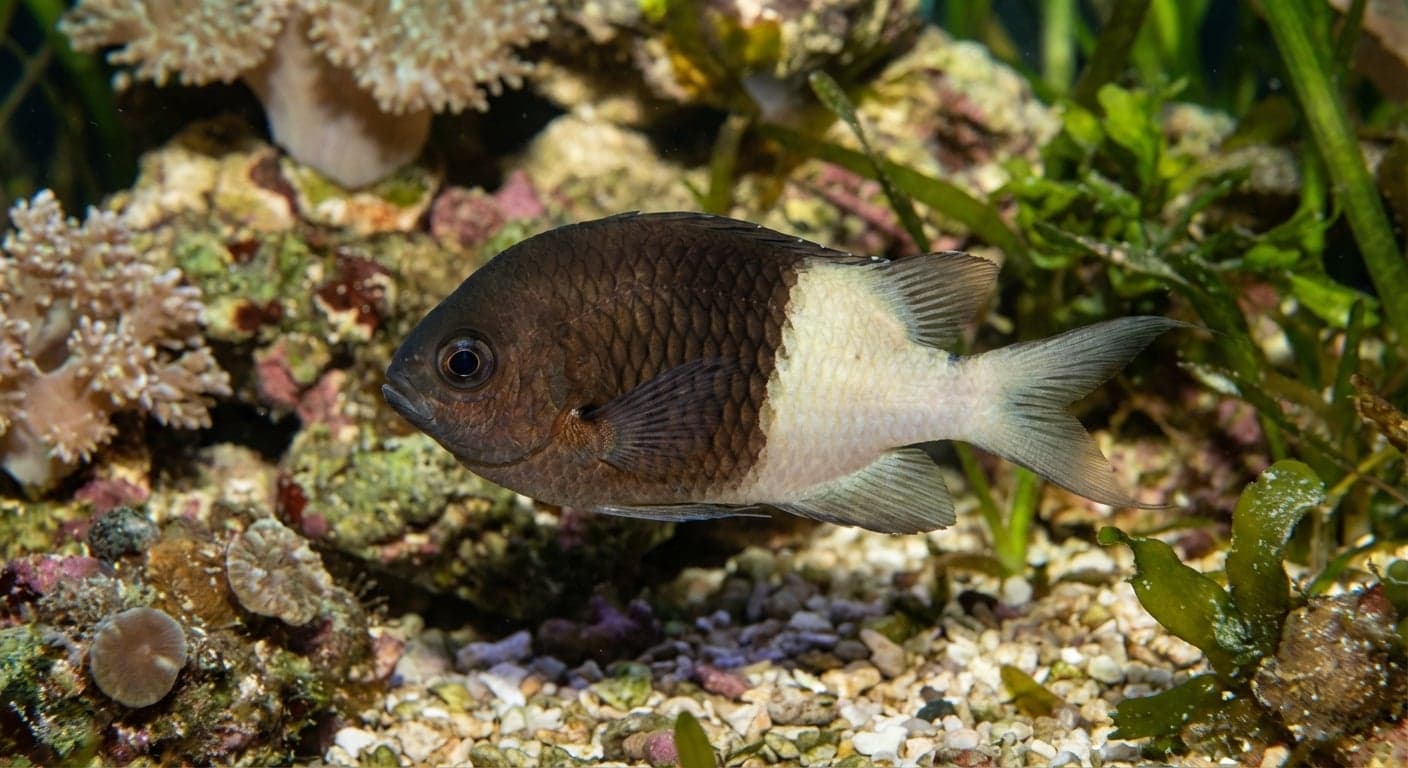
The Bicolour Chromis (Pycnochromis margaritifer, formerly Chromis margaritifer) is the damsel that looks like a printing error: the front half is a solid, deep black and the rear half is clean white, meeting in a hard vertical cut rather than a fade. That graphic split is why shops still call it the half-and-half chromis, and why a small group reads so clearly against live rock and soft coral.
It is closely related to the familiar green chromis, and it shares the same useful traits — small adult size, open-water swimming, and a genuinely reef-safe mouth. What it does not share is the green chromis habit of vanishing into a pastel blur under blue LEDs. The black-and-white pattern holds under actinic light, which is most of the point of buying it.
The common mistake is treating it as a "starter damsel" you drop in alone to cycle a tank. A single chromis is a stressed fish that parks in one hole and fades. The biology wants a shoal hovering above branching cover, and the aquarium only looks right when you give it that.
Natural Habitat & Origin
P. margaritifer ranges through the tropical central Indo-Pacific out to oceanic islands of the central Pacific. On the reef it hangs in loose aggregations above branching coral and rubble, facing into the current to pick zooplankton from the water column. When a threat passes, the whole group dives into the coral heads together — the same refuge behaviour green chromis use, and the reason branching rock or coral in the aquarium is not decoration but part of how the fish stays calm.
Depth and surge matter less than cover and open water above it. In a closed system that means a rockscape with gaps the fish can shoot into, and clear midwater above the rock for feeding. A tank that is solid rock wall with no column to mill in forces them into each other's faces and turns mild pecking into attrition.
Care Requirements
Stable reef chemistry is the whole job: salinity around 1.024–1.026, pH 8.1–8.4, and temperature about 24–26°C (75–79°F). Adults reach roughly 9 cm (3.5 inches). Frontmatter minimum volume is 115 litres (30 US gallons), and that figure only works if you are stocking a small group and the tank has length and open water — a cube packed with rock will feel smaller than the number on the glass.
Chromis are often sold as bombproof beginners. That is half true. They tolerate typical reef parameters well and they do not demand specialist lighting or flow, but they are still wild-caught marine fish with thin margins on shipping stress and parasite load. A mature, cycled system with steady salinity beats a brand-new tank every time. Use the Aquarium Tracker if you want drift in temperature or salinity flagged before the fish show it.
Flow should be enough to keep food suspended and the water oxygenated without pinning them to the glass. They feed in the column; dead spots under rock are where waste accumulates and where a shy individual goes to die unnoticed.
Diet & Feeding
In the wild this is a plankton picker with a side of algae and tiny invertebrates — an omnivore, not a pure carnivore. The gut is built for frequent small meals moving past in current, not one heavy pellet dump at dinner.
In captivity that means small frozen mysis and enriched brine, quality marine flakes or micro-pellets, and some marine algae content in the mix. Feed two or three modest portions a day rather than one large one. Underfeeding is the mechanism behind the hobby's "chromis mysteriously disappear" pattern: hunger sharpens the pecking order, the weakest fish stops getting food, stress climbs, and the group collapses to one or two survivors over months. The shop sold you six; the tank kept two. That is not bad luck — it is feeding and space failing the shoal.
Do not expect them to clean the tank. They are not algae-control livestock. Any grazing they do is incidental.
Behavior & Temperament
Among damsels this is one of the easier temperaments. It is not the Azure or domino damsel that owns a rock and murders neighbours. Intra-group squabbling still happens while a pecking order settles, and keeping five or more spreads that aggression so no single fish is constantly chased.
Kept singly it becomes withdrawn and loses the open-water milling that makes the species worth keeping. Kept in too small a group in too small a volume, the dominant fish slowly eliminates the rest. If you cannot house a proper shoal, pick a different fish rather than buying three "for now."
They occupy midwater and the upper rock face, diving for cover when startled. They do not dig, rearrange rock, or harass sessile invertebrates.
Tank Mates
Peaceful reef fish in similar size classes work: clownfish, other chromis, gobies, smaller wrasses, cardinalfish and anthias. Avoid large predators and notoriously aggressive damsels that will pin them into rock forever.
Reef-safe here is literal. The mouth is built for plankton, not coral polyps or clam mantles. Soft corals, LPS, SPS and ornamental shrimp are left alone. That is the practical reason chromis remain a default reef community fish — they add motion without adding coral risk.
Do not mix them with anything that regards a 9 cm damsel as a snack. Lionfish, large groupers and big triggers will end the experiment quickly.
Breeding
Like other damselfish, P. margaritifer lays demersal adhesive eggs that the male guards and fans. Pairing and nest-tending show up in home aquaria more often than people expect. What almost never succeeds at home is rearing the pelagic larvae: the fry are tiny, need continuous planktonic food, and die in ordinary display tanks.
Trade fish are wild-collected. Captive breeding at commercial scale for this species is not what fills the bag at the shop, so treat every new arrival as a wild import with wild pathogen risk.
Common Health Issues
Hardiness in established fish is real; hardiness in freshly imported chromis is oversold. Marine ich (Cryptocaryon irritans) and marine velvet (Amyloodinium ocellatum) still take stressed fish, and chromis shipments are also associated with Uronema and bacterial sores when holding systems are poor.
Quarantine new arrivals in a separate system before they touch the display — copper-safe hospital gear if you treat with copper, remembering copper and invertebrates do not coexist. Stable salinity, no ammonia spikes, and a group large enough that no individual is endlessly chased are the prevention that matters more than any tonic in the water.
Watch for clamped fins, flashing, white spots, rapid breathing or a fish that stops coming to midwater at feed time. Isolate early. A chromis that hides for days while the rest feed is already in trouble.