Blackspot Hogfish
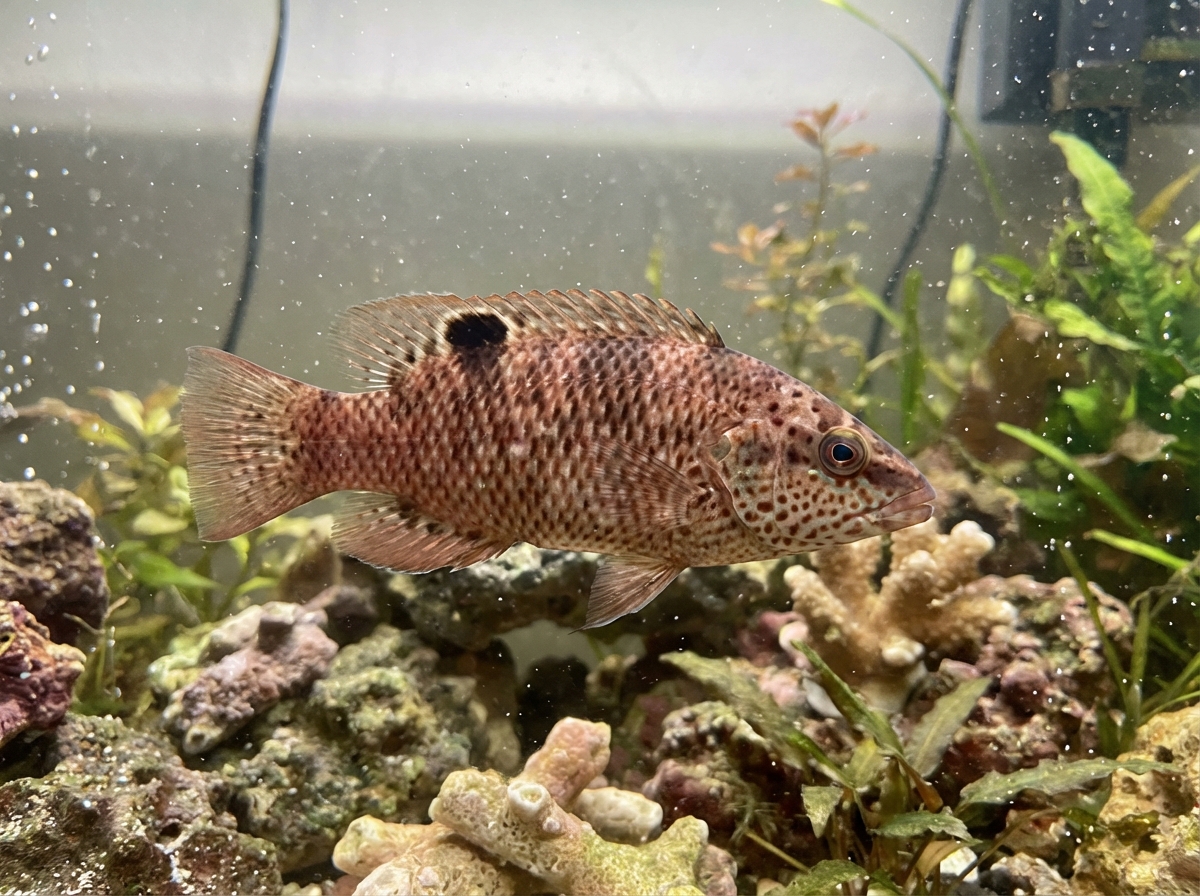
The Blackspot Hogfish (Bodianus opercularis) is a small, candy-striped deep-reef wrasse from the Indian Ocean — hardy and coral-safe, but a predator of small invertebrates.
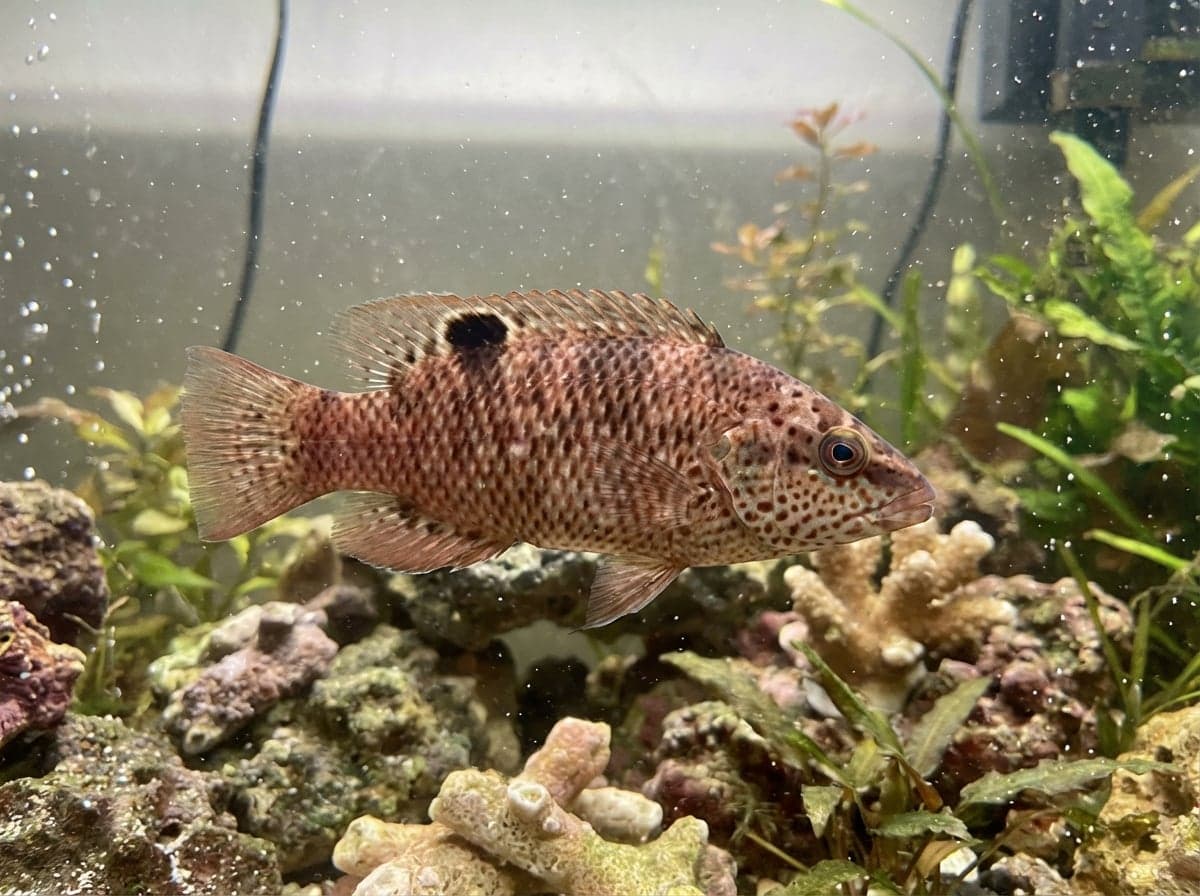
Blackspot Hogfish
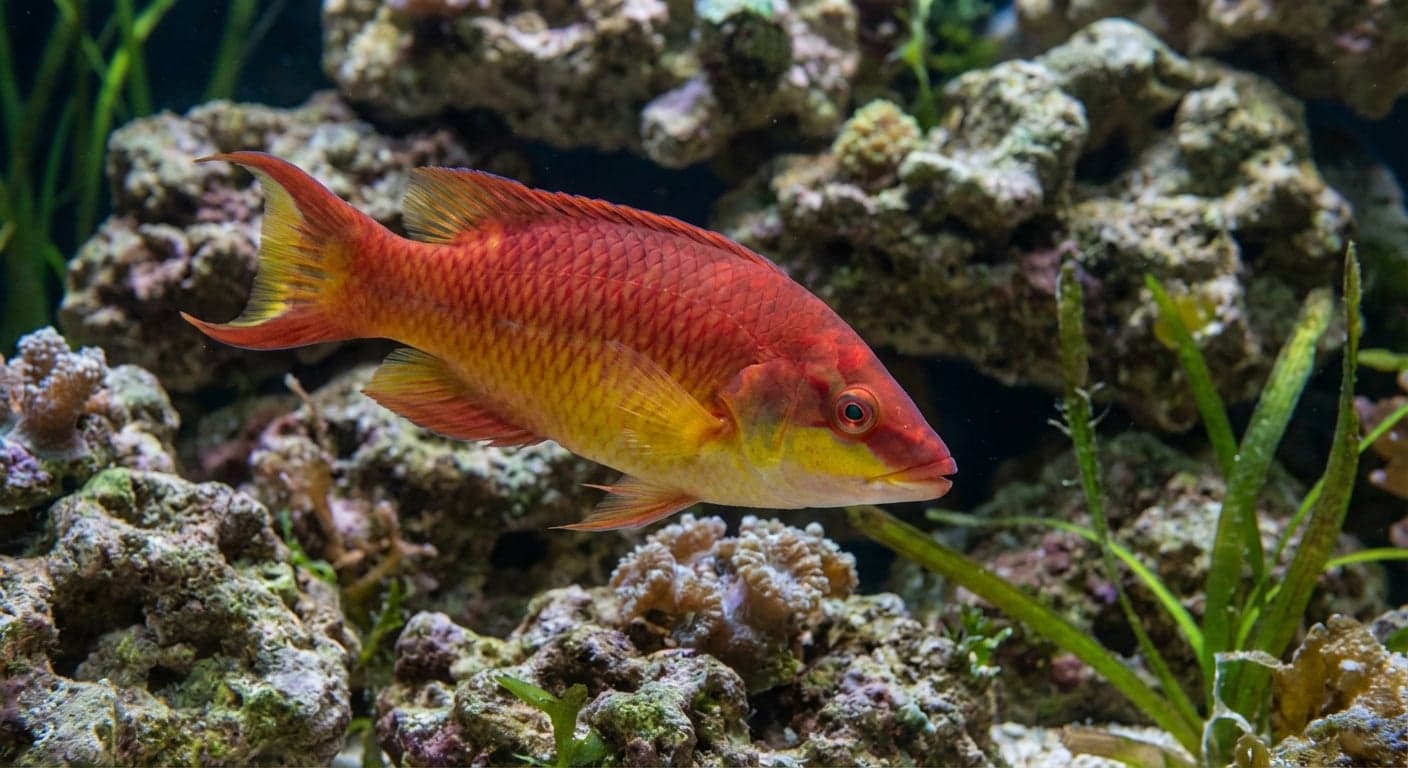
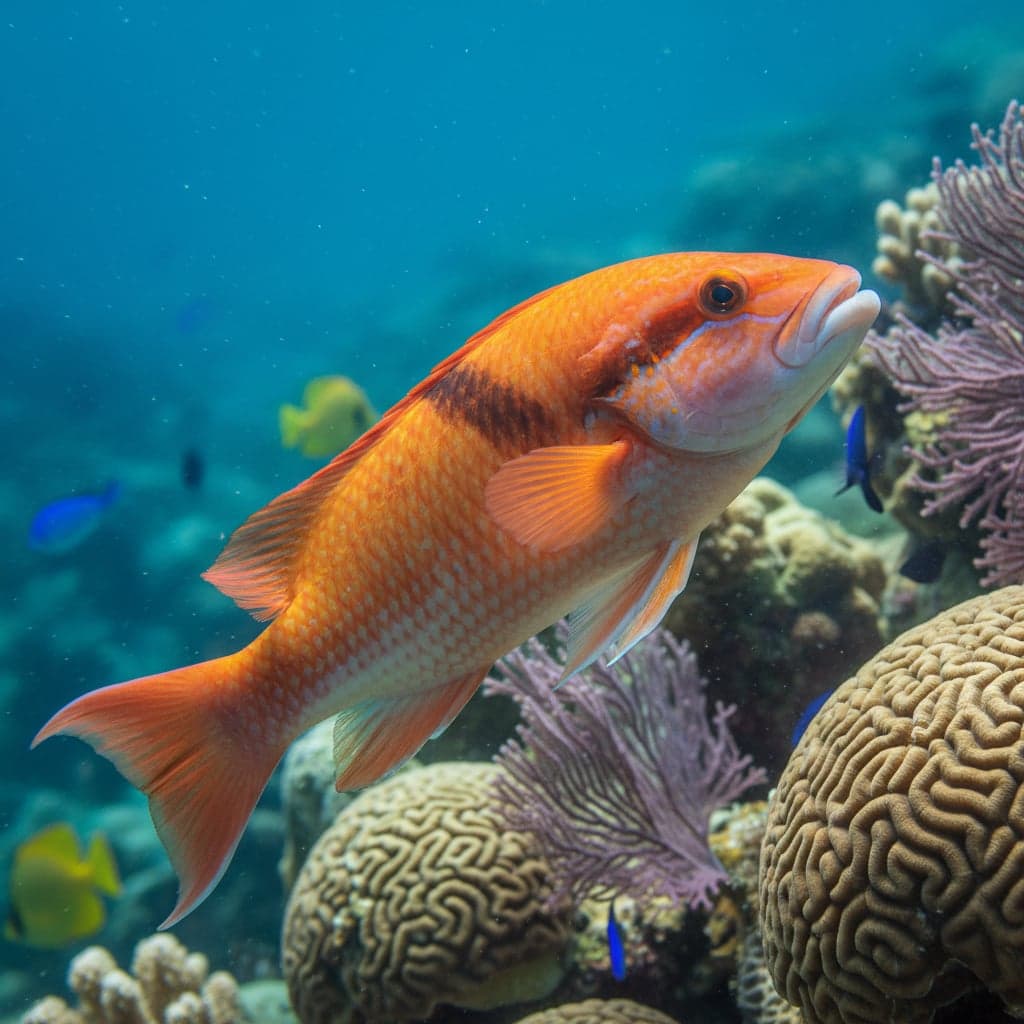
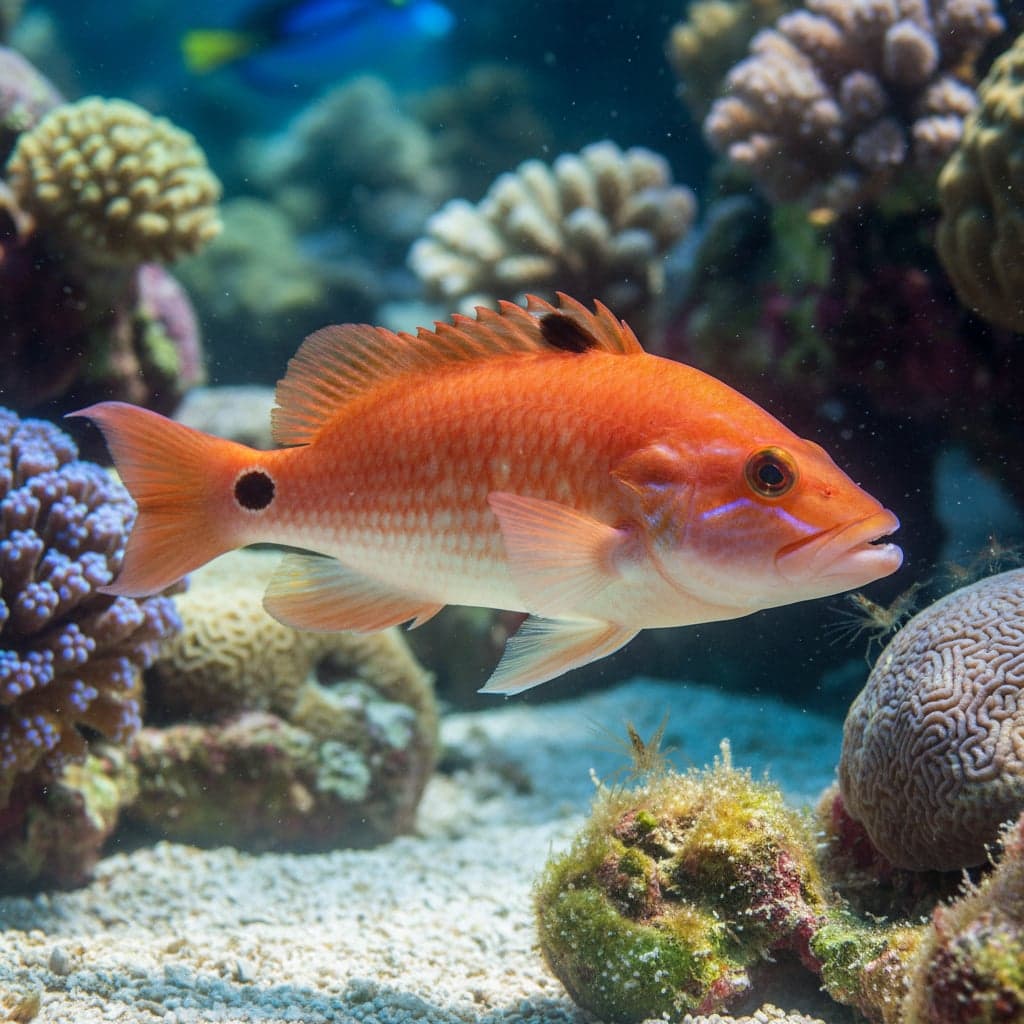
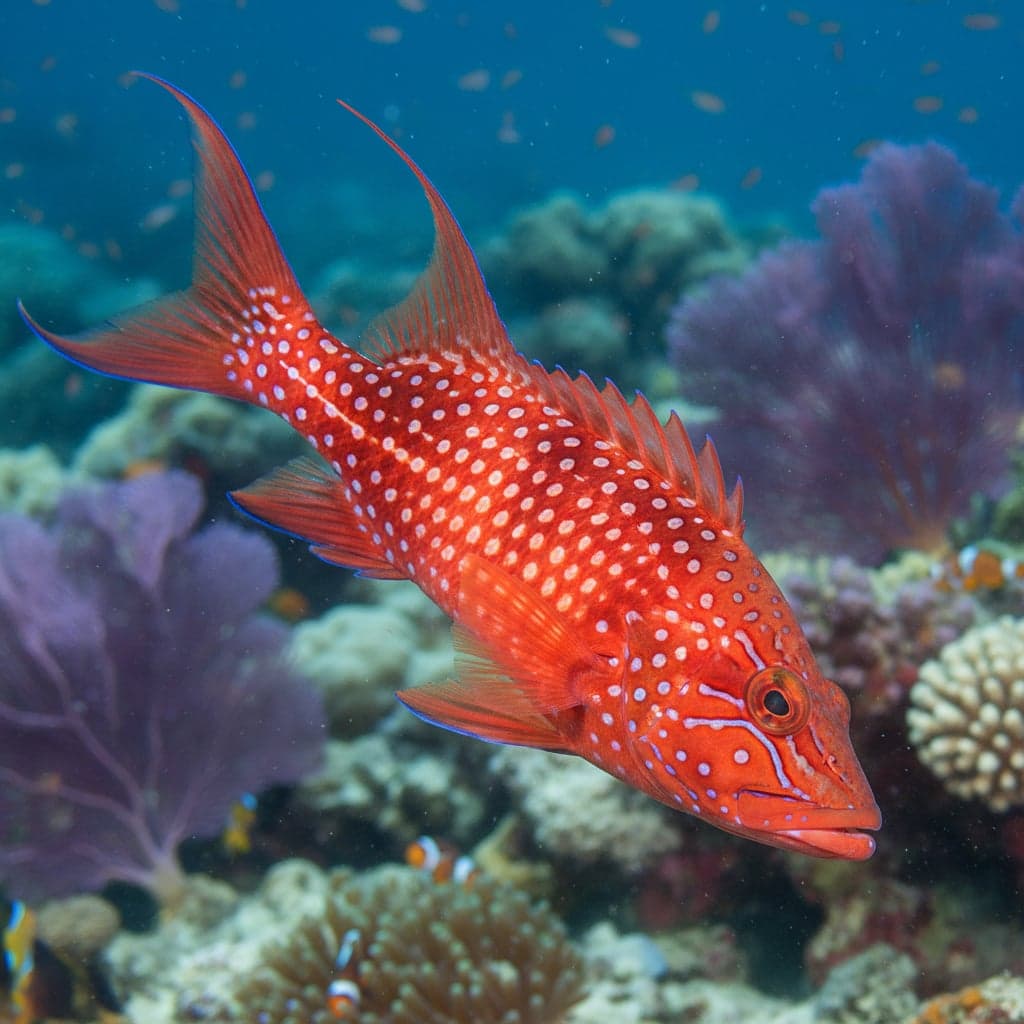
The Blackspot Hogfish (Bodianus opercularis), also sold as the candystripe hogfish, is a small, boldly banded wrasse — red and white stripes with a dark blotch on the gill cover and another toward the rear of the dorsal. It stays modest for a hogfish, comes from deeper Indian Ocean slopes, and brings the usual Bodianus package: hardy once settled, endlessly curious, and frankly interested in anything that looks edible and fits in its mouth.
Coral-safe is not the same as reef-safe in the full sense. This fish leaves polyps alone and vacuums ornamental shrimp, small crabs, snails and worms. Plan the system around that appetite or you will learn it the expensive way.
As with other active wrasses, swimming room and a secure lid are the real price of admission. Temperament toward smaller fish is the second. Frontmatter lists Solitary because one confident hogfish is the honest default in home aquaria — not a school of candy stripes.
Natural Habitat & Origin
Bodianus opercularis occurs in the Indian Ocean — Red Sea and Gulf of Aqaba south toward Madagascar and Mauritius, east to Christmas Island — on deeper reef slopes, drop-offs and shaded rock, often near caves and overhangs. It hunts over rock and rubble for benthic invertebrates rather than hovering mid-water like a fairy wrasse.
In the aquarium recreate patrol routes and cover: substantial live rock with caves, ledges and open lanes to cruise. A flat, bare FOWLR box with nowhere to duck into produces a paced, jumpy wrasse. Deeper origin also means many imports settle better under softer light at first; blast them with intense reef LEDs on day one and they hide until hunger wins.
Care Requirements
Stable marine water: salinity about 1.024–1.026, pH 8.1–8.4, temperature 24–26°C (75–79°F). Adults reach around 18 cm (7 inches). Plan on about 280 litres (around 75 US gallons) or more — length for swimming beats a short, tall tank of the same volume. A tight-fitting, gap-free lid is not optional; active labrids clear open tops.
Flow and oxygenation matter. This is an active hunter, not a stillwater ornament. Quarantine every specimen. Shipping stress makes wrasses reliable carriers of marine ich (Cryptocaryon irritans) and marine velvet (Amyloodinium ocellatum). Observe or treat in QT before the display — medications belong in hospital tanks, not as panic copper on a mixed reef after white spots show.
Use the Aquarium Tracker to log salinity, temperature and feeding; a hogfish that suddenly ignores meaty foods after weeks of begging is flagging water or illness, not a sudden diet preference. Subdued lighting during acclimation helps deep-slope fish settle before you restore full reef intensity.
Diet & Feeding
Carnivore, no debate. Wild fish take small crustaceans, molluscs and other benthic invertebrates. In captivity they usually accept prepared foods readily: frozen mysis, enriched brine, finely chopped seafood, krill and quality marine pellets. Feed once or twice daily; this species learns the glass and begs hard.
Do not confuse easy feeding with a licence to underfeed or to stock prized inverts “just to see.” A well-fed hogfish still samples the reef’s mobile cleanup crew. If you keep ornamental shrimp, this is the wrong wrasse. If the fish arrives thin and refuses food, solve that in QT — a pinched Bodianus is a husbandry emergency, not a “shy phase.”
Variety keeps condition and colour. Relying forever on one flake brand works until it does not; rotate meaty frozen items and a solid pellet so the fish cannot hold out for a single favourite.
Behavior & Temperament
Semi-aggressive and confident. Toward similarly sized, robust fish it is often fine; toward small, timid or slow species it can harass, especially as it grows into its full 18 cm. Keep one per tank unless you have a very large system and a clear plan. Introduce thoughtfully — last among assertive fish often works better than first, so it does not own the entire rockscape from day one.
Daytime behaviour is continuous patrol of rock and sand looking for food. Nighttime means shelter in the rockwork. Jumping is the classic surprise failure mode: one gap in the lid, one startle, one dry floor. Treat lids as part of the life-support system, not as optional glassware.
Tank Mates
Pair with robust marine fish that hold their own: tangs, larger wrasses, angelfish, assertive clownfish and similar in honest volume. Avoid nano gobies, tiny fairy wrasses, expensive cleaner shrimp and other bite-sized targets. Coral safety is good news for SPS/LPS keepers who want a colourful wrasse without polyp nipping — invertebrate safety is the hard no.
Do not trust generic “reef-safe wrasse” charts that lump Paracheilinus and Bodianus together. Flasher wrasses and hogfish share a family and little else in invert risk. This species belongs in fish-only-with-live-rock systems, or in reefs that deliberately omit prized mobile inverts.
Breeding
Bodianus opercularis is a protogynous hermaphrodite, typical for the genus, and a pelagic spawner. Home breeding and larval rearing are not realistic trade paths. Specimens in the hobby are wild-collected. Buy a feeding fish, quarantine it, and treat captive breeding claims for this species with scepticism unless you are talking specialist facilities.
Common Health Issues
Hardy once acclimated, but still prone to marine ich and marine velvet under shipping and poor oxygen stress. Jump injuries and lid escapes are husbandry-made problems, not mysterious disease. Quarantine every fish. Keep water stable, meaty foods constant and the top sealed.
A candystripe hogfish that refuses food in QT is not “waiting for live rock” — prove feeding before display life gets harder. Give it swimming room, robust tankmates and an honest invert policy, and B. opercularis is a dependable, characterful intermediate wrasse. Stock it over cleaner shrimp in a 100-litre nano and you get a short, expensive lesson in hogfish appetite.