Blue Spotted Hill Trout: Opsarius bakeri
A beautiful, active cyprinid from India. Needs high flow and cool water. Not a true trout.
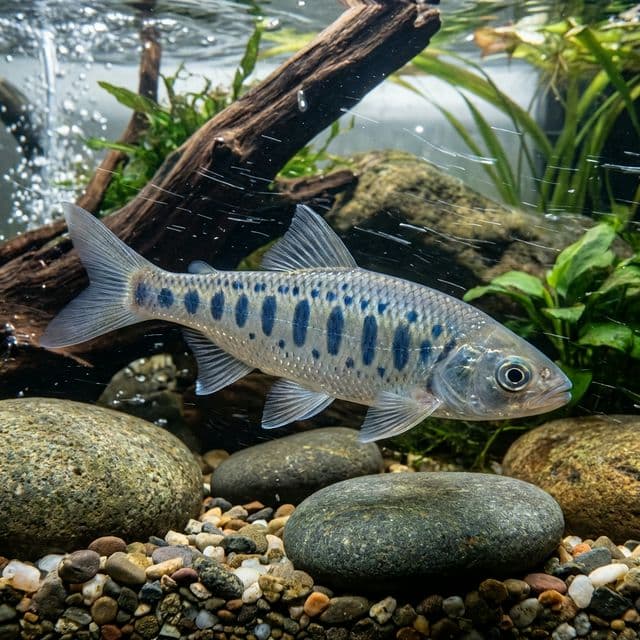
Blue Spotted Hill Trout
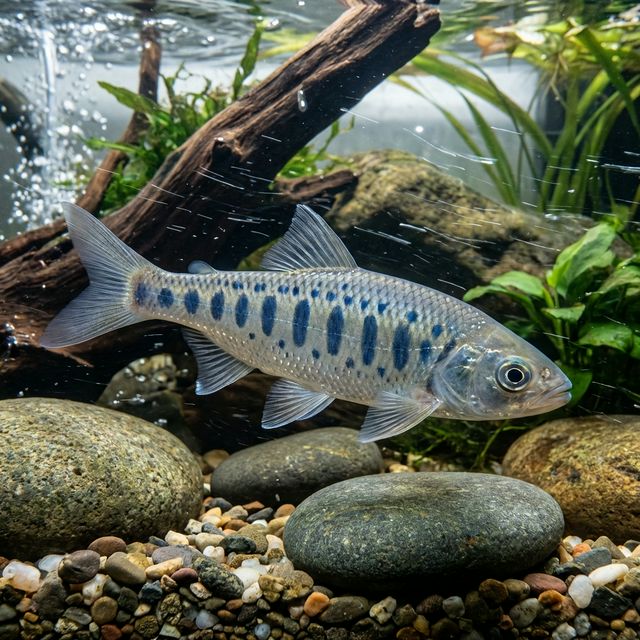
The Blue Spotted Hill Trout, scientifically known as Opsarius bakeri, is a striking freshwater fish that captures the attention of aquarists and enthusiasts alike. Its mesmerizing blue spots, which stand out vividly against its silvery body, add a splash of color and elegance to any aquarium setup. Apart from its visual appeal, the Blue Spotted Hill Trout is not just a pretty face; it plays an important role in the aquarium hobby, valued for its unique behavior and relatively manageable care requirements, making it an ideal choice for beginners and experienced aquarists alike.
This species hails from the rich biodiversity of Southeast Asia, particularly found in the fast-flowing streams and rivers of Malaysia. The Blue Spotted Hill Trout has gained a reputation for its vibrant colors and lively personality, making it a sought-after species for community tanks. Its presence not only enhances the aesthetic of an aquarium but also promotes a biotope that mimics its natural habitat, allowing for a more immersive and educational experience for both fish and hobbyist.
Natural Habitat & Origin
The Blue Spotted Hill Trout is typically found in the mountainous regions of Malaysia, where it resides in cool, clear waters of tributaries and streams. These freshwater environments are characterized by their high oxygen levels, stable temperatures, and slightly acidic to neutral pH levels, presenting a pristine habitat teeming with life. The surrounding jungle vegetation contributes to the water’s natural filtration, resulting in low levels of turbidity and a predominance of plant debris that creates a nutrient-rich environment for aquatic life.
These fish thrive in conditions reminiscent of their native habitats, which largely consist of fast-flowing streams that are well-oxygenated and feature rocky substrates. Understanding their natural habitat is essential for aquarists aiming to replicate these conditions in captivity, allowing the Blue Spotted Hill Trout to not only survive but flourish within an aquarium ecosystem.
Care Requirements
To ensure the well-being of the Blue Spotted Hill Trout, aquarists should strive to replicate its natural environment within their tanks. The ideal water parameters for these fish include a pH of 6.0 to 7.5, a temperature range of 22°C to 26°C (72°F to 79°F), and a hardness level between 5 to 15 dGH. A minimum tank size of 75 liters (20 gallons) is recommended, allowing ample space for swimming and establishing territories.
The tank setup should include a fine substrate that mimics the riverbeds of their natural habitat, with ample hiding spots created by rocks, driftwood, and sparse vegetation. A moderate light intensity is best, as this mimics the dappled sunlight they would encounter in the wild. Incorporating live plants can also help maintain water quality and provide additional cover while creating a serene, natural-looking environment.
Diet & Feeding
The Blue Spotted Hill Trout is an omnivorous species that thrives on a varied diet. In captivity, they can be fed high-quality flake and pellet foods as a staple, supplemented with frozen or live foods such as bloodworms, brine shrimp, and daphnia to provide essential nutrients. This diverse diet supports their growth and vibrant coloration, and it’s important to ensure that all food is appropriately sized for their mouths to prevent choking or digestive issues.
Feeding should be approached with care; aquarists should aim to perform small feedings multiple times a day to mimic their natural foraging behavior. This not only promotes healthy eating habits but also encourages movement and engagement, enhancing their overall wellbeing within the aquarium.
Behavior & Temperament
The Blue Spotted Hill Trout exhibits a generally peaceful temperament, making it a wonderful addition to community aquariums. These fish are social creatures that thrive when kept in small groups, typically requiring a minimum shoal of six individuals to feel secure and exhibit natural behaviors. They are known for their lively swimming patterns, often darting through water columns and exploring their environment.
In terms of tank placement, these fish are mid-water swimmers, enjoying both free swimming space and the chance to explore near the substrate and plants. Although they are predominantly non-aggressive, male Blue Spotted Hill Trouts can display territorial behavior during breeding seasons, so providing ample space and hiding spots can mitigate potential conflicts.
Tank Mates
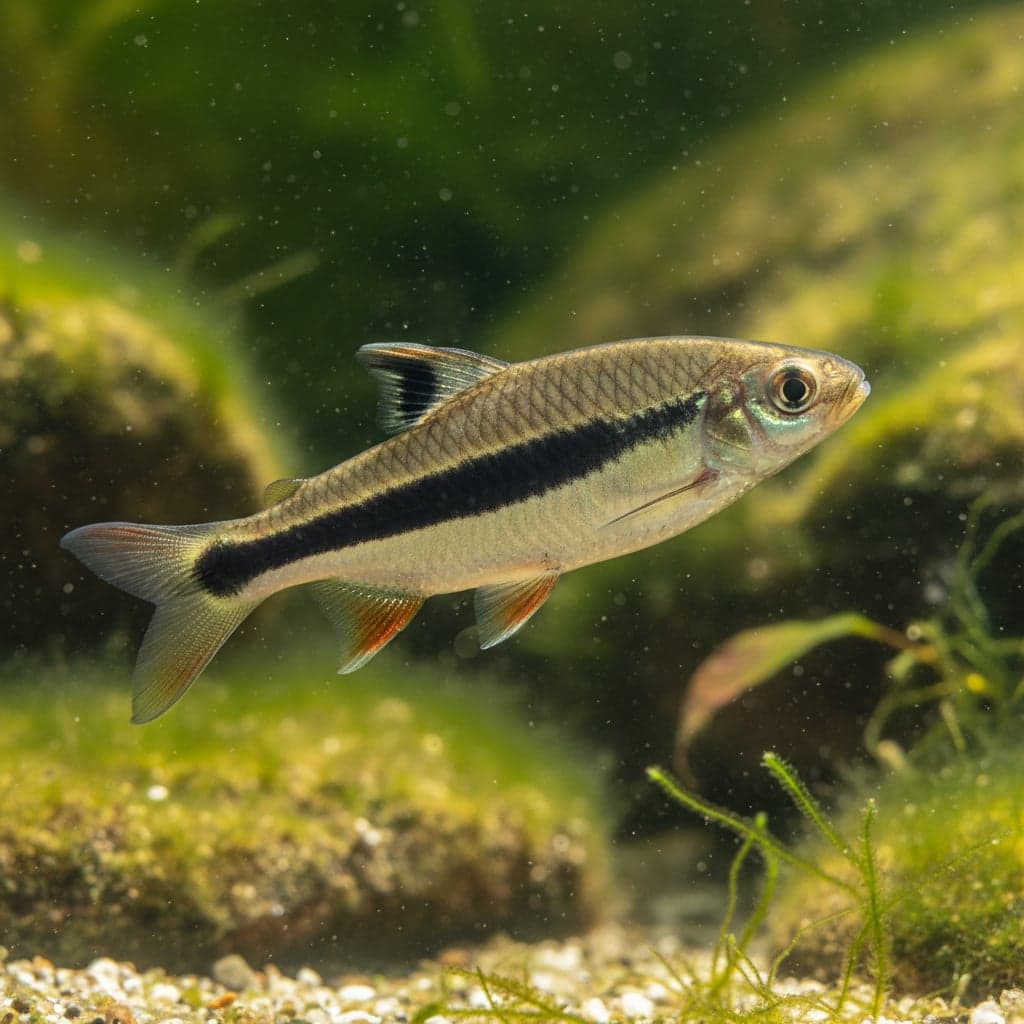
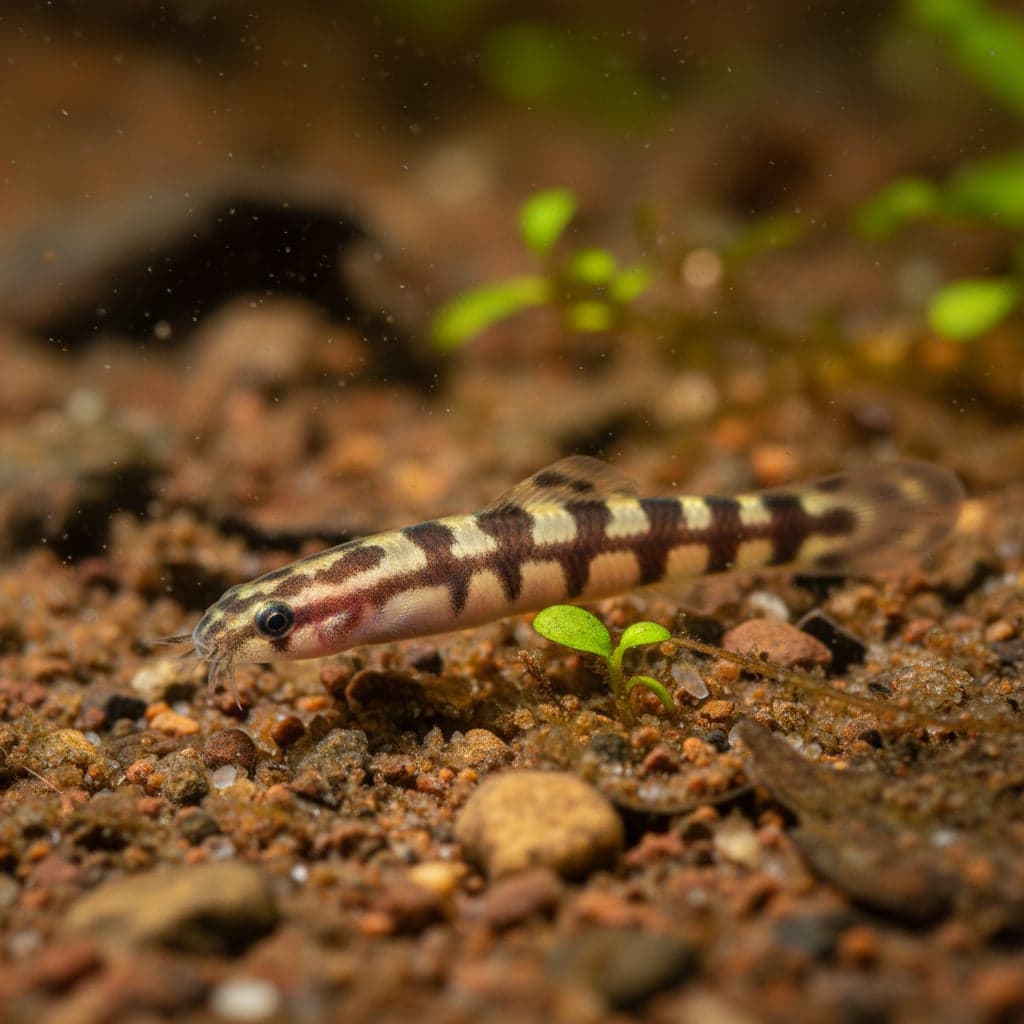
When selecting tank mates for the Blue Spotted Hill Trout, it is important to choose species that match their peaceful disposition. Compatible tank mates include larger rasboras, tetras, and suitable catfish such as otocinclus and Corydoras. These fish generally coexist well due to their similar water requirements and peaceful nature.
Conversely, it is crucial to avoid keeping the Blue Spotted Hill Trout with aggressive or highly territorial species such as cichlids or larger barbs, as this could result in stress or injury. Ensuring a diverse yet compatible community will provide a harmonious tank environment that benefits all inhabitants.
Breeding
Breeding Blue Spotted Hill Trout in captivity can be achieved with the right conditions and environment. These fish are egg layers and prefer to spawn in soft, slightly acidic water with a temperature around 24°C (75°F). To encourage spawning, a separate breeding tank can be set up with fine-leaved plants or spawning mops where the female can lay her eggs.
Once spawning occurs, it is advisable to remove the adults, as they may consume their eggs. The eggs typically hatch in about 24-48 hours, and the fry will need to be fed infusoria or finely crushed flake food until they grow large enough for more substantial offerings. Providing a breeding environment specific to their needs can lead to successful spawning and a rewarding experience for aquarists.
Common Health Issues
While the Blue Spotted Hill Trout is generally hardy, they are susceptible to certain health issues, primarily poor water quality leading to stress and disease. Common ailments include ich (white spot disease) and fin rot, often triggered by suboptimal water conditions. Regular water testing and high-quality filtration are essential for maintaining water parameters that promote fish health.
Preventative measures such as routine water changes, maintaining a stable temperature, and ensuring proper diet will decrease the risk of disease. Additionally, quarantining new arrivals can help prevent the introduction of pathogens to your established aquarium, keeping your Blue Spotted Hill Trout and other inhabitants healthy and thriving.