Blue Throat Triggerfish
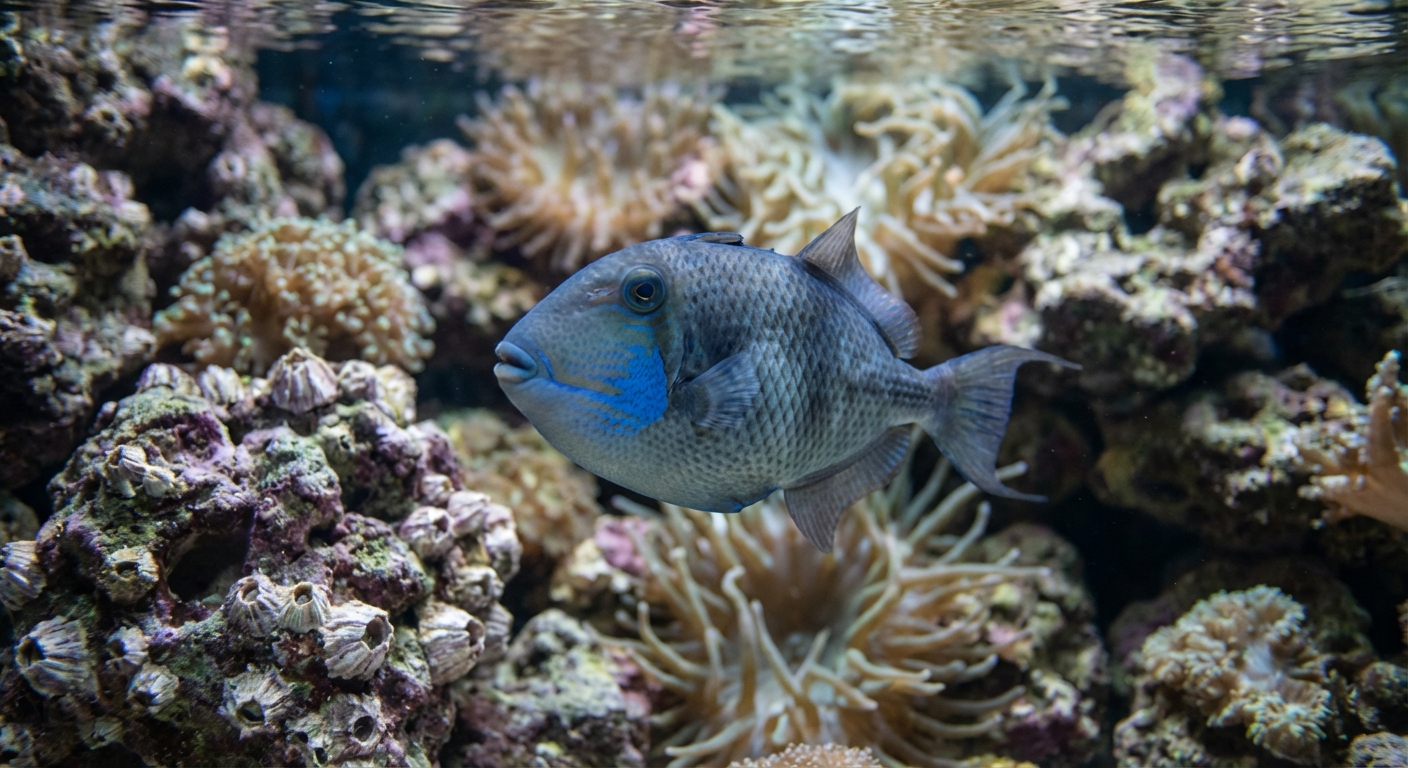
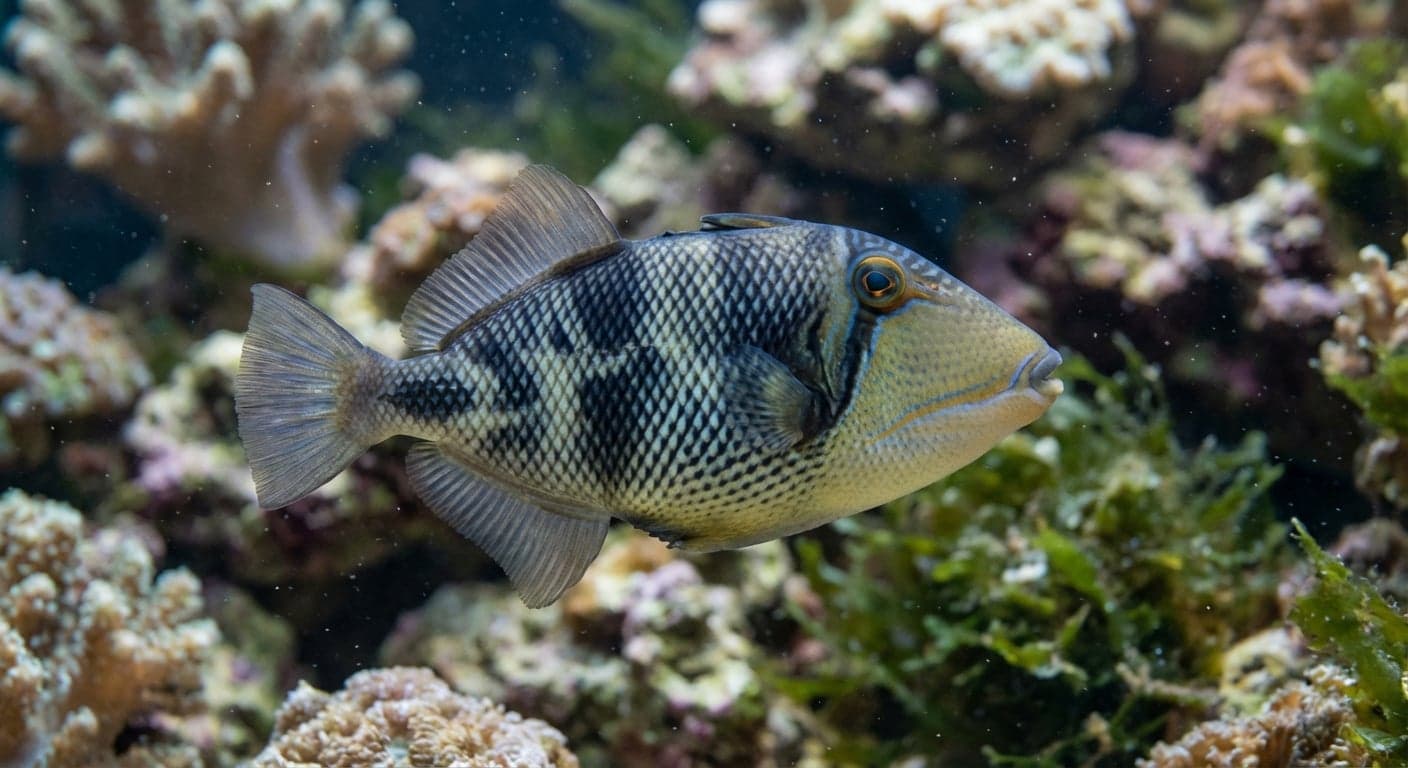
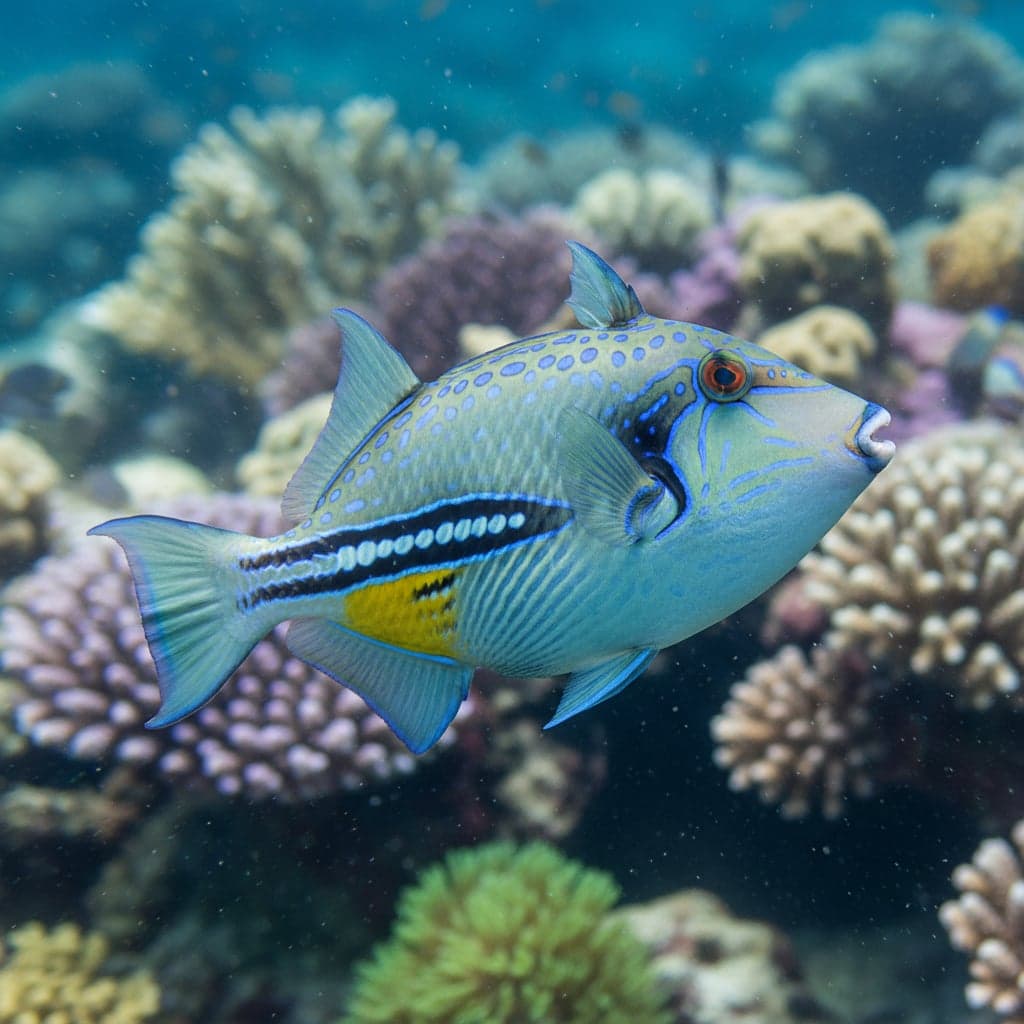
The Blue Throat Triggerfish (Xanthichthys auromarginatus) is one of the few reef-safe triggerfish — a peaceful, planktivorous fish whose males sport a vivid blue throat.
Blue Throat Triggerfish
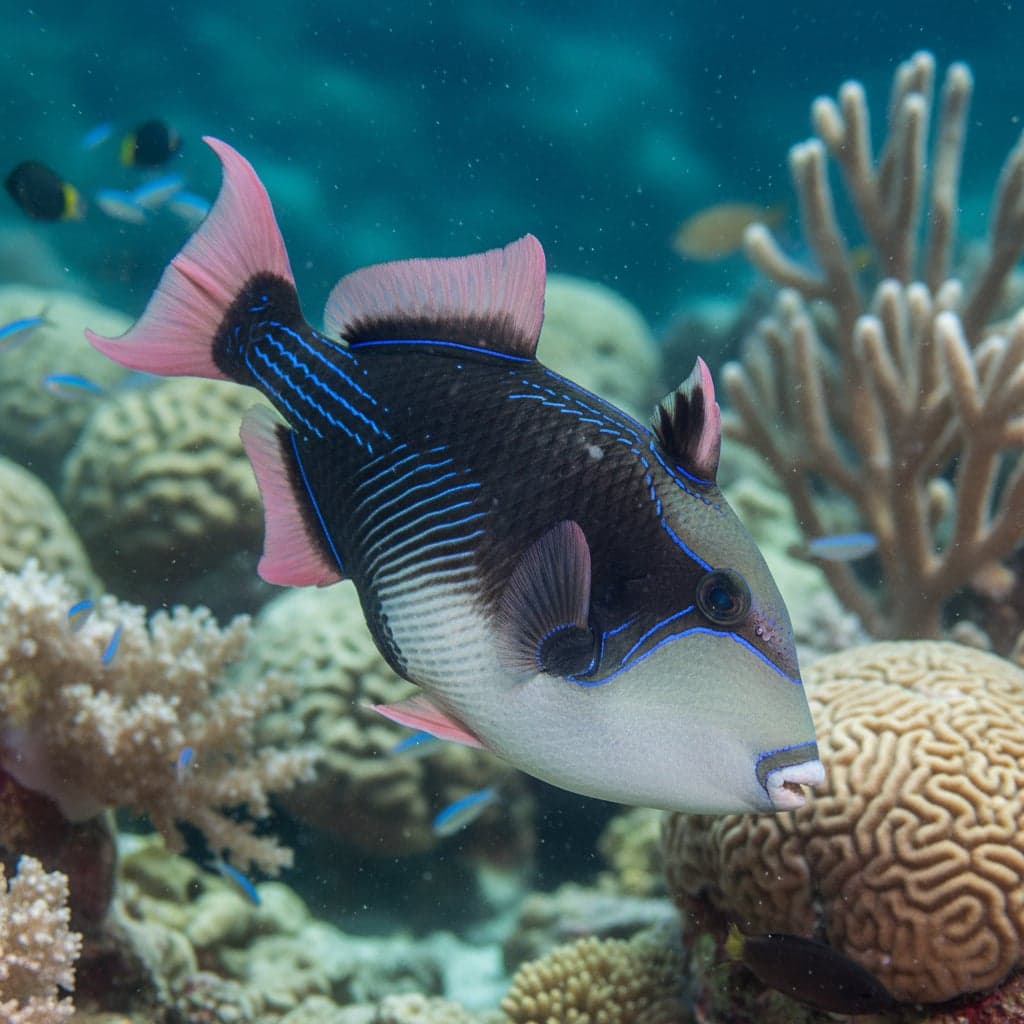
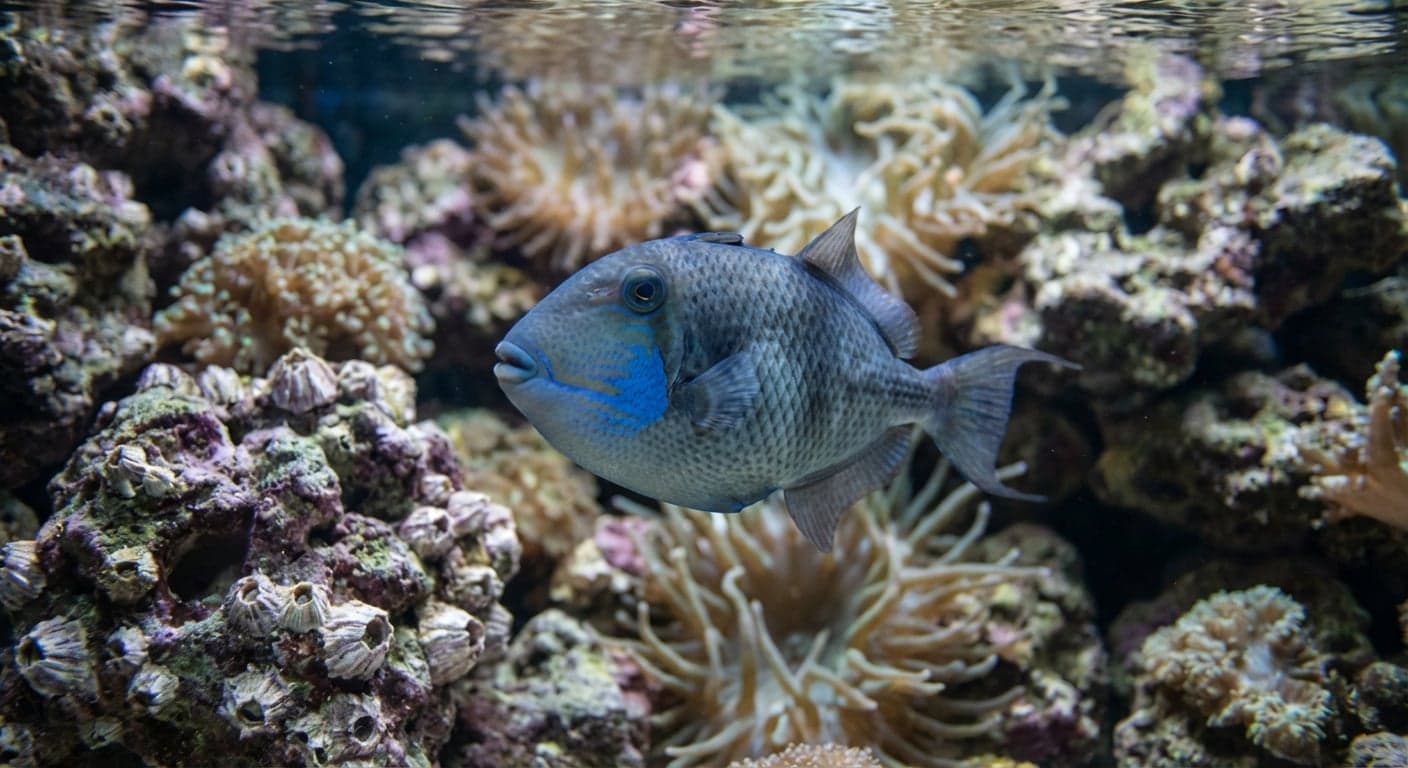
The Blue Throat Triggerfish (Xanthichthys auromarginatus), also sold as the gilded or blue-jaw triggerfish, is the exception that keeps reef keepers interested in triggers. Soft grey body, neat pale spots, yellow fin margins — and mature males wearing the vivid blue throat that names the fish. Adults reach about 30 cm (12 inches). Unlike boisterous, shell-crushing relatives, this species is a mid-water plankton feeder with manners closer to a large wrasse than to a Balistoides wrecking crew.
That combination — triggerfish character without the usual carnage — is why it is a favourite for people who want the genus in a reef. Frontmatter still lists semi-aggressive for a reason: “reef-safe trigger” is comparative, not a promise of lifelong pacifism as the fish grows into a large adult.
Natural Habitat & Origin
Xanthichthys auromarginatus ranges widely across the Indo-Pacific. Wild fish hover in open water above outer reef slopes, often in loose aggregations, picking zooplankton from the current. They retreat to holes and crevices to rest and sleep. Mid-water life, not constant rock excavation, is the ecological story.
In the aquarium recreate that mix: long open swimming lanes plus rock with caves it can dart into. A low, densely packed aquascape with no clear mid-water path produces a paced, frustrated trigger even when water chemistry is perfect.
Care Requirements
Stable marine parameters: salinity about 1.024–1.026, pH 8.1–8.4, temperature 24–26°C (75–79°F). The listed minimum around 340 litres (about 90 US gallons) is a floor for a fish that can hit 30 cm — prefer longer tanks and more volume when you can. Height alone does not replace swimming length.
Strong, well-oxygenated flow suits a plankton-picking mid-water fish. Keep nitrogen waste in check; large messy eaters advertise neglect through dull colour and aggression long before they stop swimming. Quarantine is mandatory. Triggers arrive from the same ich-and-velvet supply chain as other marine fish; treat disease in QT with protocols from medications, not copper on a reef full of inverts.
Use the Aquarium Tracker to log salinity, temperature and your change schedule. Chronic nitrate creep and warm stagnant corners are how hardy triggers become sick triggers.
A secure lid helps. Triggers are powerful and curious; gaps at the top are exit routes, not theoretical risks. Rockwork should be stable: even a relatively gentle Xanthichthys can wedge into caves and lever loose stacks overnight.
Diet & Feeding
Functionally a planktivore; frontmatter omnivore covers the captive mix of meaty and prepared foods rather than a grazing herbivore lifestyle. Wild intake is zooplankton. In captivity offer frozen mysis and enriched brine shrimp, finely chopped seafood, quality marine pellets and occasional varied frozen blends. Feed a couple of times a day so mid-water foraging stays busy without turning the water into soup.
It is an easy, enthusiastic feeder once settled. That is not permission to underfeed shy tankmates — broadcast or target-feed so smaller fish get a share. Do not expect it to need live rock invertebrates the way a Picasso or undulate trigger does; leaving the cleaning crew alone is part of why this species earns its reef reputation. Marine diets help structure staples for large carnivorous-leaning fish.
Behavior & Temperament
Comparatively peaceful for a trigger, especially when young. Assertiveness often rises with size and age, which is why temperament is listed as semi-aggressive rather than peaceful. It mixes well with robust tankmates and can be kept as a male–female pair in a truly large system. Frontmatter pair behaviour reflects wild and captive pair options — not a requirement to buy two for a standard 340-litre box.
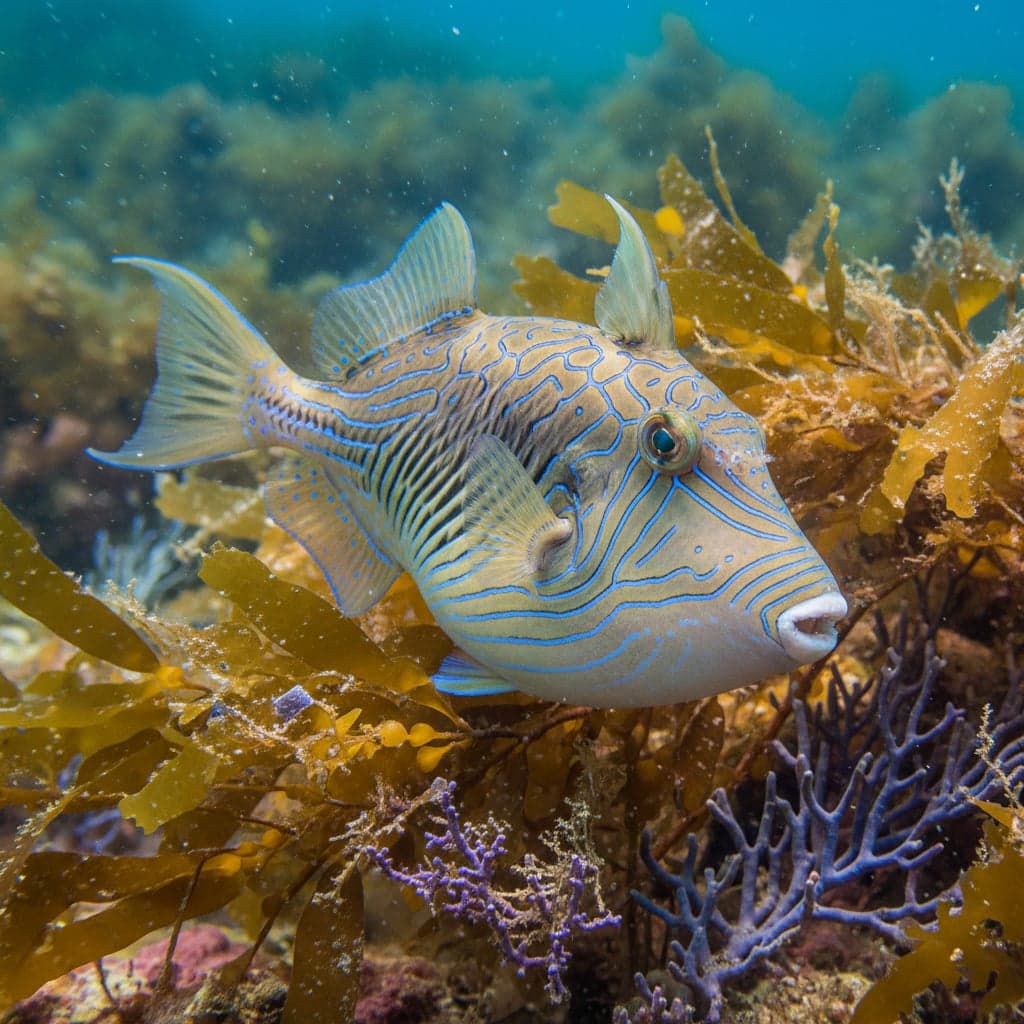
It cruises open water rather than rearranging the substrate. Still watch for the classic trigger toolkit: a locking dorsal spine, a strong bite and the ability to intimidate fish that share the same mid-water lane. Hunger and crowding turn mild pacing into chasing.
Tank Mates
Good companions are robust, non-timid marine fish: tangs, larger wrasses, angelfish, larger anthias and similar in honest volume. Avoid very small or shy fish that will be bullied or, in rare cases, eaten as the trigger matures.
Reef status is the selling point. It leaves corals alone and is far less likely than most triggers to systematically destroy ornamental shrimp, crabs and snails — yet caution with tiny mobile invertebrates remains sensible, especially as adults. Do not confuse charts that lump all “triggers” together; this Xanthichthys and a clown trigger share a family name and little else in invert risk.
Breeding
Xanthichthys auromarginatus is a pelagic spawner and is not bred in the home aquarium. Trade specimens are wild-collected. In the wild, males hold territories and court visiting females — useful context for why a single male in a reef is the usual stocking choice unless volume supports a pair.
Common Health Issues
Hardy, still vulnerable to marine ich and marine velvet when stressed by capture, shipping or poor oxygen. Quarantine every fish. Keep flow high, meals regular and water clean. Lateral-line and skin issues track dirty water and chronic stress more often than mysterious “trigger disease.”
Give it open water, a varied plankton-style diet and neighbours that can take its size, and the blue throat is one of the few triggers that honestly belongs in a reef. Undersize the tank, stock timid fish, or treat “reef-safe” as “harmless forever,” and a 30 cm adult will rewrite the compatibility chart for you. Prove appetite and manners in QT first; a settled X. auromarginatus is far easier to place than a stressed new arrival dumped straight onto a mixed reef.