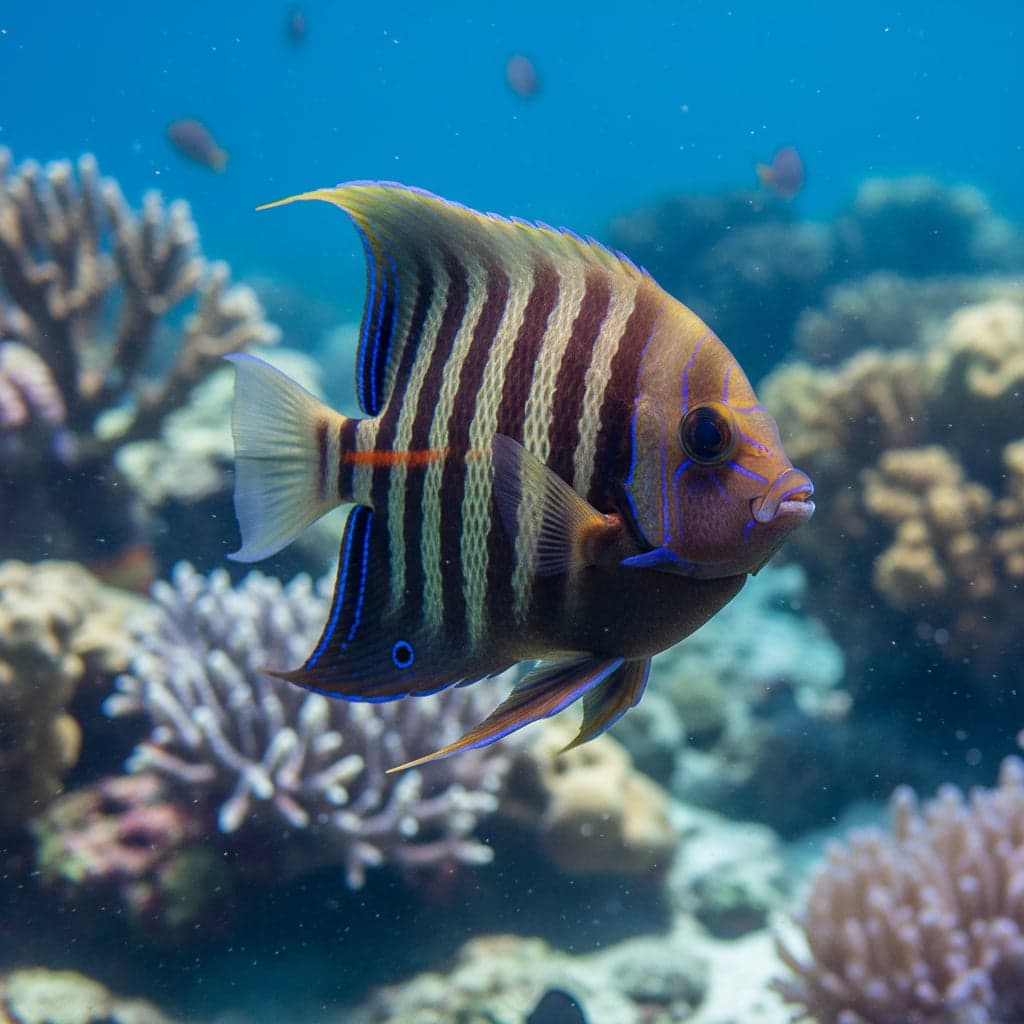
Bluespotted Angelfish
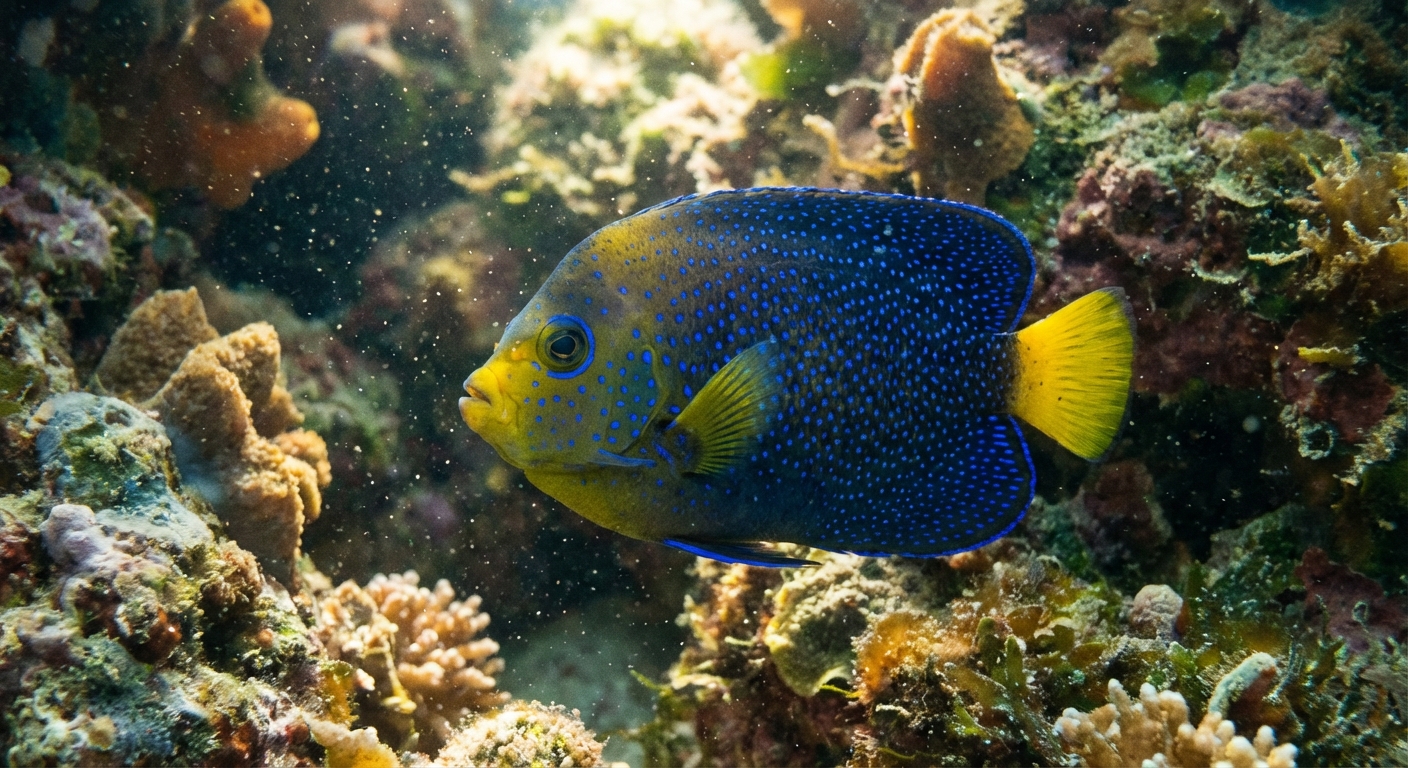
The Bluespotted Angelfish (Chaetodontoplus caeruleopunctatus) is a striking blue-speckled Western Pacific marine angel — best kept with reef caution by experienced keepers.
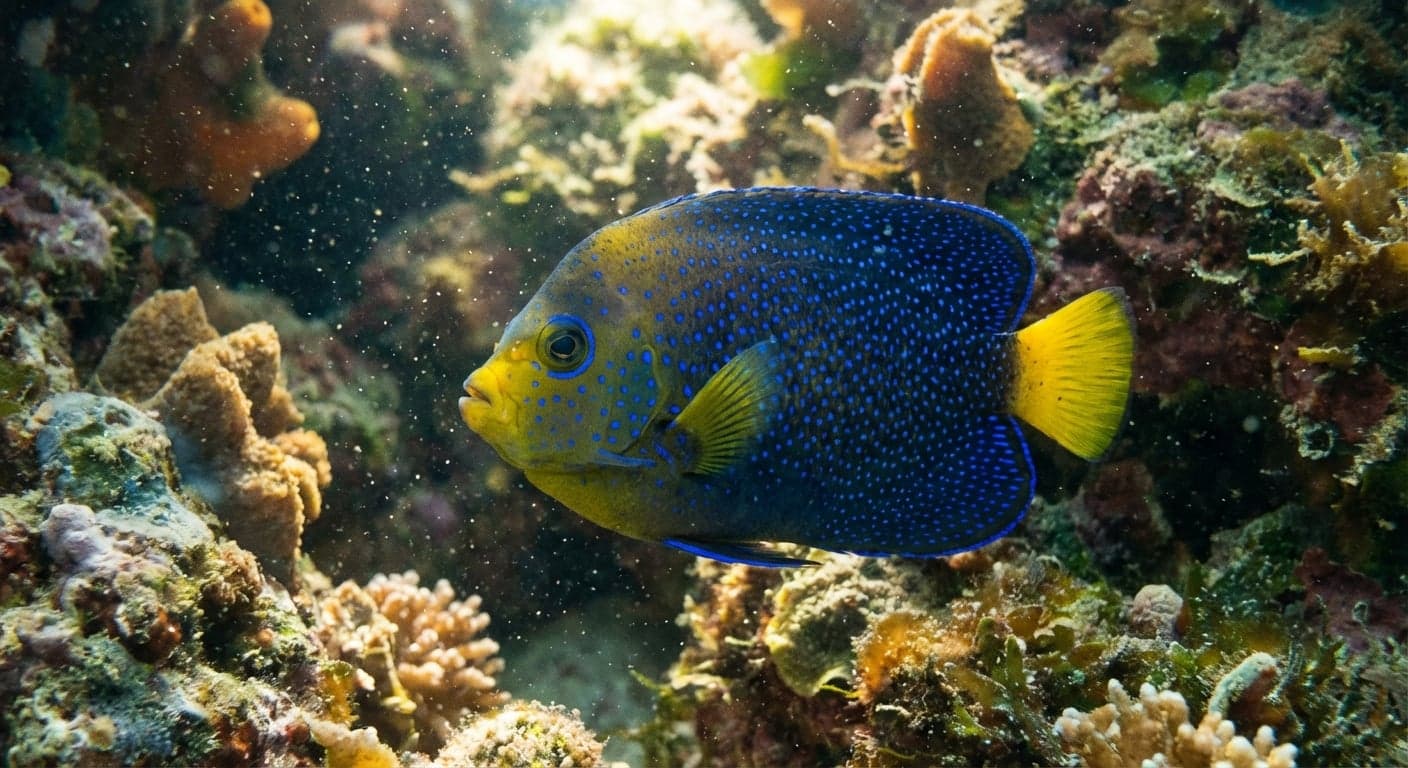
Bluespotted Angelfish
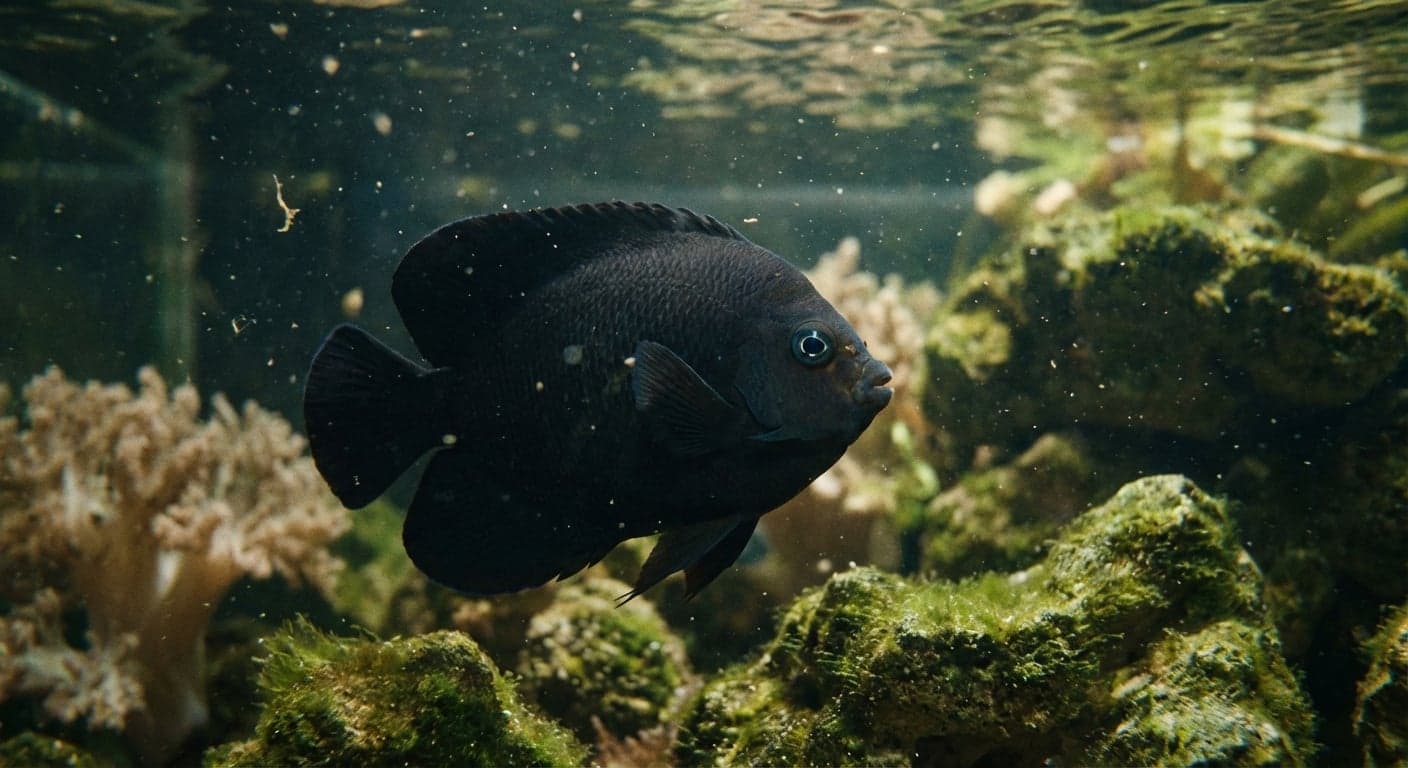
The Bluespotted Angelfish (Chaetodontoplus caeruleopunctatus) wears a dark body dusted with bright blue spots and a pale tail that reads as a flag when the fish turns. It sits in the same genus as the velvet and scribbled angels — sponge- and tunicate-oriented Chaetodontoplus species that look like reef fish and then quietly sample the reef.
That last clause is the whole care problem. People buy it for colour, house it in a mixed coral tank because "angels can be reef-safe," and discover that reef-safe for this genus is a probability, not a promise. The fish is characterful and keepable. It is not a set-and-forget community angel.
Natural Habitat & Origin
The species centres on the Western Pacific, especially Philippine reefs, where it works caves, overhangs and invertebrate-rich rock faces. It is usually seen alone or in pairs, picking at sponges, tunicates and other sessile growth rather than browsing open sand.
That wild diet is the mechanism behind captivity failures. An angel adapted to sessionally grazing sponge tissue does not automatically switch to flake. A newly imported specimen that has not been weaned onto prepared foods will starve slowly in a clean, sterile rockscape even while the aquarist swears they are "offering everything." Mature live rock with natural growth is not scenery for this fish — it is part of the food supply during acclimation.
Care Requirements
Hold salinity around 1.024–1.026, pH 8.1–8.4 and temperature about 24–26°C (75–79°F), with nitrate and phosphate kept low and stable. Adults reach about 14 cm (5.5 inches). Frontmatter sets a minimum around 280 litres (about 75 US gallons); that volume is about territory and water quality for a mid-sized angel, not an invitation to stack three angels in the same box.
A well-established system beats a new one. Chaetodontoplus that arrive into bare rock and sterile water have nothing to graze while they learn pellets. Arrange live rock into caves and overhangs so the fish can claim a route and retreat when startled. Strong, clean export and steady salinity matter more than chasing perfect alkalinity numbers on day one.
Use the Aquarium Tracker to catch parameter drift; angels advertise stress with clamped fins and appetite loss before the test kit looks dramatic.
Diet & Feeding
Labelled omnivore in the trade, this fish's wild intake is heavy on sponges and tunicates plus algae. Captivity has to fake that. Base the diet on quality marine angelfish preparations that actually list sponge, then add herbivore foods, spirulina, frozen mysis and enriched blends. Small meals several times a day beat one large dump — continuous grazers do poorly on feast-and-famine schedules.
Buy a feeding fish. Ask the shop to feed it in front of you. A Bluespotted that ignores prepared food in the dealer tank will not suddenly invent an appetite in yours. Once home, leave room for natural grazing on mature rock; that bridge feeding is often what carries a stubborn specimen until pellets stick.
Do not assume nori clips alone are enough. This is not a tang. Algae is part of the mix, not the whole mix.
Behavior & Temperament
Toward unrelated fish it is often civil. Toward other angels and similar mid-water competitors it can be territorial and persistent. One angel of this type per tank is the default unless the system is very large and carefully laid out with broken sightlines. Introduce it thoughtfully — last into a settled community is safer than first into an empty palace it will defend against every later arrival.
Fresh imports can be shy for days. Dim the chaos, offer cover, and do not stock a hyperactive trigger next door while it settles. Semi-aggressive in the frontmatter means managed aggression, not a licence to house it with timid dwarfs in a short tank.
Tank Mates
Robust, peaceful to semi-aggressive fish in different niches work: tangs in large enough systems, larger wrasses, anthias, and similarly sized community fish that will not compete for the same caves. Avoid other large angels in anything near the minimum volume. Avoid known fin-nippers and anything that will bully a shy new arrival off food.
Reef caution is the honest line. Like other Chaetodontoplus, it may sample coral polyps, soft coral flesh and clam mantles. Some individuals barely touch coral; others systematically test LPS and clams. That variance is why "reef-safe with caution" exists as a phrase — it is an admission that the fish's mouth and history point at sessile invertebrates. Safest homes are fish-only or FOWLR systems, or reefs stocked only with corals you are willing to lose. Ornamental shrimp are usually ignored; the coral risk is the issue.
Breeding
C. caeruleopunctatus is a pelagic spawner. Pairs may form and rise to release eggs in large systems, but larval rearing is not a home-aquarium project. Trade fish are wild-collected, with the usual import stress and parasite exposure that implies.
Common Health Issues
Diet refusal is the quiet killer. A fish that never takes prepared foods wastes away while looking "a bit thin" for weeks. Choose feeders and keep sponge-inclusive foods in rotation.
Parasites are the loud killer. Marine ich (Cryptocaryon irritans) and marine velvet (Amyloodinium ocellatum) hit stressed, freshly moved angels hard. Quarantine new arrivals in a hospital tank; treat there, not in the display if you keep inverts. Angels' body shape and scale cover do not make them immune — they are ordinary marine teleosts under the paint.
Secondary issues follow poor water and hunger: bacterial infections, HLLE-type erosion in chronically stressed fish, and velvet that arrives after a rough ship. Pristine, stable water and a diet that actually gets eaten are the prevention. Medicine is the backup, not the plan.