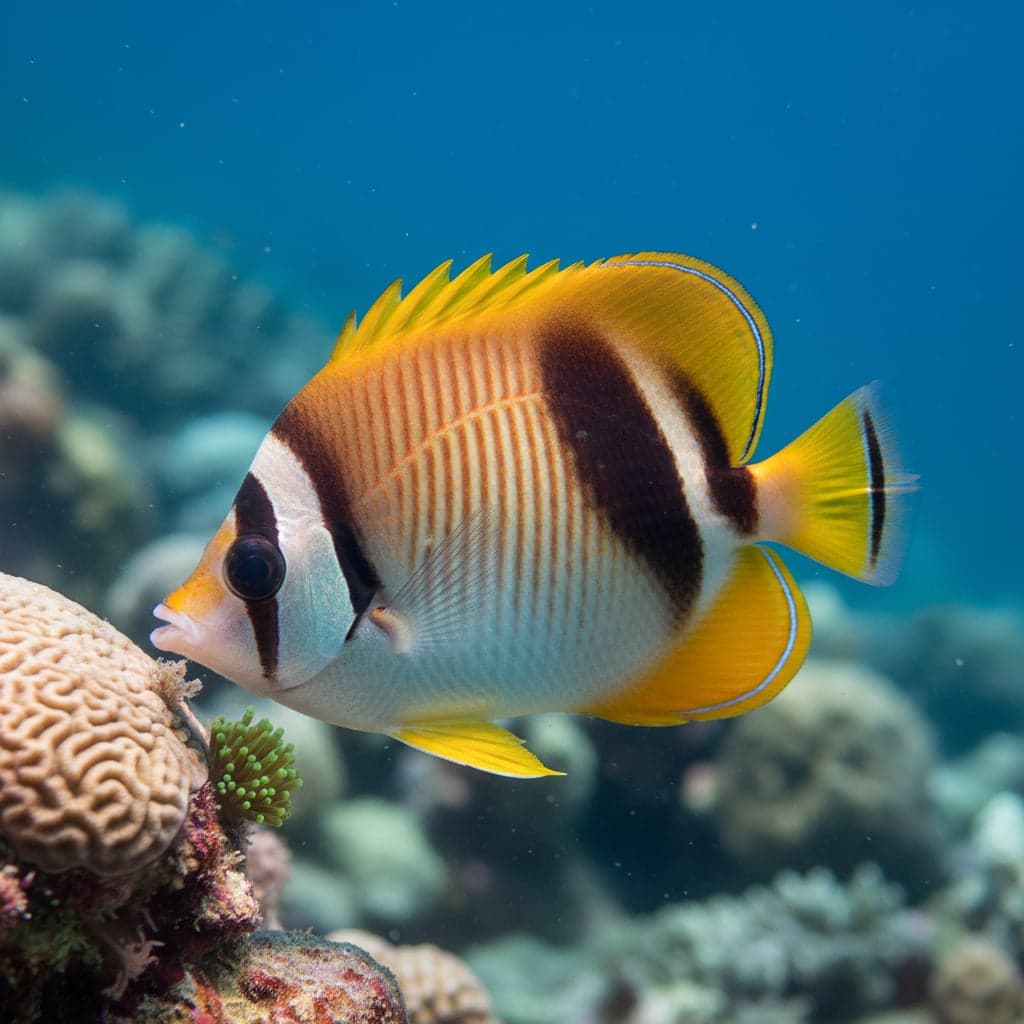
Bluestriped Butterflyfish
The Bluestriped Butterflyfish (Chaetodon fremblii) is a hardy Hawaiian endemic — one of the more adaptable, reef-tolerant butterflyfish for experienced keepers.
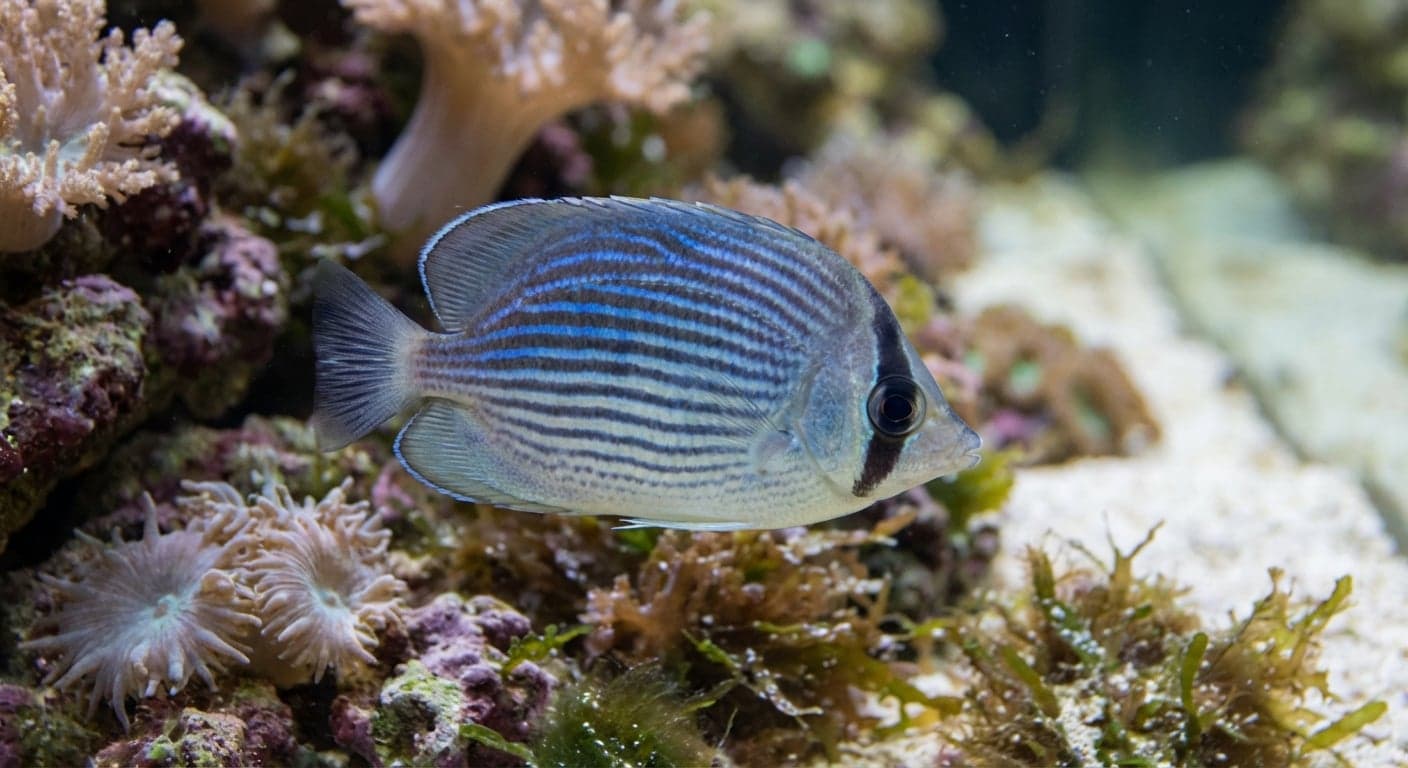
Bluestriped Butterflyfish
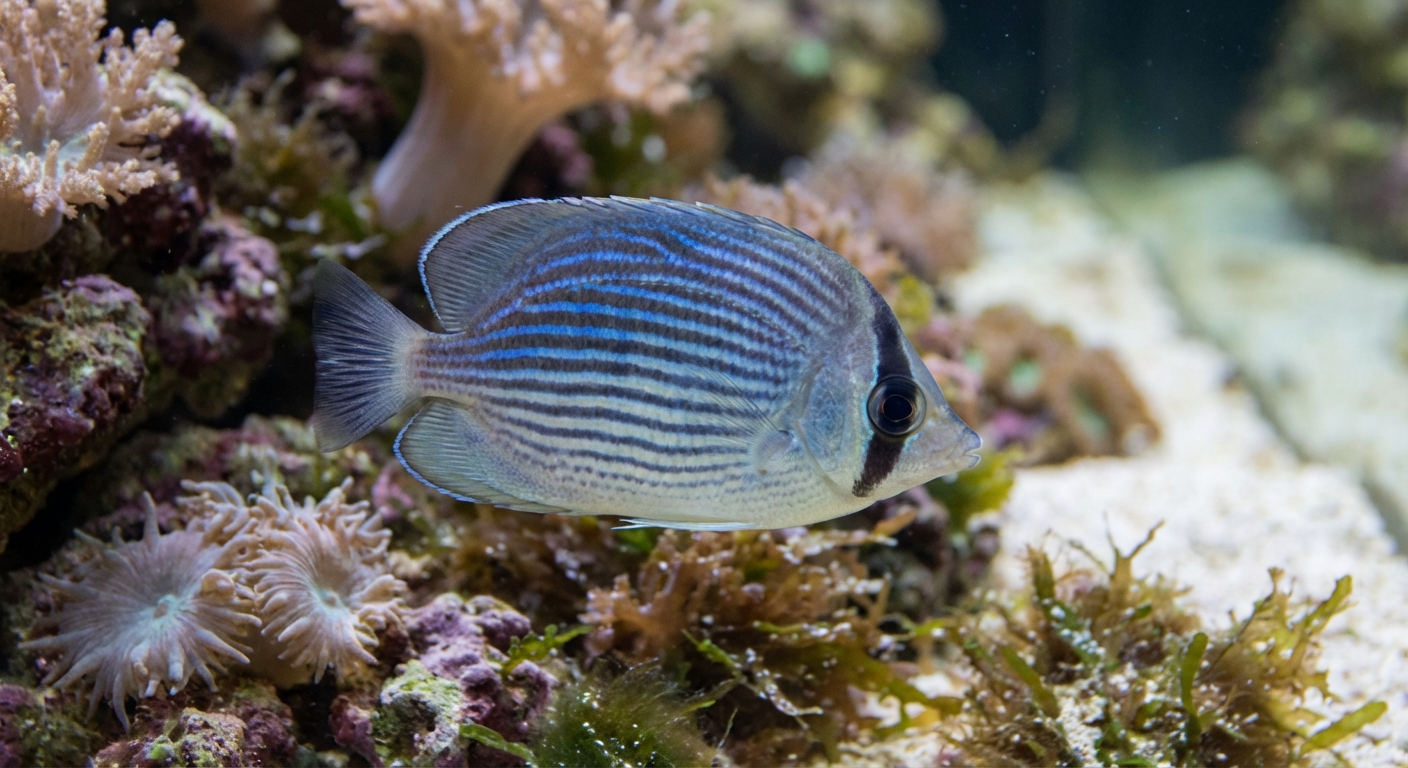
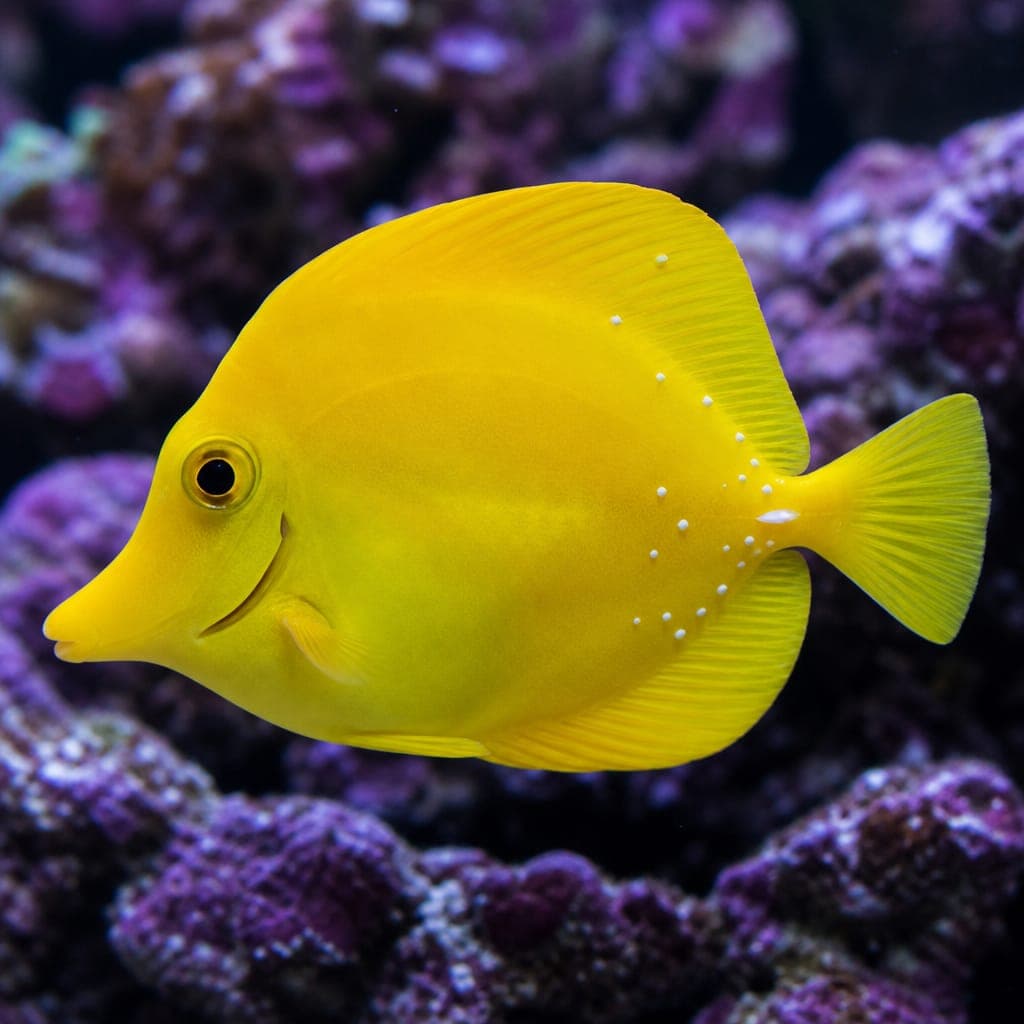
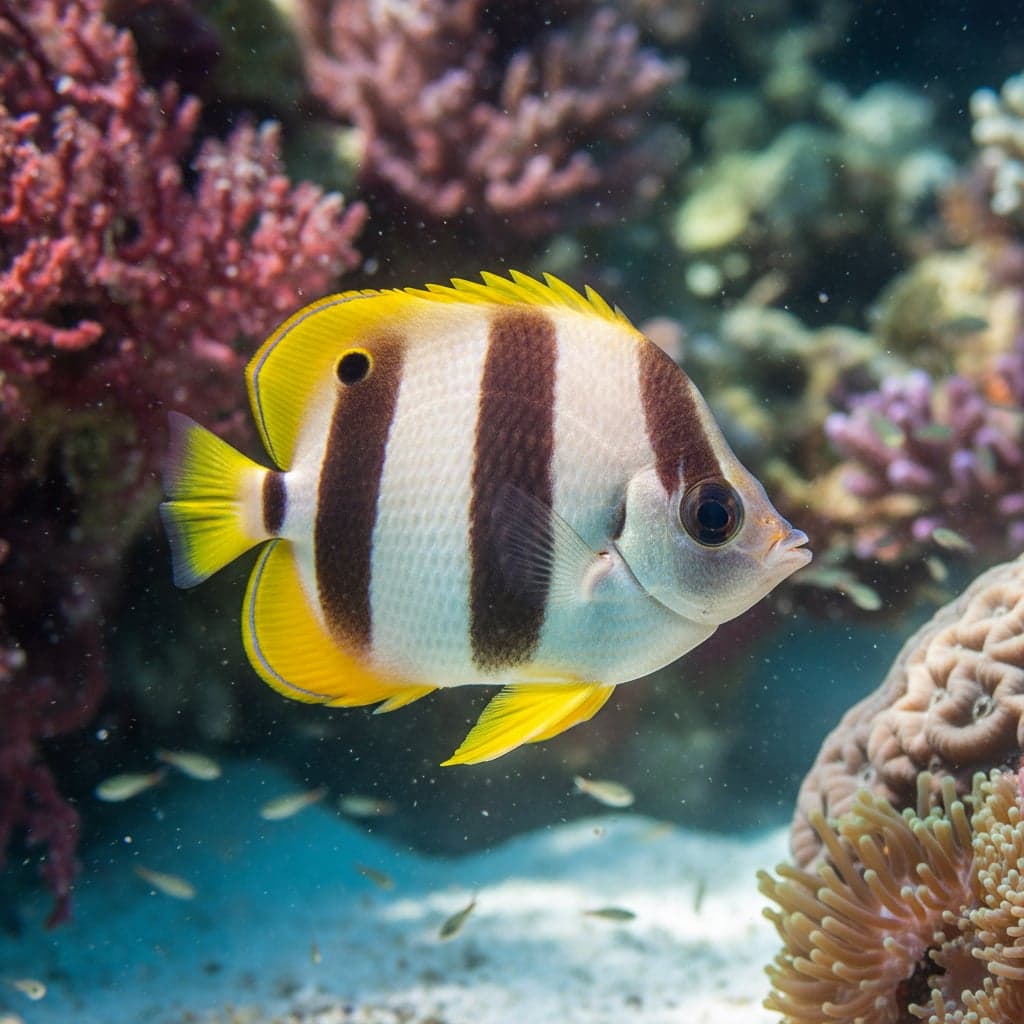
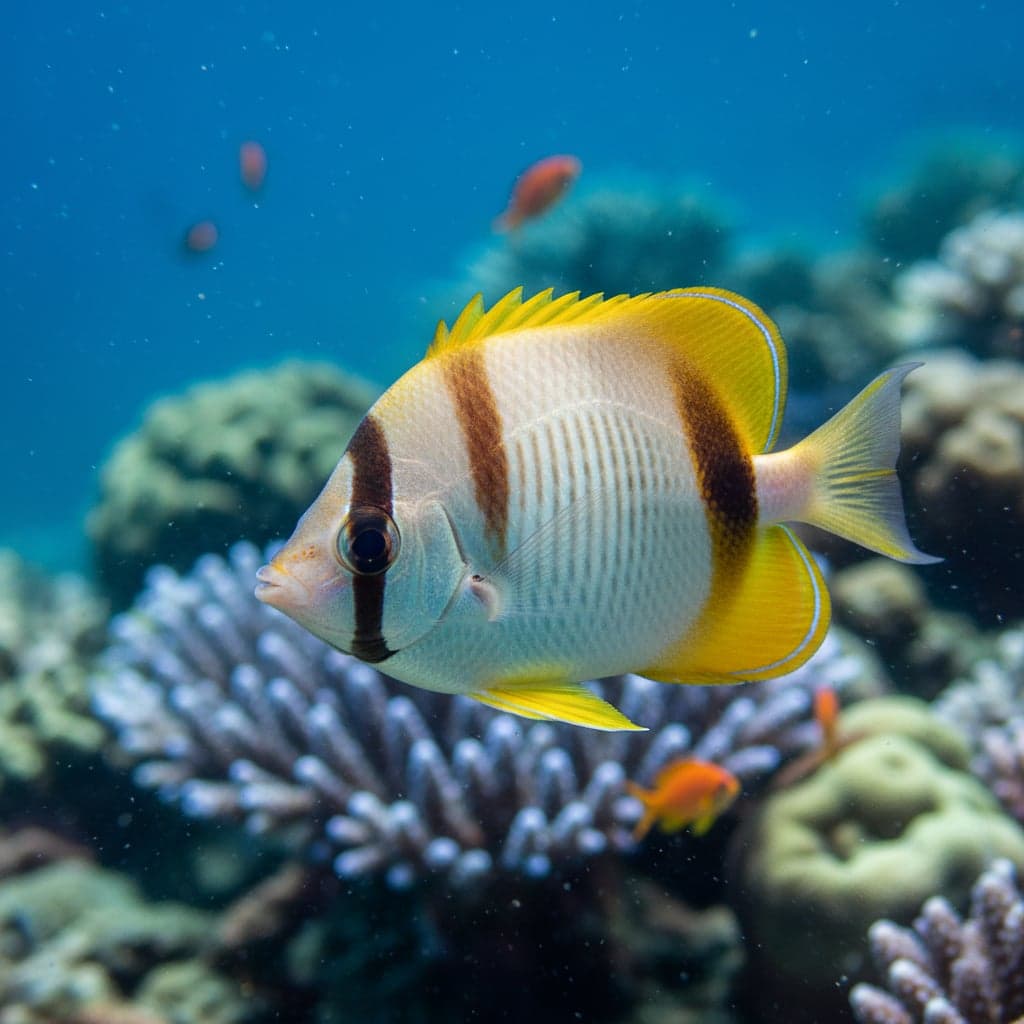
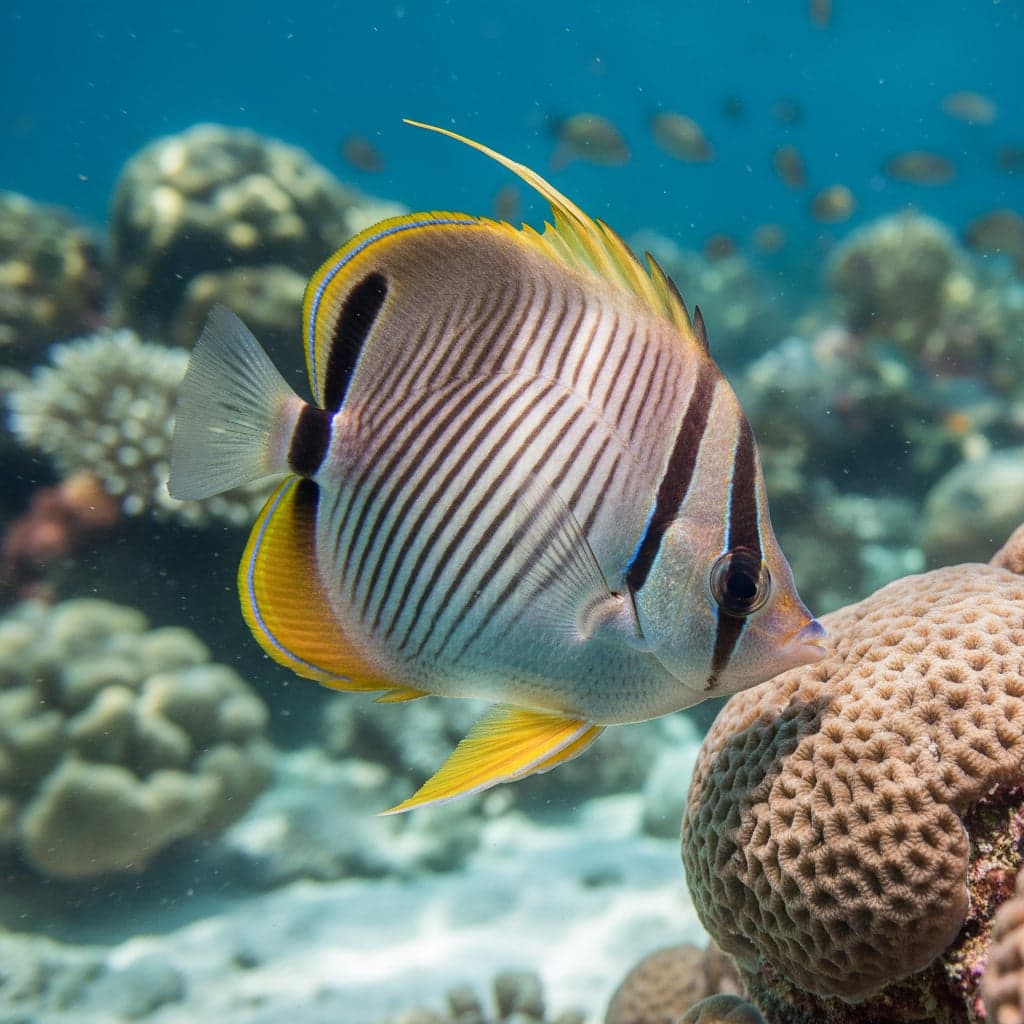
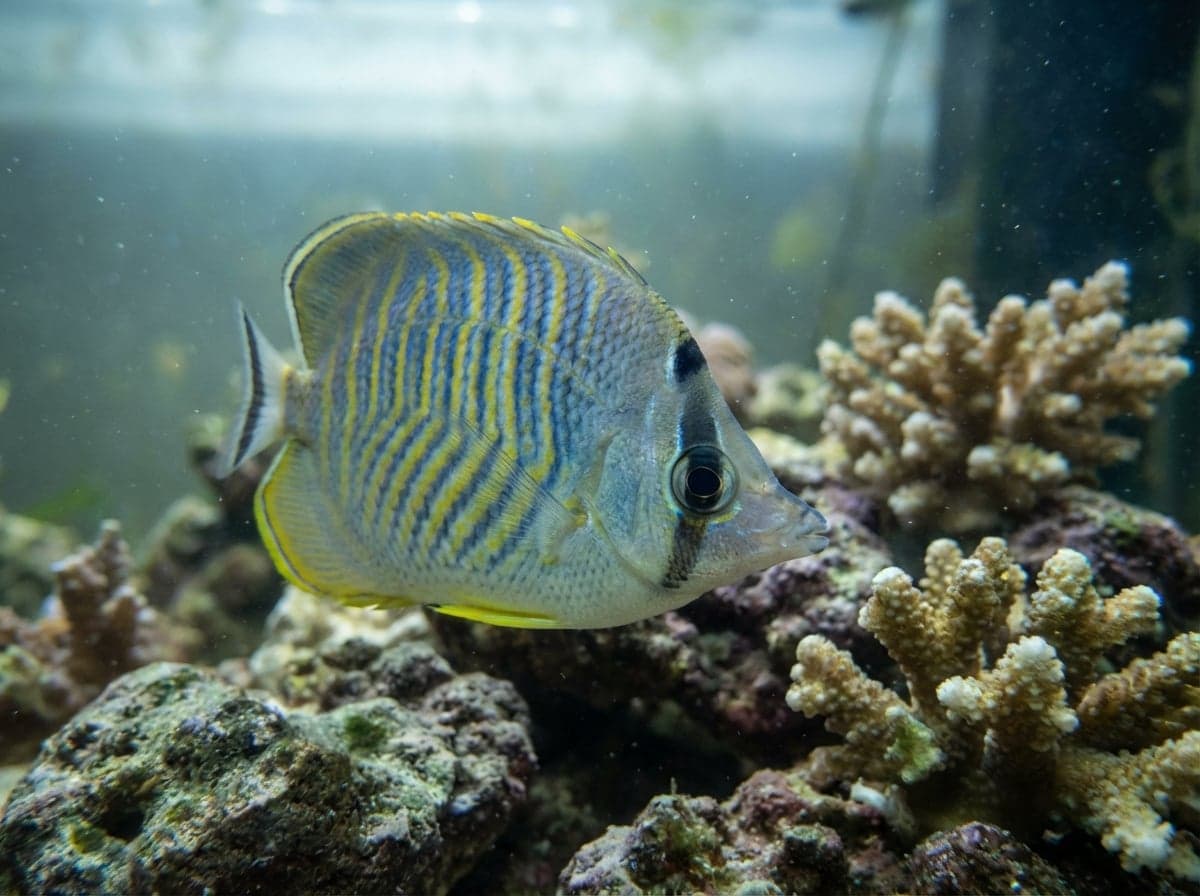
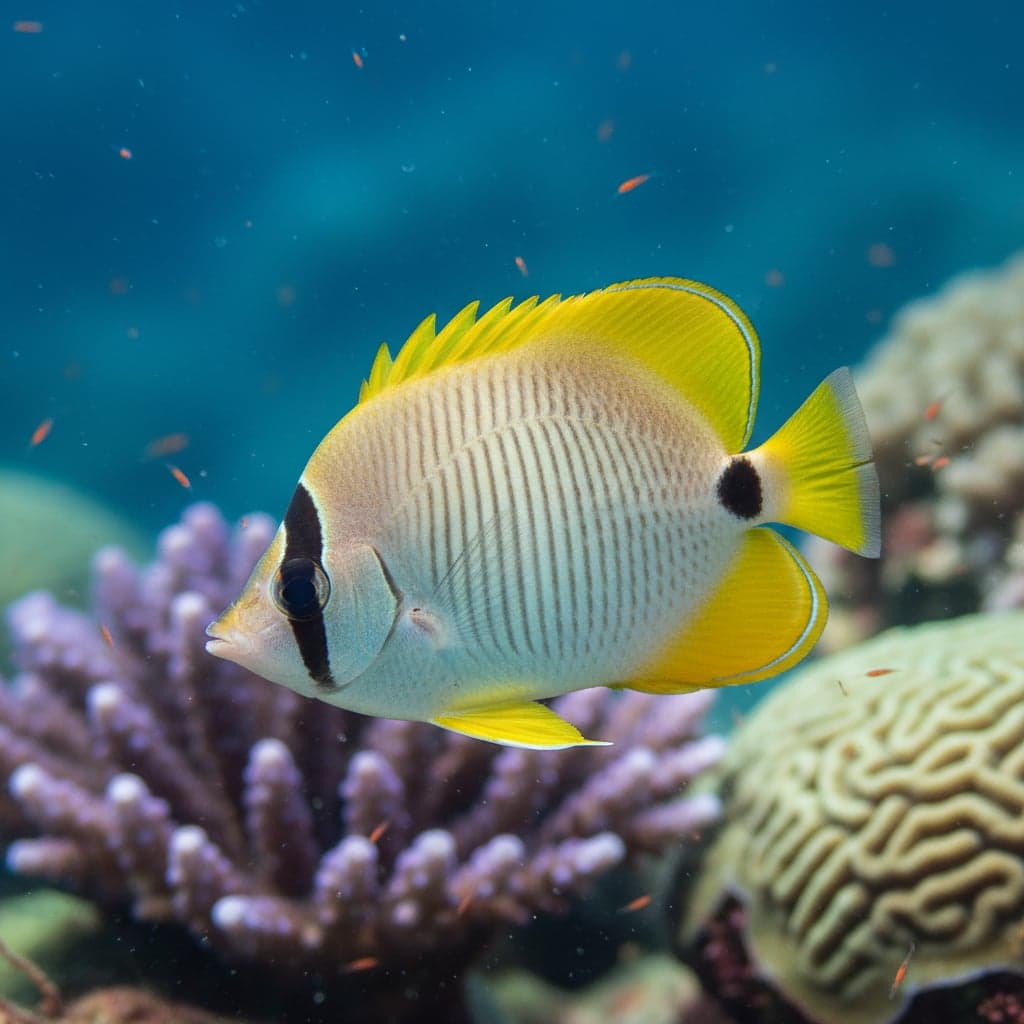
The Bluestriped Butterflyfish (Chaetodon fremblii) is a bright golden-yellow Hawaiian endemic crossed by diagonal electric-blue stripes, with a dark spot behind the head instead of the classic chaetodontid eye-mask. That missing mask is a field mark, not a husbandry free pass. What actually made the species popular is diet flexibility: it forages polychaetes, small invertebrates and algae rather than living coral as a staple, and it usually converts to aquarium foods better than obligate corallivores.
It is still a butterflyfish. “Hardier than most” is not “bulletproof,” and “reef-tolerant” in the description means comparatively well behaved — not harmless to every polyp. Experienced keepers succeed with it; rushing a non-feeding import onto a mixed reef is how the reputation gets ruined.
Natural Habitat & Origin
Chaetodon fremblii is endemic to the Hawaiian Islands. It occupies coral and rocky reefs, rubble and mixed substrate, often alone or in pairs, picking along the bottom and rock face through the day. Hawaiian reef water runs cooler than many Indo-Pacific collection sites; that thermal niche is why frontmatter lists 23–25°C (73–77°F) rather than the 24–26°C band used for many tropical species on this site.
In the aquarium recreate foraging opportunity: mature live rock, open patrol lanes, and a community that does not monopolise every feed. Pair the cooler setpoint with tankmates that tolerate it — stuffing this fish into a 27°C SPS system “because everything else likes it” is avoidable stress.
Care Requirements
Stable marine water: salinity about 1.024–1.026, pH 8.1–8.4, temperature held toward the cooler reef end at about 23–25°C (73–77°F). Adults reach roughly 13 cm (5 inches). A tank around 200 litres (about 55 US gallons) or more with ample rock suits a single fish or a bonded pair. Longer footprints help; butterflies are continuous movers.
Water quality should be excellent. Chaetodontids show stress early when nitrogen or salinity swings. Keep ammonia and nitrite and nitrate in check and avoid sudden specific-gravity changes. A mature system beats a sterile new tank for first-month foraging.
Flow moderate to strong but broken; lighting can be reef-bright if shaded retreats exist. Log temperature carefully in the Aquarium Tracker — chronic warmth above the Hawaiian comfort band is a quiet failure mode when the heater is set for other livestock.
Diet & Feeding
Omnivore. Wild intake includes polychaete worms, small benthic invertebrates and algae — not a coral-mucus addiction. That is why captive fish usually adapt to frozen mysis and brine shrimp, mixed marine preparations, pellets or flakes, and foods with marine algae content. Feed several small meals a day; high metabolism plus competition is how “hardy” butterflies still go thin.
Confirm the individual is eating before purchase when you can. A bluestripe already taking frozen food in the shop is the practical buy. Variety after introduction matters more than a single miracle food. See marine diets and feeding schedules.
Refusal is still an emergency. Reduce aggression, offer rich frozen foods at lights-on, and do not assume rock microfauna will carry an adult for a week. Body shape behind the head is the scoreboard.
Behavior & Temperament
Peaceful and active. It mixes well in calm communities and can be kept singly or as a pair. Frontmatter “Pair” describes the common wild social unit, not a requirement to force two unpaired adults into 200 litres. Known pairs often thrive; random doubles in tight quarters can quarrel.
It forages constantly over rock. Shyness that never lifts usually means an aggressive tankmate or no cover. Avoid damsels that police the scape, large predators, and food-hogs that leave only scraps. Toward clownfish, peaceful wrasses and similarly mannered fish it is typically an easy neighbour.
Tank Mates
Good companions are peaceful marine fish that accept cooler water: tangs in large enough systems, peaceful wrasses, anthias that tolerate the temperature band, cardinalfish and similar. Match the thermal plan across the community — a Hawaiian endemic plus livestock that demand 28°C is a design conflict, not a compromise.
Reef labelling needs precision. Relative to obligate corallivores it is among the more reef-tolerant butterflies, which is what the description means by that phrase. Individuals may still nip coral polyps or ornamental invertebrates when hungry or bored of prepared food. Call it reef-safe with caution: safest with hardy corals, in fish-focused systems, or where soft corals are expendable. It is not a copperband starvation saga by default, and it is not a guaranteed SPS roommate either.
Ornamental shrimp and snails are often left alone; the coral question is the one that matters.
Breeding
Pelagic spawner with planktonic larvae. Not a home-breeding project. Trade fish are wild-collected from Hawaiian waters. Watching pair behaviour in a large display is rewarding; rearing fry is not available to hobbyists.
Common Health Issues
Hardy by butterflyfish standards, still a marine fish. Marine ich (Cryptocaryon irritans) and velvet (Amyloodinium ocellatum) punish shipping stress and skipped quarantine. Follow a quarantine protocol and treat in hospital systems; copper and many baths are incompatible with reef invertebrates — see medications.
Chronic warmth, thin diet and food competition are the husbandry killers that do not look like spots. Watch thickness, feeding vigour and temperature logs.
Given cooler stable water, a confirmed eating specimen, frequent varied meals and honest coral expectations, Chaetodon fremblii remains one of the more approachable butterflyfish for intermediate keepers — Hawaiian colour without the classic chaetodontid death spiral, provided “reef-tolerant” is not misread as “reef-proof.”