Caribbean Longnose Butterflyfish
The Caribbean Longnose Butterflyfish (Prognathodes aculeatus) is a small, elegant Atlantic butterflyfish with a probing snout — best kept with reef caution by experienced keepers.
Caribbean Longnose Butterflyfish
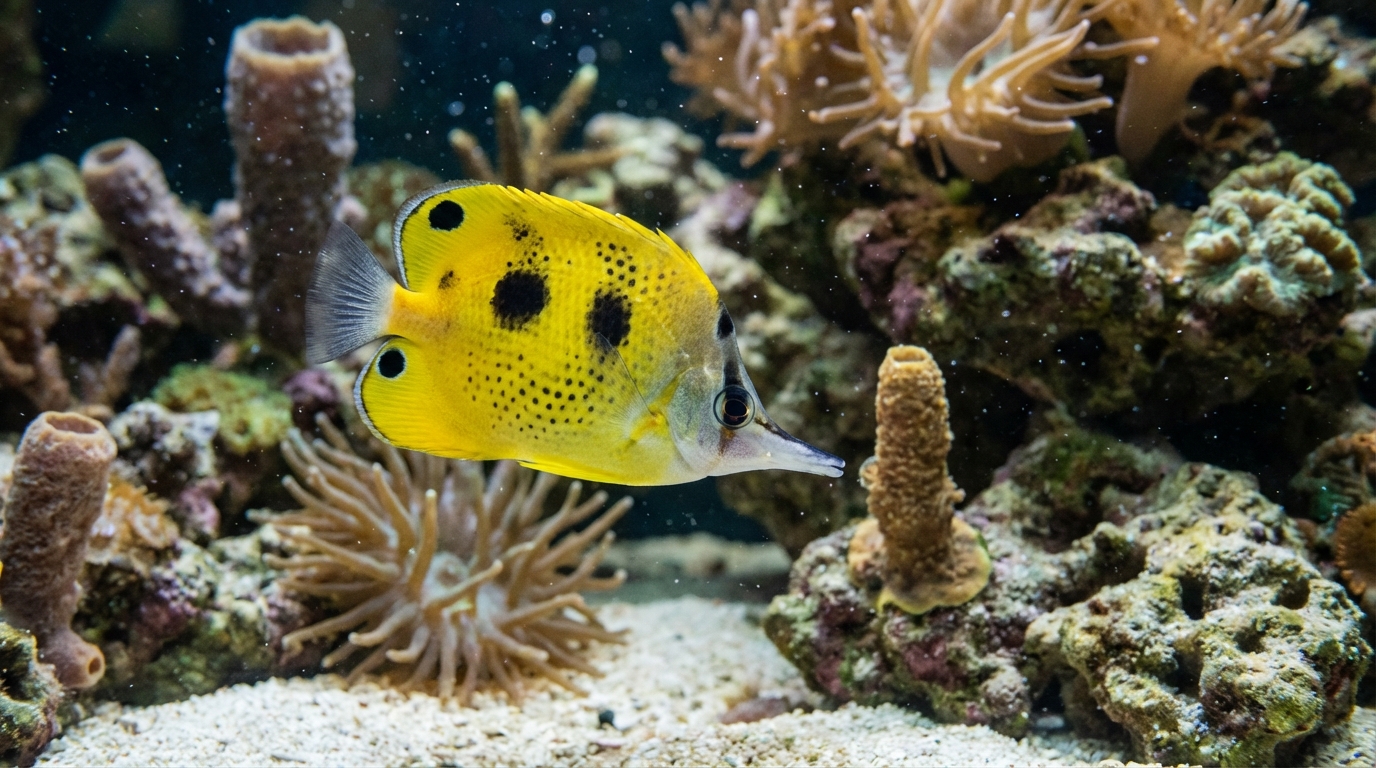
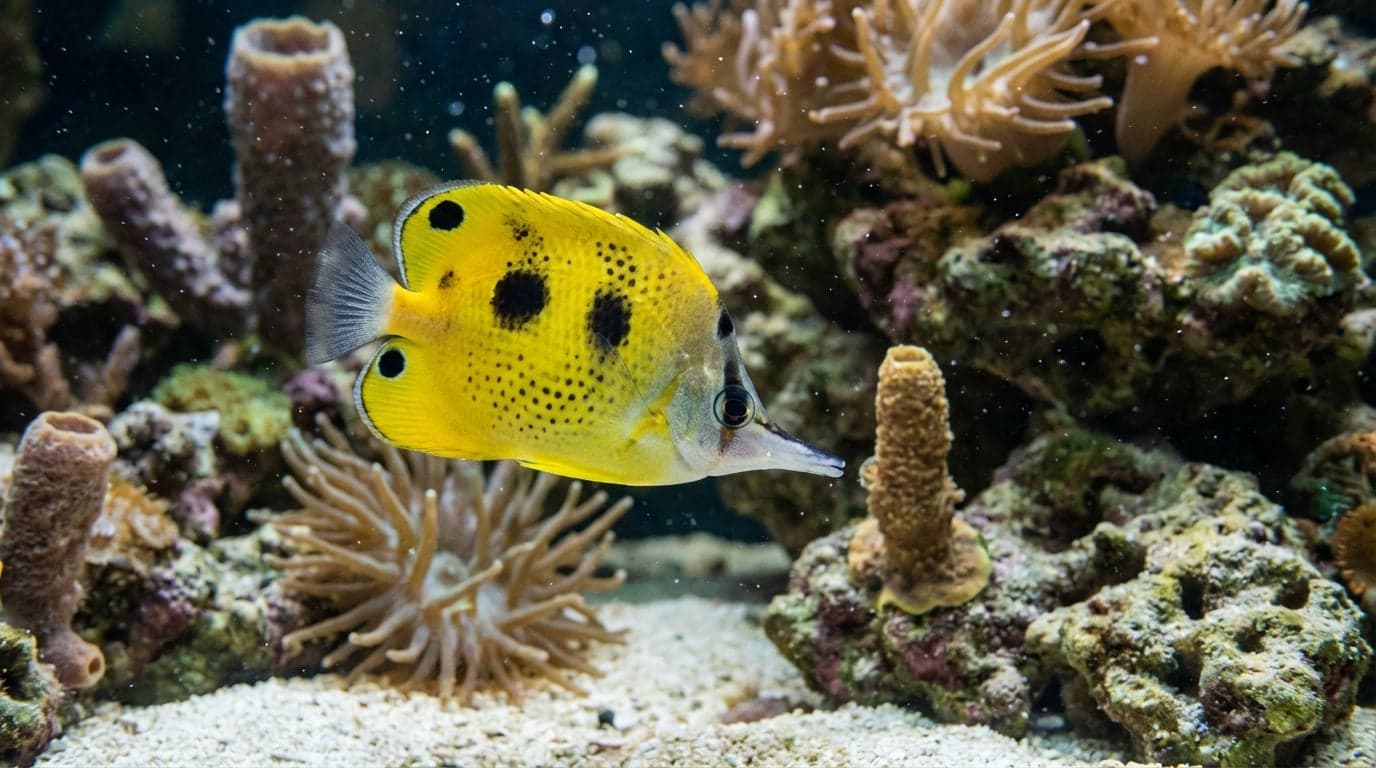
The Caribbean Longnose Butterflyfish (Prognathodes aculeatus), also sold as the longsnout butterflyfish, is a small, refined Atlantic chaetodontid: yellow and white compression, dark markings, and a distinctly elongated snout built for probing cracks rather than grazing coral heads in the open. That mouth is a tool — it extracts small invertebrates from crevices with a deliberate, almost surgical feeding style. Adults stay around 10 cm (4 inches), which makes the fish look nano-friendly; husbandry says otherwise. Success tracks diet establishment and calm competition, not volume alone.
It is less of a wholesale coral wrecker than many Chaetodon corallivores, but “less destructive” is not “reef-proof.” Frontmatter and the species description both call for reef caution — treat prized sessile inverts as at risk until proven otherwise in your system.
Natural Habitat & Origin
Prognathodes aculeatus inhabits the Caribbean and western Atlantic, often on deeper reef slopes, walls and rubble where crevice prey is dense and light is lower than on the shallow flat. It works methodically over rock — alone or in pairs — poking the snout into holes for worms, tiny crustaceans and similar items. That deeper, quieter niche is why subdued lighting and mature rock help captive fish settle.
In the aquarium recreate foraging surface: abundant live rock with real crevices, a mature microfauna film, and tankmates that do not blast every meal away. A sterile, newly set system with aggressive damsels is a poor classroom for this family.
Care Requirements
Stable marine parameters: salinity about 1.024–1.026, pH 8.1–8.4, temperature 24–26°C (75–79°F). Despite the modest adult size, plan on around 200 litres (about 55 US gallons) or more with ample rock — butterflies are continuous movers, and a bonded pair needs room to patrol without constant collision. Longer footprints help more than tall cubes.
Water quality must be excellent. Butterflies advertise stress early when ammonia, nitrite or wild salinity swings appear. Keep nitrogen compounds in check — ammonia, nitrite and nitrate — and avoid sudden specific-gravity jumps during changes. A mature system is strongly preferred.
Lighting can be reef-bright if shaded retreats exist; many keepers soften intensity for this deeper-slope fish during acclimation. Flow moderate and broken. Use the Aquarium Tracker to log salinity and temperature so small drifts show up before appetite does.
Diet & Feeding
Carnivore specialized for picking small invertebrates from rock. Wild diet is worms, tiny crustaceans and similar crevice fauna — not a reliable live-coral staple, which is why it is easier than obligate corallivores, and not a guaranteed pellet convert on day one either.
Tempt with frozen mysis and enriched brine shrimp, finely chopped seafood, small marine preparations and, when needed, live foods to jump-start feeding. Offer frequent small meals rather than one evening dump. A tank with established microfauna bridges the gap while the fish learns the glass schedule. Confirm eating before purchase whenever possible — a longnose that already takes frozen food is worth more than a prettier non-feeder.
Refusal after introduction is an emergency for chaetodontids. Reduce competition, feed at lights-on, and do not wait a week hoping rock film will carry an adult. See marine diets and feeding schedules for routine structure. Body thickness behind the head tells the truth faster than colour.
Behavior & Temperament
Peaceful and somewhat shy. It rarely troubles other fish; it spends the day methodically foraging. Frontmatter lists Pair because wild fish are often seen as couples — that describes the natural social unit, not a mandate to buy two unrelated strangers and hope. Singles do well; known pairs often do better if introduced together. Two unpaired adults forced into a tight tank can quarrel.
Avoid aggressive or hyper-competitive tankmates that outcompete it at every feeding. Damsels that police the entire rock pile, large angels and food-hog triggers turn a manageable butterfly into a thin one. Shyness that never lifts usually means aggression or insufficient cover, not a “personality quirk.”
Tank Mates
Good companions are calm marine fish that leave food on the table: anthias in appropriate systems, peaceful wrasses, gobies, cardinalfish and similar. Add the butterfly when the community already eats on a schedule so you can verify it competes.
Reef compatibility needs an honest sentence. It favours small invertebrates over coral tissue compared with many Chaetodon, and some keepers maintain it in reefs without disaster. It may still sample ornamental invertebrates, fan worms, or coral polyps when hungry or underfed. Safest homes are fish-only systems, FOWLR, or reefs without prized small sessile inverts. It is not the same risk profile as a starving copperband, and it is not a coral-safe grazer like a tang.
Ornamental shrimp are usually lower risk than sessile prey in crevices, but nothing with a probing snout is guaranteed around every tube worm and clam.
Breeding
Pelagic spawner with planktonic larvae. Not a home-breeding project. Trade specimens are wild-collected from Atlantic waters. Courtship and pair bonding in a large display can be rewarding; rearing fry is not on offer.
Common Health Issues
The headline failure mode is starvation — a thin, non-feeding import that never converts to prepared foods. Quarantine is where you prove feeding, not where you rush the fish onto the reef. Marine ich (Cryptocaryon irritans) and velvet (Amyloodinium ocellatum) hit stressed butterflies hard. Follow a quarantine protocol and treat in hospital tanks; copper and many therapeutics destroy invertebrates — see medications.
Buy a feeding specimen, keep competition low, offer frequent varied carnivore meals, and be honest about sessile inverts. Done that way, Prognathodes aculeatus is an elegant intermediate Atlantic butterfly — snout specialist rather than coral vacuum — for keepers patient enough to establish it properly.