Carpenter's Flasher Wrasse
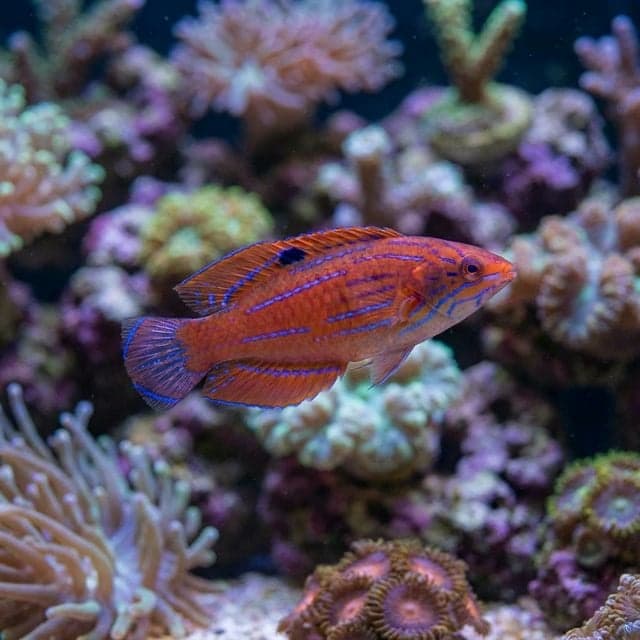
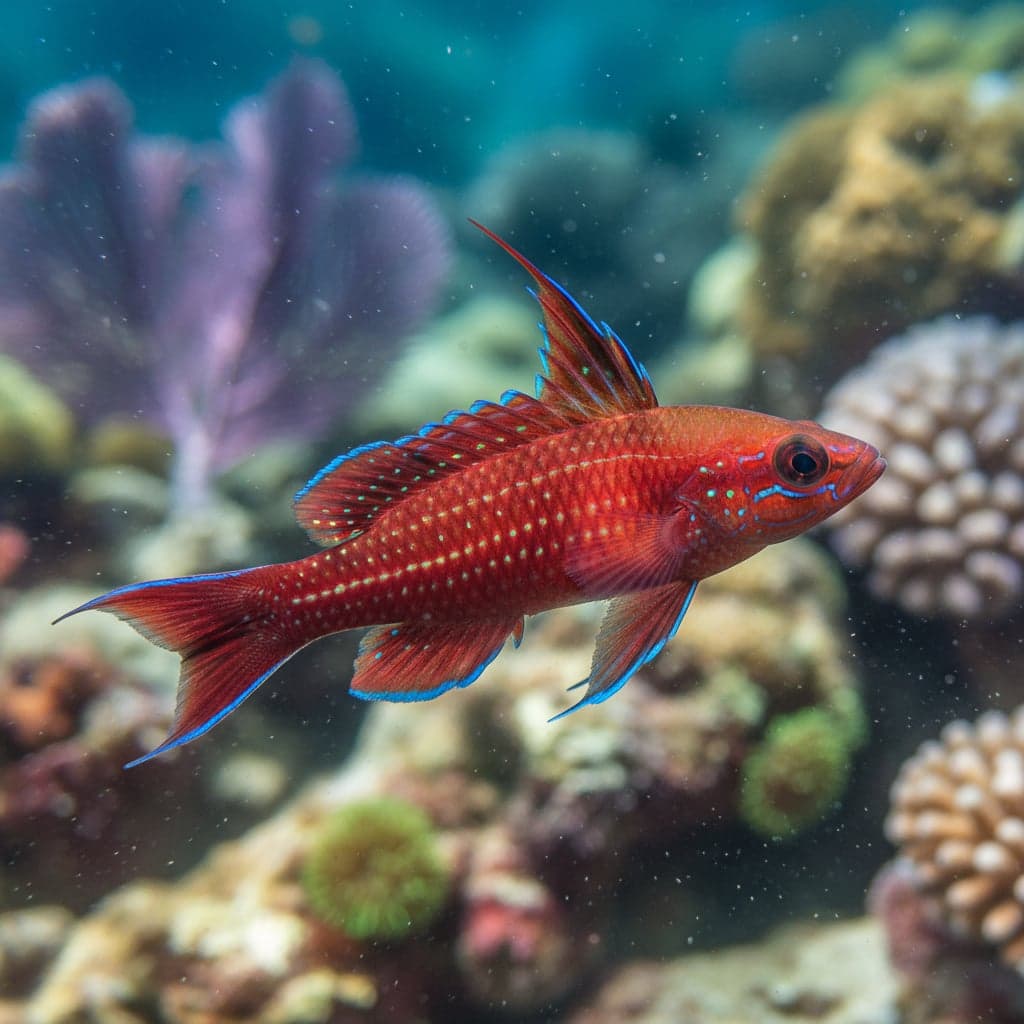
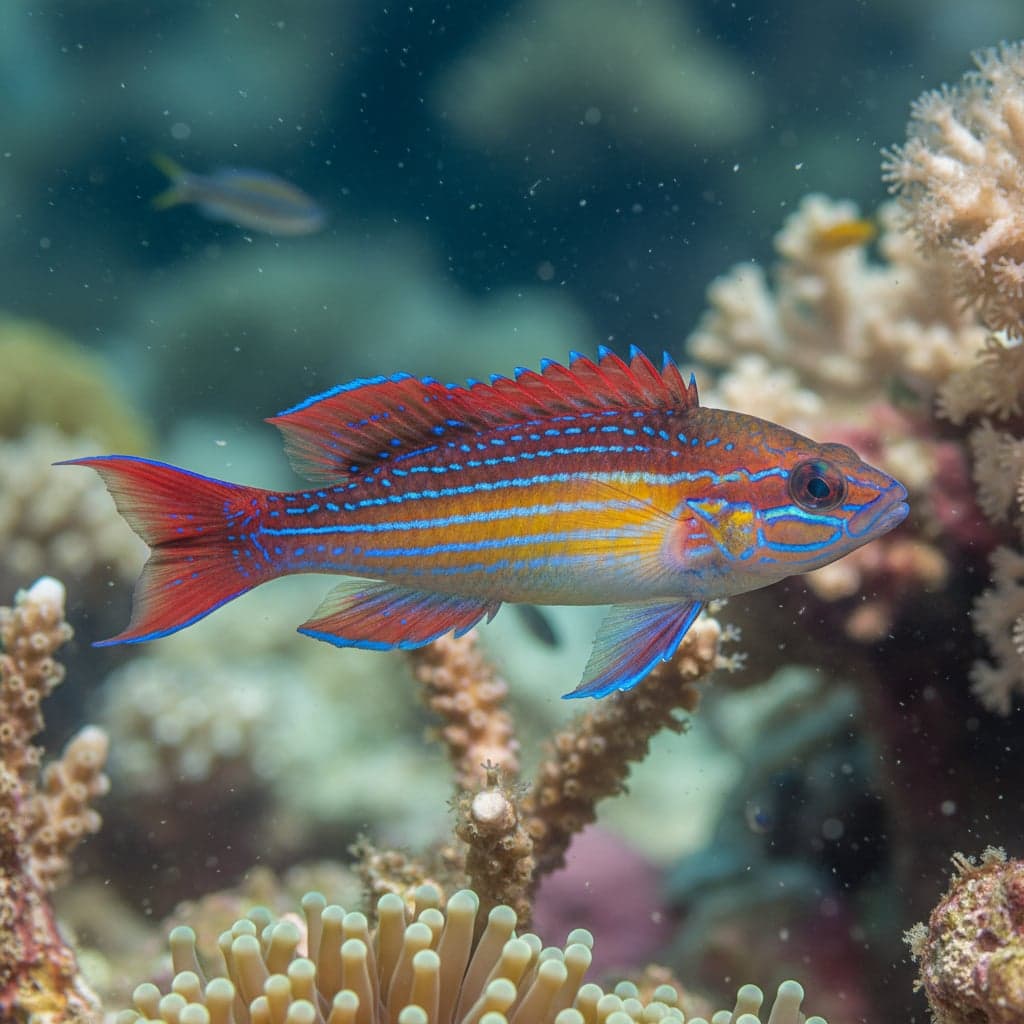
Carpenter's Flasher Wrasse (Paracheilinus carpenteri) is a small, dazzling reef-safe wrasse whose males "flash" vivid colour — peaceful and ideal for a community reef.
Carpenter's Flasher Wrasse
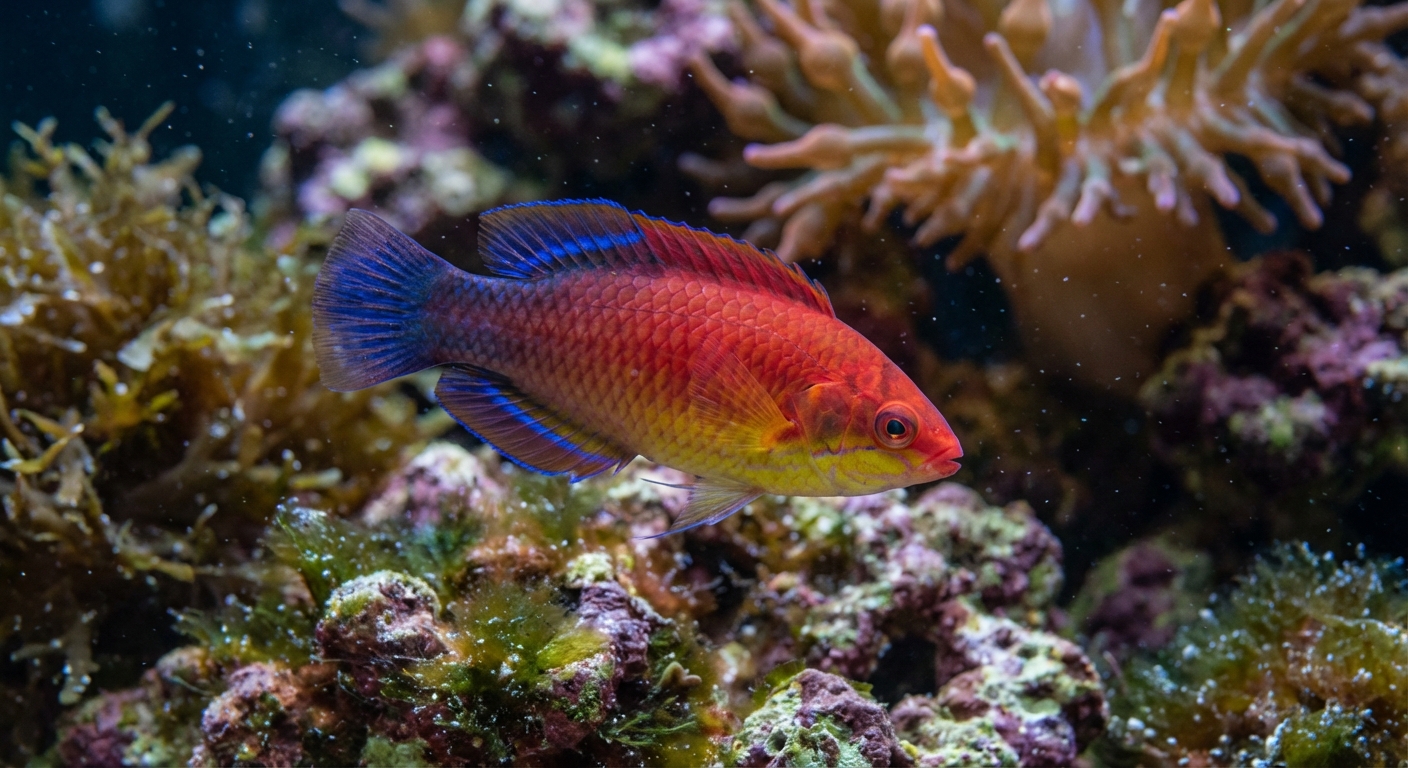
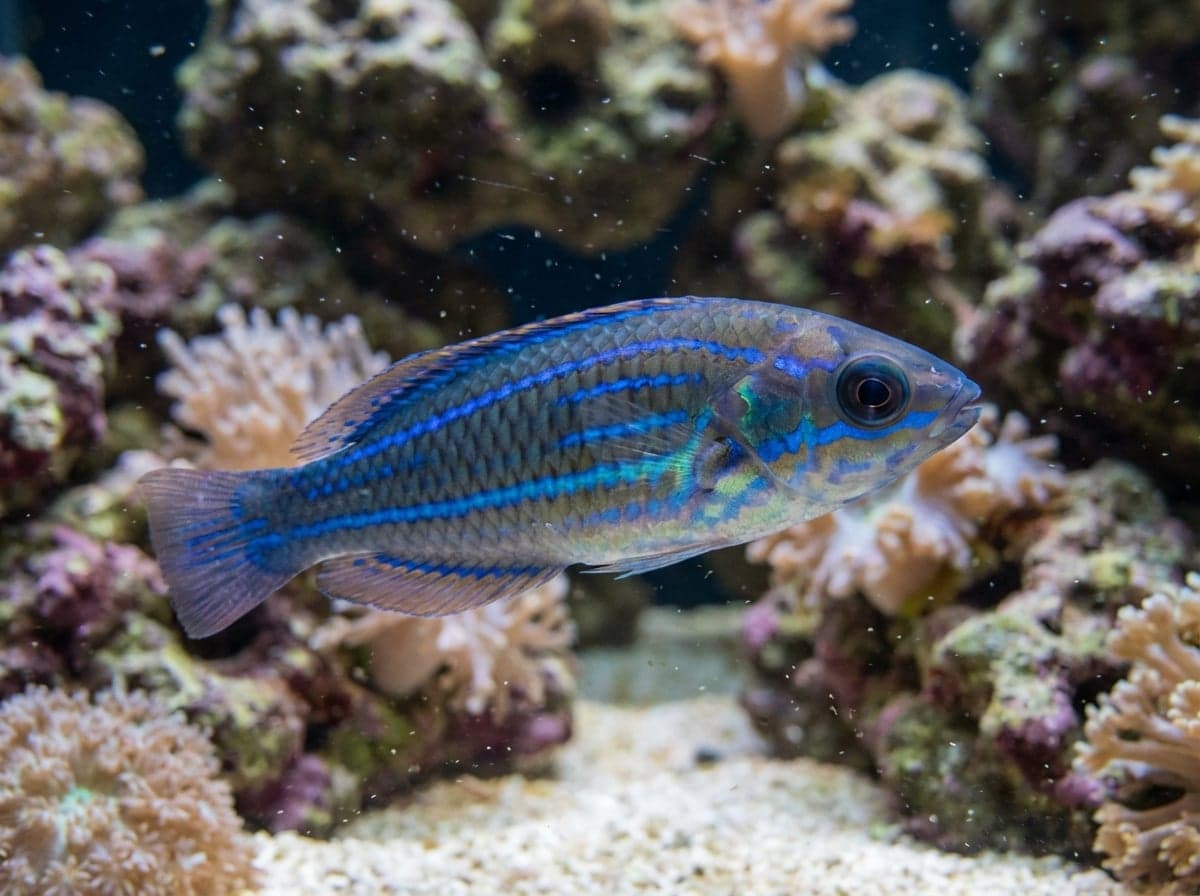
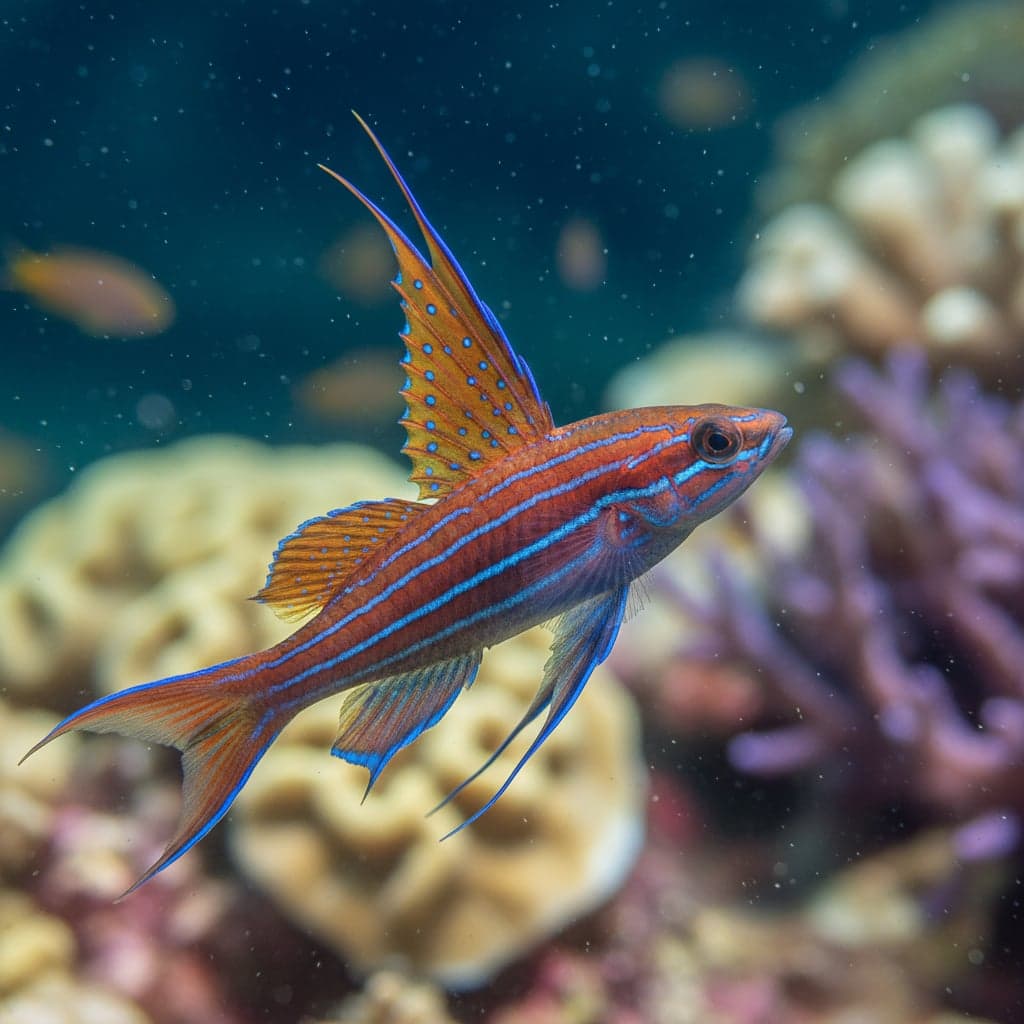
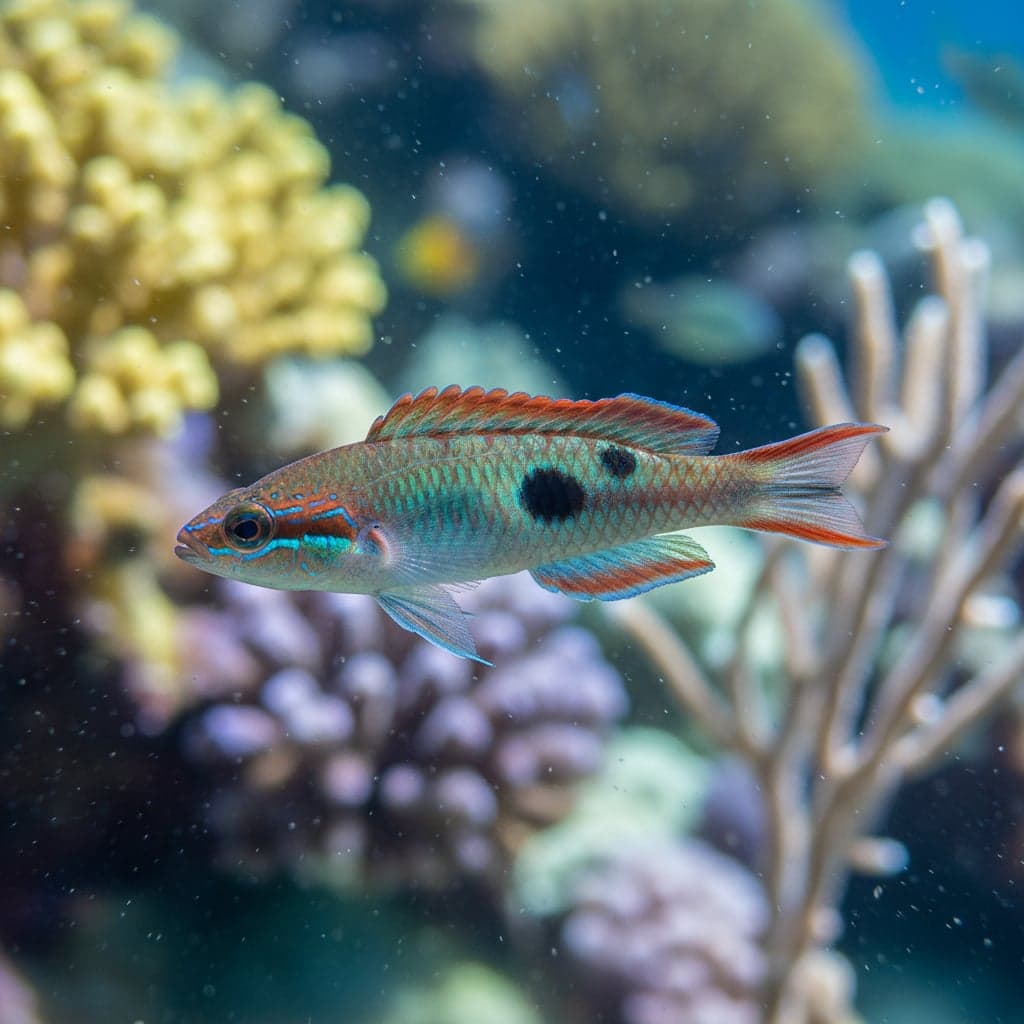
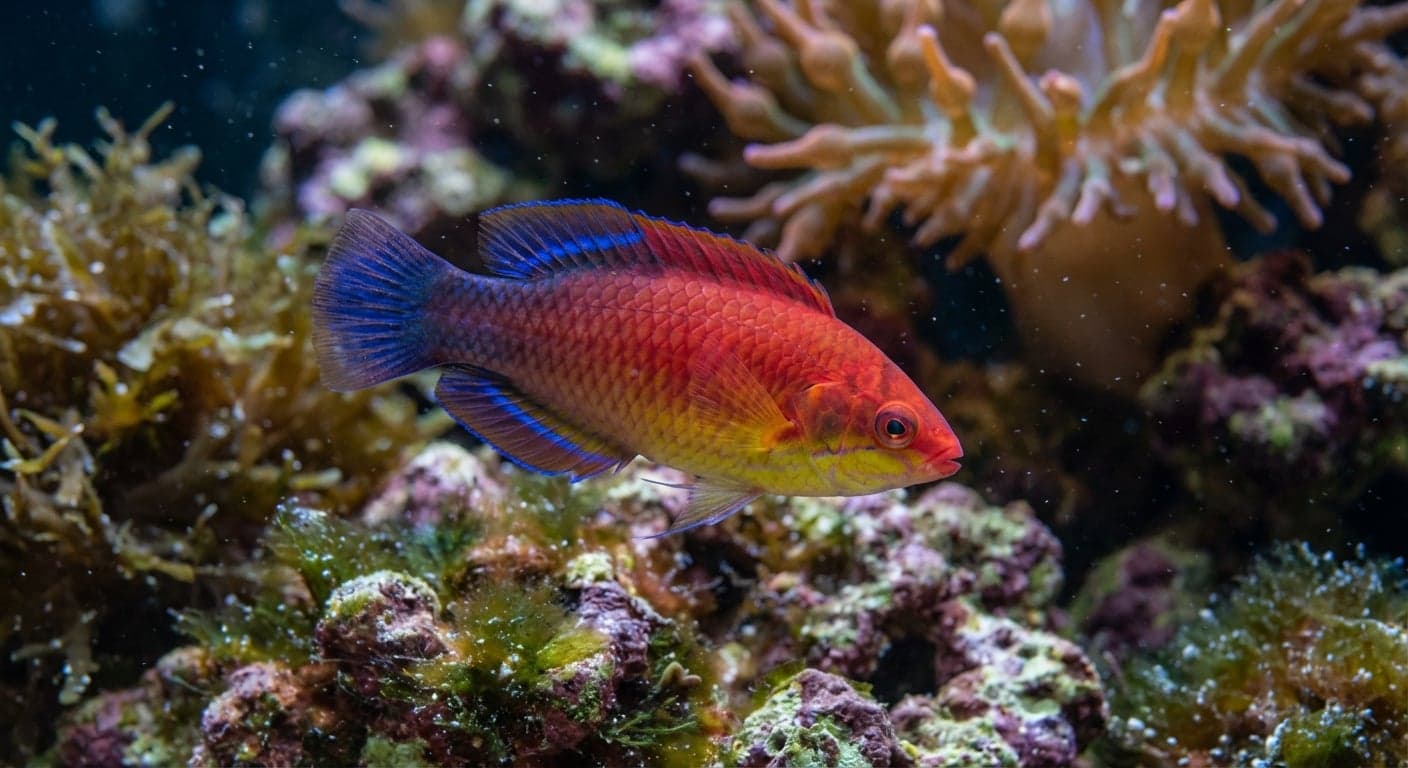
Carpenter's Flasher Wrasse (Paracheilinus carpenteri) is one of the most popular flasher wrasses in the hobby — a small, active reef fish whose males put on spectacular courtship displays. At rest they read orange and pink with fine blue lines; when a male courts or competes he “flashes,” erecting elaborate fins and lighting up in electric reds, blues and yellows for a few dazzling seconds. Peaceful, reef-safe and hardy once settled, it is a brilliant colour fish for a community reef rather than a nano mascot that sits still.
It is at its best kept as a male with several females, where ongoing low-level competition keeps the male flashing. Frontmatter lists shoaling because wild fish form loose aggregations and harems; in a home aquarium that almost never means packing a school into 115 litres — it means one male and a small female group, or a single specimen in a peaceful reef.
Natural Habitat & Origin
Paracheilinus carpenteri ranges through the western Pacific, living in loose aggregations over reef slopes and rubble where zooplankton drifts past in the current. Males hold display stations above the structure and court harems of females, especially toward dusk; both sexes work the water column rather than picking at coral tissue.
In the aquarium recreate that geometry: open mid-water swimming space above the rock for displays, moderate-to-strong flow that keeps food suspended, and enough caves and overhangs for night shelter. A heavily cave-packed maze with no clear flight path produces a skulking fish that never shows the flash. Fine sand under the rock is fine; flashers are not dedicated sand-sifters, but many wedge into cover or sleep in rock crevices when lights go out.
Care Requirements
Stable marine water: salinity about 1.024–1.026, pH 8.1–8.4, temperature 24–26°C (75–79°F). Adults reach only about 8 cm (3 inches). The listed minimum of around 115 litres (30 US gallons) works for a single male or a small harem if the footprint gives swimming length, not just height. Larger systems show better colour and less tension if you ever try more than one male.
A gap-free lid is non-negotiable. Flasher wrasses are committed jumpers — startled by lights-out, a net, or a sudden chase — and Carpenter's is no exception. Screen overflow boxes and filter intakes; a fish that wedges into a sump overnight is a common loss mode.
Quarantine new arrivals even though the species is beginner-friendly. Marine ich (Cryptocaryon irritans) and marine velvet (Amyloodinium ocellatum) still hit stressed imports. Observe and feed in QT before the display; copper and related therapeutics belong in a hospital tank, not on a mixed reef — see medications and a proper quarantine protocol.
Use the Aquarium Tracker to log salinity and temperature; chronic nitrate creep and heater faults show up as dull colour and clamped fins before the fish stops eating.
Diet & Feeding
Micro-carnivore. Wild intake is zooplankton in the current. In captivity offer frequent small meals: frozen mysis, enriched brine shrimp, finely chopped seafood, and quality small marine pellets or flakes. Several feedings a day match a fast metabolism better than one evening dump that faster fish clear first.
Colour tracks diet and calm. A male that fades after introduction usually needs more frequent planktonic foods and less competition at the surface, not a different “colour food” brand. Live pods in a mature system help between meals but should not be the only plan — prove the fish takes frozen in QT. Marine diets and feeding schedules cover timing for active mid-water feeders. Watch belly fullness behind the pectorals; a thin flasher that still rushes the glass is losing the food race.
Behavior & Temperament
Peaceful toward unrelated reef fish. Males display and may gently spar with other male Paracheilinus; keep a single male unless the tank is large and heavily broken by rock. A male with several females is the classic setup that brings out peak flashing without constant chasing.
By day it works open water; at night it shelters in rock and often sleeps in a mucus cocoon — normal, not disease. Avoid boisterous damsels, large hawkfish and food-hogging triggers that pin it in a cave. Introduce after the community is settled, or with other peaceful mid-water fish of similar energy so it is not the only moving target.
Tank Mates
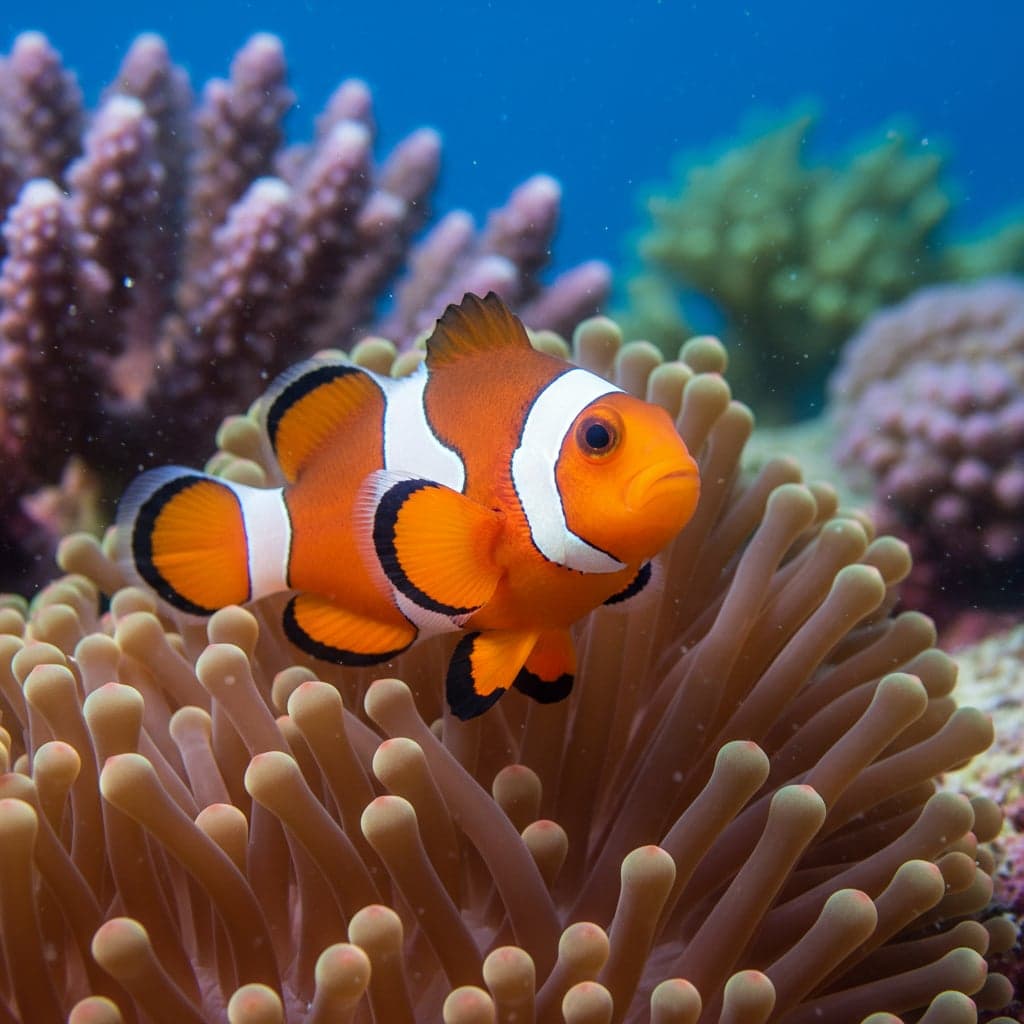
Good companions: common clownfish, gobies, cardinalfish, anthias, peaceful smaller wrasses and similar community reef fish. Multiple flasher or fairy wrasse species can share a large system if added with care — ideally together or with clear swimming lanes — but two large males of similar look will quarrel in a small box.
Fully reef-safe: it does not eat coral polyps, clams or ornamental shrimp. That makes it one of the cleanest colourful additions for a soft- or stony-coral reef where temperament, not diet risk, is the only planning constraint. Avoid aggressive Pseudochromis dottybacks and large Thalassoma wrasses that will intimidate or shred the display fins.
Breeding
Paracheilinus carpenteri is a pelagic spawner. Aquarium spawning is occasionally observed when a harem is settled and well fed — the male leads a female into the upper water column for a rapid gamete release — but rearing the tiny larvae is difficult and rarely achieved at home. Trade specimens are typically wild-collected; captive-bred flashers exist in specialist circles but are not yet shop-floor normal for every species.
Common Health Issues
Hardy once eating, but like all marine fish it can pick up marine ich and marine velvet under shipping or QT stress. Internal parasites sometimes show up as weight loss despite a good appetite — investigate in hospital, not by dumping unproven mixes on the display. Long fins can pick up bacterial damage if water is dirty or tankmates nip.
Quarantine every fish, keep the lid locked, feed frequently, and give the male open water to flash. Given those basics — ideally as a small harem — Carpenter's Flasher Wrasse is a brilliant, beginner-friendly and entertaining reef fish. Starve it of mid-water space or leave the lid ajar and the story ends as a jump or a faded male hiding in the rock.