Cherry Dottyback
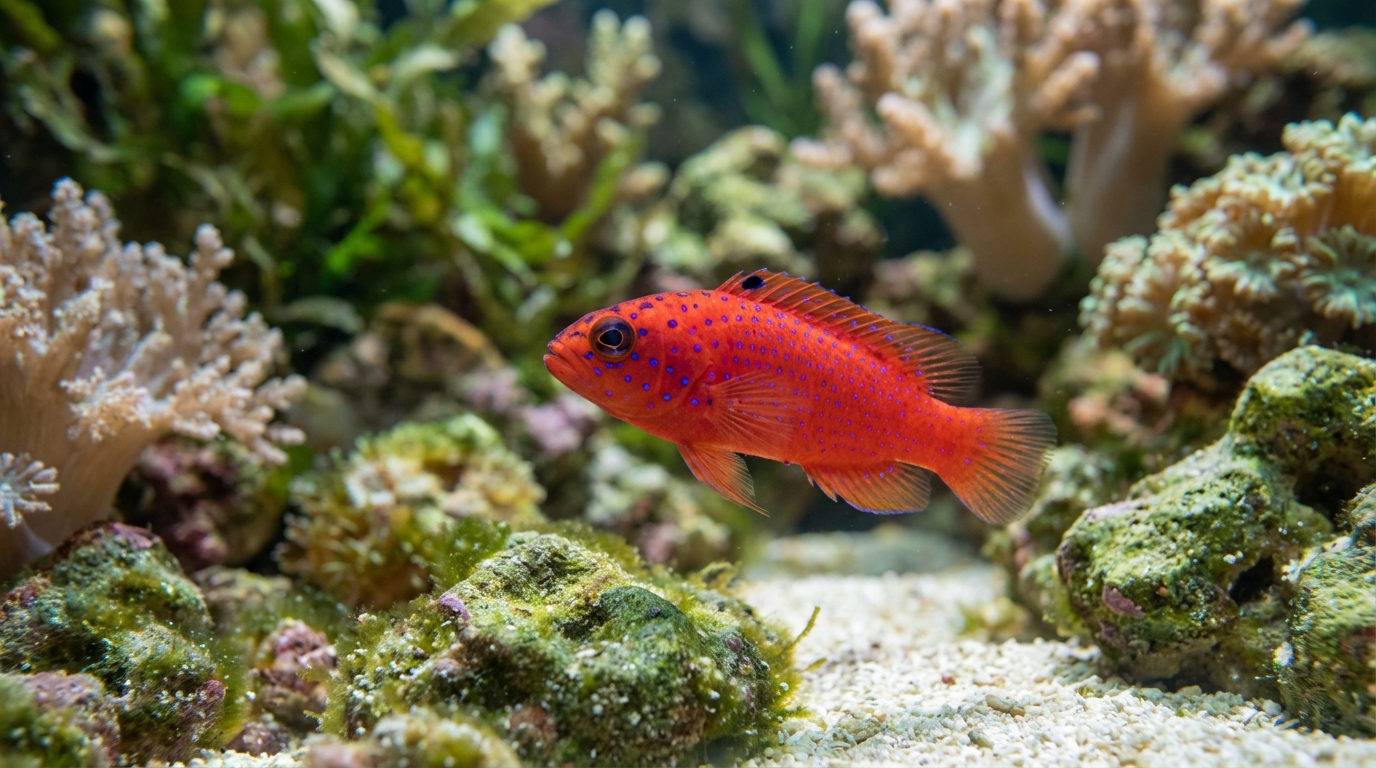
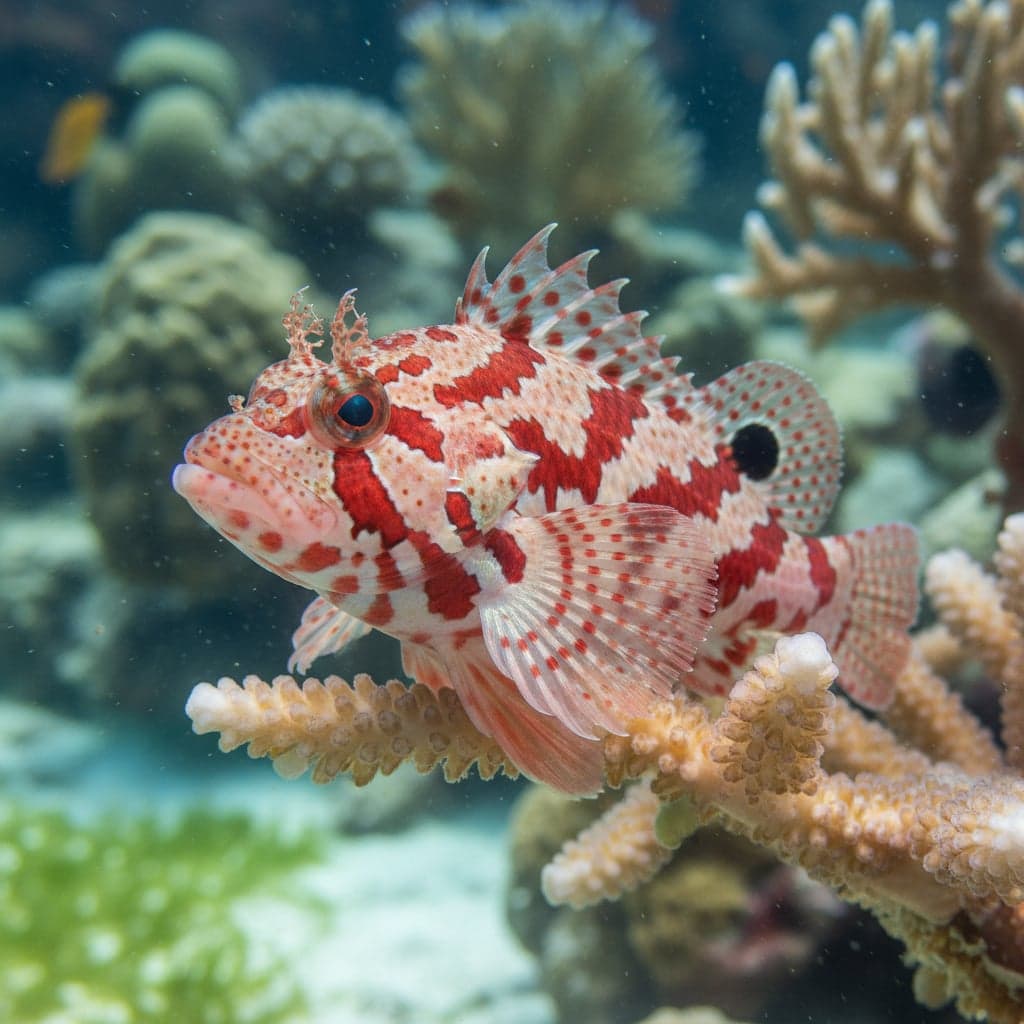
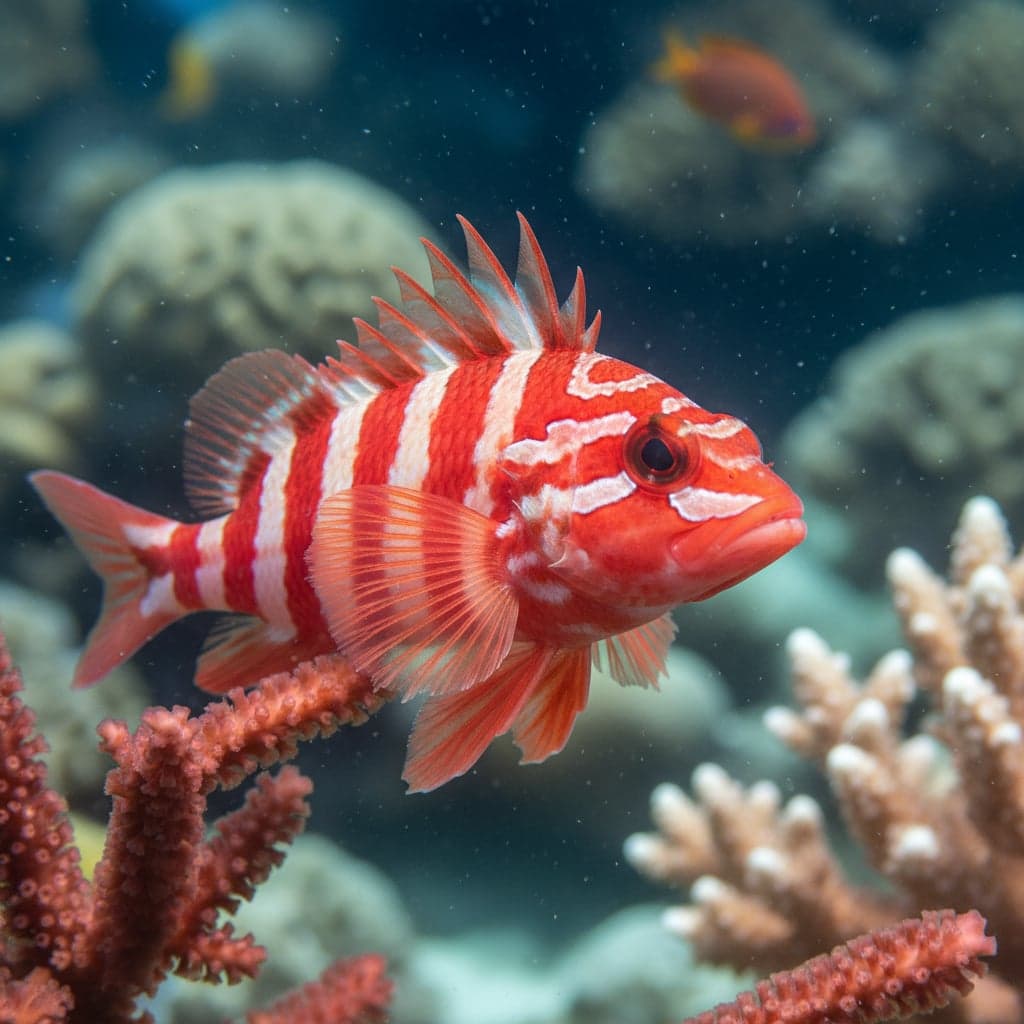
The Cherry Dottyback (Pholidochromis cerasina) is a small, deep cherry-red Western Pacific reef fish — reef-safe and relatively peaceful for a dottyback.
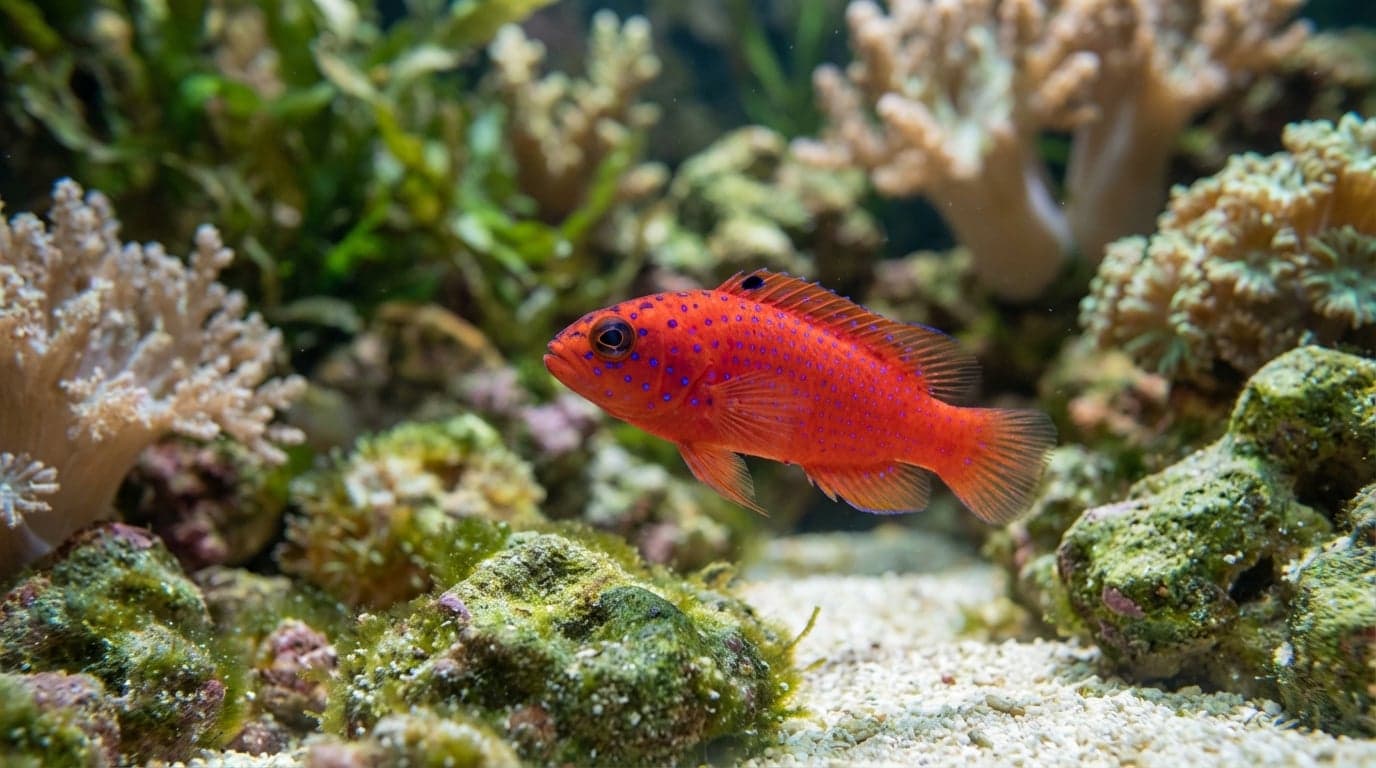
Cherry Dottyback
The Cherry Dottyback (Pholidochromis cerasina) is a small, richly coloured reef fish cloaked in deep cherry-red, fading toward a paler belly. A relatively recent addition to the hobby compared with classic Pseudochromis species, it has become popular for combining jewel-like colour with a somewhat gentler temperament than the feistiest purple or neon dots. Hardy and reef-safe with corals, it is an attractive splash of red for nano and small reef aquariums — not a fish that sits in open water posing for photos all day.
Like all dottybacks it is bold and likes cover, but it tends to be a little more easygoing than many of its relatives. “Peaceful for a dottyback” still means semi-aggressive: it will claim rock, chase similar shapes, and eat anything small enough that wanders into its cave mouth.
Natural Habitat & Origin
Pholidochromis cerasina is found in the western Pacific, living close to the reef among rock, rubble and crevices and darting out to take small crustaceans and zooplankton. It is a secretive fish that quickly retreats into cover when disturbed — the wild pattern aquarists should copy rather than fighting.
In the aquarium it wants exactly that: abundant live rock with holes, caves and overhangs to claim as territory and overnight shelter. A bare nano cube with one ornament forces constant glass-pacing and turns mild boldness into harassment of every tankmate. Leave sightline breaks so the fish can own a patch without owning the whole box.
Care Requirements
Stable marine water: salinity about 1.024–1.026, pH 8.1–8.4, temperature 24–26°C (75–79°F). Adults reach only about 8 cm (3 inches). Around 75 litres (20 US gallons) and up works if rockwork is dense; volume without structure is the wrong kind of space. A secure lid is wise — startled dottybacks can jump, especially during lights-out or netting.
It is hardy and tolerant of typical reef conditions once settled and eating. Quarantine anyway. Marine ich (Cryptocaryon irritans) and marine velvet (Amyloodinium ocellatum) do not care that the fish is “beginner-friendly.” Observe feeding and behaviour in QT before the display; copper and related therapeutics belong in a hospital tank, not on sessile inverts — see medications and quarantine protocol.
Use the Aquarium Tracker to log salinity, temperature and change schedule; chronic dirty water shows up as dull colour and clamped fins long before the fish stops darting from its cave.
Diet & Feeding
Carnivore. Wild fish take small crustaceans and zooplankton from the water column and rock face. In captivity they are usually enthusiastic feeders: frozen mysis and enriched brine shrimp, finely chopped seafood, and quality marine pellets or flakes. Feed once or twice a day; prove acceptance in QT so you are not guessing after introduction.
A mature system with pods helps between meals but is not a substitute for prepared foods. Watch that faster mid-water fish do not strip every feeding before the dottyback leaves cover — drop a portion near its cave if needed. Marine diets cover staple choices for small reef carnivores. A thin fish that still refuses food after days in QT is a husbandry problem to solve before display life gets harder.
Behavior & Temperament
Semi-aggressive but comparatively even-tempered for the group. It will defend a territory and can squabble with similar fish — other dottybacks, similarly sized basslets, or anything that tries to share its favourite hole — yet it is generally less belligerent than many Pseudochromis. Keep it as a single specimen in smaller systems; “a pair” only works when sex is clear and the tank is large enough to dilute disputes.
Add it later in the stocking plan so it cannot dominate every crevice from day one. It spends its time patrolling and defending its patch of rock, darting out for food and retreating when startled. Hunger and crowding turn manageable boldness into constant chasing.
Tank Mates
Pair it with robust tankmates that can hold their own — common clownfish, damsels, larger wrasses, cardinalfish and similar — rather than very shy gobies, tiny firefish or ornamental shrimp you intend to keep long-term. As a small predator it may eat ornamental shrimp, tiny crustaceans and bristleworms; some keepers count the pest-worm habit as useful, others lose expensive cleaner shrimp.
It is reef-safe with corals and sessile inverts — it does not graze polyps — which makes coral safety easier than temperament planning. Avoid other dottybacks in a nano; two red or purple shapes in 75 litres is a recipe for a loser pinned in a corner.
Breeding
Dottybacks such as Pholidochromis cerasina are increasingly captive-bred, and tank-raised specimens — which tend to be hardy and well-adjusted — are sometimes available. Males typically guard a clutch of eggs in a crevice or shell; rearing the larvae requires dedicated effort (tiny foods, clean water, careful lighting) but is achievable for committed breeders. Wild-collected fish still appear in trade; prefer captive-bred when you can find them.
Common Health Issues
Hardy and not especially disease-prone relative to surgeonfish, but still vulnerable to marine ich and marine velvet under stress. Jump injuries and wounds from territorial fights are the other common stories. Quarantine new arrivals, keep water quality stable, secure the lid, and choose tankmates that will not be terrorised by a bold red fish in a cave.
Mindful of its temperament when stocking, the Cherry Dottyback is otherwise an easy, colourful and rewarding fish — a genuine splash of red for a small reef when rock, feeding and companions are honest. Undersize the rockwork or add it first among timid fish and the same “peaceful for a dottyback” becomes the fish everyone else avoids.