Christmas Goby
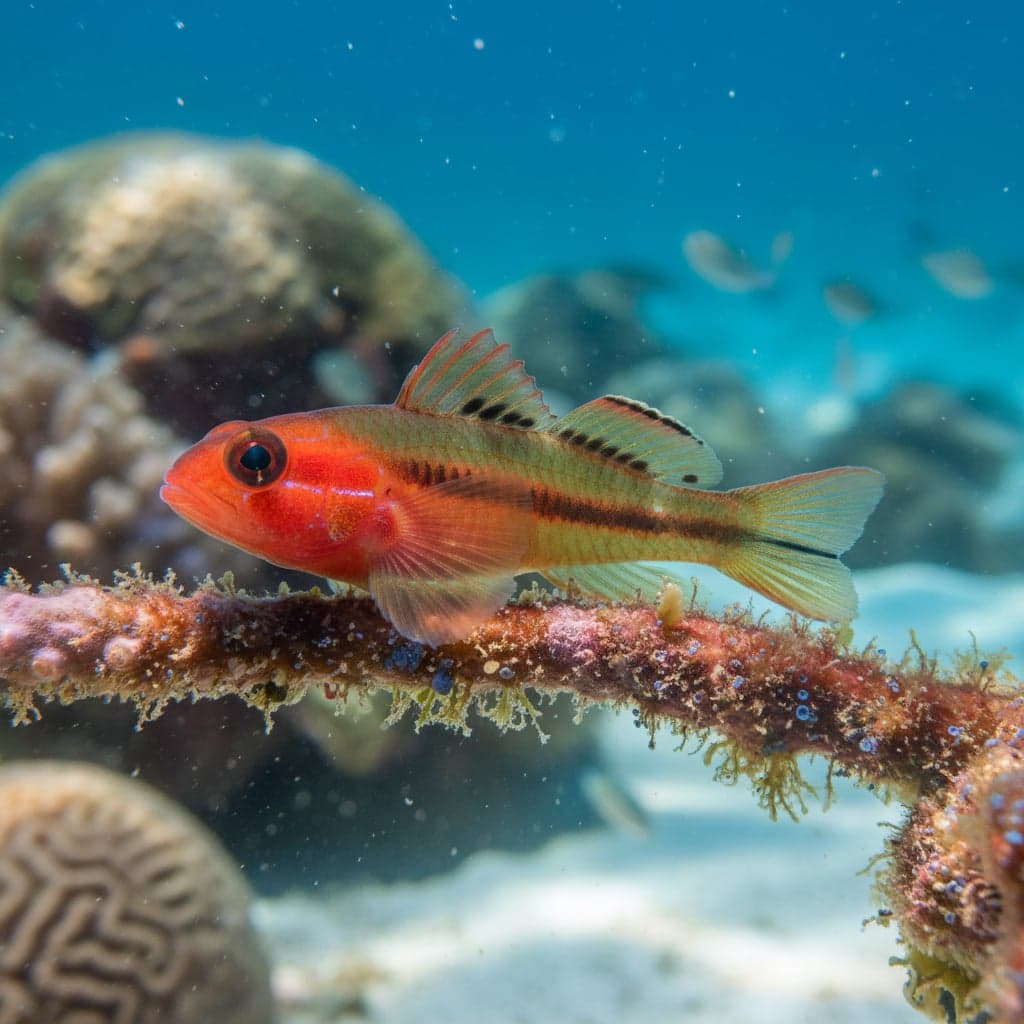
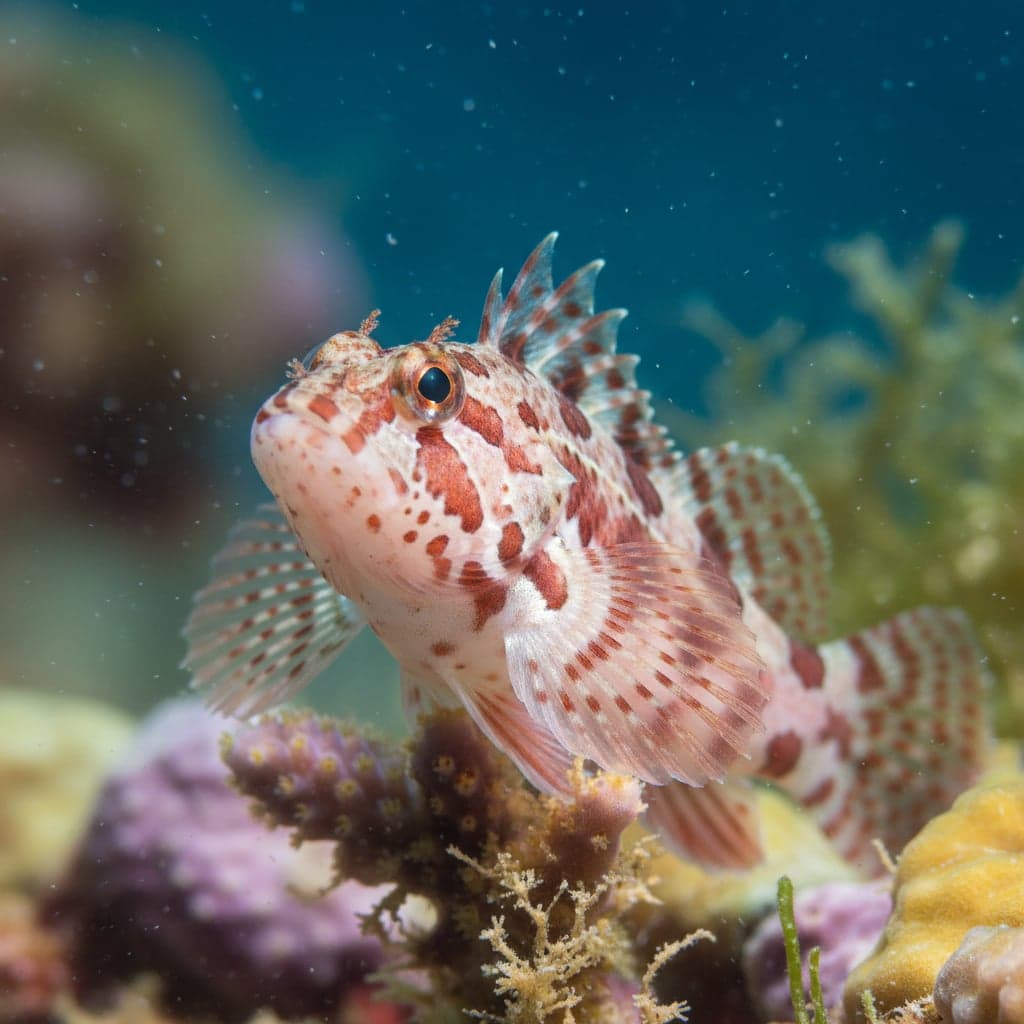
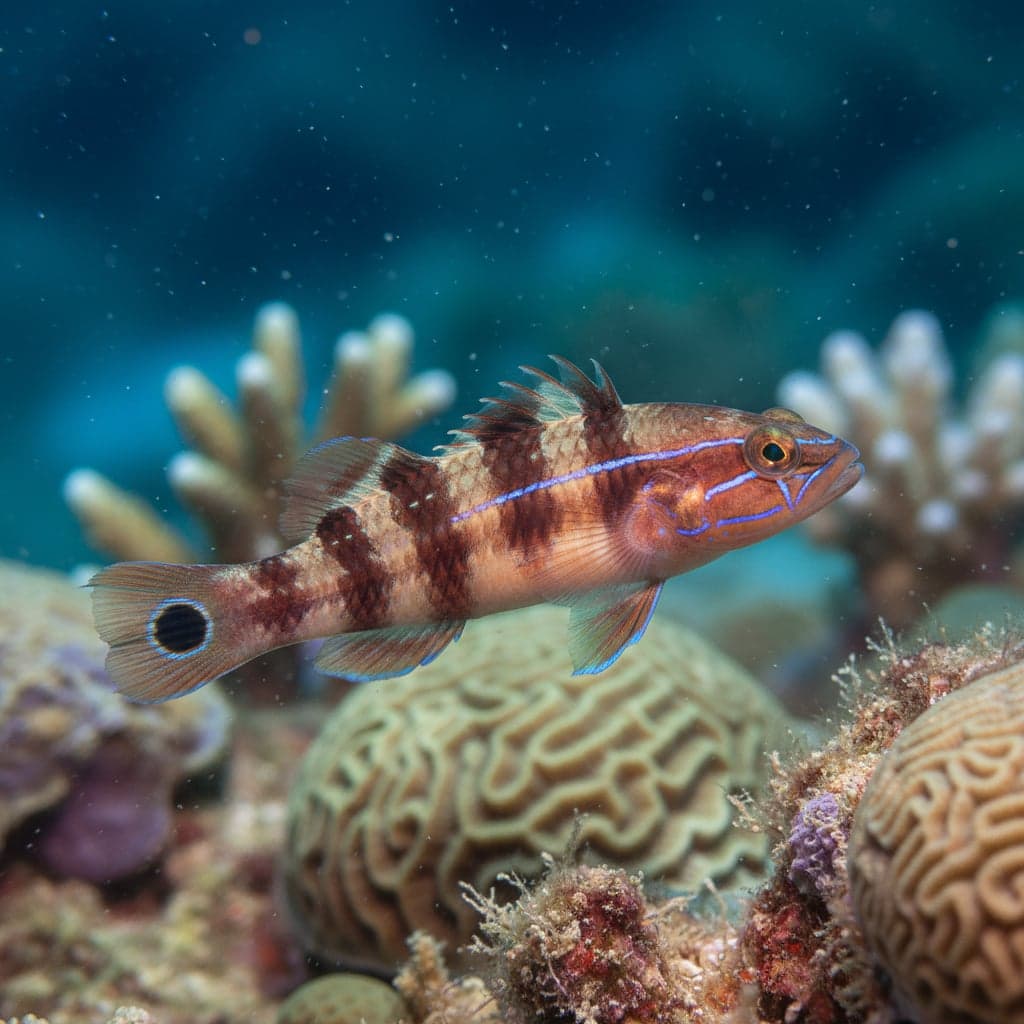
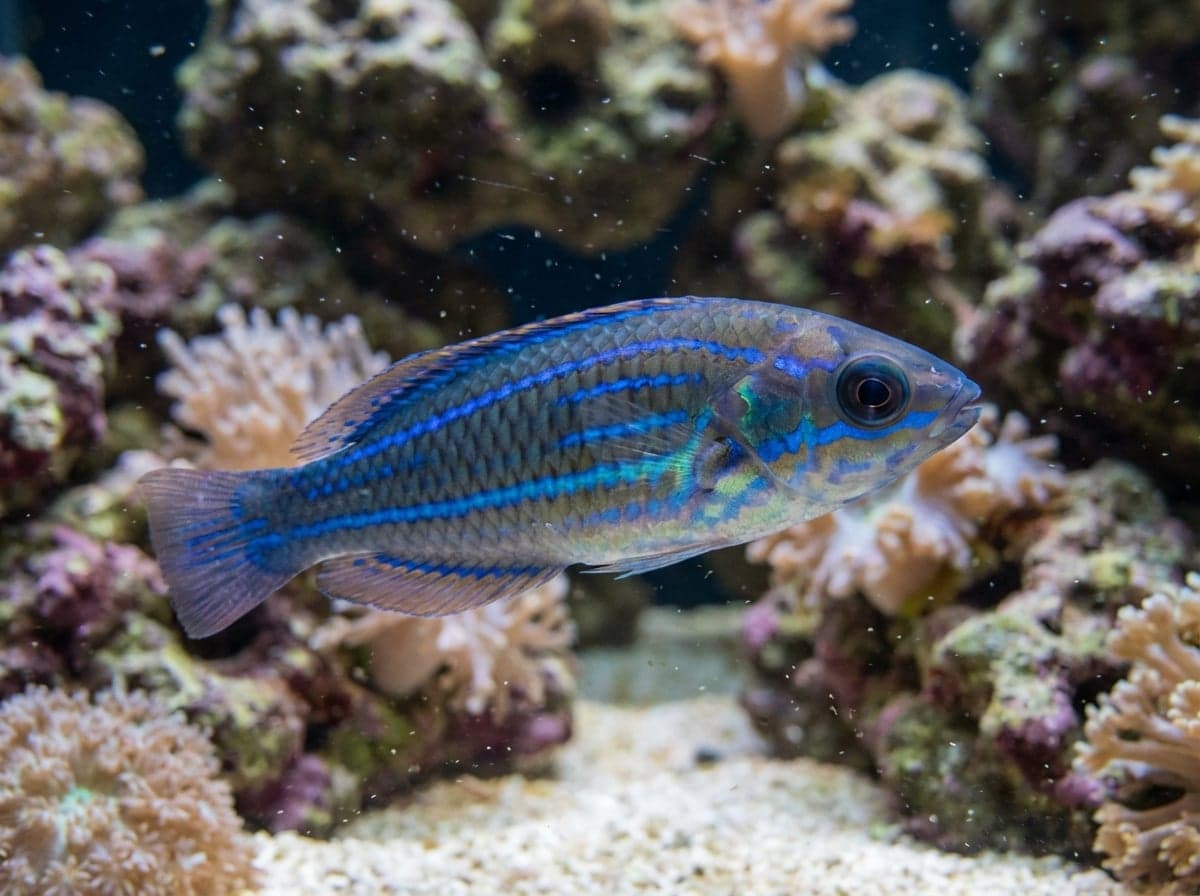
The Christmas Goby (Tigrigobius multifasciatus) is a tiny, finely banded Caribbean reef goby — peaceful, reef-safe and well suited to nano marine tanks.
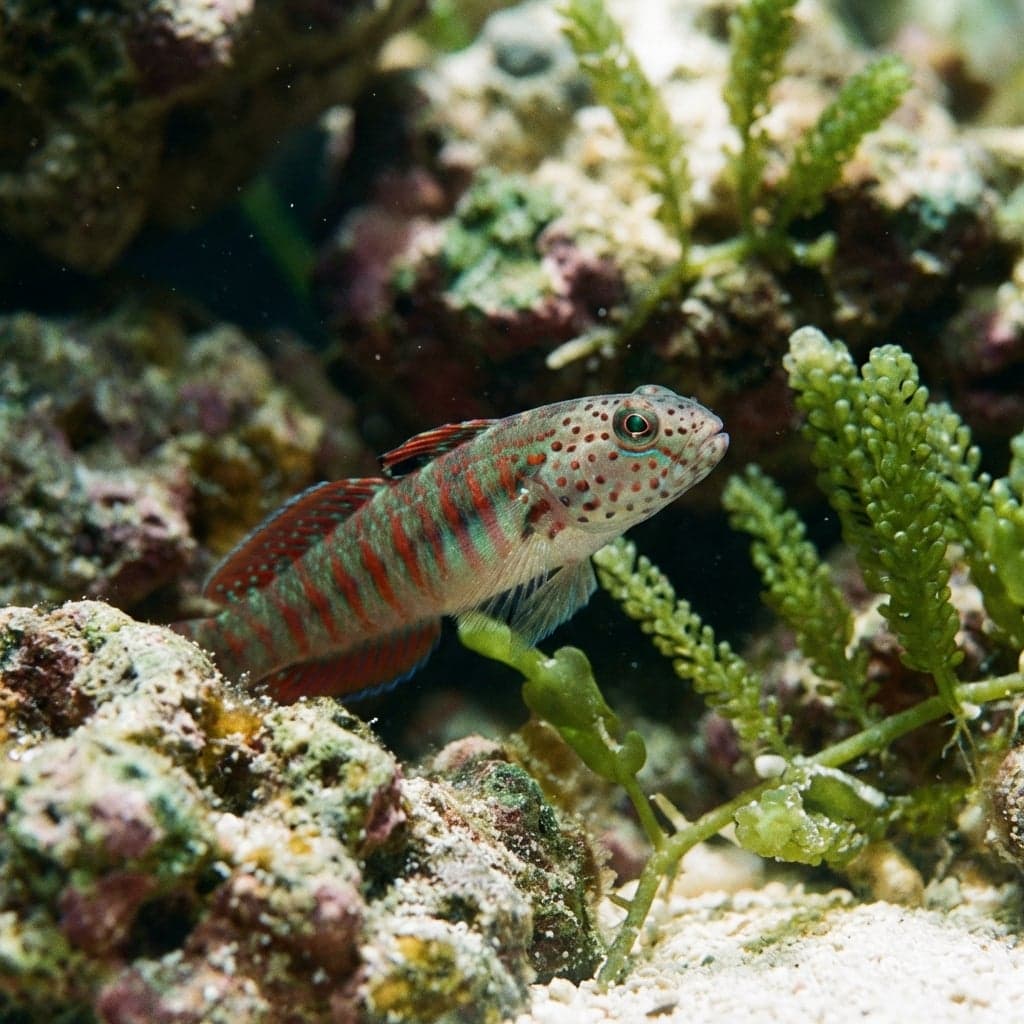
Christmas Goby
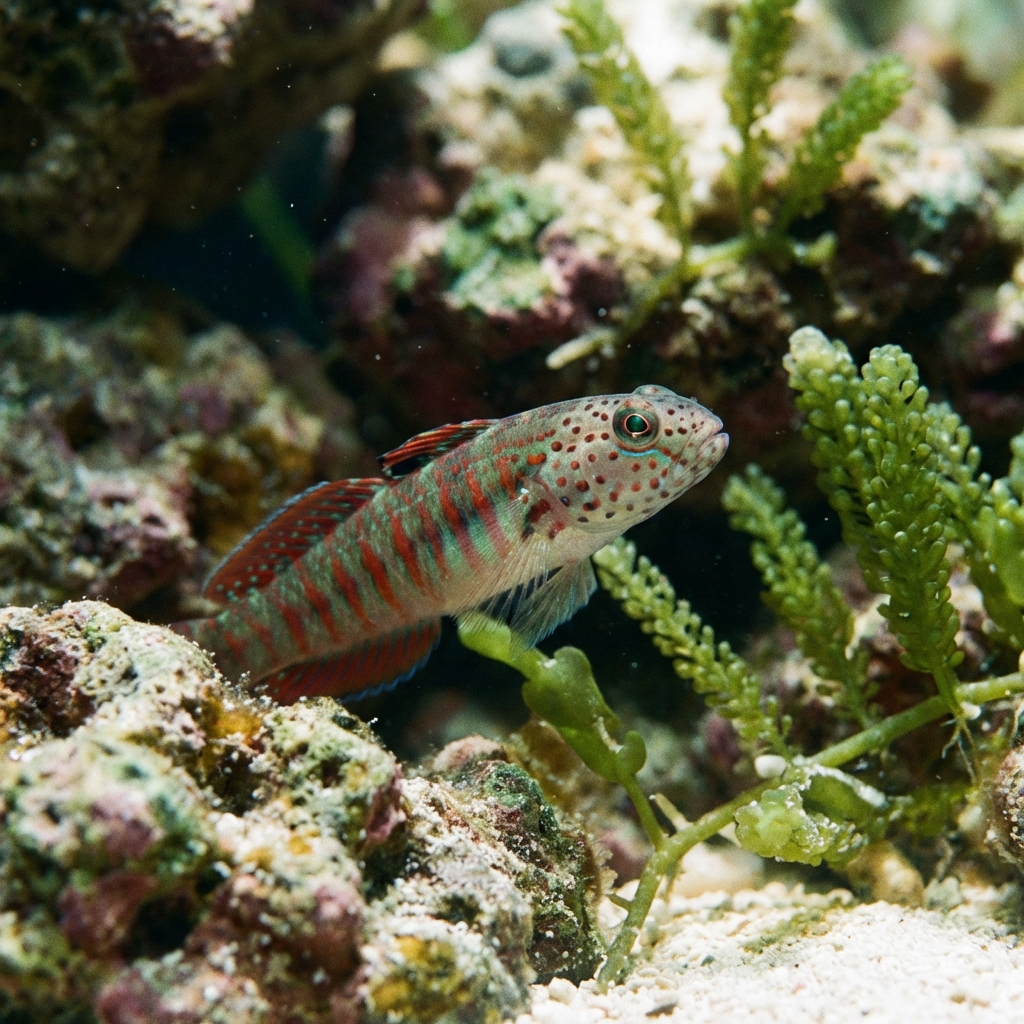
The Christmas Goby (Tigrigobius multifasciatus), also called the greenbanded or many-lined goby, is a diminutive Caribbean reef fish ringed with fine vertical bands of red and green over a pale body — a festive little jewel that earns its common name. Tiny, peaceful and hardy for its size, it perches on rock and coral and picks at small prey, making it a genuine nano candidate rather than a large fish sold small. Fully reef-safe with corals and ornamental inverts, it asks for calm tankmates and a lid more than it asks for volume.
Like related neon and cleaner gobies, it is secretive at first and becomes confident once it claims a crevice in a quiet tank. “Nano-suited” still means stable marine water — a 38 litre box that swings salinity every water change is a poor choice regardless of the fish’s adult size. Sold length and adult length are nearly the same here; the risk is predation and starvation, not surprise growth.
Natural Habitat & Origin
Tigrigobius multifasciatus lives on Caribbean reefs close to coral and rock, often at the bases of corals and in small crevices, picking tiny invertebrates from surfaces. It stays near cover rather than cruising open water. Some related gobies show facultative cleaning behaviour; this species may pick at parasites or mucus on tankmates opportunistically, but it is not a dedicated cleaner you can rely on as disease control.
In the aquarium recreate that micro-habitat: live rock with small perches, overhangs and tight crevices where a pair can claim a favoured spot. A sparse “open sand show tank” with one rock leaves a tiny goby exposed and stressed. Put structure first; the bands only show when the fish feels safe enough to sit in view.
Care Requirements
Stable marine conditions: salinity around 1.024–1.026, pH 8.1–8.4, temperature about 24–26°C (75–79°F). Adults reach only about 4 cm (1.5 inches). Around 38 litres (10 US gallons) or more suits a single fish or pair if water quality is genuinely stable and tankmates cannot eat it. Nano volume fails when parameters drift, when a single large hermit crab monopolises food, or when a “peaceful” wrasse treats the goby as a snack.
Use a secure lid. Tiny gobies jump through gaps that look too small to matter — overflow notches, cable slots and open corners. Quarantine new arrivals even at this size. Marine ich (Cryptocaryon irritans) and velvet (Amyloodinium ocellatum) do not skip nano fish; they often kill them faster because metabolic and osmotic stress hit a 4 cm body harder. Treat in QT, not on the display; see medications. Copper protocols and invert-safe reefs do not mix — hospital tanks exist for a reason.
Gentle to moderate flow is enough; blasting a nano with tang-level turbulence pins a crevice fish to the rock and interferes with feeding. Oxygen still matters — surface agitation without a firehose. Log salinity and temperature in the Aquarium Tracker; in small systems a missed top-off shows up as a salinity climb before the goby looks obviously sick.
Diet & Feeding
Micro-carnivore. Wild diet is tiny crustaceans and other small invertebrates picked from surfaces, plus occasional opportunistic cleaning nips. In captivity offer small meaty foods: finely chopped or small-grade frozen mysis, enriched brine shrimp, cyclops or similar micro-frozen items, and quality small marine pellets or crushed flakes. Feed small amounts a couple of times a day, and watch whether this fish actually gets any — mid-water anthias and clownfish will vacuum the cloud before a perched goby moves.
Prove feeding in QT. A Christmas goby that only grazes film fauna in a mature rock system may look fine until you move it to a sterile nano and it fades. Do not assume “it will find pods.” Enrich frozen foods if the fish arrived thin. Body shape tells the truth: a hollow belly on a 4 cm goby is an emergency, not a cute slim profile. If tankmates outcompete it, target-feed near the claimed crevice with a pipette or place food on the rock face at lights-on before the faster fish wake fully into hunting mode.
Captivity diet is prepared micro-foods plus whatever naturally grows on live rock; it is not a substitute for quarantine or a cure for ich. Parasite-picking, when it happens, is a bonus behaviour — not a reason to skip QT.
Behavior & Temperament
Peaceful and non-aggressive toward fish that cannot eat it. Best kept singly or as a pair; multiple unpaired individuals may squabble over the same crevice in a small tank. A bonded pair typically shares a favoured perch and becomes a reliable sight once settled. It spends its time perched on rock and darting between crevices — low activity is normal; frantic open-water swimming is stress.
Toward corals and ornamental invertebrates it is indifferent. The mouth and hunting scale are wrong for polyp damage or shrimp predation of the hawkfish sort. Toward large predators it is simply prey — temperament charts that list “peaceful community” assume the community is sized for a 4 cm fish.
Tank Mates
Pair it with peaceful reef fish that will not view it as food: small clownfish, firefish, other small gobies, cardinalfish, small fairy wrasses in larger peaceful systems, and similar. Avoid large wrasses, hawkfish, groupers, triggers, lionfish and any fish whose mouth can finish the job in one gulp. Avoid hyper-aggressive damsels that claim every crevice the goby needs.
It is fully reef-safe: corals, clams and ornamental shrimp are not on the menu because feeding is micro-picking, not crushing or polyp grazing. That makes it an ideal nano-reef resident when the rest of the stocking list respects its size. It is a poor choice in a mixed reef built around large semi-aggressive fish, or in an open-top nano where jump risk and evaporation swing water chemistry weekly. Tiny and hardy are not the same as unkillable.
Breeding
Tigrigobius multifasciatus pairs can spawn in sheltered cavities, with the male guarding the eggs. Small gobies of this type are occasionally bred by dedicated hobbyists. Rearing the larvae requires suitable small live foods and real attention to water quality, so most trade specimens are still wild-collected. A spawning pair in a home nano is a bonus project, not something to promise from buying two banded gobies and hoping.
Common Health Issues
Hardy for its size when water is stable and food arrives at the crevice, but sensitive to parameter swings that larger fish shrug off. Ich and velvet under shipping stress remain real; quarantine every fish. Jump losses and predation losses are more common than mysterious disease in mixed tanks — search the floor and sump, and audit tankmate mouth size, before restocking.
A Christmas goby sold into a 200 litre predator community “for cleanup” is a poor choice; so is an open-top 20 litre desk tank with no lid and weekly salinity chaos. Prove feeding in QT, give a pair a quiet crevice and sealed covers, and this finely banded Caribbean goby is a charming, peaceful, reef-safe nano fish. Starve it under faster feeders or house it with anything that fits it in one bite, and the festive bands never get time to matter.