Crescent-tail Hogfish
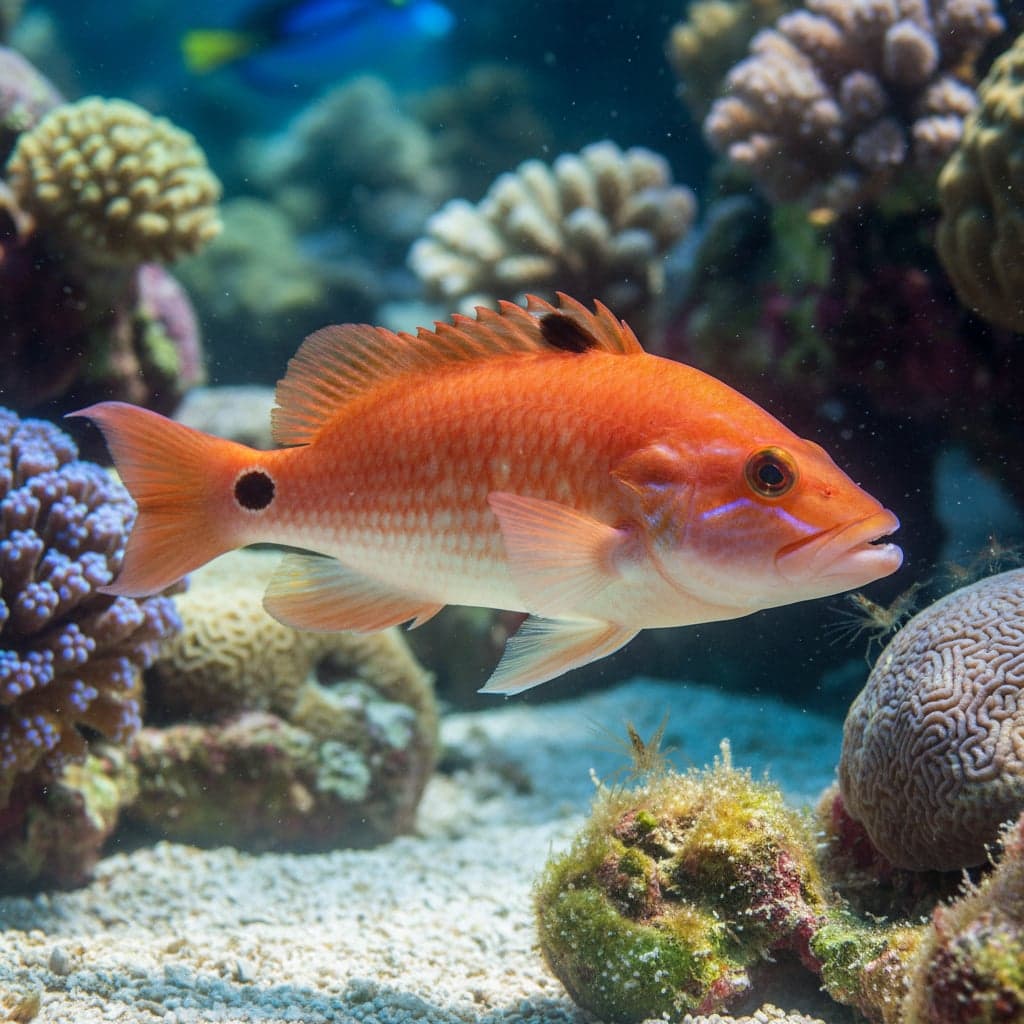
The Crescent-tail Hogfish (Bodianus sepiacaudus) is a small, elegant deep-reef wrasse — peaceful and coral-safe, but a predator of small invertebrates.
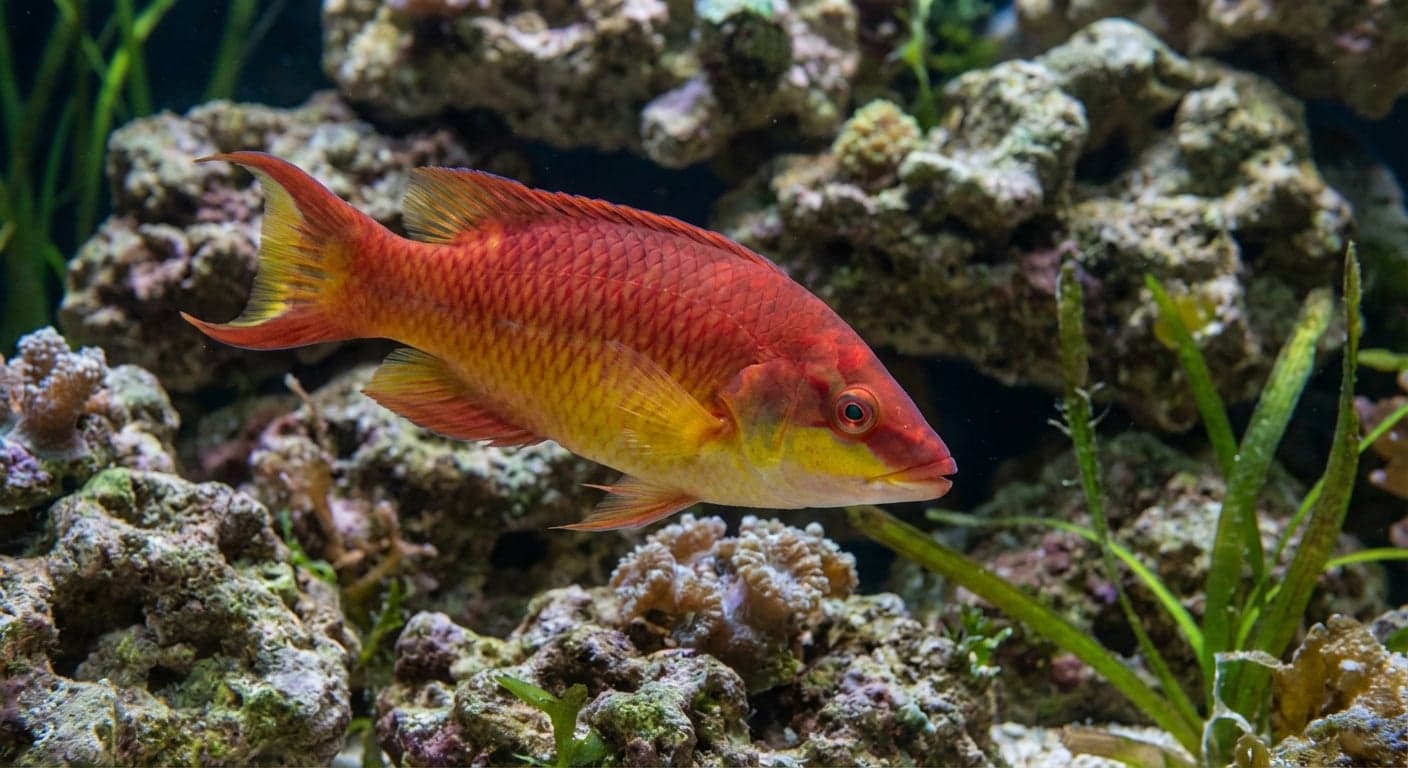
Crescent-tail Hogfish
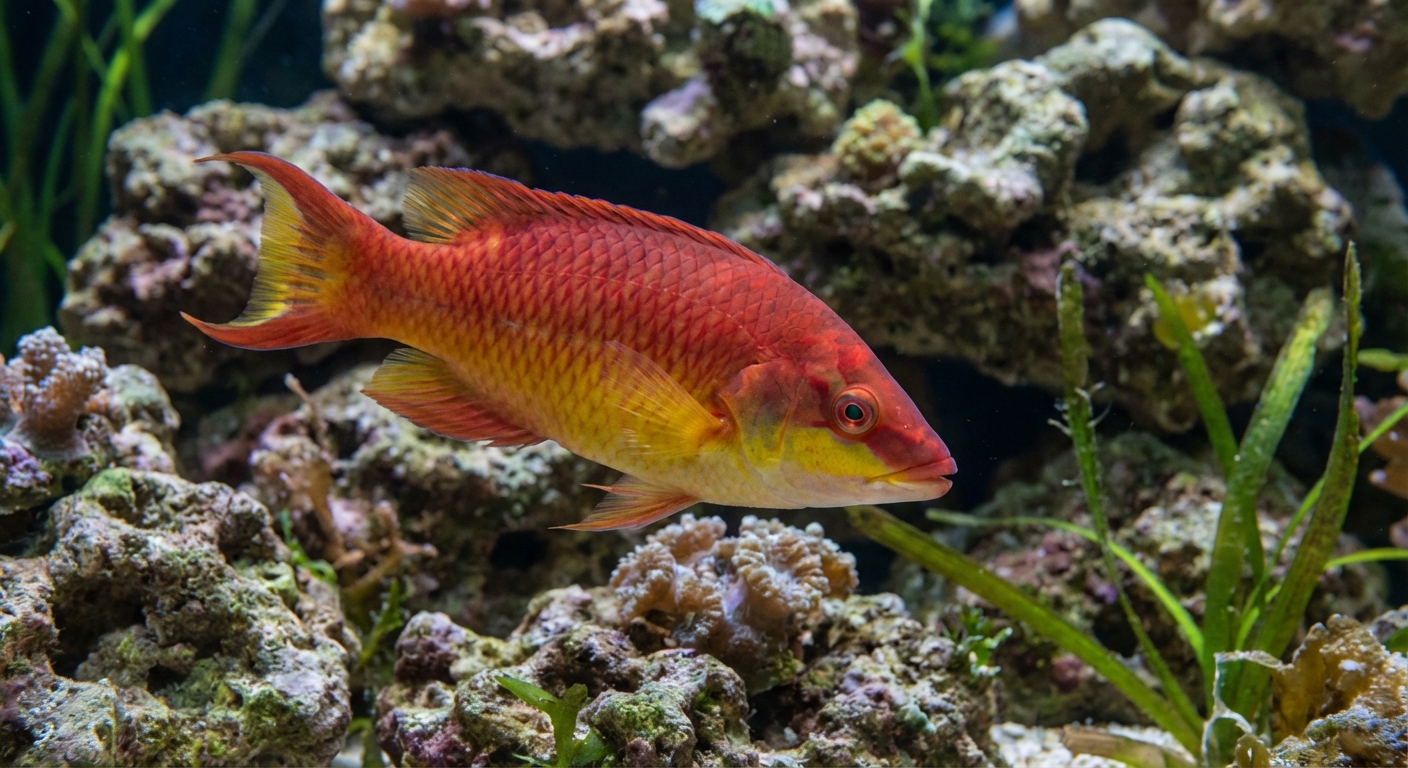
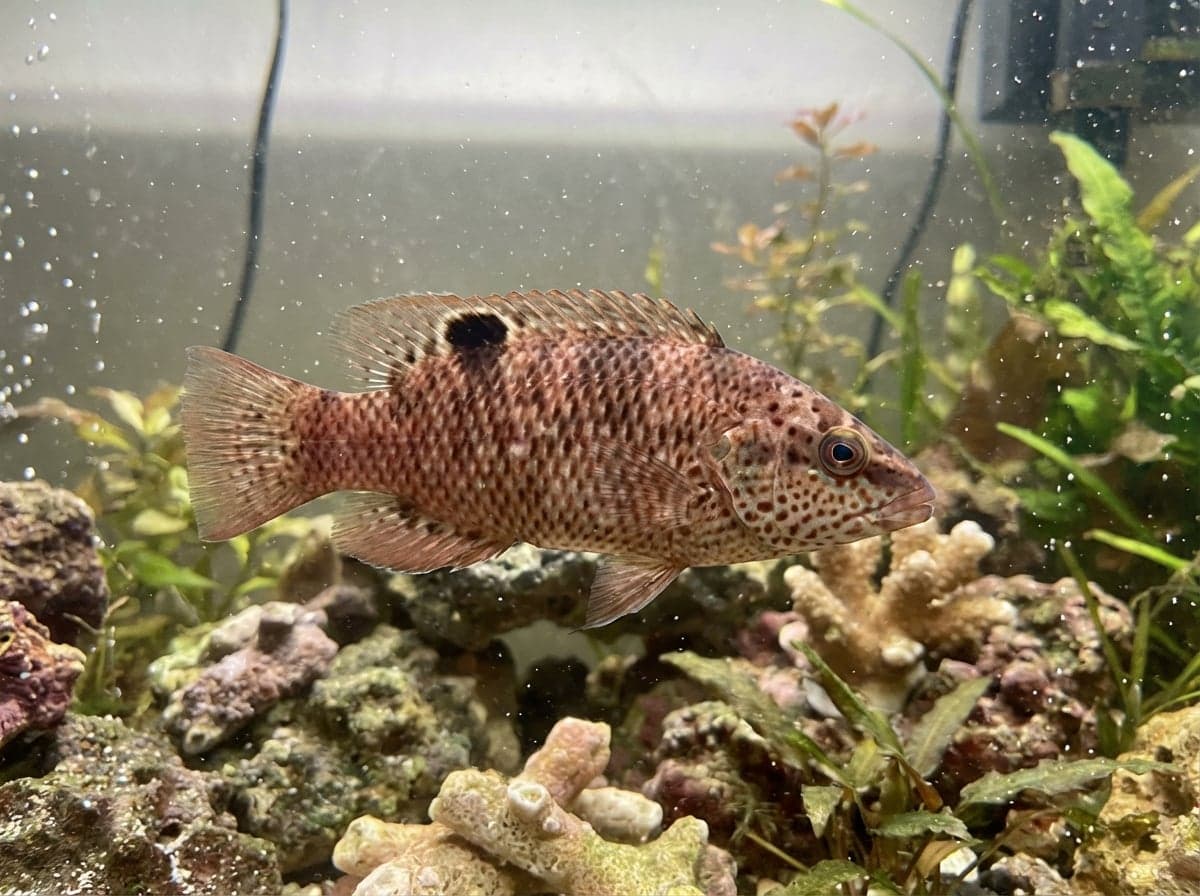
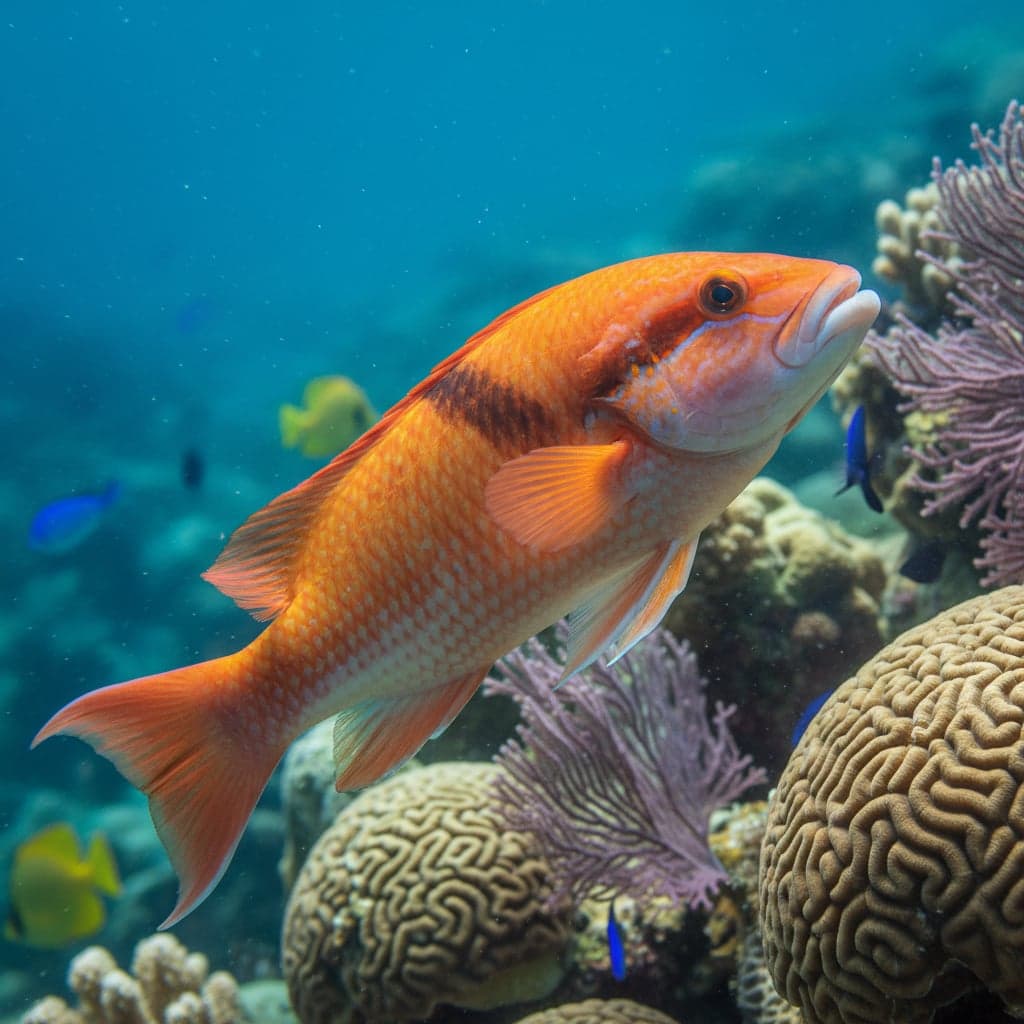
The Crescent-tail Hogfish (Bodianus sepiacaudus) is the hogfish people buy when they want the look without the wrecking crew. Clean white and pink-red banding, a dark crescent on the caudal fin, a modest adult size — it reads as jewellery rather than as the bulky Caribbean hogfish that rearrange rock and eat shrimp for sport. That refinement is real. So is the appetite: this is still a Bodianus, which means a carnivore built to pick small invertebrates off rock and rubble. Coral polyps are usually safe. Ornamental shrimp are not.
Frontmatter and trade sheets often list it around 10 cm (4 inches). Wild maxima run higher — closer to the mid-teens of centimetres on some records — so treat 10 cm as a typical aquarium size, not a hard ceiling, and size the tank for an active wrasse that will use every rock face it can reach.
Natural Habitat & Origin
Bodianus sepiacaudus is an Indo-Pacific deep-reef and reef-slope fish, associated with rock and rubble rather than shallow sunlit flats. Collectors and divers find it in shaded ledges, drop-offs and deeper slopes where light is lower and the invertebrate fauna in the crevices is dense. That origin explains two aquarium quirks that look like fussiness until you map them to habitat.
First, bright, freshly lit reef tanks can leave a new arrival pinned in the darkest cave for days. Subdued lighting for the first week, or at least heavy overhangs, lets it settle. Second, it forages by searching surfaces and crevices, not by hovering in open water like an anthias. Rock with real structure — holes, rubble pockets, vertical faces — is habitat. A bare sand plain with two decorative stones is not.
Care Requirements
Stable marine conditions: specific gravity about 1.024–1.026, pH 8.1–8.4, temperature 24–26°C (75–79°F). It is not a fragile deep-water specialist in captivity once acclimated, but deep-collected fish often arrive thin and shipping-stressed, which is a disease risk rather than a parameter problem.
Tank size versus body size: 115 litres (about 30 US gallons) is the listed floor for a fish that stays near 10 cm. That volume works if the footprint gives continuous rock to work and a secure lid. Wrasse of this type jump — especially at night lights-out, or when startled by a net — and a missing hogfish is usually on the floor, not hiding in the sump. Longer tanks at the same volume beat tall nano cubes; this fish patrols horizontally along rock edges.
Acclimate slowly, especially if the dealer's salinity differs from yours. Deep-slope fish sometimes sit at slightly different specific gravities in holding systems. A rushed swing after a long flight is how a hardy species becomes an ich case before it has taken its first meal in your tank.
Diet & Feeding
Wild diet is small benthic invertebrates: tiny crustaceans, worms, molluscs and other mobile prey picked from rock, rubble and sand interfaces. It is a hunter of things that fit in a small mouth, not a coral-polyp browser and not a plankton picker in open water.
In captivity that maps cleanly onto meaty prepared foods — and that is why this species is easier to wean than many deep-water specialists. Frozen mysis, enriched brine shrimp, finely chopped seafood, copepod products and small marine pellets are all accepted by a healthy fish. Feed once or twice a day what it will clear in a couple of minutes. Enthusiastic feeding is normal; refusal for more than a day in a new arrival is a red flag for stress or parasites, not "it needs to settle for a week without food."
The wild-versus-captivity gap that matters is enrichment, not acceptance. A fish that only gets the same mysis cube every evening still eats, but it stops working the rock the way it evolved to. Occasional live enriched brine, pod-rich refugium exports, or varied frozen blends keep foraging behaviour alive. Do not rely on the display tank's microfauna as the staple — a single hogfish will strip a lightly seeded system of pods and then sit waiting for you.
Behavior & Temperament
Peaceful by hogfish standards and by most wrasse standards. It mixes with similarly sized, non-aggressive reef fish and spends the day cruising rockwork in search of movement. Best kept singly in home aquaria; pairs and groups are a large-system proposition and not required for the fish to thrive.
It is shy for the first days, then increasingly bold as it maps caves and feeding spots. Sudden dashes into cover when a hand appears above the tank are normal, not a sign the tankmates are bullying it — watch whether it comes back out to eat. Night shelter in a chosen crevice is typical Bodianus behaviour.
Tank Mates
Good companions: other peaceful to semi-aggressive reef fish that will not outcompete it at feeding time or chase it into starvation — wrasses of different shape, anthias in larger tanks, gobies, blennies, smaller tangs, clownfish. Avoid large aggressive triggers, groupers and predatory wrasses that treat a 10 cm fish as food. Avoid very small ornamental shrimp if you want to keep them.
Reef safety needs a precise sentence, because "reef-safe" is sold as a binary and this fish is not one. It is coral-safe in the usual sense: it does not systematically eat SPS or LPS polyps. It is not invertebrate-safe. Small ornamental shrimp (Lysmata, Stenopus juveniles, sexy shrimp), tiny crabs, snails in some cases, and bristleworms are all in the size class it evolved to hunt. Feather dusters and other sessile worms can disappear overnight. If the reef's value is in coral and fish, B. sepiacaudus fits. If the reef's value is a cleaner shrimp display, choose a different wrasse.
Breeding
Protogynous hermaphrodite, as is typical for Bodianus: social structure can drive sex change, and spawning is pelagic. Home-aquarium breeding is not a practical project — larval duration and planktonic feeding needs put it beyond hobby rearing. Trade fish are wild-collected. Choose alert specimens that eat in the dealer's tank; a deep-water wrasse that has already stopped feeding is a poor rescue candidate.
Common Health Issues
Hardy once eating and settled, but subject to the same post-import parasites as other wild marine fish. Marine ich (Cryptocaryon irritans) and velvet (Amyloodinium ocellatum) are the headline risks. Deep-collected fish often spend longer in the supply chain; stress and skin damage from nets raise infection odds. Run a full quarantine — bare bottom, observation, treatment if needed — before the display. Copper does not belong in a reef; hospitalise instead.
Jumping injuries are under-counted. A lid gap around cables is enough. Bacterial fin damage after a jump-and-recover incident needs clean water and, if it progresses, quarantine treatment — not hope and a bigger water change alone.
Given rock structure, a meaty varied diet, a secure lid and a clean bill of health from quarantine, B. sepiacaudus is one of the more peaceful, coral- tolerant hogfish available: elegant on purpose, predatory on schedule, and only "reef-safe" if you mean corals rather than shrimp.