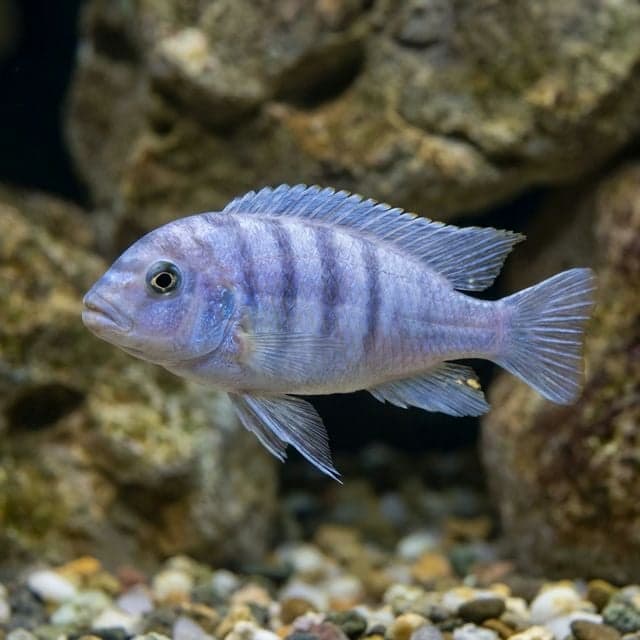
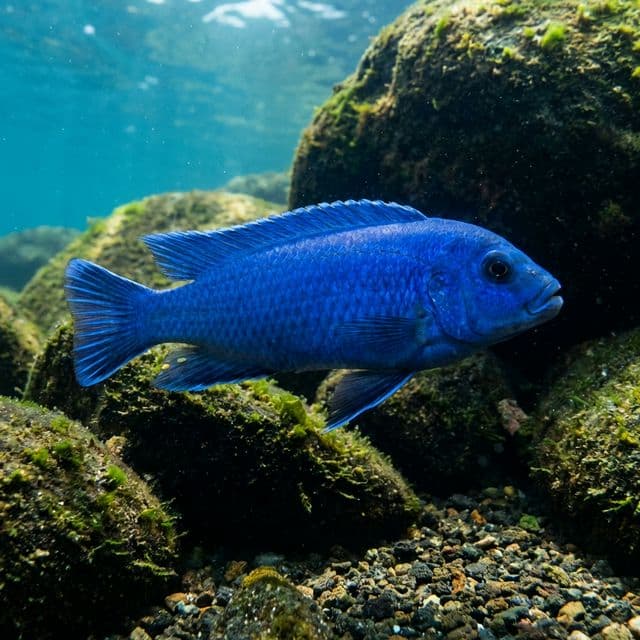
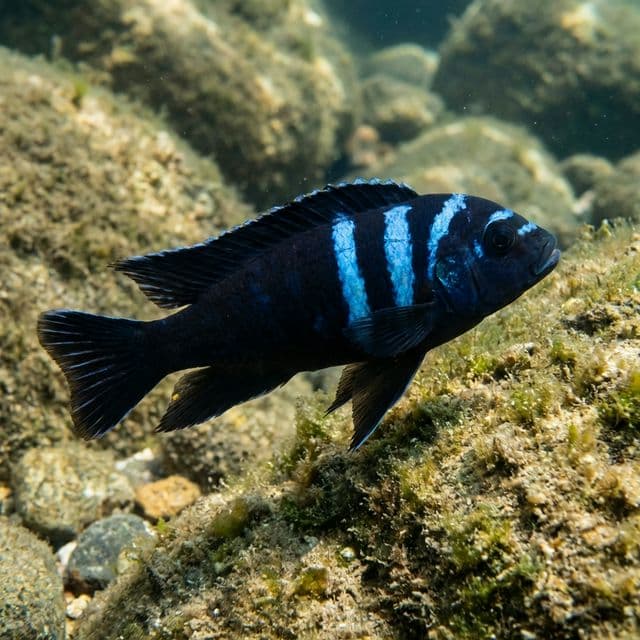
Electric Blue Hap: Sciaenochromis fryeri
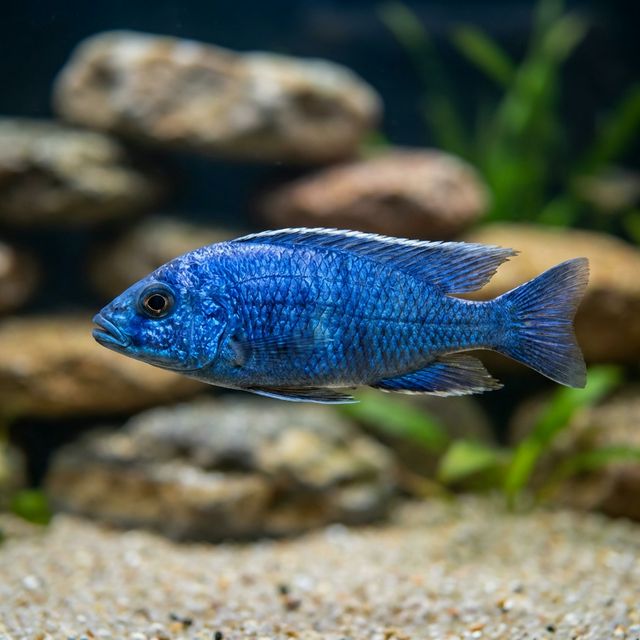
One of the most popular Malawi Haps. Males are solid electric blue. A fish-eating predator.
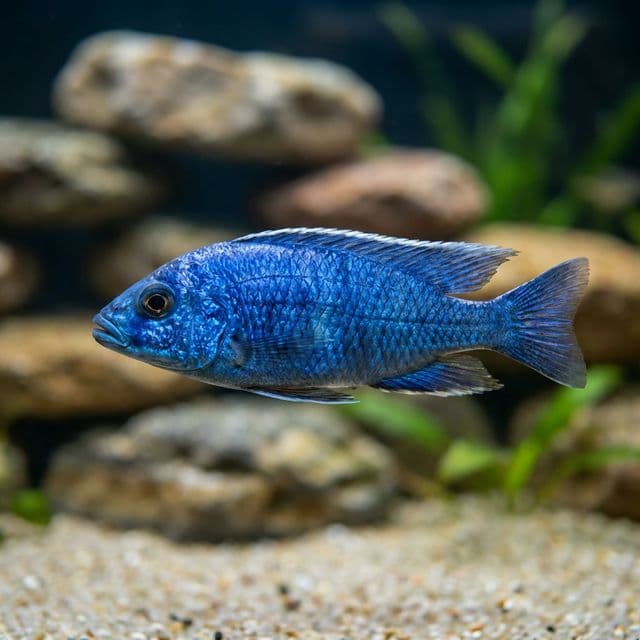
Electric Blue Hap
The Electric Blue Hap, scientifically known as Sciaenochromis fryeri, is a visually striking species of cichlid originating from the rocky shorelines of Lake Malawi, Africa. This captivating fish is renowned for its brilliant, iridescent blue coloration that can vary from deep azure to a lighter, shimmering turquoise, making it a centerpiece in any aquarium. The Electric Blue Hap not only holds a significant aesthetic appeal due to its vibrant hue but also fascinates aquarists with its dynamic behavior and spirited nature. These characteristics have solidified its status as a favorite among both novice and experienced hobbyists.
Beyond its beauty, the Electric Blue Hap plays a crucial role in the freshwater aquarium trade due to its hardiness and adaptability. Its bold coloration often serves as a gateway into the world of African cichlids for many fishkeepers. The study of this species offers insights into diverse aquatic environments and their respective ecosystems. Since the Electric Blue Hap is a mouthbrooder, meaning that the female incubates her fertilized eggs in her mouth until they're ready to hatch, observing the breeding behavior can be both educational and rewarding. Understanding its needs and care requirements is essential for maintaining a healthy and thriving aquarium.
Natural Habitat & Origin
The Electric Blue Hap hails from the mineral-rich waters of Lake Malawi, known for its unique biodiversity and specific environmental conditions. This freshwater lake is characterized by its clear and alkaline waters, with a pH typically ranging from 7.8 to 8.6. The lake’s rocky substrate provides ample hiding spots and breeding grounds for cichlids, promoting a healthy ecological balance. The combination of these environments, along with the varied depth zones, offers different habitats for the Electric Blue Hap, contributing to its adaptability in both natural and captive settings.
In the wild, the Electric Blue Hap primarily inhabits the rocky zones of the lake where it feeds on zooplankton and smaller invertebrates found among the stones. This natural dietary preference highlights the importance of replicating their habitat in an aquarium setting. By understanding their geographical origin, aquarists can better create an environment that mimics Lake Malawi, thus enhancing the overall health and behavior of this stunning cichlid.
Care Requirements
To successfully keep Electric Blue Haps in an aquarium, it is essential to maintain specific water parameters. The ideal temperature for this species ranges from 76°F to 82°F (24°C to 28°C), while the pH should be kept between 7.8 and 8.6, with water hardness between 10 to 20°dGH. These conditions mimic the alkaline waters of Lake Malawi and are crucial for the health of the fish. Furthermore, frequent water changes of 10-15% bi-weekly can help maintain water quality, which is essential to keeping this cichlid thriving.
The recommended tank size for one Electric Blue Hap is at least 55 gallons to provide ample swimming space and territorial boundaries. The substrate should consist of fine sand or crushed coral, resembling its natural environment. While the Electric Blue Hap doesn't require an overly complex aquascape, incorporating rocky structures, caves, and hiding spots is vital for promoting their natural behaviors. Lighting should be bright enough to enhance the fish's coloration while also simulating a natural day/night cycle. Live plants are not a necessity, but species that tolerate higher pH levels, such as Anubias or Java Fern, can provide additional cover.
Diet & Feeding
The Electric Blue Hap is primarily carnivorous, thriving on a varied diet that encompasses a blend of high-quality foods. These fish are known to consume a mix of flakes, pellets, frozen foods, and live options, which can include brine shrimp and daphnia. High-protein foods are essential to promote healthy growth and vibrant coloration. It is recommended to feed them multiple times a day in small portions rather than one large feeding to prevent overfeeding and maintain optimal health.
In addition to prepared foods, introducing occasional vegetable matter, such as blanched spinach or spirulina, can ensure a balanced diet. This omnivorous approach not only provides the necessary nutrients but also mimics the natural feeding habits of the Electric Blue Hap in the wild. By offering dietary variety, aquarists can enhance their posture and coloration while promoting longevity.
Behavior & Temperament
The Electric Blue Hap is known for its lively demeanor and displays moderate territoriality, especially males during breeding season. While generally not aggressive towards other tank mates, they may display signs of dominance or mild aggression if they feel their space is invaded. These fish typically prefer to occupy middle and lower water levels in the tank, frequently darting between rocky formations for refuge or as they patrol their territory.
In terms of social behavior, the Electric Blue Hap tends to form loose groupings but is not a schooling fish. They can coexist peacefully with other species of similar size and temperament, allowing them to showcase their vibrant colors and dynamic behaviors. Understanding their behavior within the tank is essential for maintaining harmony and ensuring that the Electric Blue Hap thrives in a community setting.
Tank Mates
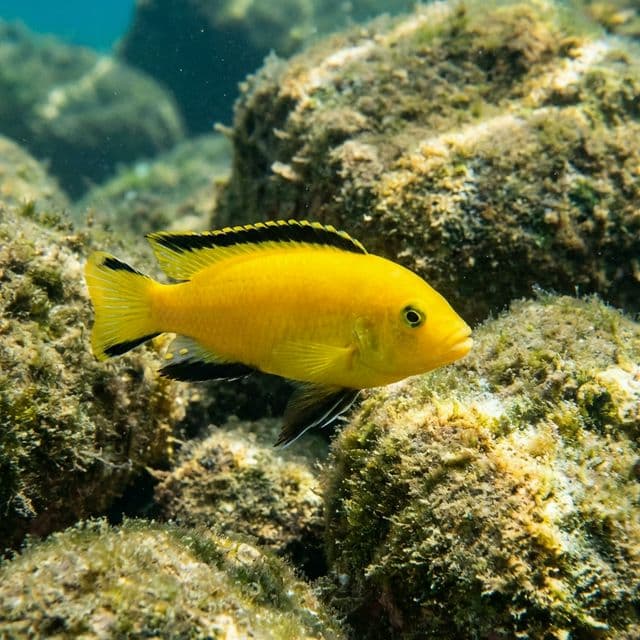
Finding compatible tank mates for the Electric Blue Hap requires careful consideration, as its temperament and size can influence tank dynamics. Suitable companions include other cichlids from Lake Malawi, such as the Yellow Lab (Labidochromis caeruleus) and various types of Mbuna, which share similar water parameters and dietary needs. Additionally, larger peaceful species like the Rainbowfish can make excellent tank mates, as they complement the Electric Blue Hap's vibrant coloration while avoiding territorial disputes.
Species to avoid include smaller fish that may be viewed as prey, such as tetras or guppies, as well as overly aggressive fish that can provoke stress or harm to the Electric Blue Hap. Males, in particular, should not be kept together unless in a well-planted tank with plenty of hiding spaces to reduce aggressive confrontations. Creating a compatible community will not only enhance the visual appeal of the aquarium but also contribute to a balanced ecosystem.
Breeding
Breeding the Electric Blue Hap in captivity can be a rewarding experience, although it requires specific conditions to ensure success. Males typically exhibit vibrant colors and engage in courtship displays, attracting potential females by establishing a territory within the tank. Spawning typically occurs in a rocky cave or crevice, as this environment closely resembles their natural breeding grounds in Lake Malawi.
To foster breeding conditions, aquarists should ensure the tank is spacious enough for the male to establish dominance and have a separate area for female breeding. A temperature of around 78°F to 80°F (25°C to 27°C) and stable water parameters are essential during this process. After fertilization, females will carry the eggs in their mouths until they hatch, usually within three weeks. Once the fry are released, providing fine food such as powdered fry food or crushed flakes will help them thrive in the initial days post-hatching.
Common Health Issues
Like many aquarium fish, the Electric Blue Hap may be prone to specific health issues, including ich (Ichthyophthirius multifiliis), fin rot, and swim bladder disorders. Ich is a parasitic infection that can occur due to stress or poor water conditions, leading to white spots on the skin and resembling grains of salt. Maintaining high water quality, along with a stable environment, is paramount in preventing such maladies.
Another recognized health concern is Malawi bloat, often linked to overfeeding protein or unstable water chemistry. Maintain hard alkaline conditions, strong filtration, and a mostly herbivorous diet with occasional protein. Quarantine newcomers and avoid sudden parameter swings. Watch for white spots, bloating, frayed fins, or lethargy, and treat promptly in a hospital tank. Stable rockwork and clean Malawi water keep Electric Blue Haps colourful, active, and resilient for years.