Flying Fox: Epalzeorhynchos kalopterus
A handsome algae eater with a bold black stripe. More territorial than the SAE.
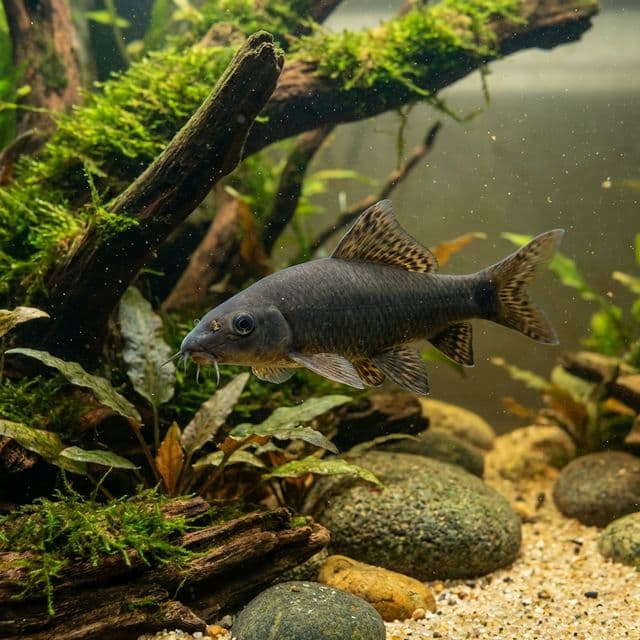
Flying Fox
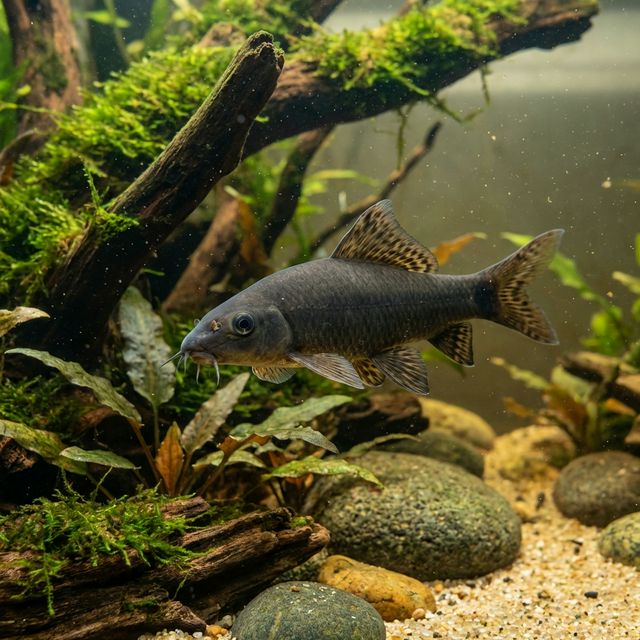
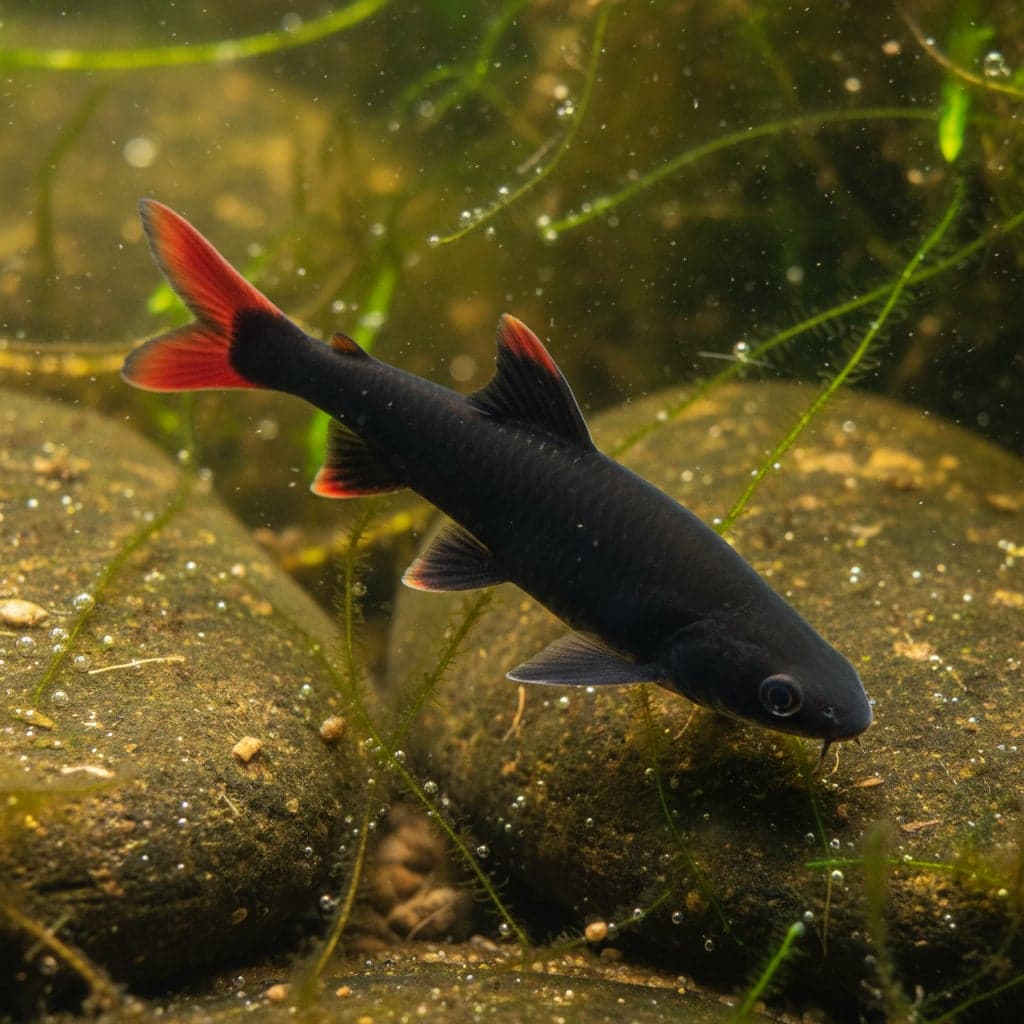
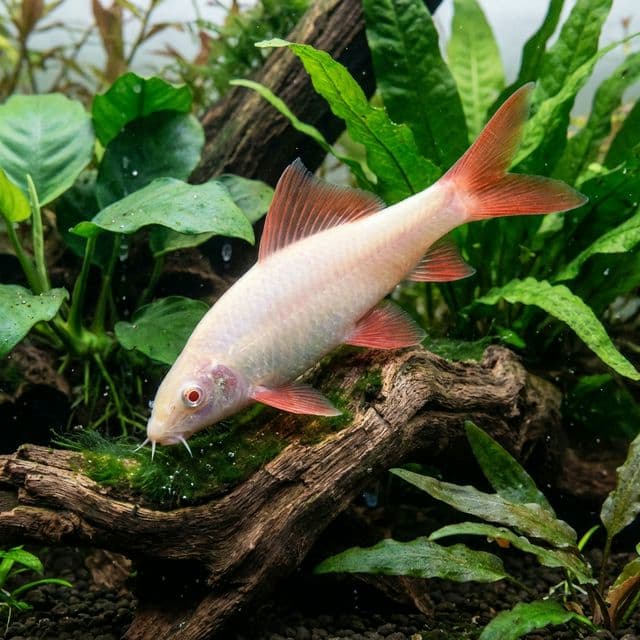
The Flying Fox, scientifically known as Epalzeorhynchos kalopterus, is a popular freshwater fish favored in the aquarium hobby for its vibrant colors and unique body shape. This species features a sleek, elongated body with a striking golden-orange hue adorned with a distinctive black stripe running from its nose to the base of its caudal fin. Its body tapers elegantly, reminiscent of a small shark, which adds visual appeal to community tanks and aquascapes alike. Additionally, the Flying Fox is often lauded not just for its aesthetic attributes but also for its role in algae control, as it enjoys grazing on various algae types, making it a crucial addition for maintaining balance in the aquarium ecosystem.
In the aquarium hobby, the Flying Fox is significant for its adaptability and general hardiness. This fish is known for its active swimming behavior and sociable nature, which can enhance the dynamics of a community tank. While it may resemble other species such as the Siamese Algae Eater, the Flying Fox can be easily distinguished by its coloration and fewer fin rays. The appeal of the Flying Fox transcends mere aesthetics; its presence in an aquarium can provide both beauty and functional benefits, making it a valuable species for aquarists looking to create a diverse aquatic environment.
Natural Habitat & Origin
The Flying Fox originates from the freshwater rivers and streams of Southeast Asia, specifically found in countries like Thailand, Cambodia, and Laos. Its natural habitat consists primarily of clear waters with moderate to strong current, often characterized by dense vegetation along the banks. The presence of submerged roots, fallen leaves, and debris creates rich habitats where Flying Foxes thrive. The water in these regions is typically soft, slightly acidic, and well-oxygenated, providing a variety of microhabitats where these fish can seek shelter and forage.
In their native environments, Flying Foxes inhabit a range of conditions, from slow-flowing areas to more turbulent waters. They tend to favor slightly acidic to neutral pH levels but can adapt to varying conditions. Their affinity for densely planted areas helps illustrate the aquatic ecosystems they are originally adapted for, and replicating these conditions in captivity is essential for their overall well-being.
Care Requirements
For successful care of the Flying Fox in an aquarium setting, it is essential to provide specific water parameters. The ideal pH range is between 6.5 to 7.5, with a temperature that should be maintained between 24°C to 28°C (75°F to 82°F). Water hardness should be within a range of 5 to 15 dGH. These parameters help facilitate optimal health and longevity for the fish.
In terms of tank setup, a minimum tank size of 75 liters (20 gallons) is recommended to accommodate their active swimming behavior. A sandy substrate is ideal, as it resembles their natural environment, and can help reduce stress on the fish. Adding natural decorations such as driftwood, rocks, and live plants will create hiding spots and encourage natural behaviors. The lighting in the aquarium should be moderately bright, with areas of shade provided by plants or structures to mimic their natural habitat. Additionally, planted sections will not only enhance the aesthetic appeal but also provide essential cover and grazing areas for the Flying Fox.
Diet & Feeding
The Flying Fox is classified as an omnivore, making its diet diverse and flexible. In the wild, it primarily feeds on algae, detritus, and some plant matter. In captivity, it is important to offer a balanced diet to ensure their health and vigor. High-quality flakes or pellets designed for omnivorous fish should form the staple of their diet, supplemented with algae wafers to promote healthy growth and coloration.
Additionally, offerings of fresh or blanched vegetables such as zucchini, spinach, and cucumber can be beneficial. Frozen or live foods, such as brine shrimp or daphnia, can be included occasionally to enhance dietary variety and provide essential nutrients. Regular feeding 1-2 times a day, with amounts sufficient for them to consume within a few minutes, helps ensure that the Flying Fox remains healthy and well-fed.
Behavior & Temperament
Flying Foxes are known for their active and sociable behavior, often exhibiting a strong propensity for schooling. It is best to keep them in groups of at least three to encourage natural social interactions and reduce stress. They are typically peaceful, but males may demonstrate territorial behaviors, particularly when breeding or during feeding times.
In terms of tank placement, Flying Foxes often occupy the mid to top levels of the aquarium, showcasing their energetic swimming habits. While generally non-aggressive, they can display occasional skirmishes with their species or similar-looking fish. To maintain harmony in a community tank, provide ample space and hiding spots to reduce potential conflicts.
Tank Mates
When selecting tank mates for the Flying Fox, it is essential to consider species that share similar water parameter preferences and exhibit non-aggressive behavior. Compatible species include tetras, rasboras, and other peaceful community fish. Additionally, small barbs and some cichlids, such as dwarf cichlids, can coexist peacefully with the Flying Fox, provided the environment is spacious enough to reduce rivalry.
However, it's advisable to avoid housing Flying Foxes with more aggressive species like large cichlids, aggressive barbs, or fish that display fin-nipping tendencies. Furthermore, since they can be territorial, avoid keeping them with other members of their family, such as other Epalzeorhynchos species, to mitigate aggression.
Breeding
Breeding Flying Foxes in captivity can be challenging and requires specific conditions. Typically, spawning occurs when water conditions are optimal, with a slightly higher temperature (around 28°C or 82°F) and lower pH levels. Providing a separate breeding tank equipped with a gentle filter, fine-grained substrate, and ample spawning sites, such as Java moss or spawning mops, can stimulate breeding behavior.
During mating, males become more colorful, displaying their brightest hues to attract females. The male will chase the female, leading her to the spawning site, where eggs are laid. After spawning, it's crucial to remove the adult fish, as they may eat the eggs. The eggs will hatch within 24-48 hours, and the fry can be fed infusoria or finely crushed flake food until they are large enough to accept small brine shrimp.
Common Health Issues
While Flying Foxes are generally hardy, they are prone to specific health issues that aquarists should monitor. Common diseases include ich (Ichthyophthirius multifiliis), fin rot, and problems related to poor water quality, such as stress-induced conditions. Regular monitoring of water parameters is crucial to prevent these issues.
To mitigate health risks, maintain a clean aquarium environment through regular water changes, and quarantine new fish before introducing them to the main tank. Routine observation of fish behavior and appearance can help catch any issues early, allowing for timely interventions. Additionally, ensuring a varied and nutrition-rich diet can bolster the immune system and promote overall health and longevity in Flying Foxes.