Fu Manchu Lionfish
A 13cm dwarf lionfish with venomous spines and a taste for anything it can swallow. Small tank mates are food; handle with real care.
Fu Manchu Lionfish
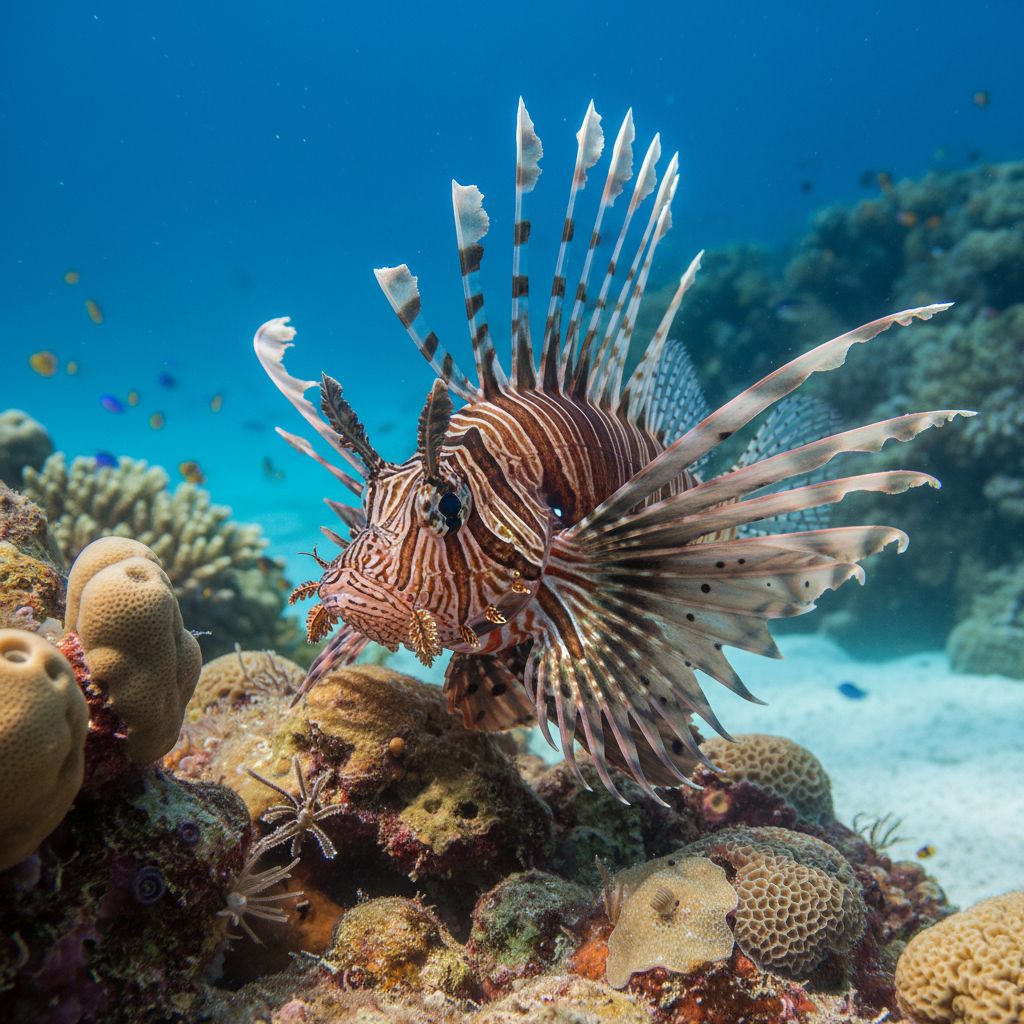
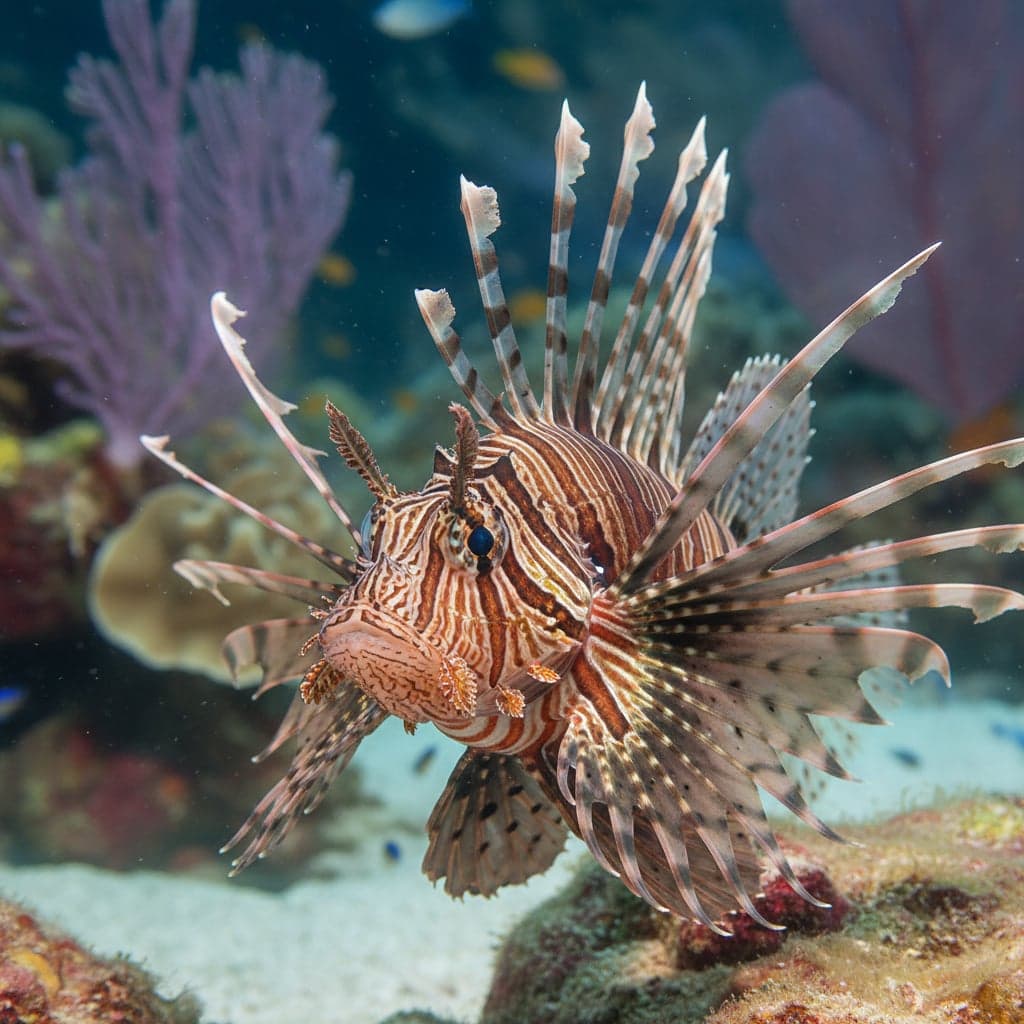
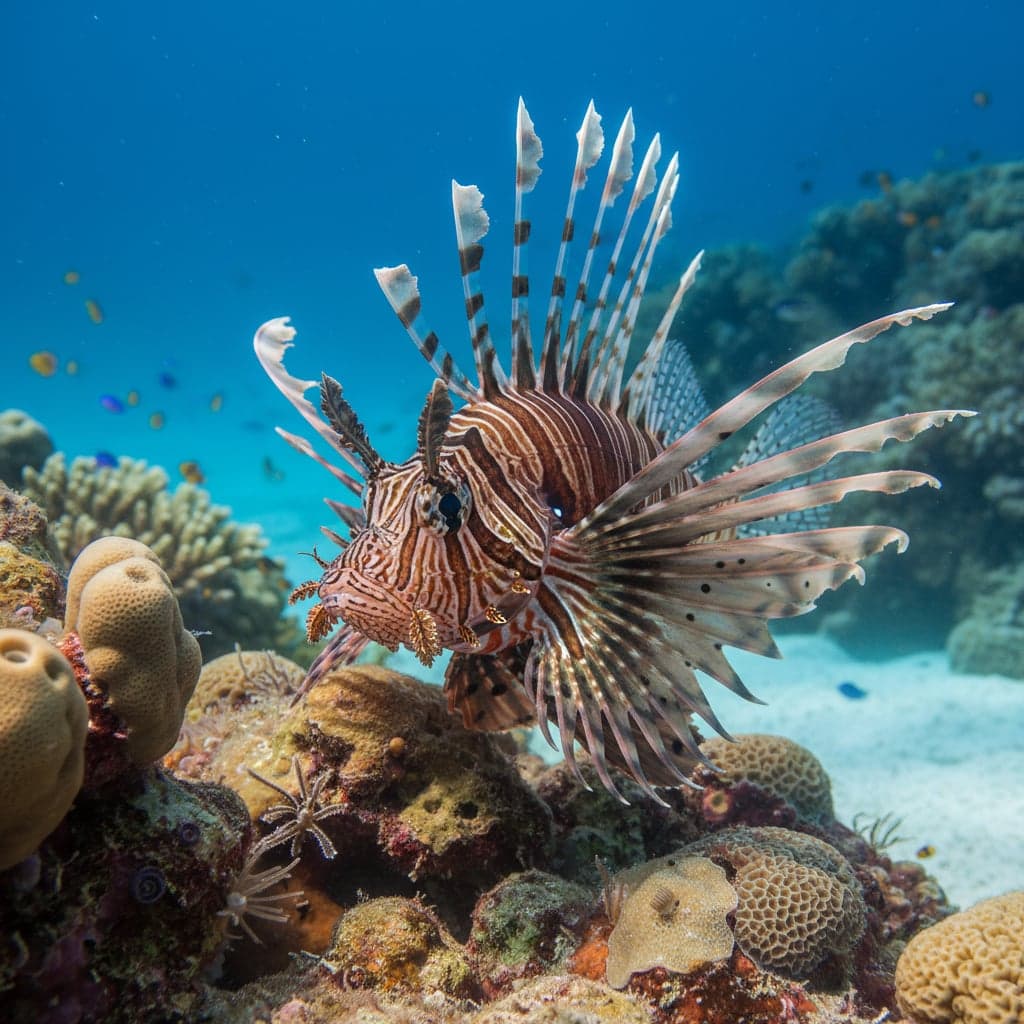
The Fu Manchu Lionfish (Dendrochirus biocellatus), also known as the Twinspot Lionfish, is a strikingly beautiful marine species known for its unique appearance and captivating presence in the aquarium hobby. Characterized by its distinctive long, venomous spines and vibrant coloration, this fish is most famously recognized for the two whisker-like "mustache" appendages on its face, which give it its common name. Displaying deep reds, browns, and whites, this dwarf lionfish typically grows up to 4 to 5 inches in length, making it a manageable but exotic addition to a specialized saltwater aquarium.
The significance of the Fu Manchu Lionfish in the aquarium hobby extends beyond its looks. It serves as an important reminder of the diversity of marine ecosystems and the need for responsible aquaristic practices. Due to its aggressive nature and specialized care requirements, it challenges hobbyists to create suitable environments for its upkeep. As a popular specimen, it also highlights environmental concerns, particularly considering its invasive status in some regions where it has established populations. By keeping the Fu Manchu Lionfish, aquarists can showcase their appreciation for marine biodiversity while promoting awareness about conservation.
Natural Habitat & Origin
The Fu Manchu Lionfish is native to the tropical waters of the Indo-Pacific region, with a distribution extending from the Red Sea and the Persian Gulf to the waters around Southeast Asia and the South Pacific islands. This species typically inhabits coral reefs and rocky environments where it can find ample hiding spots. The Fu Manchu Lionfish is particularly associated with shallow bays and lagoons, often preferring environments that exhibit some structural complexity. Despite its popularity in aquariums, this fish can sometimes be found in brackish waters, showcasing its adaptability to varying salinities.
In terms of environmental conditions, Fu Manchu Lionfish thrive in clear to moderately turbid waters that provide a rich array of prey items and protection from larger predators. They are predominantly encountered at depths ranging from 1 to 50 meters, where they can blend seamlessly into their surroundings thanks to their striking coloration and elaborate fin structures. These aquatic environments play a crucial role in shaping their behavior and feeding habits, ultimately influencing their overall well-being in captivity.
Care Requirements
To successfully maintain a Fu Manchu Lionfish in a home aquarium, certain water parameters must be adhered to. Optimal conditions include a pH level between 7.8 and 8.4, a temperature range of 24 to 28 degrees Celsius (75 to 82 degrees Fahrenheit), and salinity levels maintained around 1.020 to 1.025 specific gravity. Water hardness should fall within 8 to 12 dKH, providing a suitable environment for this marine species.
Tank setup is equally vital for the Fu Manchu Lionfish. A minimum aquarium size of 150 litres (40 gallons) is recommended: this is a dwarf lionfish of around 13cm that spends most of its time sitting in caves, so the real constraint is the waste load from its large, infrequent meals rather than swimming space. The substrate should ideally be a fine sand or crushed coral to mimic its natural environment. The inclusion of live rock and caves will not only provide essential hiding spots but also foster a sense of security for the fish. Moderate lighting is suggested, as this species thrives in environments that are not overly exposed to bright lights. While live plants are not necessary given the predatory nature of this fish, some hardy coral fragments can enhance the aesthetic appeal while offering it the camouflage it may desire.
Diet & Feeding
The Fu Manchu Lionfish is primarily a carnivore, exhibiting a diet that consists of various types of live and frozen foods. In the wild, their diet typically includes small fish and crustaceans, which they capture using their unique hunting technique of ambush predation. In an aquarium setting, it is crucial to provide a varied diet that includes high-quality meaty foods such as frozen or live brine shrimp, krill, and small silversides. Additionally, high-protein pellets can be offered to ensure a well-rounded nutritional intake.
While flakes may be accepted by some individuals, it is recommended to prioritize frozen and live foods to mimic their natural eating habits and promote optimal health. Feeding should be done 2-3 times per week, taking care not to overfeed, as this species can be prone to weight gain. Observing their feeding behavior can also provide insights into their health, ensuring that they are actively hunting or showing interest in their food.
Behavior & Temperament
In terms of behavior, the Fu Manchu Lionfish exhibits a relatively solitary demeanor, often preferring to stake out territories instead of forming schools. These fish are generally not aggressive towards their own kind unless space is limited, yet they can display territoriality and aggression towards smaller tank mates. It is best to house them in conditions where they can establish their own area without feeling crowded.
When arranging their habitat, consider the vertical placement in the tank. Fu Manchu Lionfish are known to be mid to bottom dwellers, frequently resting on substrate or positioned on rocks. This vertical placement should be taken into account when setting up the tank decorations to accommodate their natural behavior and minimize any stressors in captivity.
Tank Mates
Selecting appropriate tank mates for the Fu Manchu Lionfish requires careful consideration. They can be housed with larger, non-aggressive species such as certain wrasses, tangs, and larger damselfish, as these species typically won't provoke territorial disputes. Ideally, any tank mates chosen should be robust enough to avoid becoming potential prey.
Fish to avoid include small, slow-moving species like gobies and other small-sized fish, which may mistakenly be perceived as food. Furthermore, combining them with overly aggressive species can lead to unnecessary stress and injuries. A well-thought-out selection of tank mates will help maintain a harmonious aquarium experience and promote the well-being of the Fu Manchu Lionfish.
Breeding
Breeding the Fu Manchu Lionfish in captivity presents significant challenges due to specific spawning requirements. In the wild, these fish are known to practice a form of external fertilization, where females release eggs into the water column, and males subsequently fertilize them. Successful breeding in captivity necessitates a well-established, mature aquarium with stable water conditions, a spacious breeding environment, and minimal disturbances.
Creating specific breeding conditions might involve a separate breeding tank set up with appropriate water parameters to ensure safety for the wrigglers and fry. Though breeding is rare in captivity, when conditions are optimal, and the fish feel sufficiently secure, they may engage in mating behaviors, providing aquarists with the chance to witness and document this fascinating process.
Common Health Issues
Fu Manchu Lionfish can be susceptible to certain health issues that may arise in captivity, including ich (Ichthyophthirius multifiliis), fin rot, and other external parasites. Ensuring high water quality and maintaining stable parameters are crucial strategies in preventing these ailments. Regular water changes, coupled with thorough monitoring of tank conditions, can mitigate the risk of disease outbreaks.
Quarantining new arrivals before introducing them to the main aquarium is highly recommended, as it allows for early detection and treatment of potential issues. Additionally, maintaining a stress-free environment by avoiding overcrowding and implementing proper feeding protocols can significantly enhance the overall health of the Fu Manchu Lionfish and minimize health concerns.