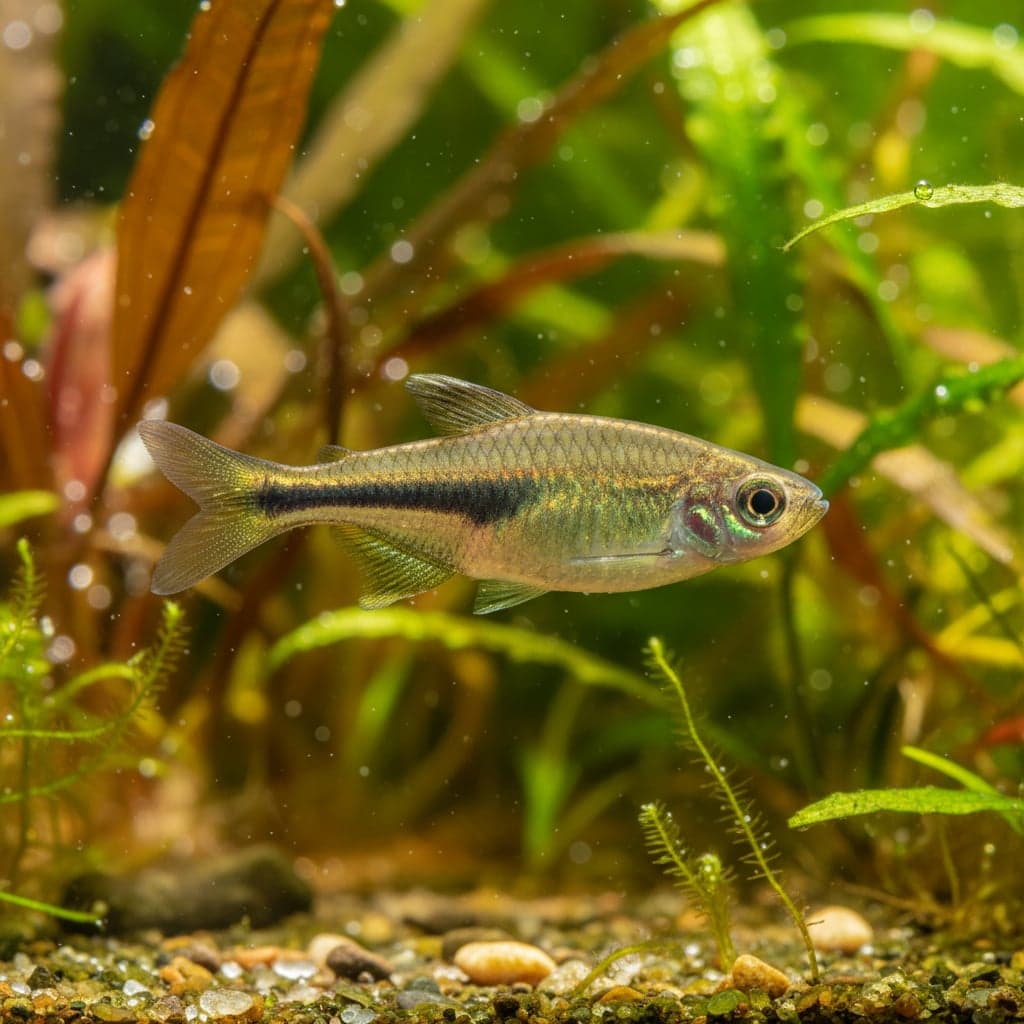
Golden Congo Tetra
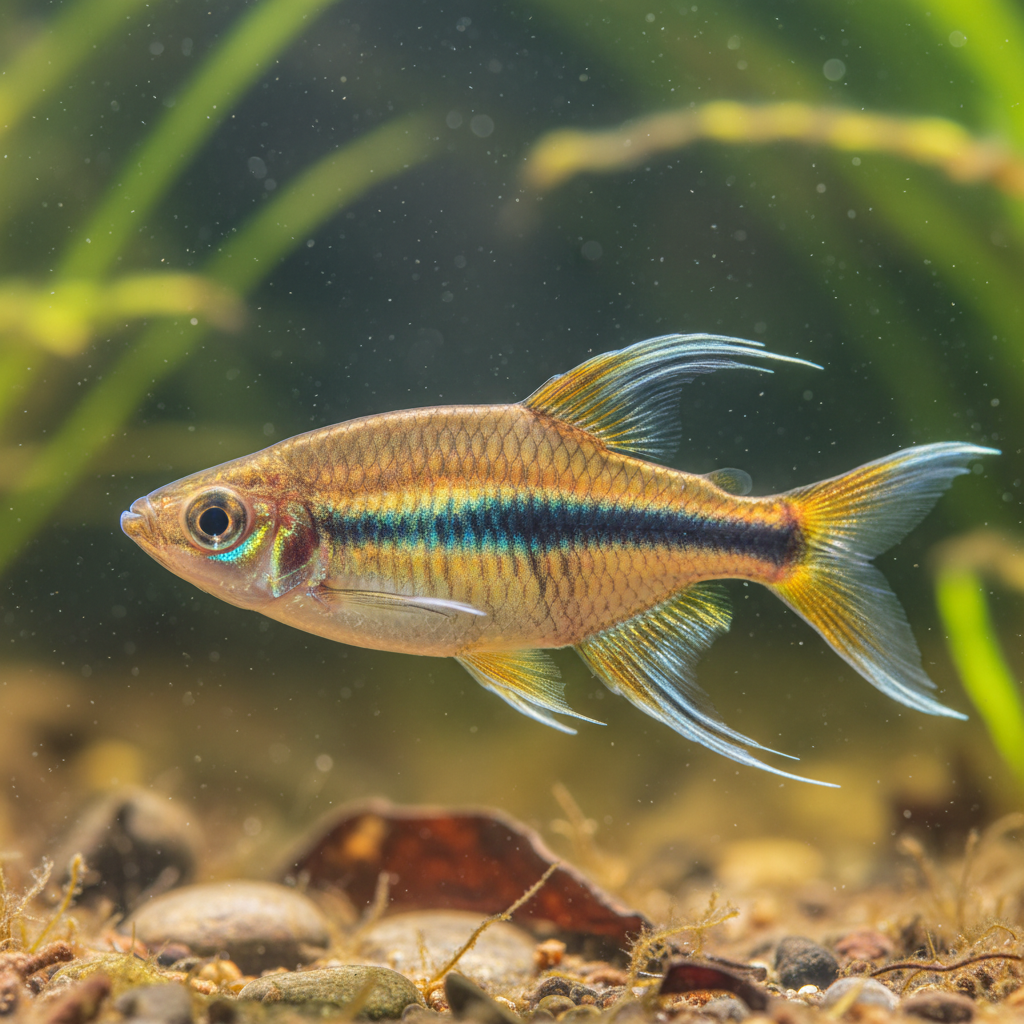
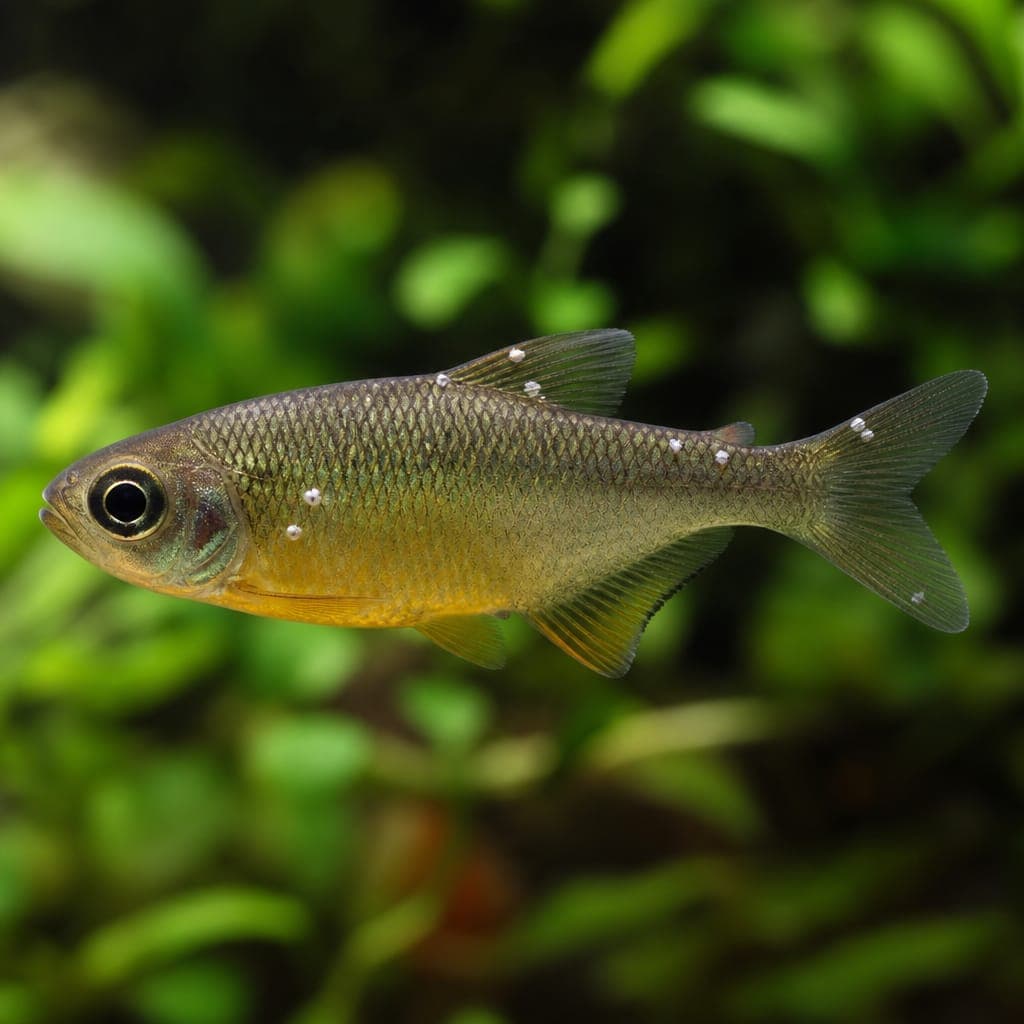
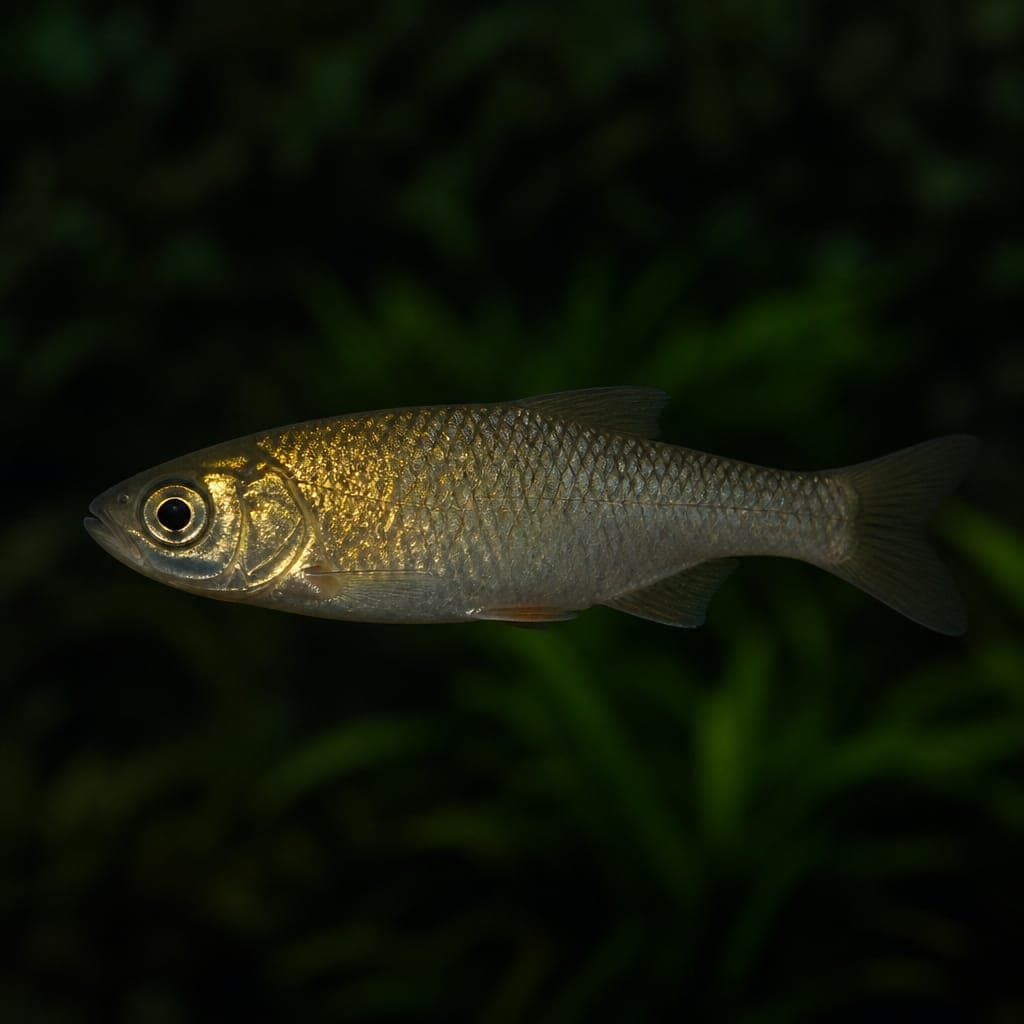
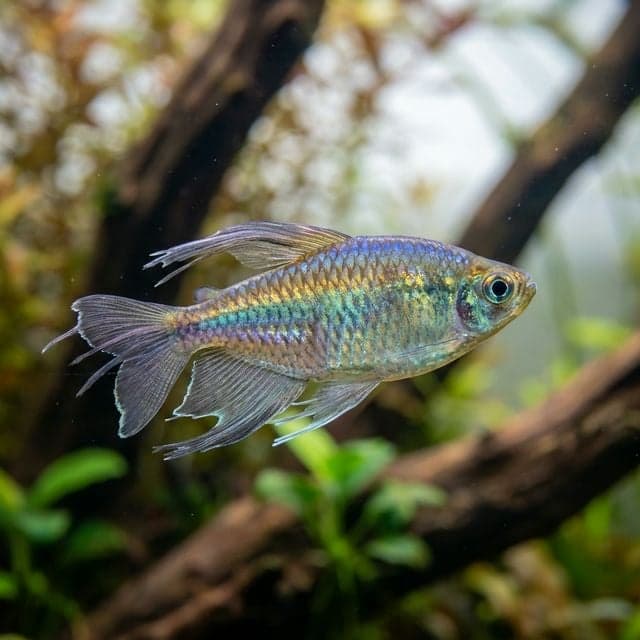
The Golden Congo Tetra (Phenacogrammus aurantiacus) is a dazzling African characin known for its shimmering gold body and the elegant, flowing fin extensions found in mature males.
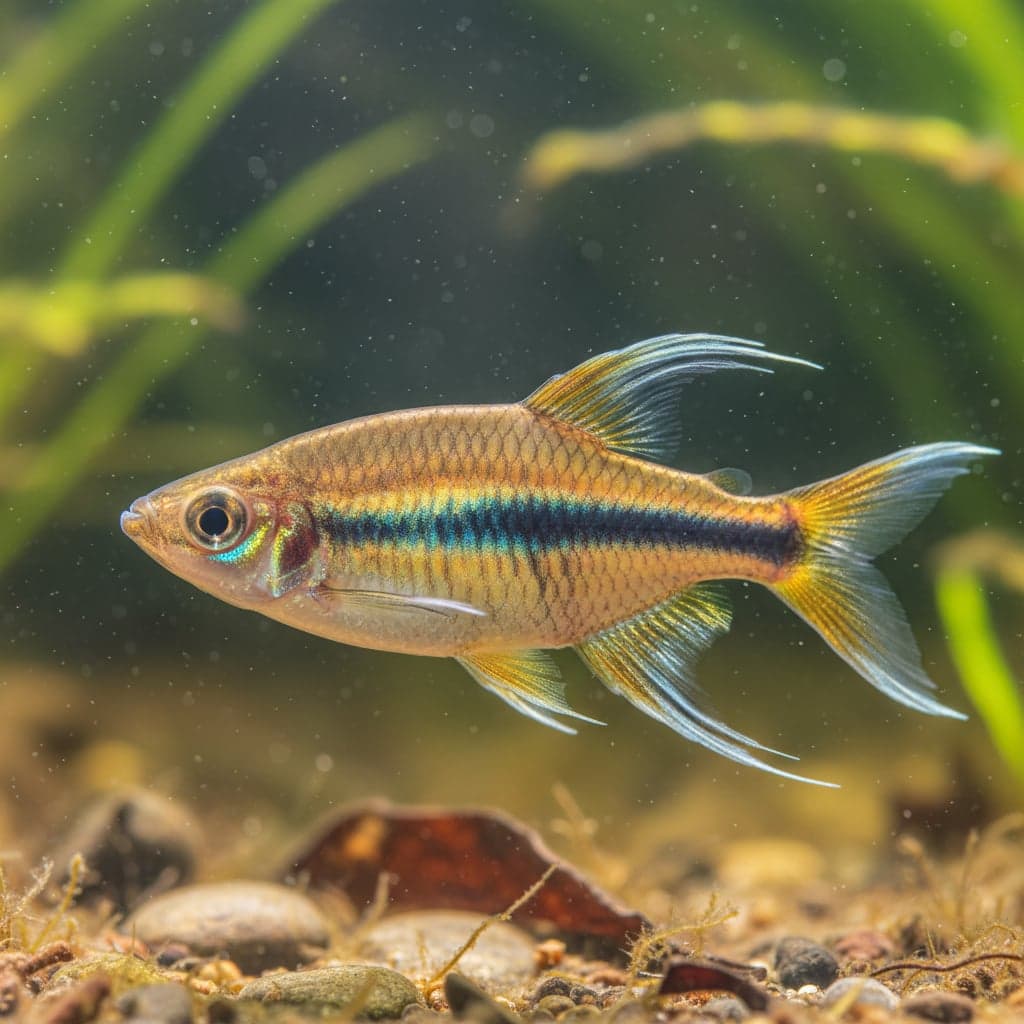
Golden Congo Tetra
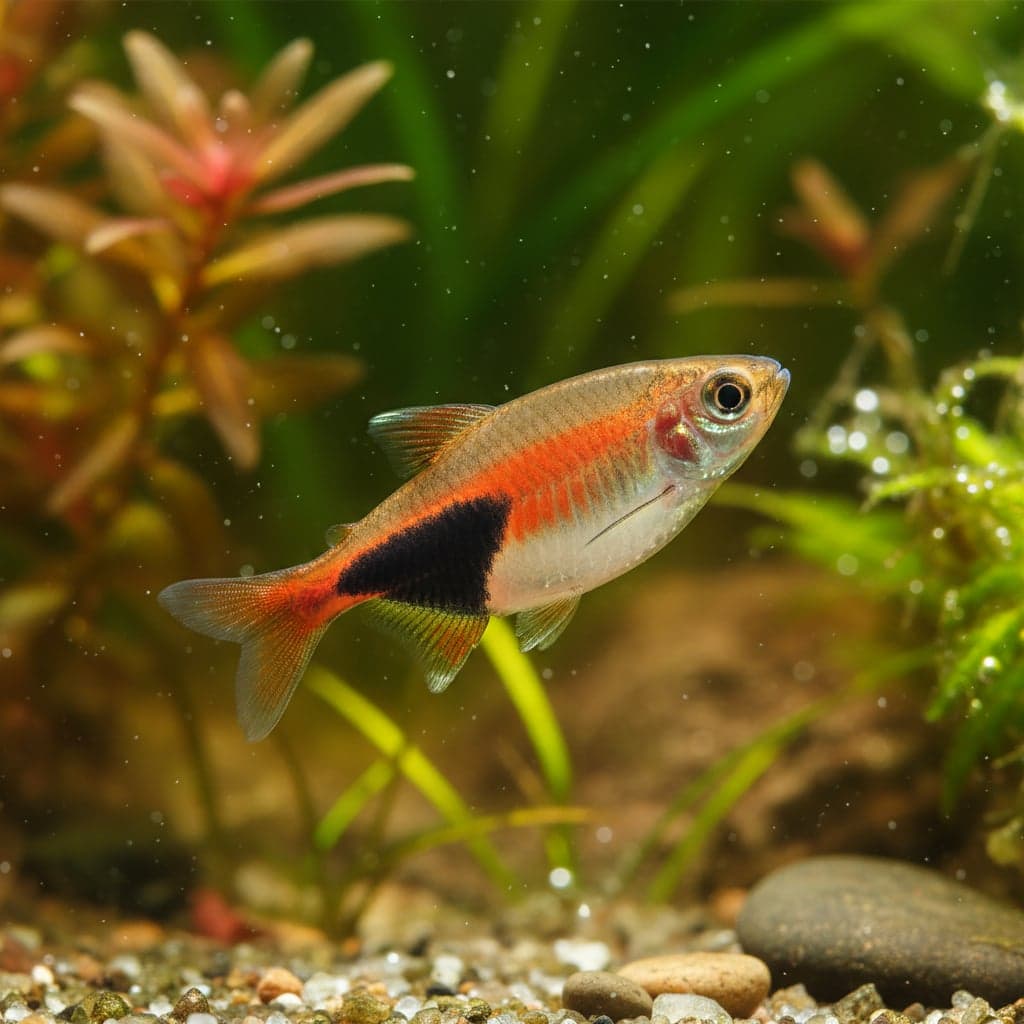
The Golden Congo Tetra (Phenacogrammus aurantiacus) is a true gem of the African continent. While its relative, the common Congo Tetra (Phenacogrammus interuptus), is more well-known, the Golden variety offers a unique aesthetic with its deep golden-to-orange iridescent body and a prominent dark lateral stripe. Mature males are particularly spectacular, developing elongated, trailing extensions on the middle rays of their caudal (tail) fin and dorsal fin.
Growing to about 3 inches (8 cm), they are an active and social species that brings a sense of constant movement and shimmering light to a well-planted aquarium.
Natural Habitat & Origin
As its name implies, this species is native to the Congo River basin in Central Africa. It is typically found in the smaller streams and tributaries rather than the main river channel. These waters are often "blackwater"—stained tea-color by tannins from fallen leaves and submerged wood. The habitat is characterized by soft, acidic water and is often heavily shaded by the overhanging rainforest canopy.
Care Requirements
The Golden Congo Tetra is relatively hardy but thrives best when its specific water conditions are met. It requires soft, slightly acidic water (pH 6.0 to 7.0) and a temperature range of 73°F to 82°F (23°C to 28°C).
A minimum tank size of 150 litres (40 gallons) is required because they are very active swimmers and need plenty of open space. To show their best colors, the tank should be well-planted along the sides and back, with some floating plants to dim the light. The use of driftwood and peat-based filtration (or botanical additions like Indian Almond leaves) will help replicate their natural blackwater environment.
Diet & Feeding
In the wild, Golden Congo Tetras are omnivores, feeding on a variety of insects, small crustaceans, and fallen organic matter. In the aquarium, they are not picky eaters and will accept most high-quality prepared foods. To maintain their health and vibrant gold coloration, provide a balanced diet of high-quality flakes, small pellets, and frequent treats of live or frozen foods like daphnia, brine shrimp, and bloodworms.
Behavior & Temperament
This is a peaceful and highly social schooling fish. They should ALWAYS be kept in a group of at least 6–8 individuals. Keeping them in smaller numbers or alone will cause significant stress and may lead to shyness or health issues. Within the school, they display fascinating social dynamics, with males occasionally "flaring" their fins at each other in harmless displays of dominance.
They are active swimmers that occupy the middle and upper layers of the water column. Their peaceful nature makes them an ideal choice for a community tank with other similarly sized, non-aggressive species.
Tank Mates
They pair well with a wide range of tank mates, including:
- Other African Tetras (like the Red-eyed Tetra)
- Smaller African Cichlids (like Pelvicachromis pulcher or Kribensis)
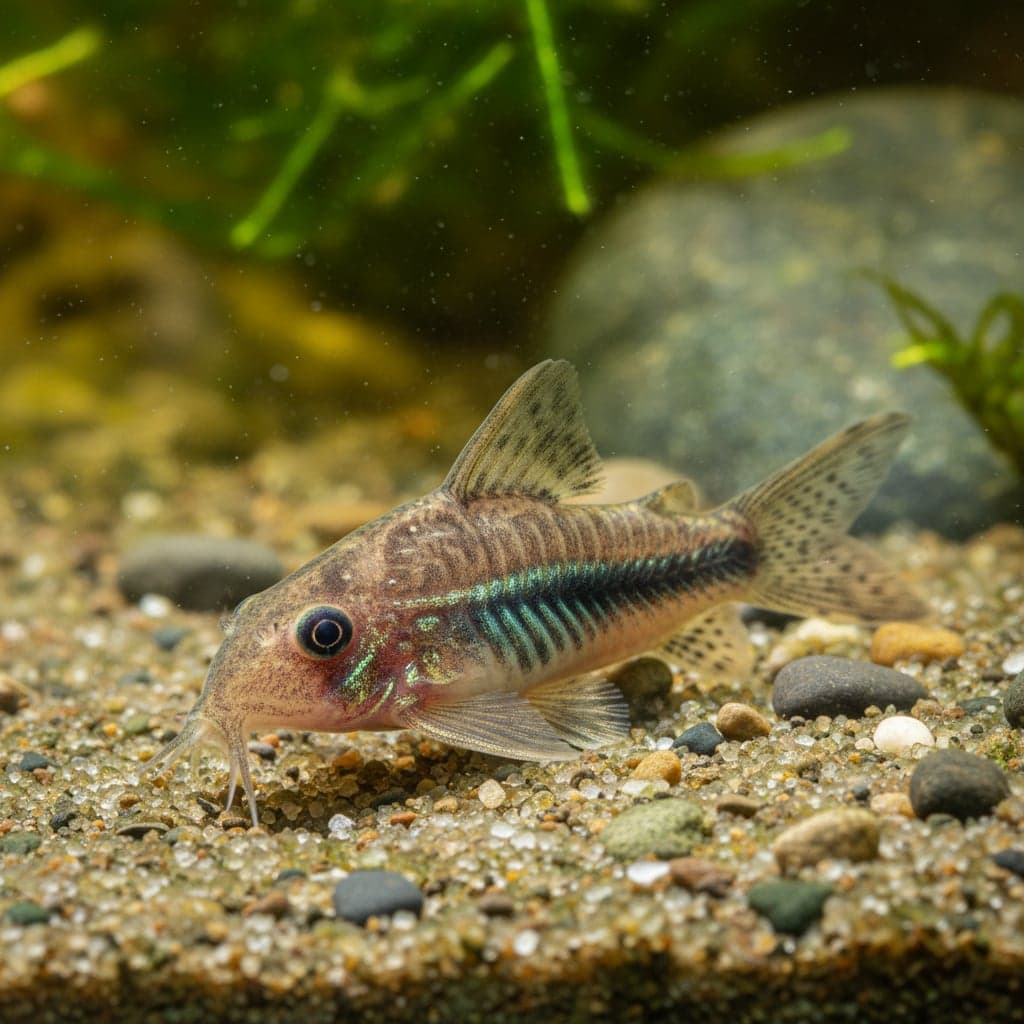
- Corydoras and small Catfish
- Rasboras and other peaceful Tetras
- Gouramis and Dwarf Cichlids
Avoid housing them with very large or aggressive fish that might see them as prey or bully them.
Breeding
Breeding Golden Congo Tetras in captivity is possible but requires a dedicated spawning setup. They are egg scatterers. A group of well-conditioned adults should be moved to a separate tank with soft, acidic water and plenty of fine-leaved plants or a spawning mop. Spawning usually occurs at dawn. Once eggs are laid, the adults must be removed immediately as they will eat the eggs. The fry hatch in about 24-36 hours and require microscopic foods like infusoria as their initial diet.
Common Health Issues
They are generally robust but, like all tetras, can be susceptible to Ich and velvet if subjected to poor water quality or sudden temperature fluctuations. They can also be sensitive to high nitrate levels, so regular water changes are essential. Providing a stress-free environment with proper schooling numbers is the best way to prevent common health problems.