Golden King Tiger Pleco L333
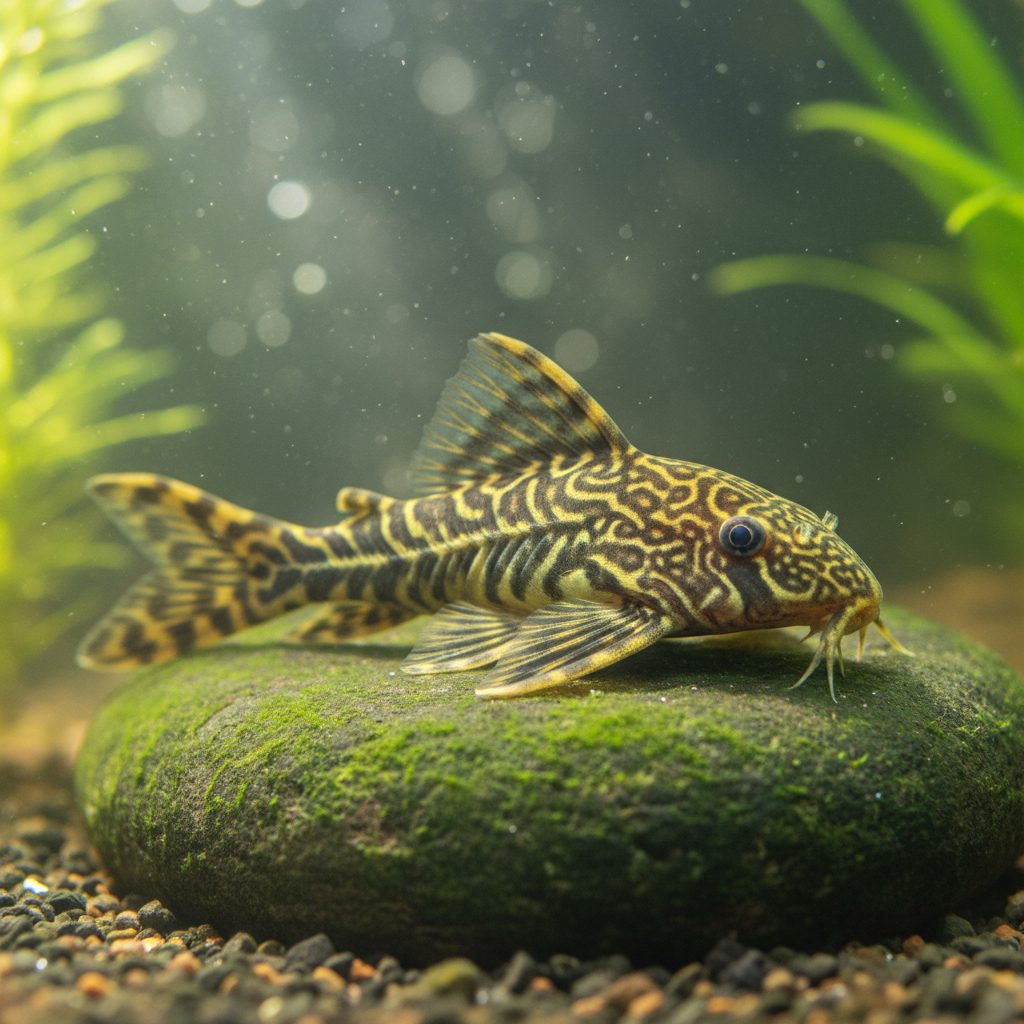
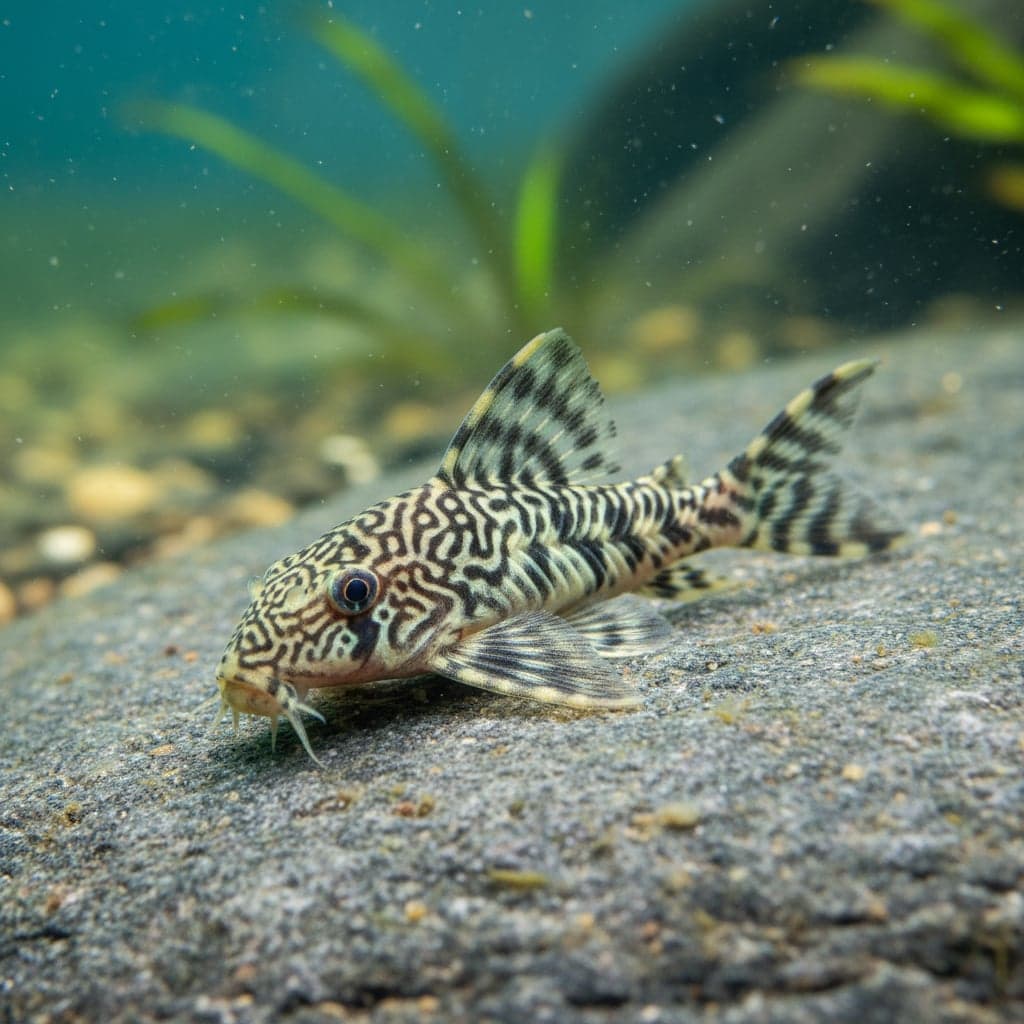
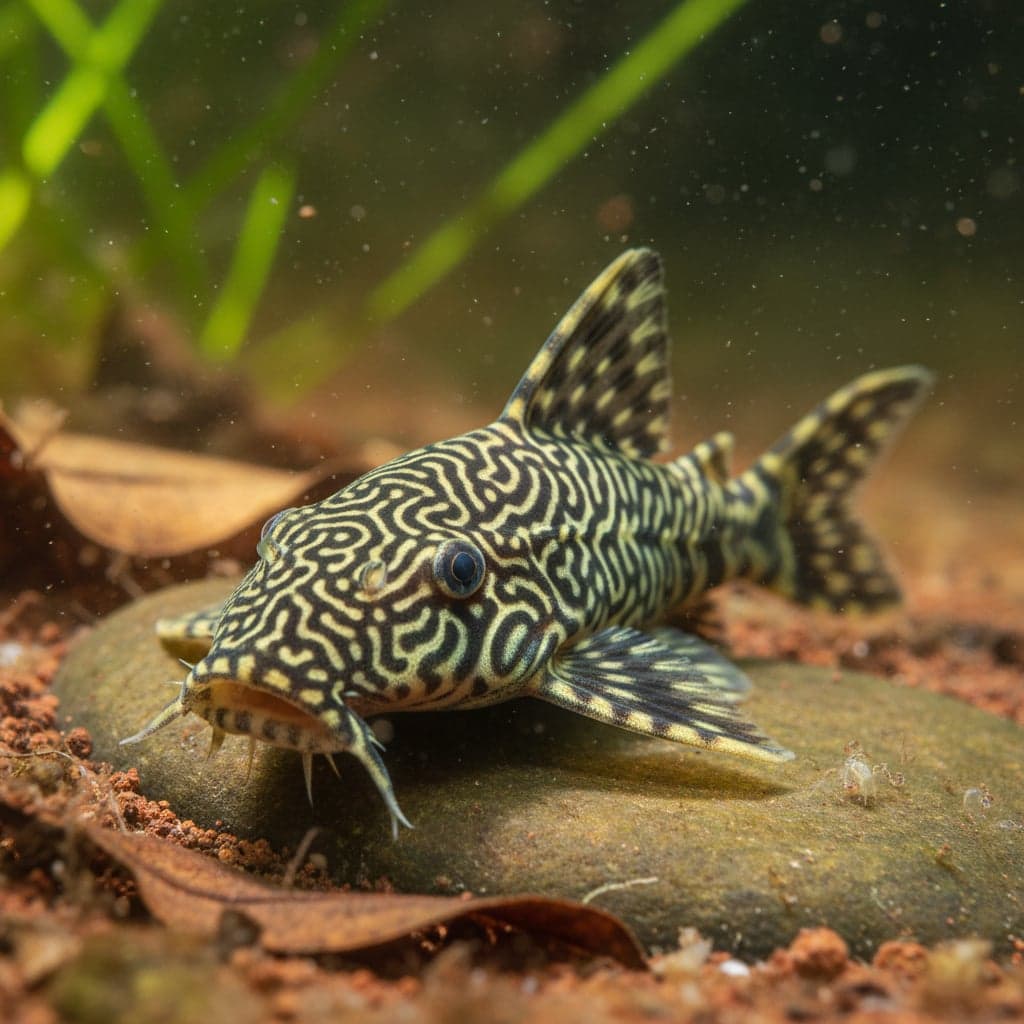
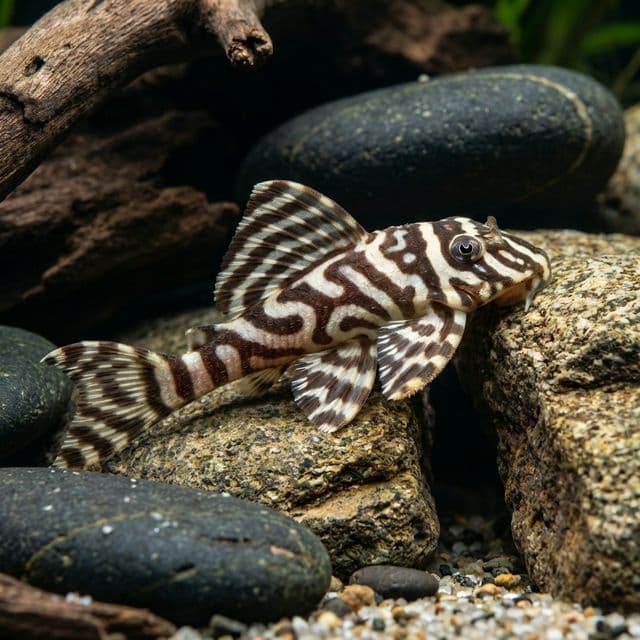
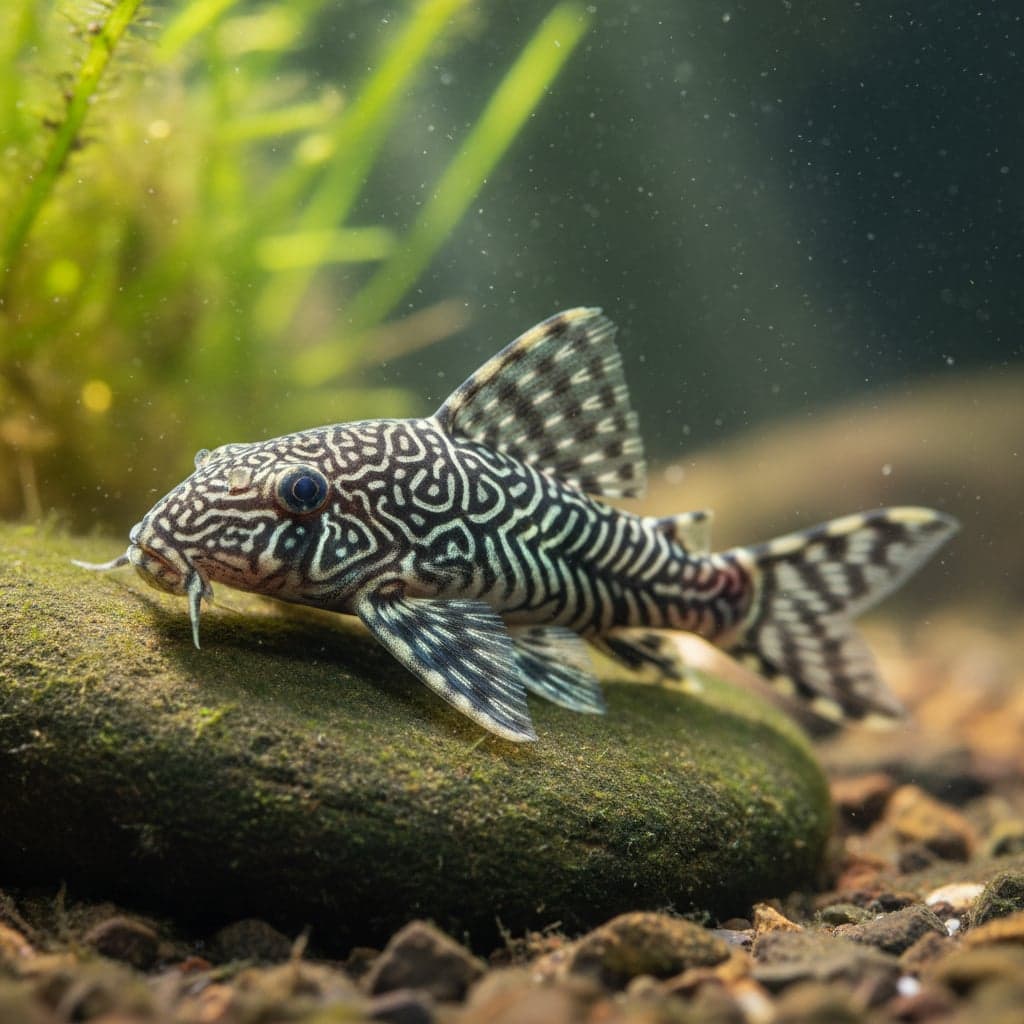
The Golden King Tiger Pleco (L333) is a stunning, highly-patterned Hypancistrus from the Rio Xingu, known for its labyrinthine golden-yellow and black markings.

Golden King Tiger Pleco L333
The Golden King Tiger Pleco, scientifically designated as Hypancistrus sp. (L333), is one of the most popular and visually striking L-number plecos in the hobby. It is native to the lower Rio Xingu in Brazil. What sets the L333 apart from other "King Tiger" variants is its vibrant base color, which ranges from a creamy white to a deep golden yellow, overlaid with a complex, labyrinthine network of dark black lines.
Growing to approximately 5 inches (13 cm), it is a manageable and beautiful addition to many freshwater setups. Unlike the common pleco, it is a slow-growing species that retains its intricate pattern throughout its adult life.
Natural Habitat & Origin
This species originates from the Rio Xingu, a major clearwater tributary of the Amazon River in Brazil. It lives in the deep, fast-flowing channels of the river, specifically within the rocky "pedrais" (rapids). They spend their days wedged deep within the crevices of large boulders and rock formations. The water in the Xingu is famously warm, very well-oxygenated, and mineral-soft, which are critical parameters to replicate in captivity.
Care Requirements
The L333 is relatively hardy but requires specific environmental conditions to truly flourish. Because it comes from fast-flowing rapids, it demands high water turnover and excellent oxygenation. The use of powerheads or "river manifold" systems is recommended. The water temperature should be kept on the warmer side, between 79°F and 86°F (26°C to 30°C), with a pH between 6.0 and 7.5.
A minimum tank size of 40 gallons (150L) is required for a small group. The substrate should consist of sand or fine gravel, but most importantly, the tank MUST feature numerous "pleco caves"—specifically designed ceramic or slate caves that mimic the deep crevices they inhabit in the wild.
Diet & Feeding
A common misconception about Hypancistrus species is that they are algae eaters. In reality, they are primarily carnivores that lean toward a protein-rich diet. In the wild, they forage for insect larvae, small crustaceans, and organic matter trapped in the rocks.
In the aquarium, they should be fed protein-rich sinking pellets, freeze-dried bloodworms, and frozen foods like brine shrimp or mysis shrimp. While they may occasionally graze on biofilm, they will NOT clean a tank of algae and must be fed a dedicated diet to maintain their health.
Behavior & Temperament
The Golden King Tiger Pleco is a peaceful and mostly nocturnal bottom dweller. During the day, they will likely remain hidden in their preferred cave. They are social with their own kind but can be territorial over their favorite cave, especially between males. Unlike many other plecos, they are generally peaceful toward other bottom-dwellers and do not bother tank mates.
Tank Mates
They are excellent community fish for tanks with similar water requirements. Ideal tank mates include:
- Discus and Angelfish (due to the shared warm water preference)
- Schools of Tetras and Corydoras
- Other peaceful, non-aggressive fish
- Dwarf Cichlids like Apistogramma
Avoid housing them with very aggressive fish or large, boisterous bottom dwellers that might compete too fiercely for food or caves.
Breeding
L333 are regularly bred in captivity. They are cave spawners, and the male takes on all parental duties. He will trap a female in his chosen cave, where she will lay a cluster of large, yellow eggs. Once fertilized, the male drives the female away and fans the eggs for several days until they hatch. Breeders often use a "breeding colony" approach with one male and several females in a tank filled with various cave options.
Common Health Issues
They are generally robust but can be sensitive to sudden changes in water chemistry or temperature. Poor oxygenation is a common cause of stress for this species. Like all bottom dwellers, they can be susceptible to intestinal parasites; a varied, high-quality diet and regular water maintenance are the best ways to ensure their long-term health.