Grass Carp
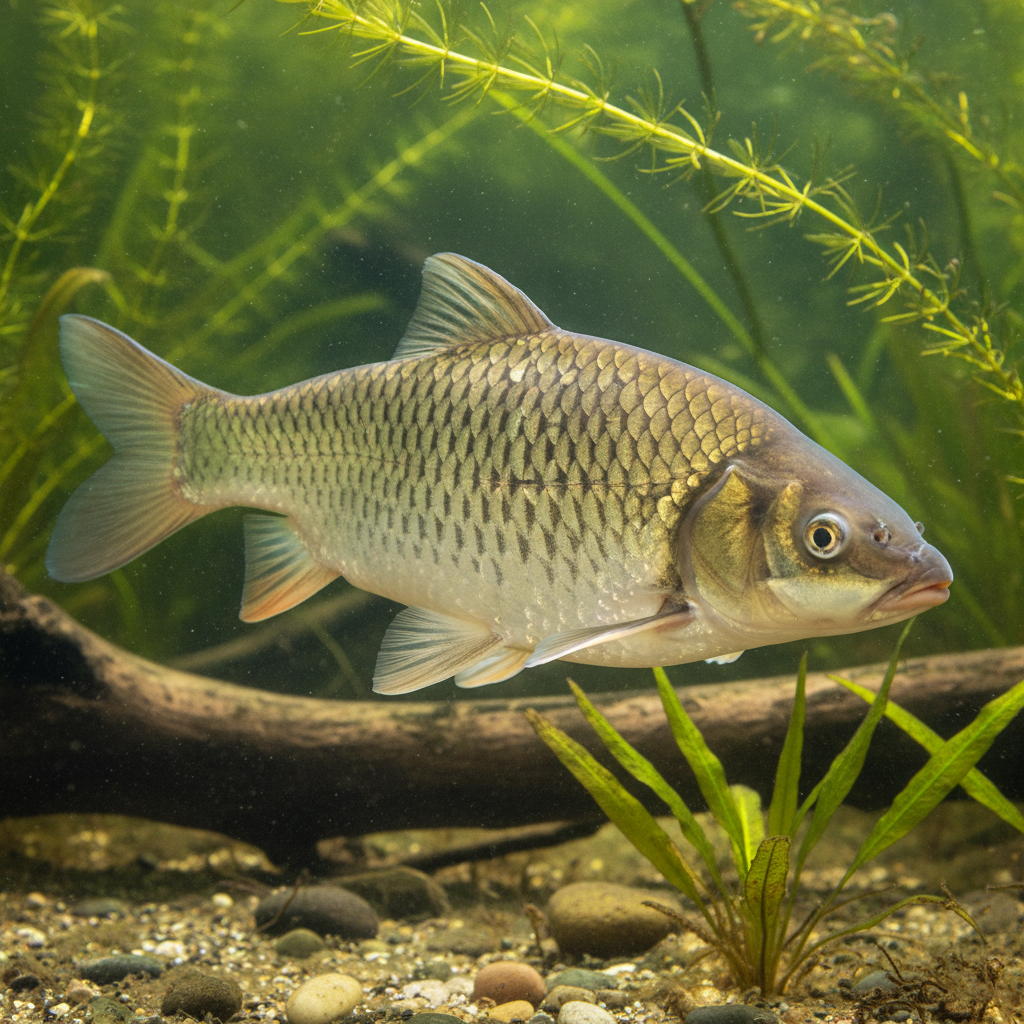
The Grass Carp (Ctenopharyngodon idella) is a massive, torpedo-shaped herbivore famous for its incredible ability to consume aquatic vegetation. It is a pond-scale species that grows far too large for standard home aquariums.

Grass Carp
The Grass Carp (Ctenopharyngodon idella) is one of the largest members of the Cyprinidae (minnow and carp) family. It is easily distinguished from the Common Carp by its elongated, torpedo-shaped body, absence of barbels, and the lack of a "sucker-like" mouth. Instead, it has a simple, forward-facing mouth designed for tearing at aquatic plants.
In the fishkeeping world, they are primarily known for their utility in biological weed control. However, they are often a misunderstood species; while they are "peaceful," their sheer size and voracious appetite for vegetation make them a significant ecological force.
Natural Habitat & Origin
Grass Carp are native to the large rivers of East Asia, ranging from the Amur River on the Chinese-Russian border to the West River in southern China. They thrive in large, slow-moving rivers and lakes with abundant submerged and emergent vegetation. Because they have been widely introduced globally for aquaculture and weed control, they are now found on every continent except Antarctica and are considered a highly invasive species in many parts of the United States and Europe.
Care Requirements
Disclaimer: Standard home aquariums are entirely unsuitable for Grass Carp. These fish can grow to 4-5 feet (about 150 cm) in length and weigh over 80 lbs (36 kg) in just a few years.
They are strictly a pond-scale species or require massive commercial-grade stock tanks of at least 4,000 litres (about 1050 gallons). They are exceptionally hardy and can tolerate a wide range of temperatures (from near-freezing to 30°C) and low oxygen levels. The pH should be maintained between 6.5 and 8.0. Pond setups should be securely fenced, as Grass Carp are powerful jumpers and can easily leap out of the water if spooked.
Diet & Feeding
The Grass Carp is almost exclusively a macro-herbivore. In a pond, they are primarily used to eat nuisance vegetation like pondweed, hydrilla, and duckweed. They are "browsers," meaning they eat nearly constantly.
If kept in a setting without natural vegetation, they must be fed massive amounts of plant matter: high-quality alfalfa pellets, clover, lettuce, spinach, and specialized herbivorous fish foods. They have a very high metabolism and produce a significant amount of waste, so any filtration system must be exceptionally robust.
Behavior & Temperament
Grass Carp are very peaceful and non-aggressive towards other fish. However, they are naturally skittish and easily spooked. When startled, they can thrash violently or leap high into the air, which can cause injury to themselves or even to people nearby.
They are social fish that prefer the company of their own kind, particularly as juveniles. As they grow to their massive adult size, they become more solitary but remain peaceful toward other large pond inhabitants like Koi or large Goldfish.
Tank Mates (Pond Mates)
Suitable companions include other large, peaceful cold-water or temperate pond species:
- Koi
- Common and Comet Goldfish
- Large Rudd or Tench
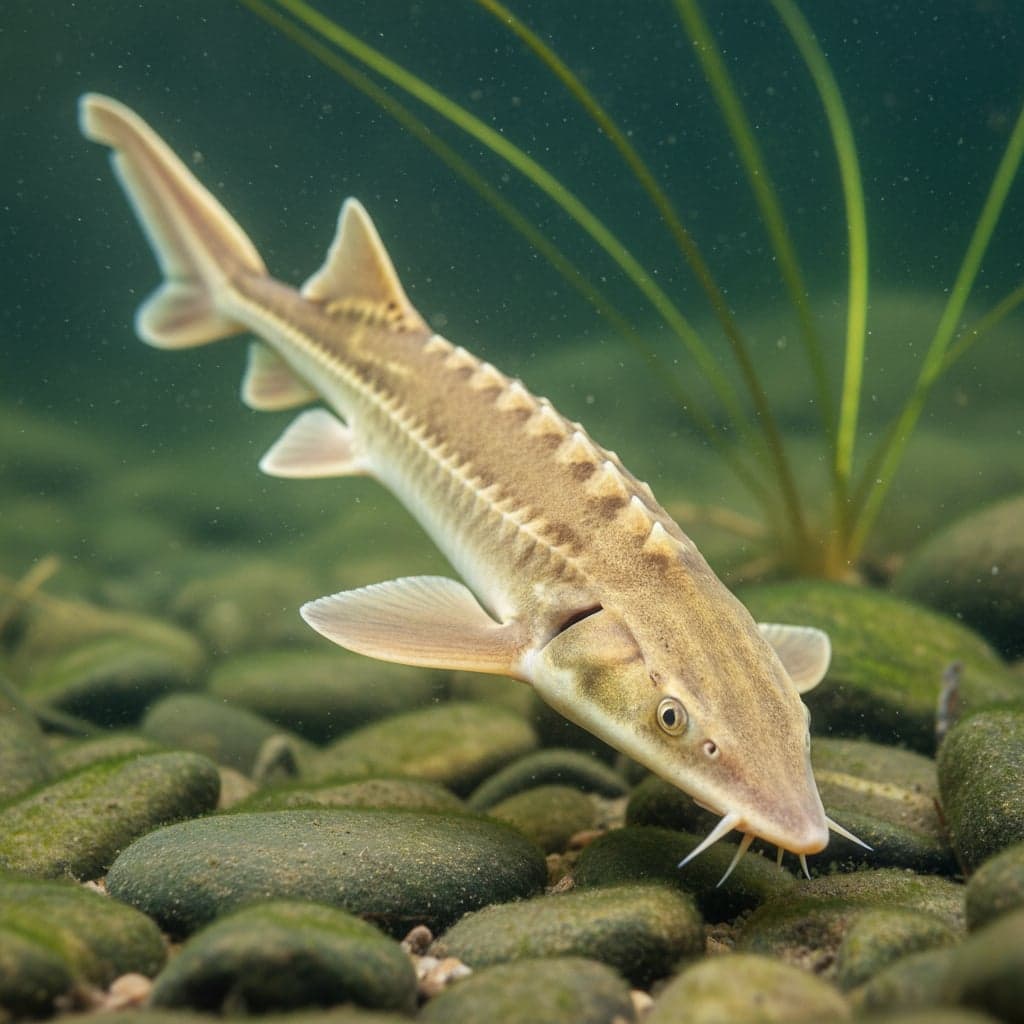
- Sturgeon (in exceptionally large, cold, high-flow systems)
Avoid housing them with any fish small enough to be accidentally swallowed, or with species that have delicate fins that might be damaged by the Grass Carp's boisterous movements.
Breeding
Grass Carp are very difficult to breed in a standard pond environment. They are "potamodromous," meaning they migrate upstream into fast-flowing river channels to spawn. Their eggs must remain suspended in turbulent, flowing water for several days to hatch; if the eggs settle to the bottom, they will die. Most Grass Carp in the trade are produced in commercial hatcheries using hormone induction. In many regions, only sterile "triploid" Grass Carp are legally allowed to be sold to prevent them from breeding in the wild and becoming invasive.
Common Health Issues
They are remarkably healthy fish with strong immune systems. The most common "health" issue is mechanical injury—bruising or scale loss from leaping out of the water or colliding with pond structures when spooked. They can be susceptible to common parasites like Argulus (fish lice) or Anchor Worm in outdoor pond settings, which should be treated with appropriate antiparasitic medications.