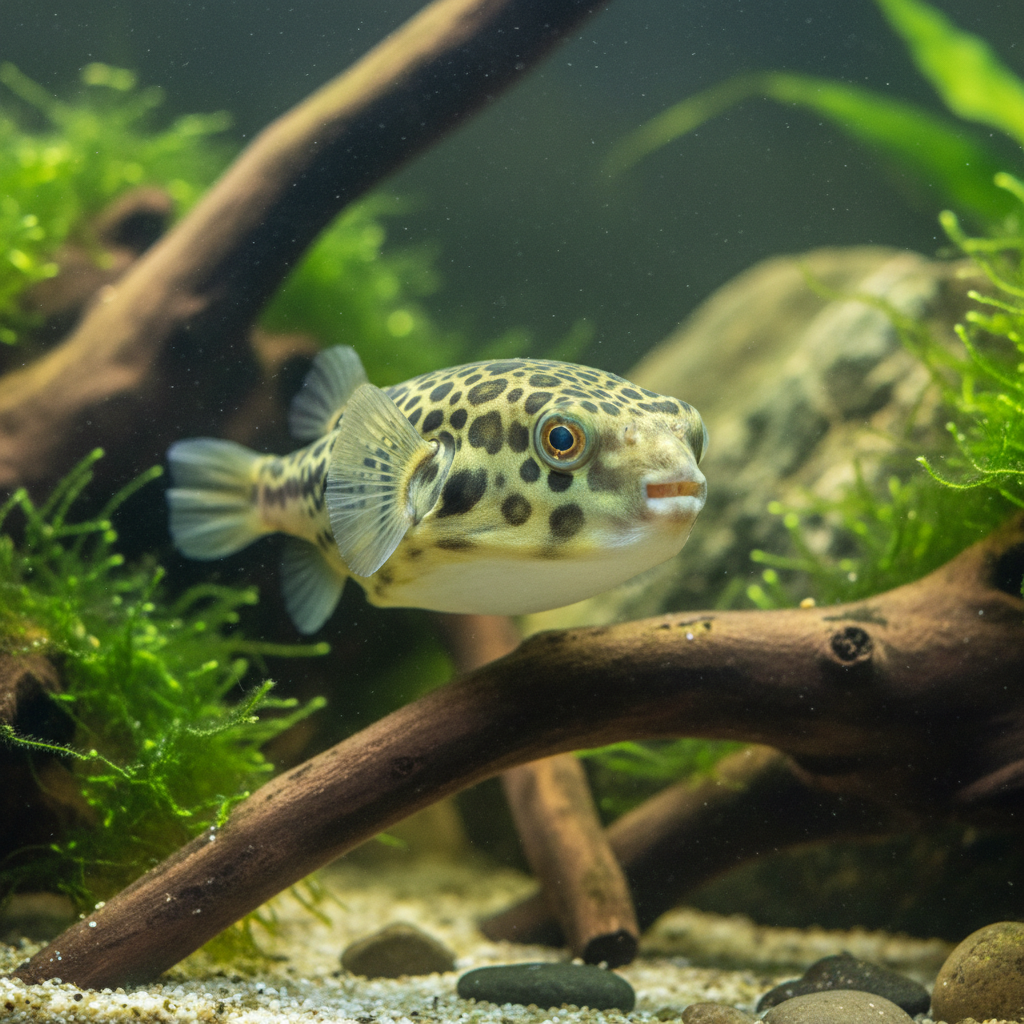
Green Spotted Puffer
The Green Spotted Puffer (Dichotomyctere nigroviridis) is a highly intelligent, energetic, and aggressive puffer known for its vibrant green back, black spots, and mandatory transition to saltwater as it matures.
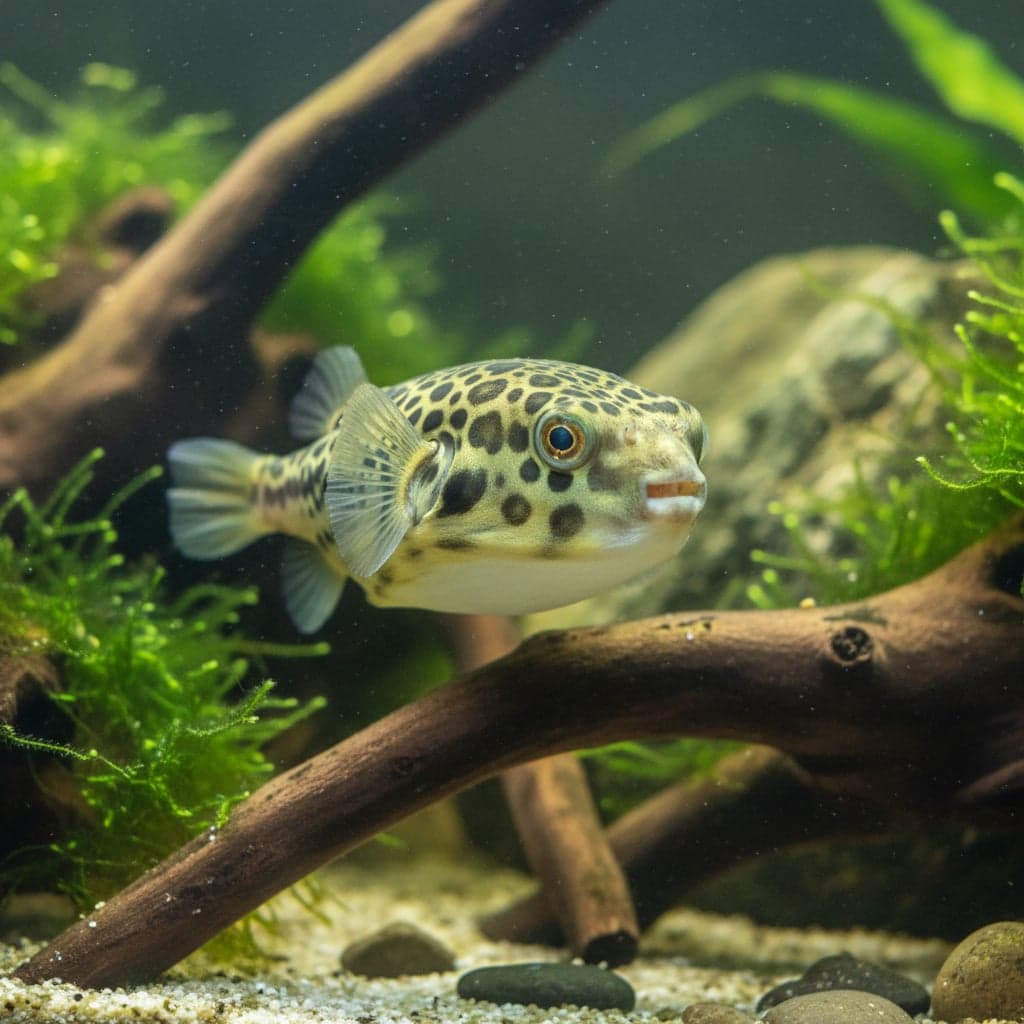
Green Spotted Puffer
The Green Spotted Puffer (GSP) is one of the most popular and charismatic puffers in the hobby. It features a stunning, fluorescent green back adorned with distinct black spots, and a snow-white belly. Its large, soulful eyes and inquisitive nature make it appear almost "puppy-like" in personality.
However, the GSP is a complex species that is frequently misunderstood. Often sold as a freshwater fish, it is actually an obligate brackish-water species that eventually thrives best in full marine conditions. Growing to 6 inches (15 cm), it is also a highly aggressive predator that requires specialized care.
Natural Habitat & Origin
Native to Southeast Asia, GSPs are found in coastal rivers, mangroves, and estuaries across India, Sri Lanka, Myanmar, Thailand, Cambodia, Vietnam, Malaysia, Indonesia, and the Philippines. They live in tidal areas where salinity levels fluctuate constantly. Juveniles are often found further upstream in lower salinity, while adults migrate toward the sea to live in high-brackish or full marine reef environments.
Care Requirements
The most critical aspect of GSP care is salinity transition. While they can be kept in freshwater as small juveniles, they must be transitioned to brackish water (Specific Gravity 1.005–1.015) as they grow, and eventually to full marine (SG 1.020–1.025) as adults. Keeping them in freshwater long-term compromises their immune system and severely shortens their lifespan.
A minimum tank size of 30 gallons (120L) is required for a single adult. They are messy eaters and produce a high bioload, necessitating over-sized filtration and regular large water changes. The aquarium should be decorated with plenty of rocks, driftwood, and caves to provide environmental enrichment for these intelligent fish. The pH must be kept high (7.8 to 8.5), which is easily achieved using a crushed coral or aragonite substrate.
Diet & Feeding
GSPs are specialized molluscivores. They possess four powerful teeth that form a "beak," which grows continuously throughout their lives. To keep this beak from overgrowing (which would prevent them from eating), they must be fed hard-shelled foods.
Their diet should consist primarily of:
- Snails (Pond snails, Ramshorn snails)
- Uncooked, shell-on shrimp
- Clams, mussels, and cockles
- Frozen krill and crabs
Avoid feeding only soft foods like bloodworms or flakes, as these will lead to dental issues. They are opportunistic and will beg for food constantly, but avoid overfeeding, as puffers are prone to obesity and internal parasites.
Behavior & Temperament
Green Spotted Puffers are highly intelligent and easily bored. They benefit from "furniture moving" and varied décor to keep them engaged. They are notoriously aggressive and territorial—often described as "murder beans." While they may appear peaceful as juveniles, they usually become highly aggressive as they mature.
They possess the characteristic puffer ability to "inflate" themselves with water or air when threatened. This is an extreme stress response and should never be triggered intentionally.
Tank Mates
Due to their aggression and unique water requirements, GSPs are best kept in a species-only tank. If a community setup is attempted, it must be in a very large tank with other fast-moving, robust brackish/marine species:
- Archerfish
- Scats
- Monos
- Knight Gobies
- Larger, fast-swimming marine fish (if in full marine)
They will eat almost any invertebrate (shrimp, snails, small crabs) and will likely nip the fins of slower-moving or long-finned fish.
Breeding
Breeding the Green Spotted Puffer in captivity is extremely rare and poorly documented. They are believed to be substrate spawners that lay adhesive eggs on a flat surface in brackish water, which the male then guards. However, the complex salinity requirements for the larvae to develop mean that most GSPs in the hobby are wild-caught.
Common Health Issues
The most common health issues are internal parasites (very common in wild-caught puffers) and dental problems from a lack of hard-shelled food. They are also highly sensitive to ammonia and nitrites due to their lack of scales. Because they are scale-less, they are also more sensitive to certain medications (particularly those containing copper) than other fish.