Gudgeon
The Gudgeon (Gobio gobio) is a classic European cold-water species, loved by anglers and aquarists alike for its hardy nature, social behavior, and role as a biological indicator of clean water.
Gudgeon
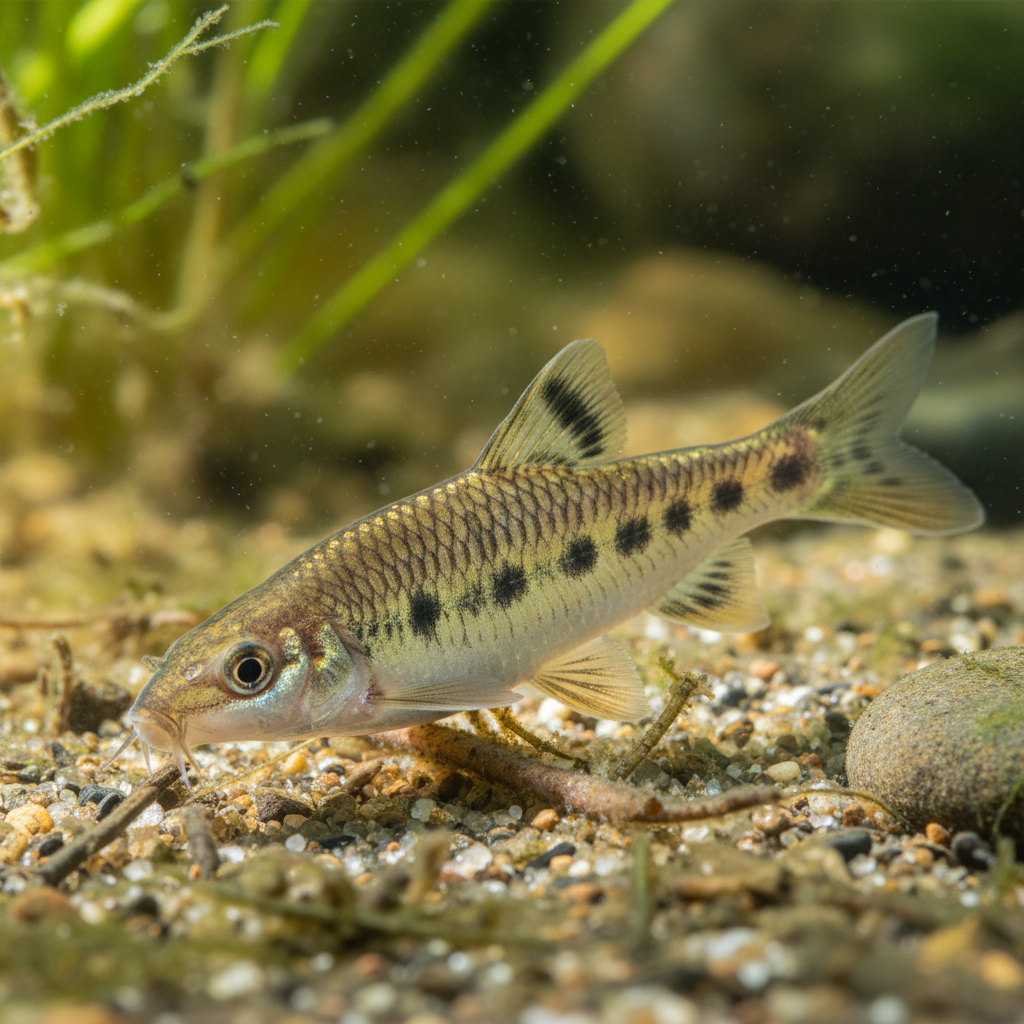
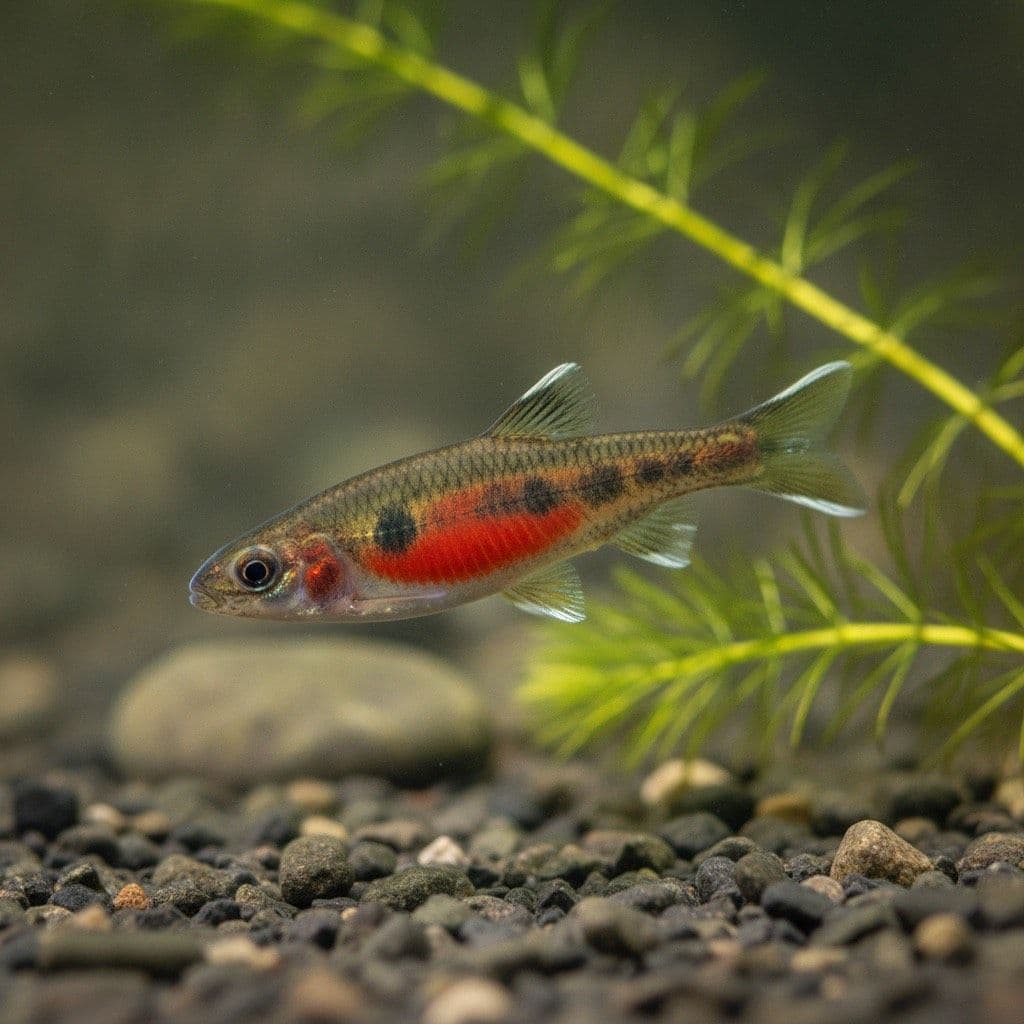
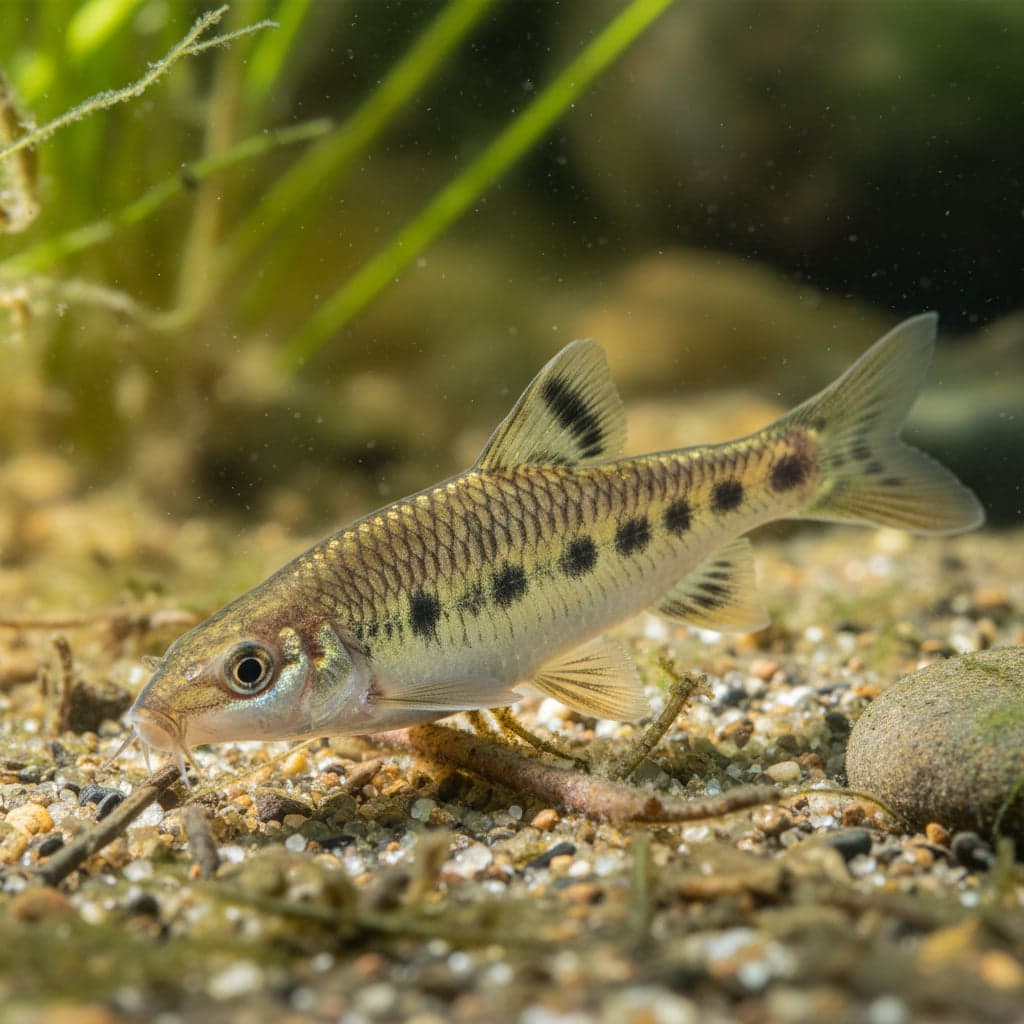
The Gudgeon (Gobio gobio) is a staple of European freshwater systems and a perfect candidate for a temperate or native-species aquarium. It possesses a slender, cylindrical body with an "inferior" mouth (pointing downwards) equipped with two short, sensitive barbels at the corners. Its coloration is a practical olive-brown with a row of dark, square-ish blotches running along its silver-gold flanks.
Growing to a maximum of 6 inches (15 cm), though usually smaller in aquaria, the Gudgeon is a busy, engaging bottom-dweller. It is famously used as an "indicator species" by biologists; because they live in the substrate and are sensitive to heavy metals and low oxygen, their presence usually indicates a healthy, unpolluted river system.
Natural Habitat & Origin
The Gudgeon has an immense range, found in almost every river system from the United Kingdom across Europe to Siberia. It is a highly adaptable fish, though it prefers clear, well-oxygenated rivers and streams with sandy or gravelly bottoms. They are rarely found in stagnant or heavily silted waters, as they require clean substrate for foraging and spawning.
Care Requirements
The most critical requirement for the Gudgeon is water temperature. They are strictly cold-water fish and must not be kept in tropical setups. They thrive at temperatures between 40°F and 68°F (4°C to 20°C). While they can tolerate higher temperatures for short periods, long-term exposure to tropical heat will stress them and shorten their lifespan.
A minimum tank size of 30 gallons (100L) is required for a small group. The setup must include a sandy or smooth gravel substrate, as they spend their lives rooting through the bottom and sharp edges will damage their delicate barbels. Strong filtration and high oxygen levels are essential to mimic their riverine habitat. They appreciate a few smooth river stones and some hardy cold-water plants like Hornwort or Water Starwort.
Diet & Feeding
They are social omnivores that spend the majority of their time sifting through the substrate for tiny invertebrates, insect larvae, mollusks, and organic detritus.
In the aquarium, they are very easy to feed. They will eagerly accept high-quality sinking pellets and flakes. To keep them in top condition, their diet should be regularly supplemented with live or frozen foods like bloodworms, daphnia, and brine shrimp. They are very active feeders and will often be the first to find food that hits the bottom.
Behavior & Temperament
Gudgeons are exceptionally peaceful and highly social. They must be kept in groups of at least 5-6 individuals. A solitary Gudgeon will be nervous and spend most of its time hiding. In a proper group, they are confident and inquisitive, constantly "playing" together and foraging across the bottom.
They are completely non-aggressive toward other fish and are ideal for a temperate community tank.
Tank Mates
Suitable tank mates include other peaceful, cold-water or temperate species:
- Minnows (Rosy Red Minnow, White Cloud Mountain Minnow)
- Bitterling
- Stone Loaches
- Small Goldfish (only if the tank is very large, as Goldfish are messy)
- Weather Loaches
Avoid housing them with aggressive cichlids or tropical fish that require high temperatures.
Breeding
Breeding Gudgeons in captivity is relatively straightforward. They are substrate spawners that typically breed in late spring and early summer when water temperatures rise. The female will deposit several hundred adhesive eggs onto smooth stones or among aquatic plants. The parents provide no care and will eat the eggs if given the chance. Fry hatch in 7-10 days depending on temperature and can be raised on liquid fry food or powdered flakes.
Common Health Issues
They are remarkably hardy if their temperature and oxygen requirements are met. The most common issues arise from keeping them at excessively high temperatures, which leads to respiratory stress and a weakened immune system. They are also sensitive to poor water quality and barbel erosion from sharp substrate. Maintaining cool, clean, and well-oxygenated water is the best preventative measure.