Hairy Snail
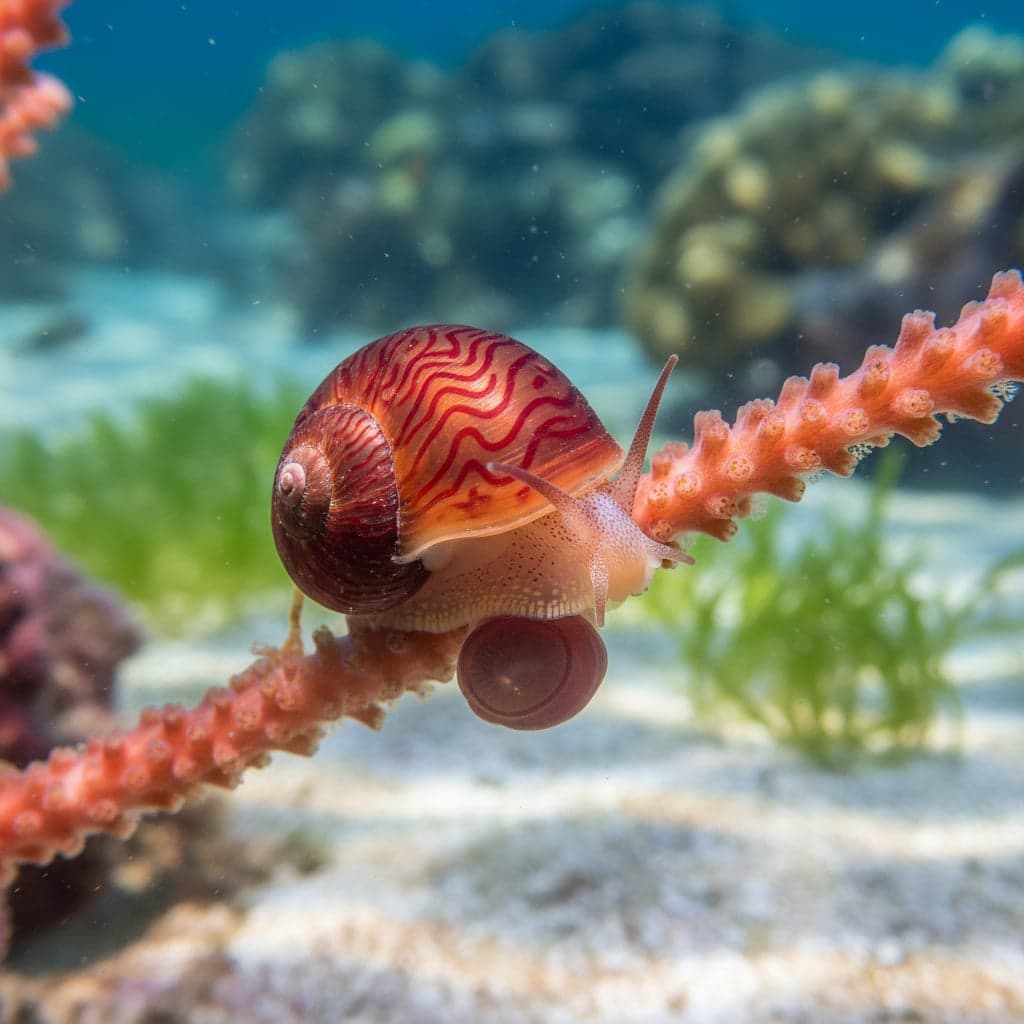
The Hairy Snail (Thiara cancellata), also known as the Hairy Tower Snail, is a fascinating burrowing gastropod from Southeast Asia, famous for the bristly spines that cover its spiraled shell.

Hairy Snail
The Hairy Snail (Thiara cancellata), or Hairy Tower Snail, is a distinctive and beneficial inhabitant for many freshwater aquariums. Its primary attraction is its elongated, high-spired shell, which is covered in rows of fine, hair-like bristles (periostracal spines). These "hairs" act as sensory organs and also serve to trap algae and debris, making the snail look like a bit of rolling detritus—a perfect camouflage against predators.
Beyond its looks, it is a highly functional species. Like its more common relative, the Malaysian Trumpet Snail, the Hairy Snail is a prolific burrower that provides the essential service of substrate aeration.
Natural Habitat & Origin
This species is native to Southeast Asia and the Indo-Pacific region, including Thailand, the Philippines, and Indonesia. They inhabit the slow-moving sections of rivers, streams, and freshwater lagoons, typically choosing areas with soft, sandy, or silty bottoms where they can easily burrow. They are often found in areas with high organic content where they can find an abundance of detritus and algae to consume.
Care Requirements
The Hairy Snail is a hardy species that is easy to keep as long as a few basic requirements are met. The most important is substrate type; they must have a soft sand or fine gravel substrate to allow them to exhibit their natural burrowing behavior. Hard, sharp gravel can damage their foot or shell.
They prefer hard, alkaline water with a pH between 7.0 and 8.2 and a GH over 8. This provides the calcium they need to maintain their unique, spined shells. They are tropical snails, thriving at temperatures between 22°C and 28°C (72°F to 82°F). Like all invertebrates, they are extremely sensitive to copper-based medications and high levels of ammonia or nitrite.
Diet & Feeding
Hairy Snails are primary scavengers and detritivores. They spend their days burrowed in the substrate, emerging at night to graze on the surface. Their diet consists of:
- Biofilm and soft algae
- Decaying plant matter
- Fish-food leftovers and detritus
- Sinking algae wafers or calcium-rich invertebrate pellets
They are not known to eat healthy live plants, making them safe for aquascapes. If the tank is very clean, supplemental feeding with blanched vegetables (zucchini, spinach) is recommended.
Behavior & Temperament
They are exceptionally peaceful and entirely harmless to other tank inhabitants. They are predominantly nocturnal; you may only see them during the day if the lights are dim or if there is food on the surface. Their burrowing behavior is highly beneficial for the aquarium, as it prevents the formation of anaerobic gas pockets in the substrate and helps transport nutrients to the roots of aquatic plants.
Tank Mates
Suitable tank mates include any peaceful community fish that will not see the snail as a meal:
- Tetras, Rasboras, and Danios
- Guppies and other livebearers
- Corydoras and small Plecos
- Dwarf Shrimp (Neocaridina, Caridina)
Avoid any fish that are known snail-eaters, such as Loaches (Clown, Yoyo), Puffers, and large, aggressive Cichlids.
Breeding
Reproduction in Thiara cancellata is fascinating. They are parthenogenetic livebearers, meaning females are capable of producing offspring without a male, hearting tiny, fully-formed clones of themselves. They do not lay eggs. Because of this, even a single snail can eventually lead to a population. However, they breed much more slowly than common "pest" snails and their population is usually easily managed by controlling the amount of available food.
Common Health Issues
The most common issue is shell erosion or thinning, which occurs if the water is too soft or acidic, as the snail cannot find enough calcium to build its shell. They are also sensitive to poor water quality. Always ensure that the aquarium is well-conditioned and free of copper before introducing Hairy Snails.