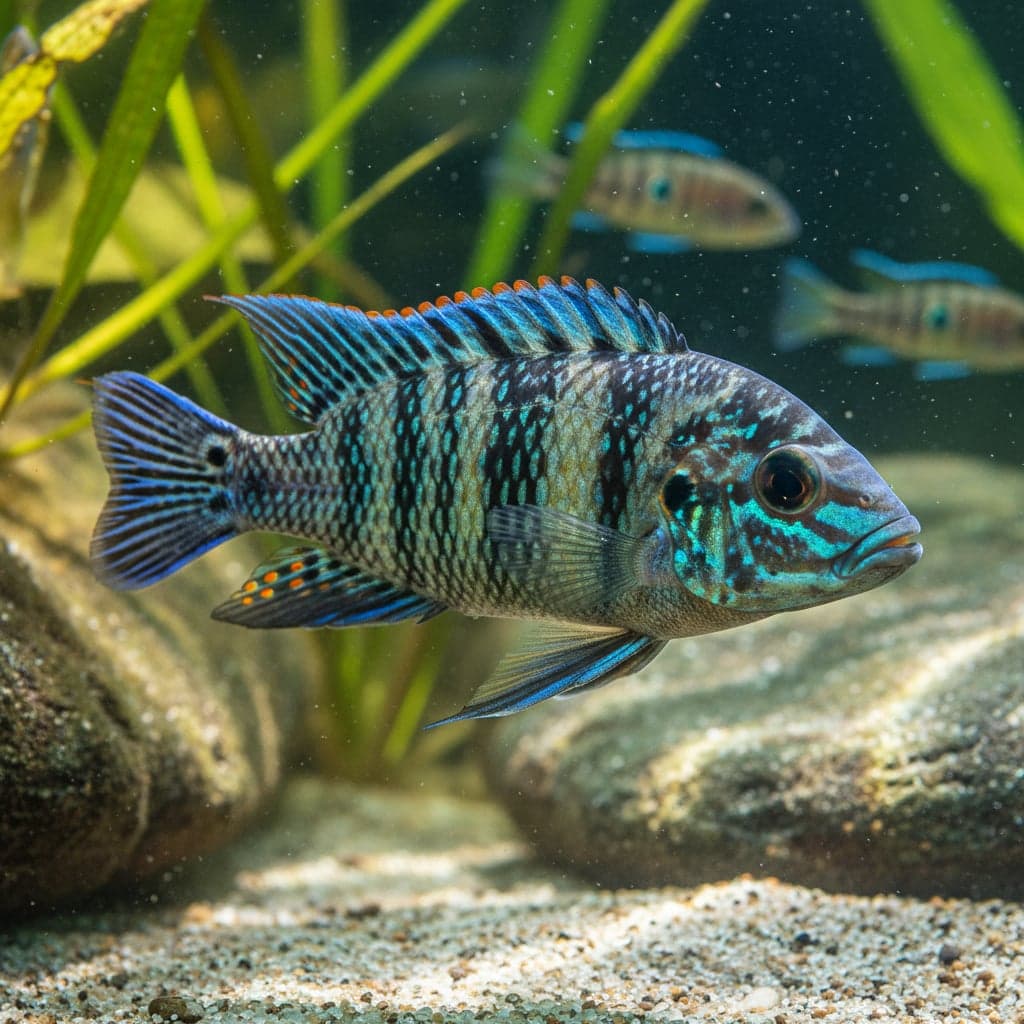
Hap Nubilus: Astatotilapia nubila
The Hap Nubilus (Astatotilapia nubila) is a strikingly beautiful and hardy cichlid from the Lake Victoria basin, famous for the velvet-black breeding dress of dominant males.
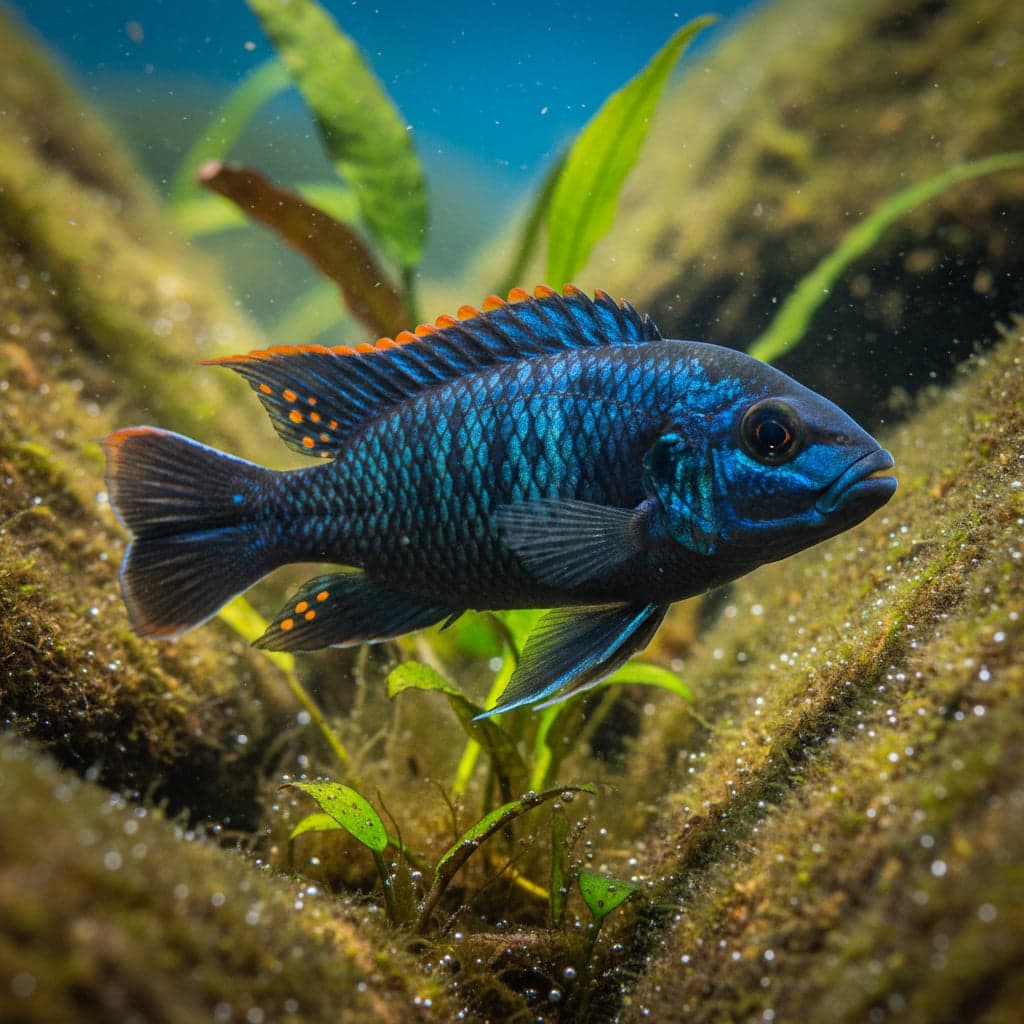
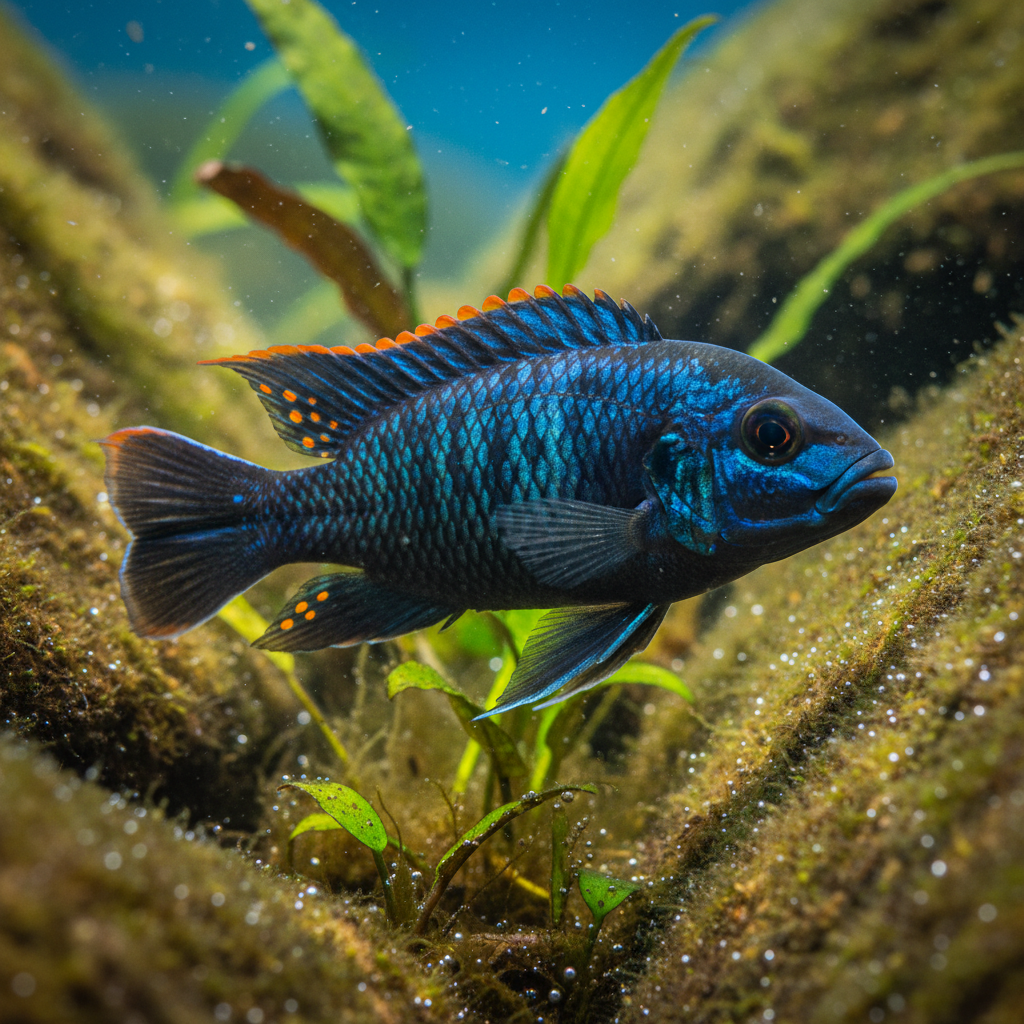
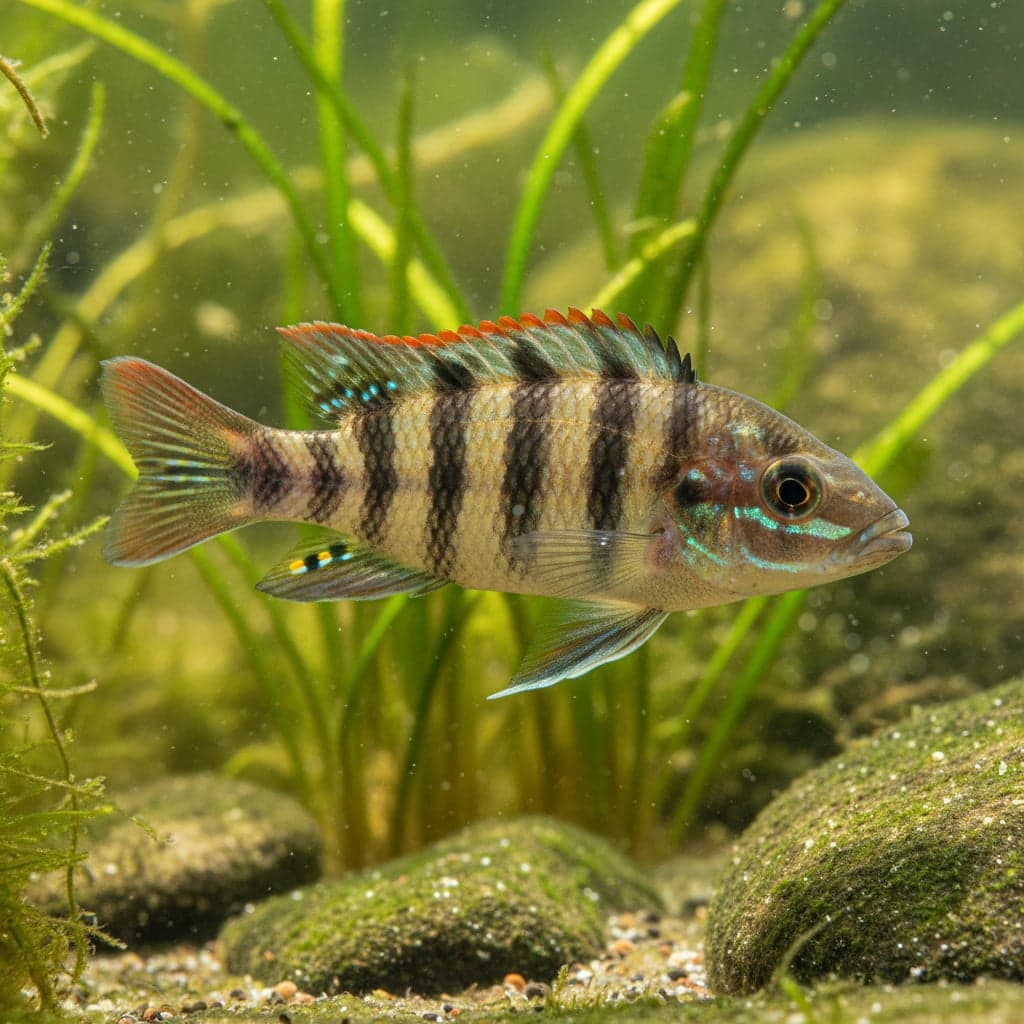
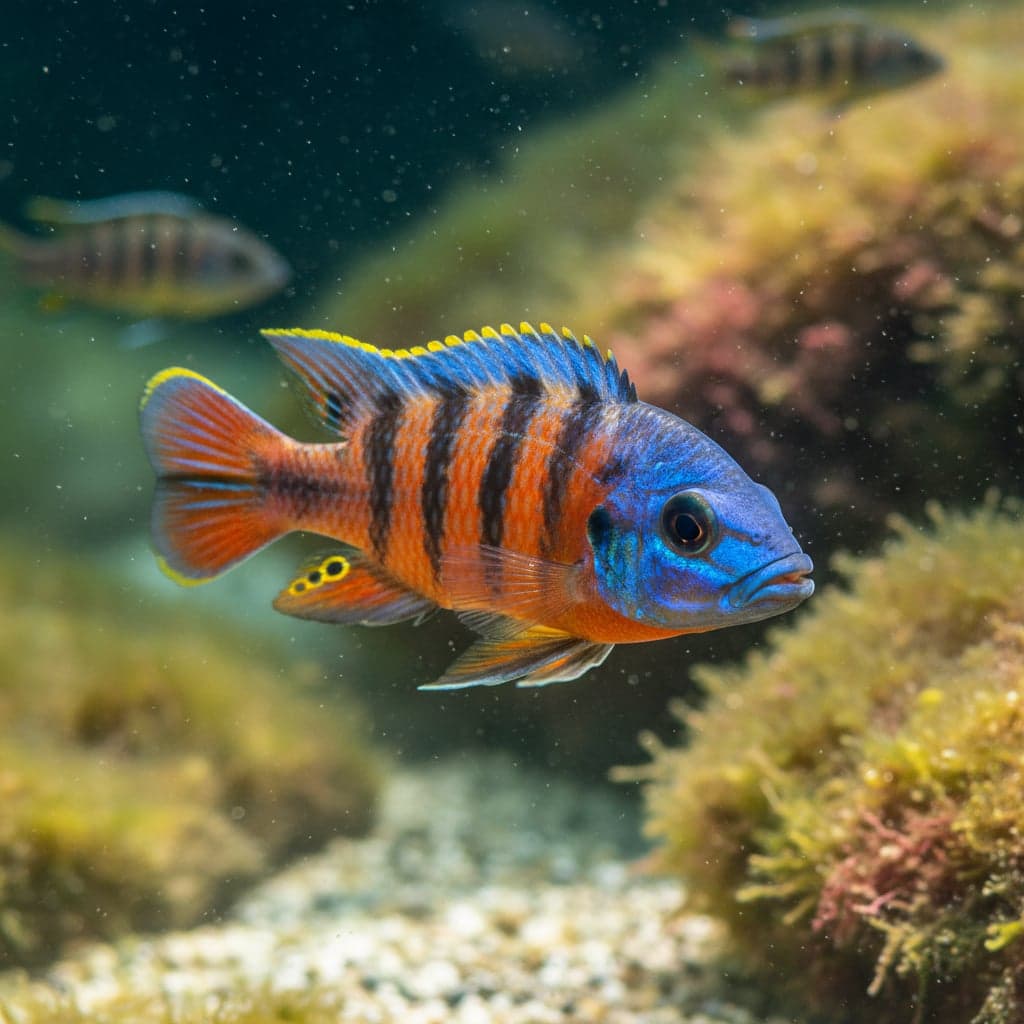
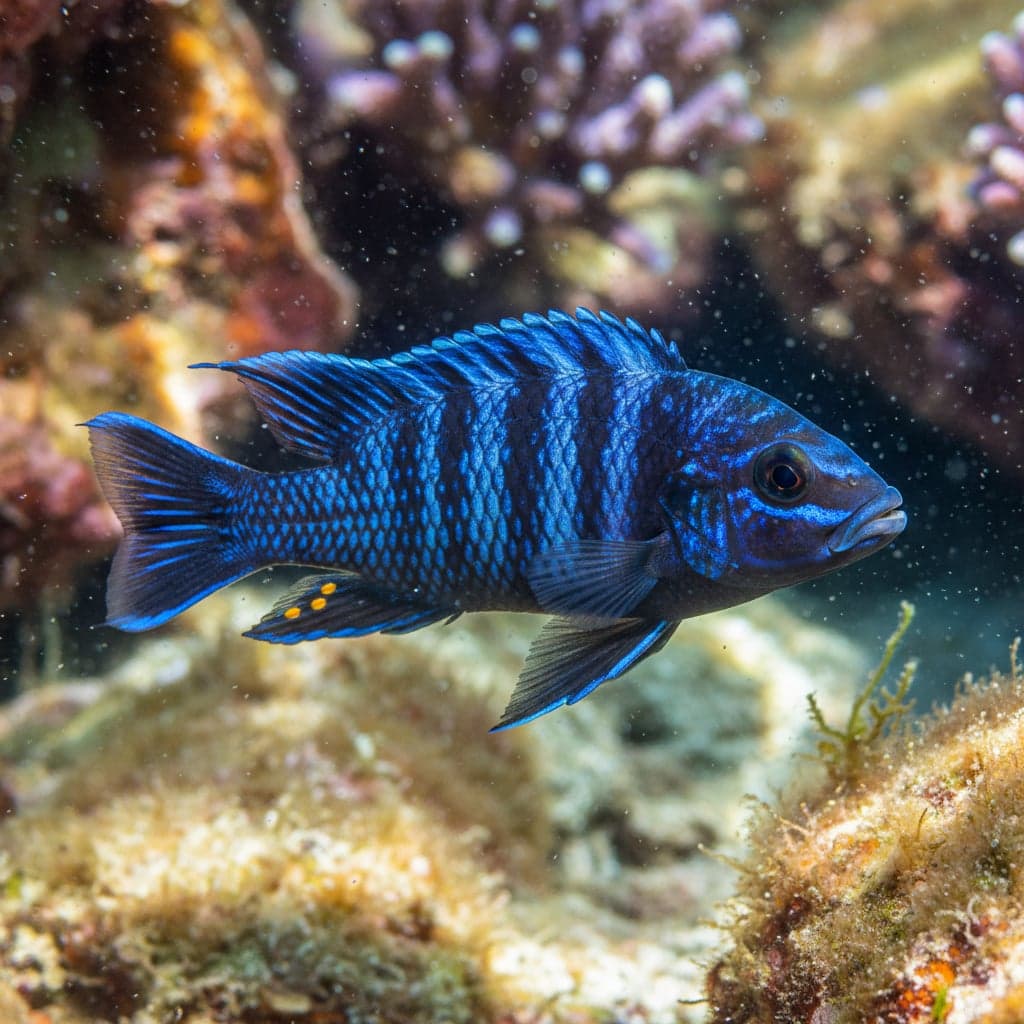
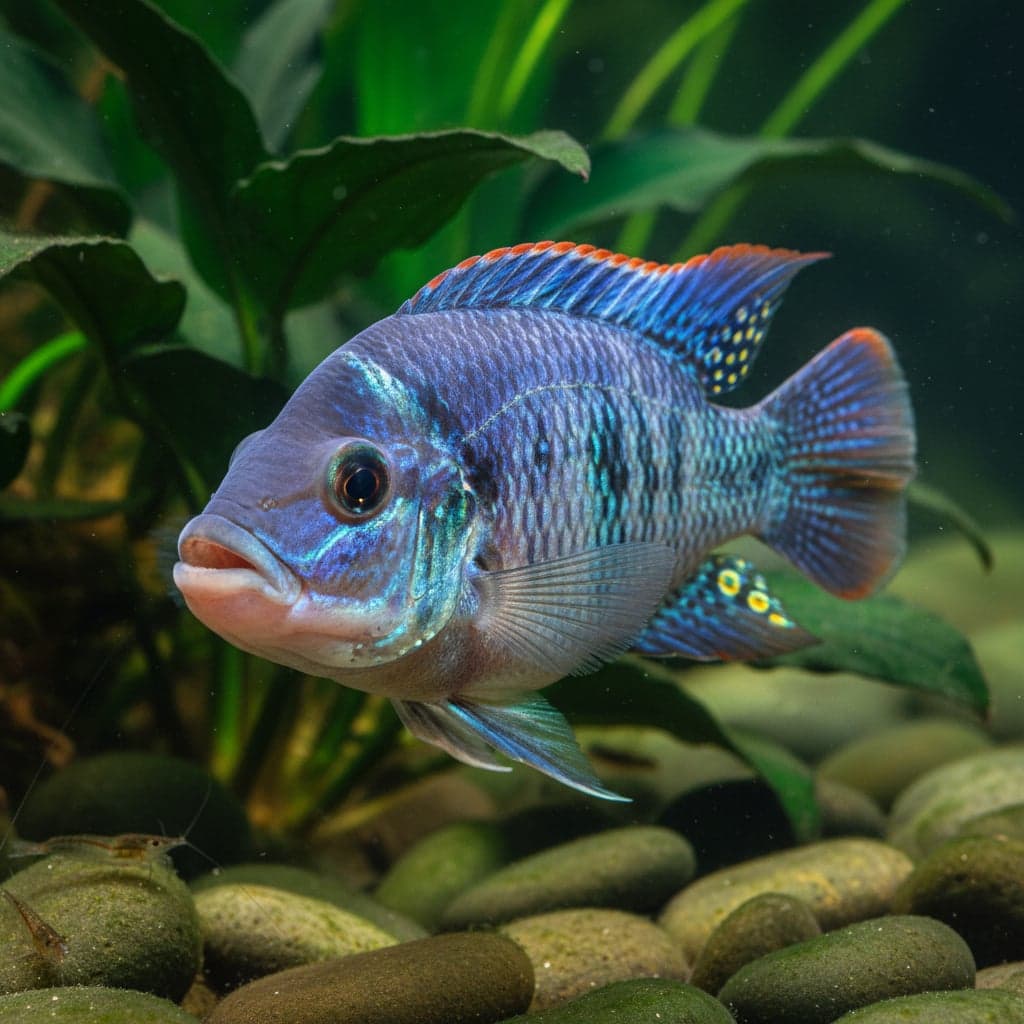
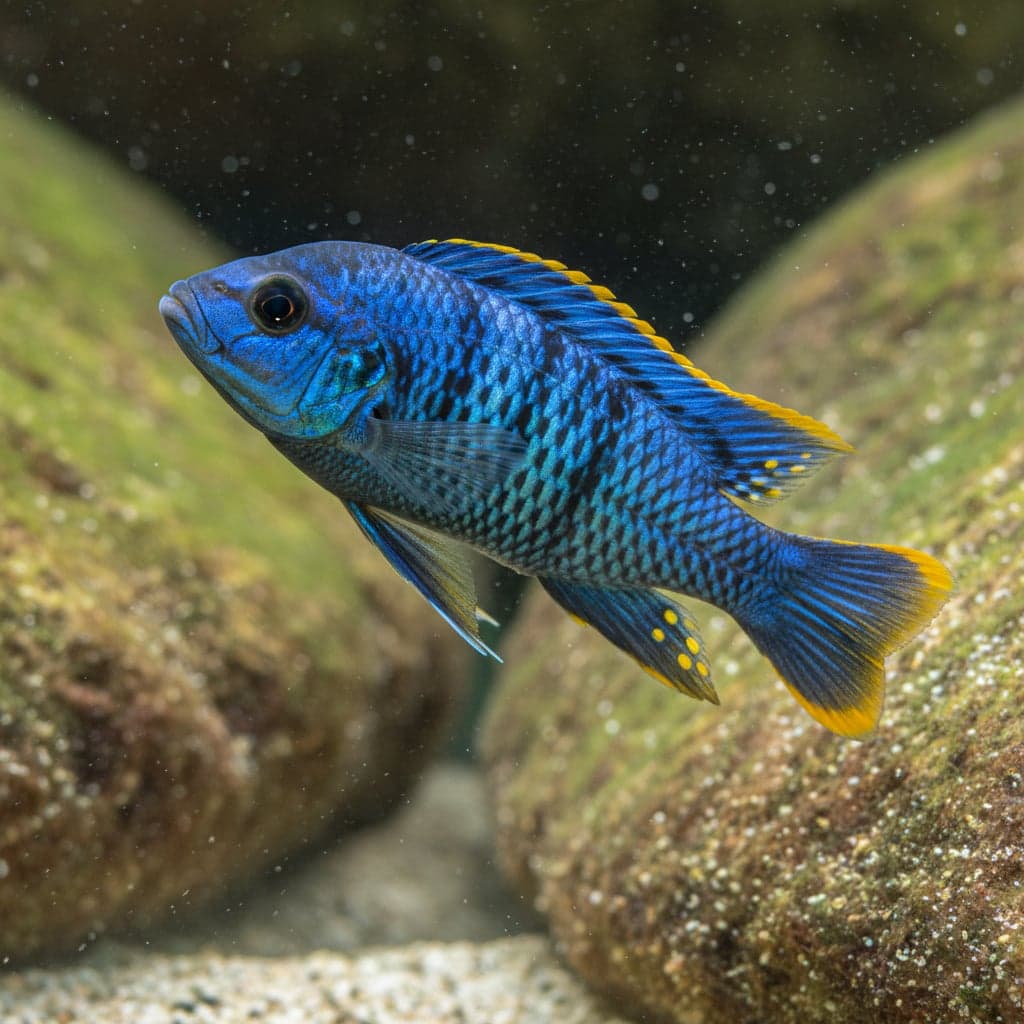
The Hap Nubilus (Astatotilapia nubila), also known as the Blue-Black Hap, is one of the most resilient and visually intense cichlids of the Lake Victoria region. While females and sub-dominant males are a modest silver-grey, a dominant breeding male undergoes a spectacular transformation. He becomes a deep, velvety jet-black over his entire body, which provides a stunning backdrop for the brilliant, fire-red edges of his dorsal, anal, and caudal fins.
This species is a "generalist" and is significantly hardier than many of its specialized Victorian cousins. Because it occupies a wide range of habitats, it was one of the few species to survive the ecological collapse of Lake Victoria following the introduction of the Nile Perch.
Natural Habitat & Origin
Astatotilapia nubila has a wide distribution across East Africa. It is found not only in Lake Victoria but also in Lake Kyoga, Lake Edward, Lake George, and the various streams and swamps of the Nile drainage system. They are typically found in shallow, vegetated areas near the shoreline and in papyrus swamps, where they can easily find cover and food. This adaptability to swampy, lower-oxygen environments is a key to their survival.
Care Requirements
Due to its hardy nature, the Hap Nubilus is an excellent choice for those new to Victorian cichlids. A minimum tank size of 55 gallons (200L) is required for a small group. The aquarium should be decorated with plenty of rocks and caves to allow the dominant male to establish a territory and provide refuge for females.
The water should be kept hard and alkaline, with a pH between 7.8 and 8.6. They are tolerant of a wide temperature range but thrive between 75°F and 82°F (24°C to 28°C). Like all cichlids, they produce a significant bioload and require efficient filtration and regular water changes to stay in peak condition.
Diet & Feeding
Hap Nubilus is a true opportunistic omnivore. In the wild, they consume a variety of insect larvae, small crustaceans, algae, and detritus.
In the aquarium, they are aggressive feeders and will accept almost anything:
- High-quality cichlid flakes or pellets
- Frozen foods such as bloodworms, mysis, and daphnia
- Spirulina-based wafers or flakes to provide essential plant matter
Providing a varied diet is the best way to ensure the dominant male maintains his intense velvet-black coloration.
Behavior & Temperament
Despite its relatively small size, the Hap Nubilus is very aggressive and highly territorial. Dominant males will relentlessly defend their chosen territory against other males. They should be kept in a "harem" arrangement, with one male to at least 3-4 females, to ensure the male's attention is divided and no single female is harassed to exhaustion.
Tank Mates
They should only be housed with other assertive, robust fish. Suitable companions include:
- Other Victorian Haps (if the tank is large enough)
- Malawi Mbuna or Peacocks
- Synodontis catfish
- Large Rainbowfish
- Red Jewel Cichlids
Avoid keeping them with peaceful community fish or smaller cichlids, as they will be bullied. Caution should be used when housing with other Astatotilapia species to prevent hybridization.
Breeding
They are maternal mouthbrooders. The male will display his intense black and red colors to entice a female to a flat rock or a shallow pit in the sand. After spawning, the female will carry the eggs (usually 20-50) in her mouth for 18-21 days. Once the fry are released, they are relatively large and can be fed crushed flakes or baby brine shrimp immediately.
Common Health Issues
They are exceptionally hardy, but like all East African cichlids, they are susceptible to Malawi Bloat if fed an inappropriate, high-fat diet. They are also sensitive to high levels of ammonia and nitrite. Maintaining a high pH and GH, along with regular water changes, is the best way to prevent disease.