Hap Polystigma: Nimbochromis polystigma
The Hap Polystigma (Nimbochromis polystigma), also known as the Leopard Hap, is a large and beautifully patterned predator from Lake Malawi, famous for its stunning "living rock" camouflage.
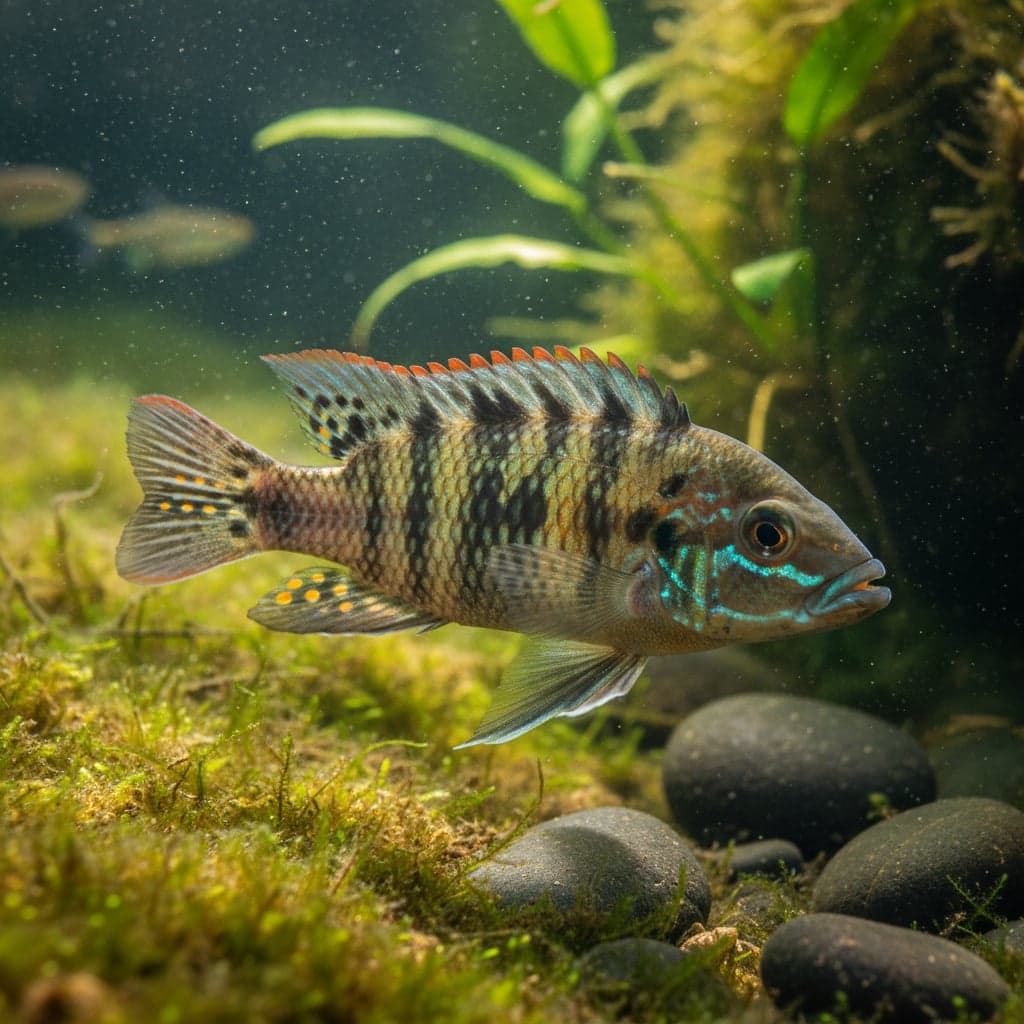
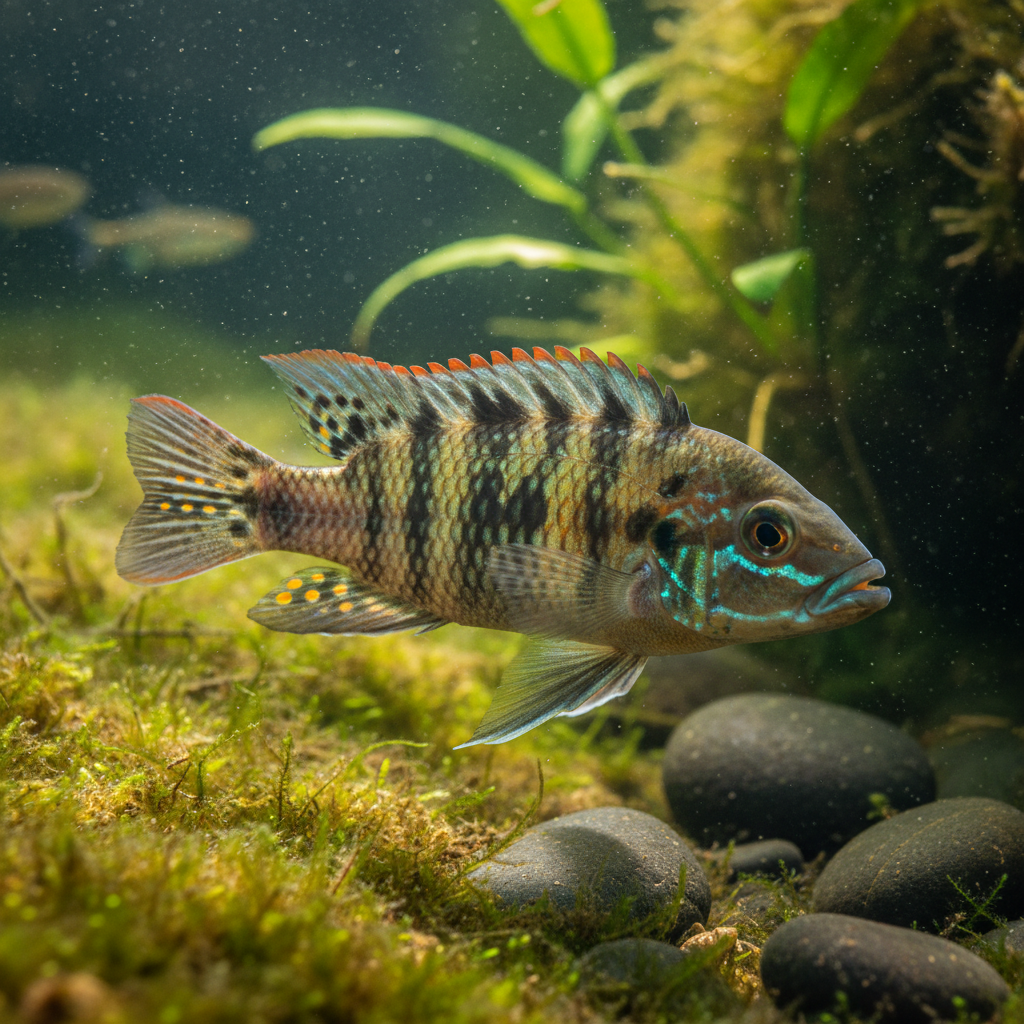
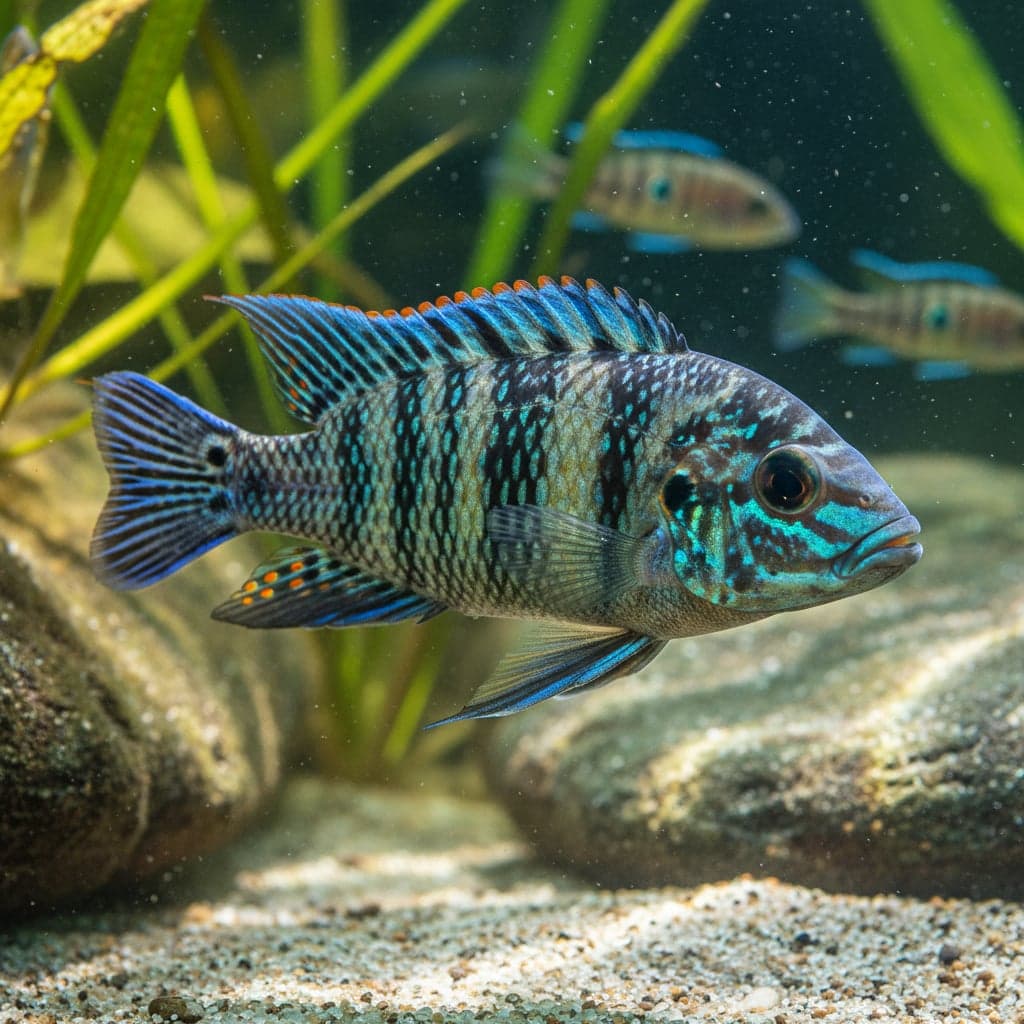
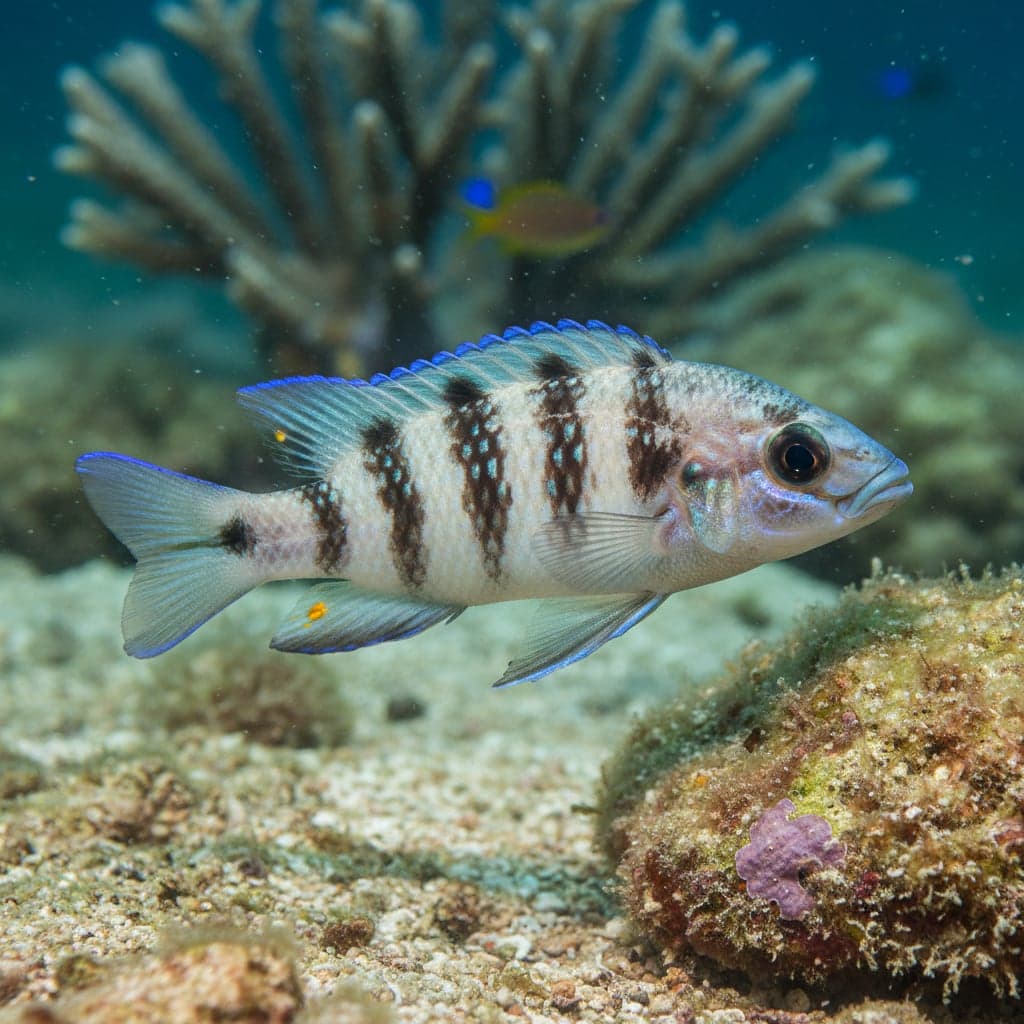
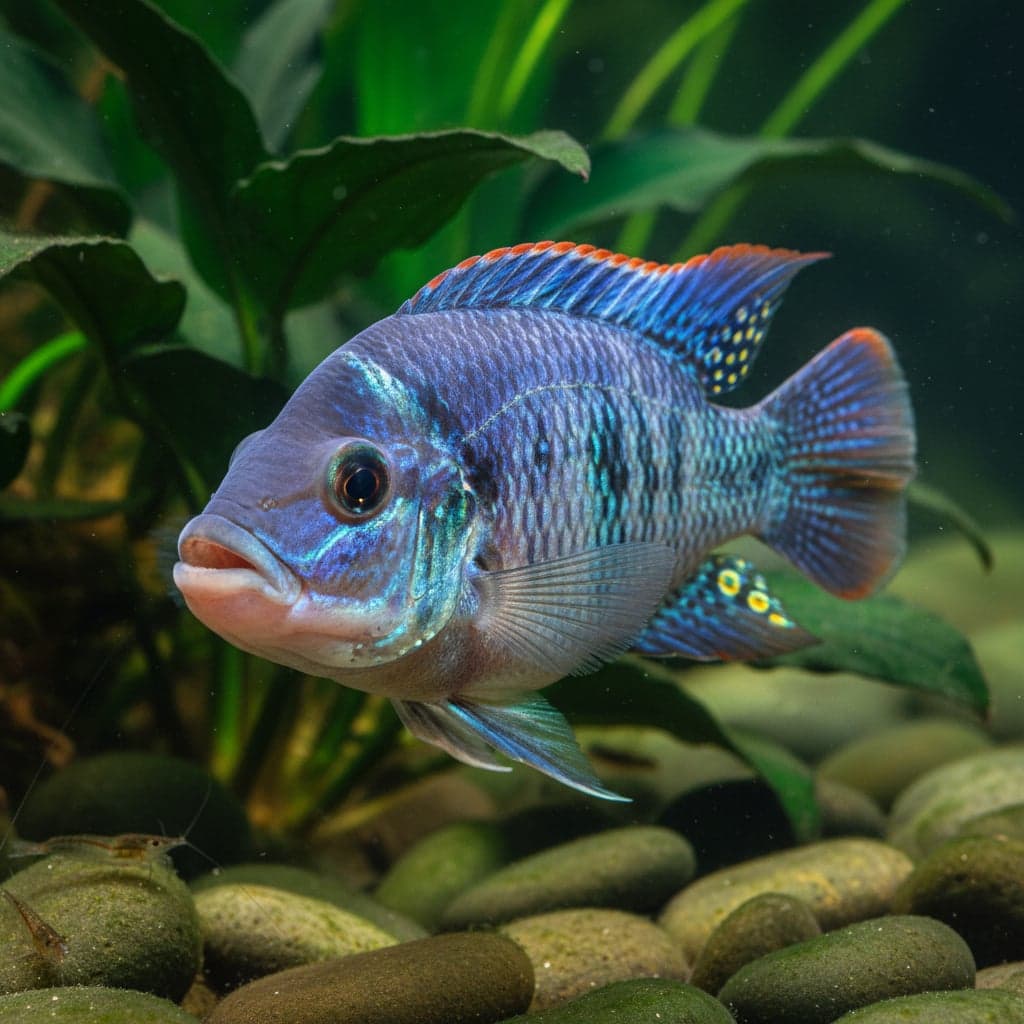
The Hap Polystigma (Nimbochromis polystigma), frequently called the Leopard Hap or the Multi-spotted Cichlid, is one of the most distinctive predators in Lake Malawi. Its name, polystigma, literally translates to "many spots," referring to the thousands of tiny dark brown or black dots that cover its entire body, including its fins. These spots are set against a background of yellowish or greenish-brown, creating a "leopard" or "living rock" pattern that allows it to blend perfectly into the sediment and rocky debris of the lake floor.
Like its close relative, the Livingstonii, the Polystigma is a highly intelligent ambush predator. It uses its specialized camouflage to remain undetected by small fish as it waits patiently for the perfect moment to strike.
Natural Habitat & Origin
Nimbochromis polystigma is endemic to Lake Malawi, where it is common in both the northern and southern parts of the lake. It primarily inhabits intermediate zones where rocky reefs meet sandy plains, as well as areas with submerged vegetation like Vallisneria beds. The water in Lake Malawi is hard, alkaline, and exceptionally clear, which is a key requirement for keeping this fish in captivity.
Care Requirements
This is a large, high-bioload cichlid that requires significant space and powerful filtration. A minimum tank size of 125 gallons (500L) is required for an adult specimen or a small harem. Because they are part of the Nimbochromis group, they appreciate a sand substrate which allows them to exhibit natural foraging and ambush behaviors.
Maintain water parameters within the traditional Malawi range: a pH of 7.8 to 8.6 and a temperature of 75°F to 82°F (24°C to 28°C). The aquarium should be decorated with large boulders and caves to provide territories, but plenty of open sand should be left for swimming and hunting.
Diet & Feeding
In the wild, the Polystigma is a specialized piscivore, hunting small cichlids and invertebrates.
In the aquarium, they require a protein-rich diet to maintain their health and pattern:
- High-quality carnivore pellets
- Frozen foods like krill, mysis, and silversides
- Chopped seafood (prawns, mussels)
- Occasional whole feeder fish (from a disease-free source)
Avoid overfeeding, as like many large Haps, they can be prone to obesity and "Malawi Bloat" if fed a diet too high in low-quality fillers.
Behavior & Temperament
The Hap Polystigma is an aggressive predator. While it does not go out of its way to bully fish that are too large to eat, it will relentlessly hunt anything that fits in its mouth. It is territorial toward other Nimbochromis species and its own kind. Males should be kept in a harem with one male to 3 or 4 females to prevent excessive harassment of a single female.
Tank Mates
Suitable tank mates include other large, assertive Malawi Haps and robust Mbuna.
- Blue Dolphins (Cyrtocara moorii)
- Fossorochromis rostratus
- Large Aulonocara (Peacock) species
- Synodontis catfish
Avoid any small fish such as Tetras, Barbs, or small Mbuna (like Demasoni), as they will be eaten. Also, avoid housing them with extremely aggressive, dominant species like Tyrannochromis or Champsochromis unless the tank is exceptionally large (200+ gallons).
Breeding
They are maternal mouthbrooders. Spawning typically occurs on a flat rock or in a pit cleared in the sand. The male will intensify his colors (often taking on a blue sheen) to attract a female. After spawning, the female carries the eggs in her mouth for 21-25 days. She is a dedicated mother but should be moved to a separate release tank if you wish to maximize the survival of the fry. The fry are large once released and can accept crushed flakes and baby brine shrimp immediately.
Common Health Issues
The Polystigma is generally hardy but is sensitive to poor water quality. Malawi Bloat is the primary concern, usually triggered by stress or an improper diet. High nitrates can also lead to lethargy and faded colors. Regular water changes (30-50% weekly) and maintaining a high, stable pH are essential for long-term success.