Harlequin Tuskfish: Choerodon fasciatus
The Harlequin Tuskfish (Choerodon fasciatus) is one of the most spectacularly colored marine fish in the world, famous for its vivid orange-and-white banding and its distinctive blue "tusks."

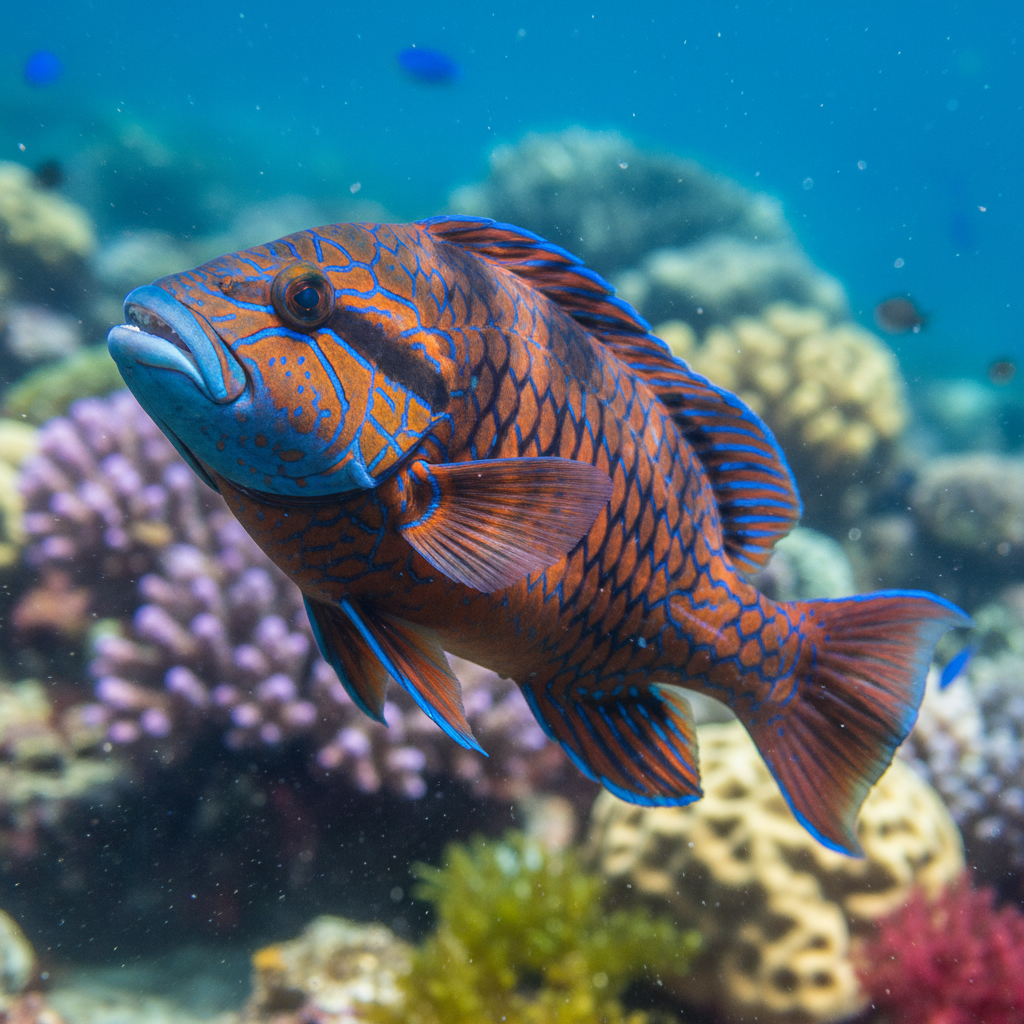
The Harlequin Tuskfish (Choerodon fasciatus) is a show-stopping member of the Wrasse family (Labridae). It is globally renowned for its surreal appearance: a white body marked with broad, vibrant orange vertical bands that are outlined in iridescent blue or purple. The most famous and bizarre feature, however, is its teeth. As the fish matures into adulthood, its teeth turn a brilliant, neon blue, earning it the name "Tuskfish."
In the aquarium, the Tuskfish is prized not just for its beauty but for its personality. They are bold, inquisitive, and highly active, often interacting with their owners through the glass. Unlike many other wrasses, they do not bury themselves in the sand to sleep, preferring to wedge themselves into rocky crevices at night.
Natural Habitat & Origin
Choerodon fasciatus has a disjunct distribution in the tropical Indo-Pacific. The most sought-after specimens come from Australia's Great Barrier Reef, where the colors are typically deeper and more vibrant. They are also found in the waters around Taiwan and the northern Philippines. They inhabit seaward reef slopes and lagoon areas at depths of 5 to 35 meters, where they forage among the coral rubble and rocky outcrops for their next meal.
Care Requirements
The Harlequin Tuskfish is exceptionally hardy for a marine fish, making it an excellent choice for an intermediate saltwater aquarist. However, it requires a large, well-established system. A minimum tank size of 125 gallons (500L) is recommended for an adult to accommodate its active swimming and territorial nature.
The water must be kept pristine with high oxygen levels. While they are not overly sensitive to minor fluctuations compared to delicate reef inhabitants, they thrive in stable conditions with a pH of 8.1-8.4 and a specific gravity of 1.020-1.025. Provide plenty of live rock with diverse caves and overhangs for the fish to claim as its territory.
Diet & Feeding
In the wild, Tuskfish are formidable predators, using their powerful jaws and "tusks" to crush the shells of crustaceans and mollusks.
In the aquarium, they are enthusiastic eaters and should be provided with a protein-rich, varied diet:
- High-quality marine carnivore pellets
- Large frozen foods like Krill, Mysis, and chopped Squid
- Whole seafood in the shell (clams, mussels, or prawns) to help keep their teeth healthy
- Occasional live ghost shrimp to stimulate natural hunting behavior
They are fast eaters and can easily outcompete slower tank mates for food.
Behavior & Temperament
The Harlequin Tuskfish is semi-aggressive and territorial. It is usually peaceful toward most tank mates but can be a bully toward other wrasses or fish of a similar shape and size. It should be the only Tuskfish in the tank unless the system is massive. They are generally "reef-safe with caution"—they will not touch corals, but they will eat small motile invertebrates like shrimp, crabs, and small snails.
Tank Mates
Suitable tank mates include other robust, moderately aggressive marine fish:
- Larger Tangs and Surgeonfish
- Angelfish (both Dwarf and Large species)
- Snowflake Eels or Zebra Morays
- Large Damselfish
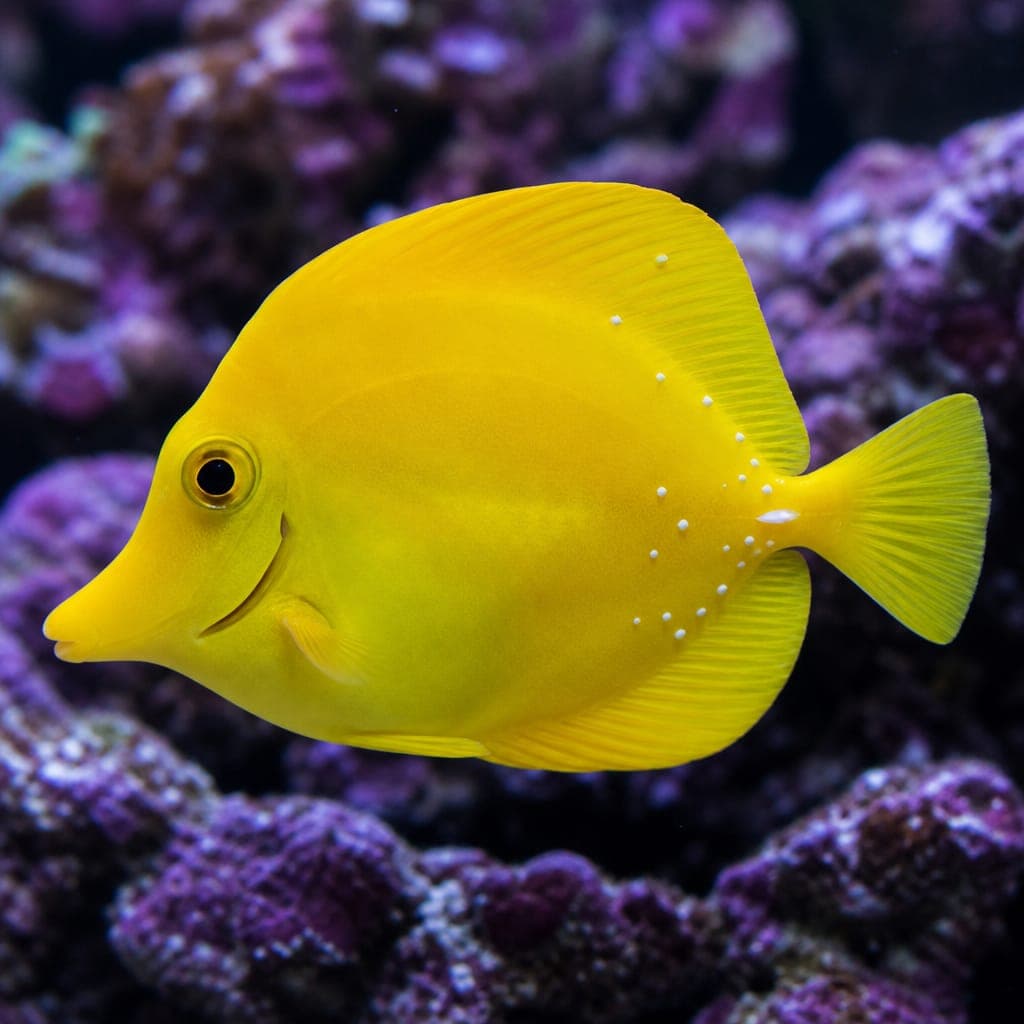
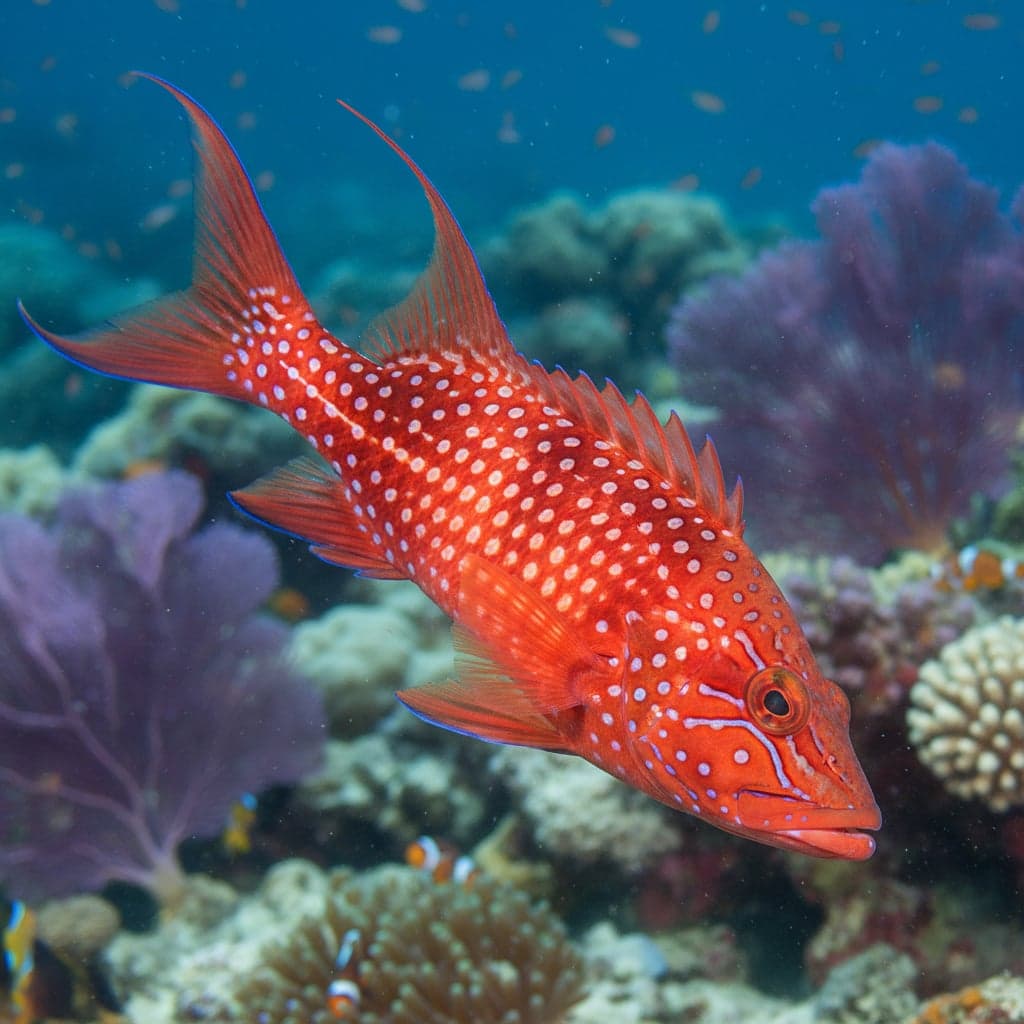
- Hawkfish
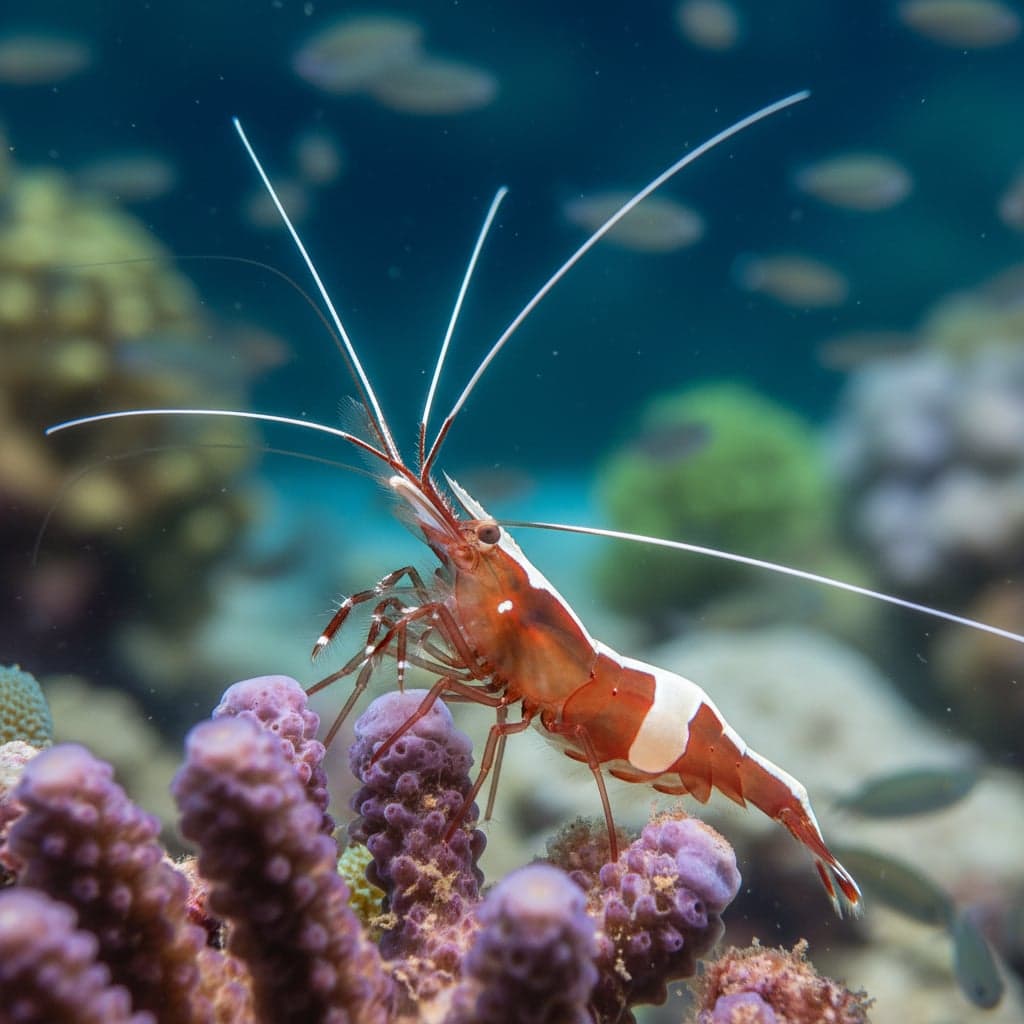
Avoid keeping them with very small fish (like Neon Gobies or small Firefish) which may be mistaken for prey, or with ornamental shrimp that will almost certainly be eaten.
Breeding
Breeding Choerodon fasciatus in captivity is extremely difficult and has rarely been documented. They are pelagic spawners, meaning they release their eggs into the open water column to drift with the currents. In the wild, they often aggregate in specific areas for spawning. There are currently no commercial captive-breeding programs for this species; almost all specimens in the hobby are wild-caught.
Common Health Issues
The Harlequin Tuskfish is a remarkably disease-resistant species. However, like all marine fish, it can be susceptible to Marine Ich (Cryptocaryon) and Marine Velvet if stressed during transport or by poor water quality. Providing a low-stress environment with a high-quality diet and clean water is the best way to ensure their long-term health.