Hi-fin Banded Goby: Stonogobiops nematodes
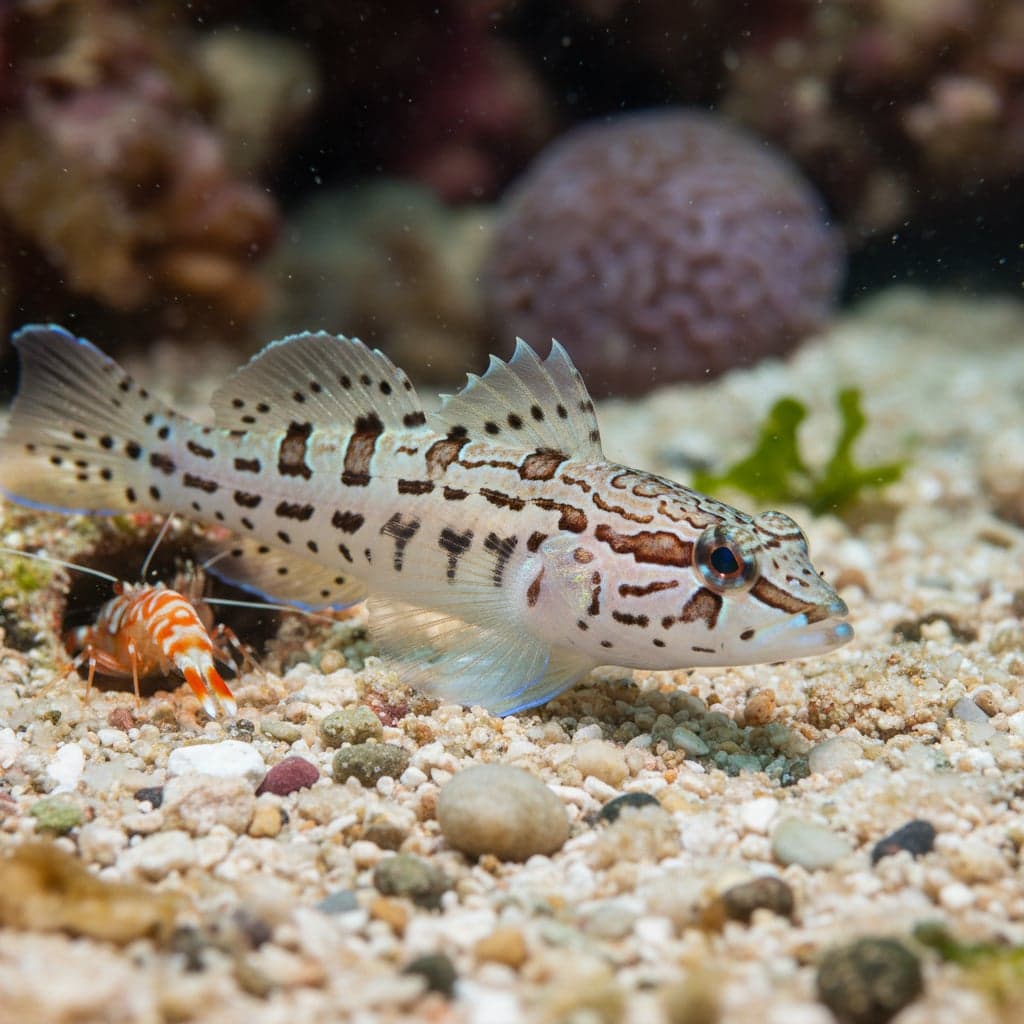
The Hi-fin Banded Goby (Stonogobiops nematodes) is a stunning marine shrimp goby famous for its elongated dorsal filament and its fascinating symbiotic partnership with Alpheid pistol shrimp.
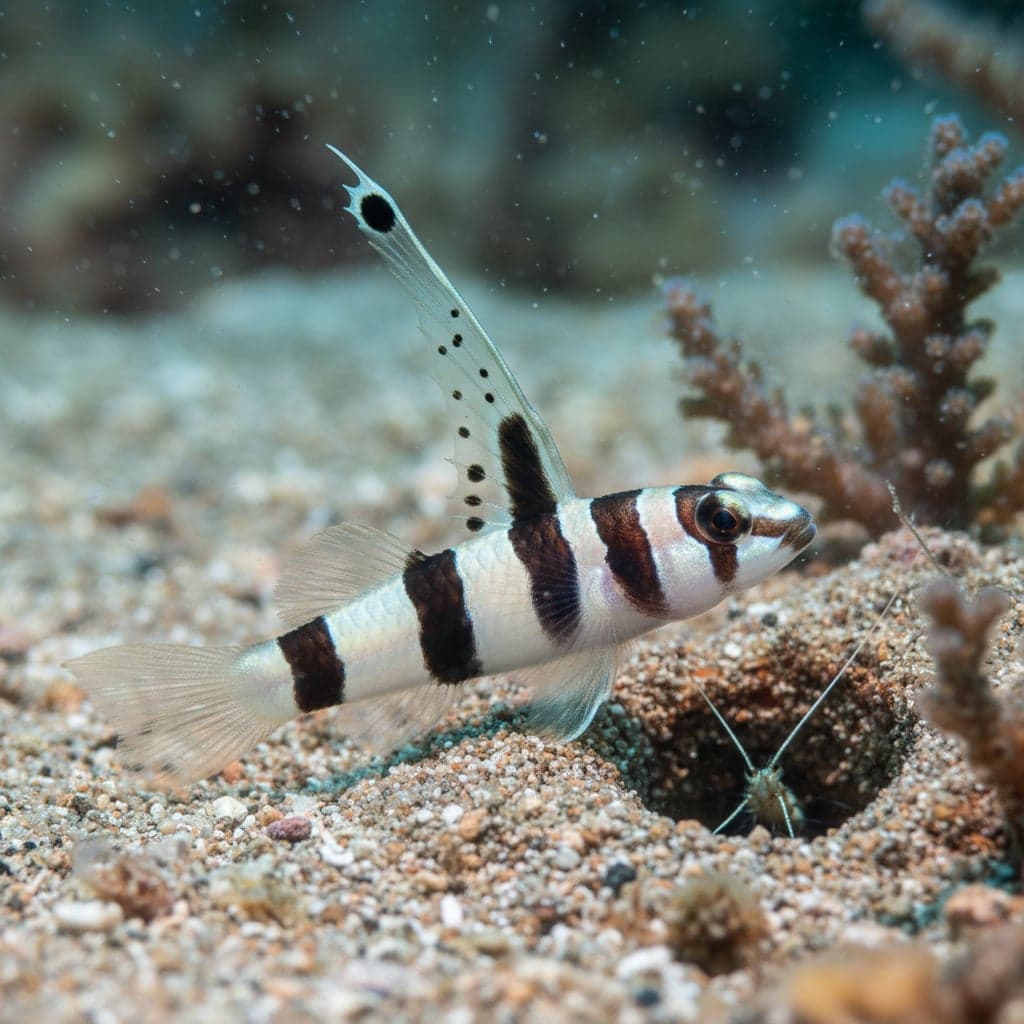
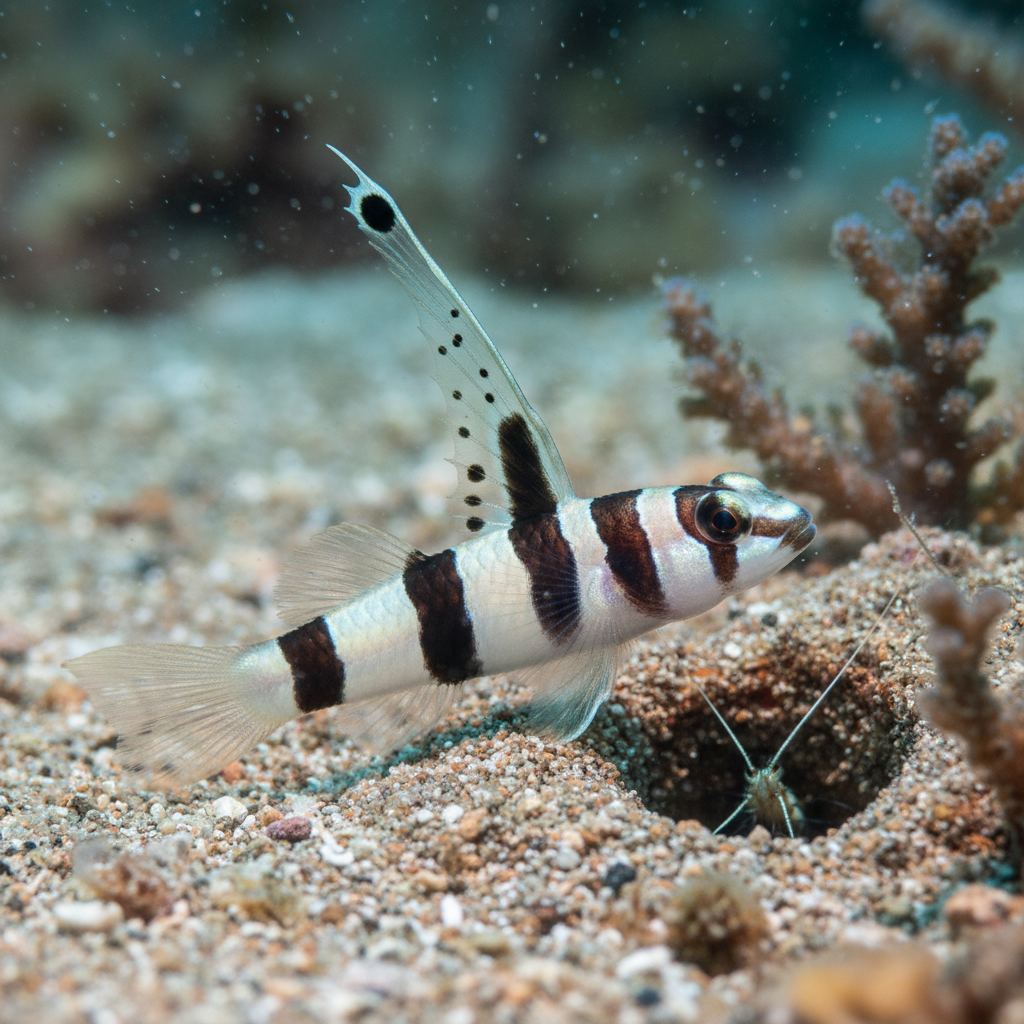
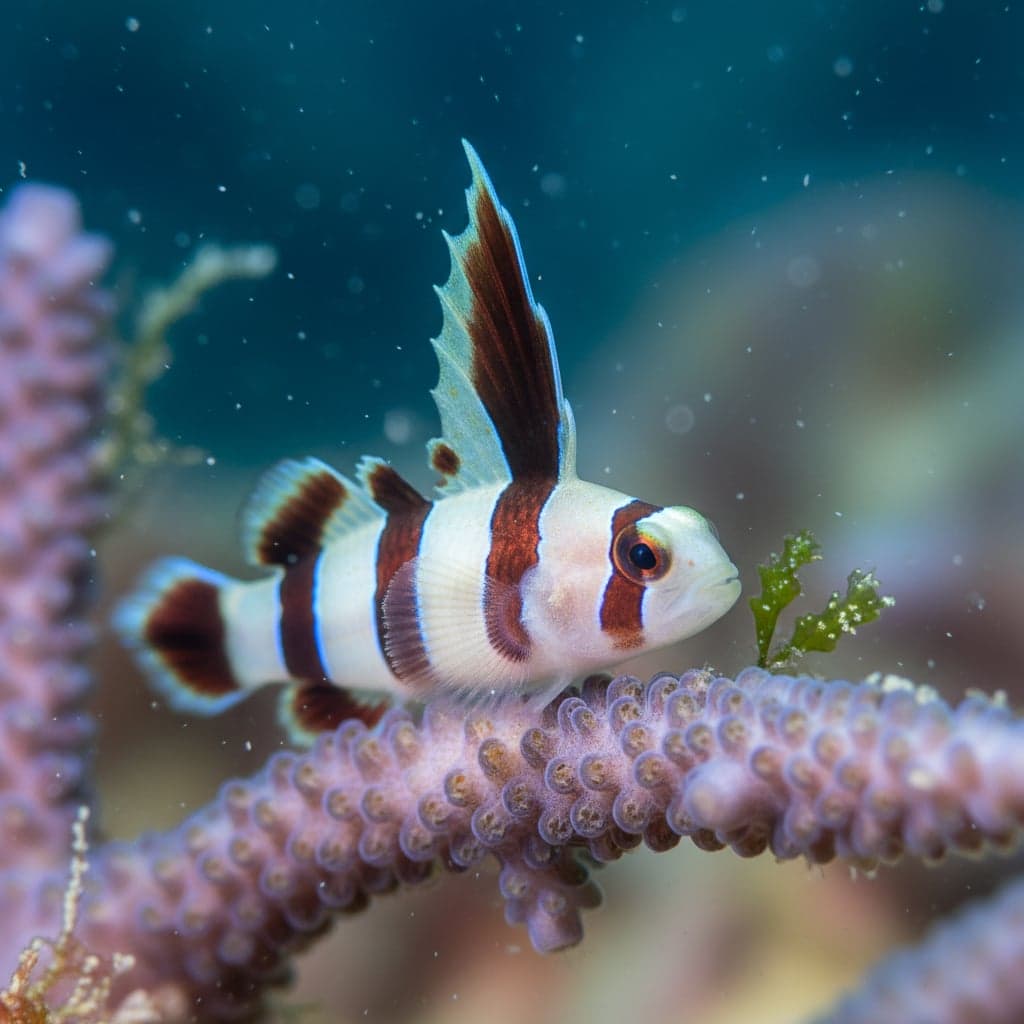
The Hi-fin Banded Goby (Stonogobiops nematodes), also known as the Blackray Shrimp Goby, is one of the most popular and charismatic species in the marine aquarium hobby. It is easily identified by its striking coloration: a pearly white body marked with four distinct, diagonal dark brown-to-black bands, and a bright yellow head. Its most iconic feature is the extremely elongated first ray of the dorsal fin, which it flicks rhythmically as it stands guard outside its burrow.
In the aquarium, the Hi-fin Banded Goby is best known for its incredible symbiotic relationship with Pistol Shrimp (specifically Alpheus randalli). The constant interaction between the vigilant goby and the busy, nearly-blind shrimp as they maintain their shared burrow is one of the most rewarding natural spectacles in marine fish keeping.
Natural Habitat & Origin
Stonogobiops nematodes is native to the tropical Indo-Pacific, ranging from the Philippines and Indonesia to the Seychelles and Bali. They inhabit sandy patch reefs and coastal lagoon areas at depths between 15 and 25 meters. They are always found in association with Alpheid shrimp on open sandy expanses where they rely on their shrimp partner to dig and maintain a deep protective burrow.
Care Requirements
The Hi-fin Banded Goby is a relatively hardy species, but it has specific environmental needs to thrive. A minimum tank size of 20 gallons (75L) is recommended, though they are excellent candidates for well-maintained "nano" or "pico" reefs. The most critical requirement is a deep sand bed (at least 2-3 inches) mixed with some fine coral rubble and shell fragments, which the shrimp needs to construct a stable burrow.
Maintain standard marine parameters: a pH of 8.1 to 8.4 and a temperature of 74°F to 80°F (23°C to 27°C). Because they are naturally found in relatively deep water, they appreciate moderate lighting and stable water quality. A tight-fitting lid is mandatory, as this species is a frequent and capable jumper when startled.
Diet & Feeding
In the wild, these gobies are micro-carnivores, feeding on zooplankton and small benthic crustaceans that drift near the entrance of their burrow.
In captivity, they are generally easy to feed but should be offered a variety of high-quality foods:
- Frozen Mysis shrimp, enriched Brine shrimp, and cyclops
- Finely chopped marine seafood (prawns or mussels)
- High-quality marine pellets or flakes (though they may take time to accept prepared foods)
Feeding should be done near the entrance of their burrow, as they are hesitant to venture too far from their safe haven.
Behavior & Temperament
The Hi-fin Banded Goby is peaceful and shy. It spends most of its time hovering just outside or resting at the entrance of its burrow. It is highly territorial toward other shrimp gobies and should be kept as a single specimen or as a mated pair. The symbiotic partnership is remarkable: the goby acts as the "eyes," flicking its tail to warn the shrimp of approaching predators, while the shrimp provides a safe home by constantly excavating sand.
Tank Mates
Suitable tank mates include other peaceful, reef-dwelling species:
- Firefish and Dartfish
- Blennies and smaller Wrasses
- Mandarins and Dragonets
- Peaceful Cardinals
- Symbiotic Pistol Shrimp (Alpheus randalli is the preferred partner)
Avoid large, aggressive fish or bottom-dwellers like large Dottybacks or Hawkfish that might harass the goby or compete too aggressively for its burrow space. They are 100% reef-safe and will not touch corals or sessile invertebrates.
Breeding
Breeding in the home aquarium is rare but has been achieved. They are demersal spawners, laying eggs deep inside the safety of the burrow where the male (and often the shrimp) will guard them. The larvae are pelagic and extremely difficult to raise, requiring specialized live foods like rotifers and a dedicated nursery system.
Common Health Issues
They are generally hardy but can suffer from starvation if housed with overly aggressive feeders that prevent food from reaching the bottom. They are also sensitive to high nitrates and copper medications. Providing a stable environment and ensuring they receive target-fed meals is the best way to maintain their health.