Honduran Red Point: Amatitlania sp. "Honduran Red Point"
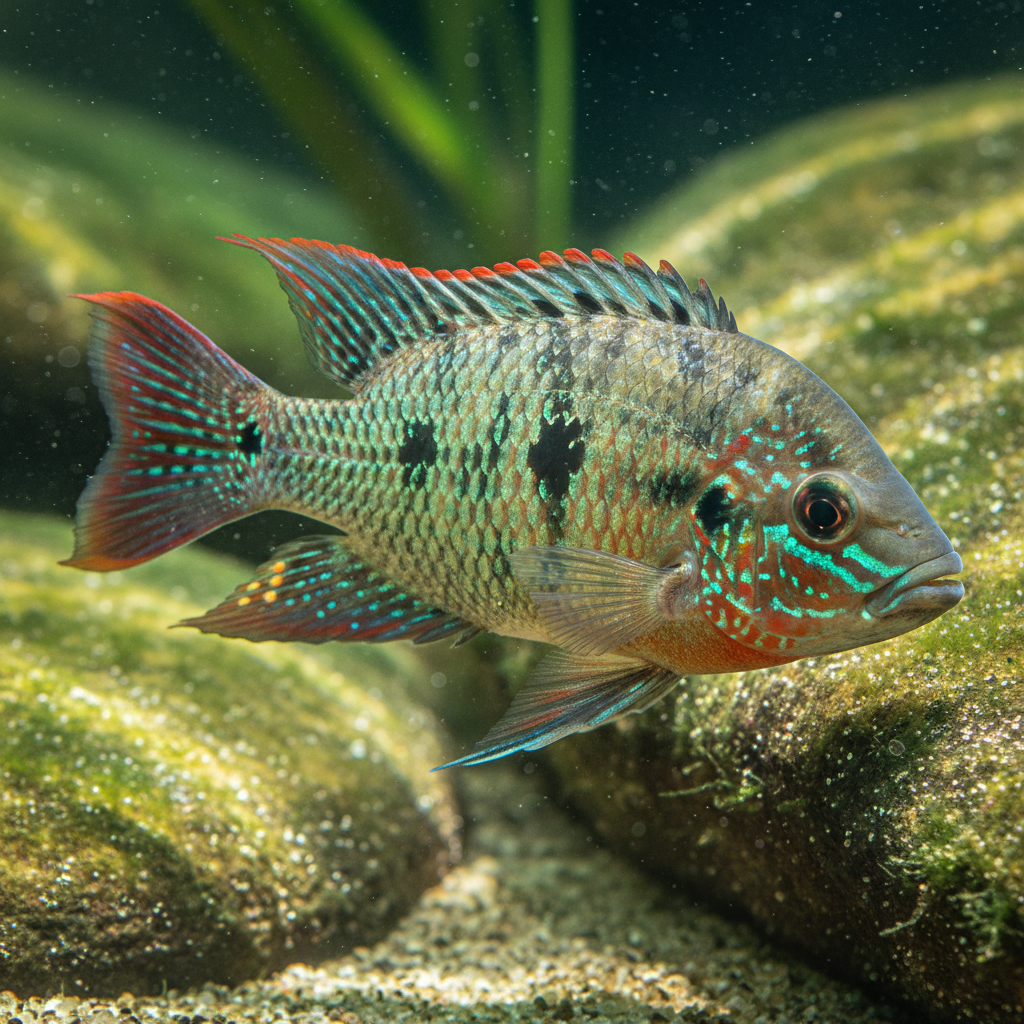
The Honduran Red Point (Amatitlania sp. "Honduran Red Point") is a pearlescent blue dwarf cichlid from Central America, prized for its vibrant color and manageable temperament.
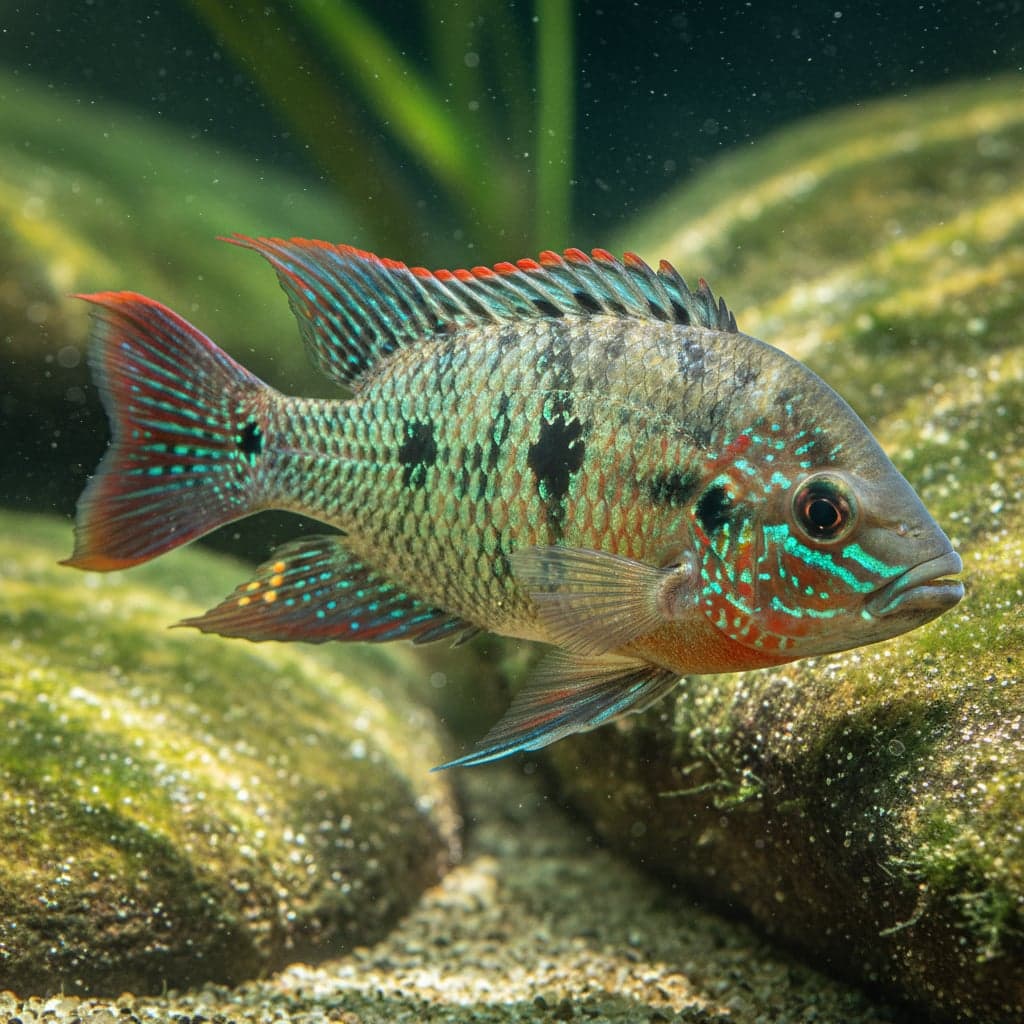
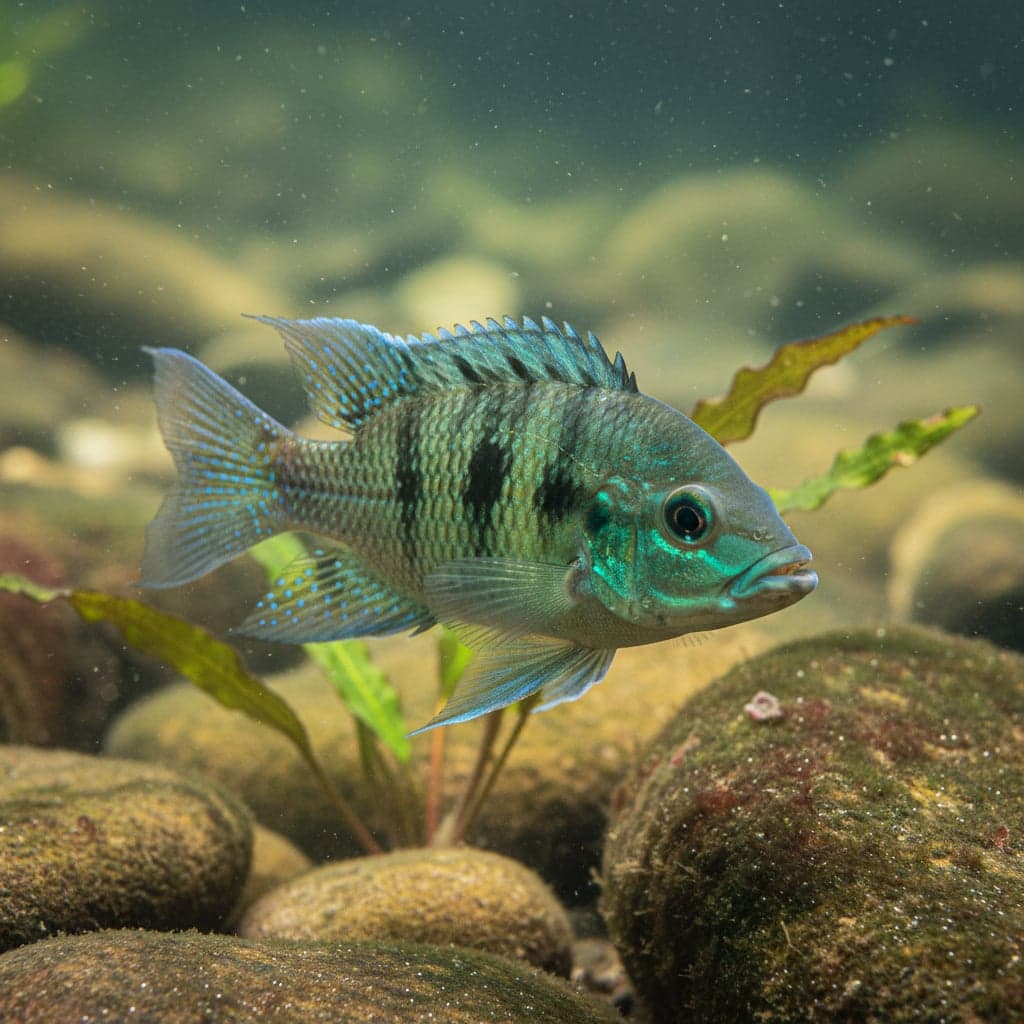
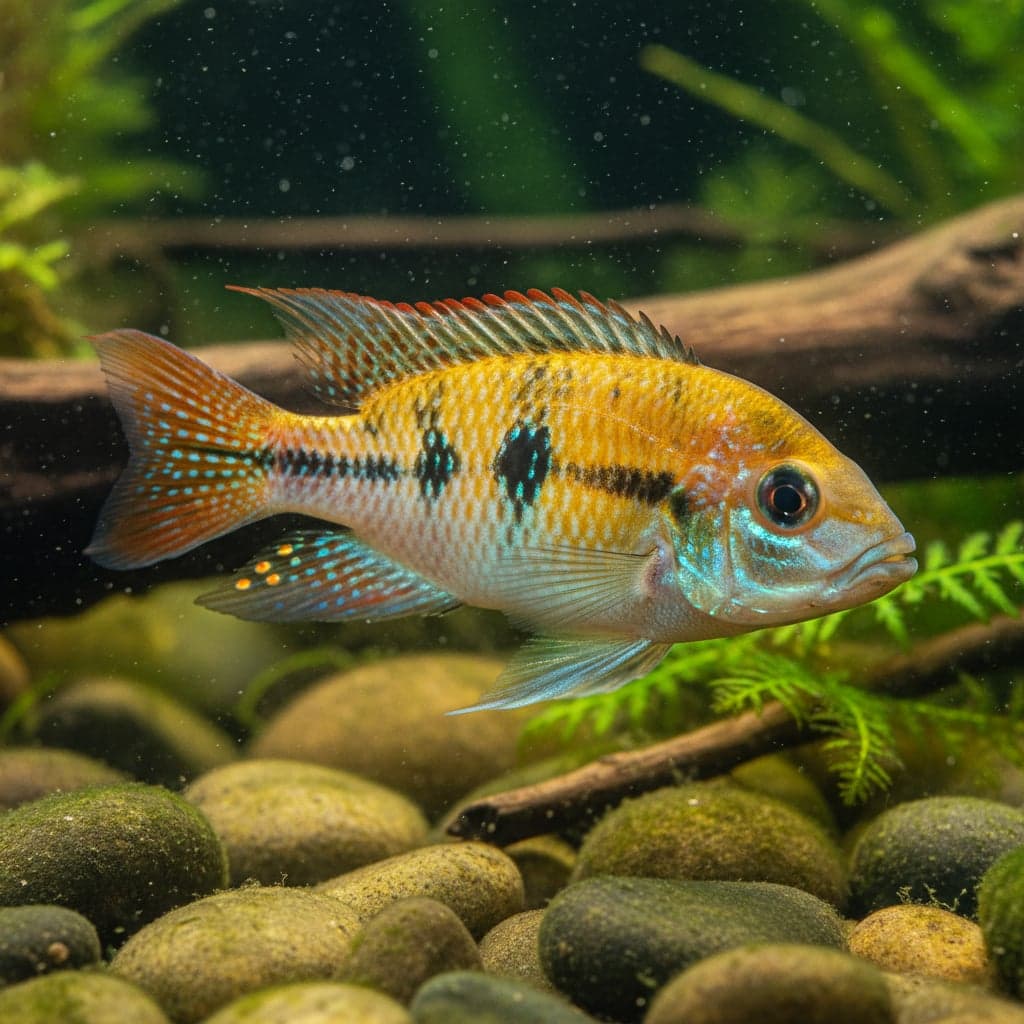
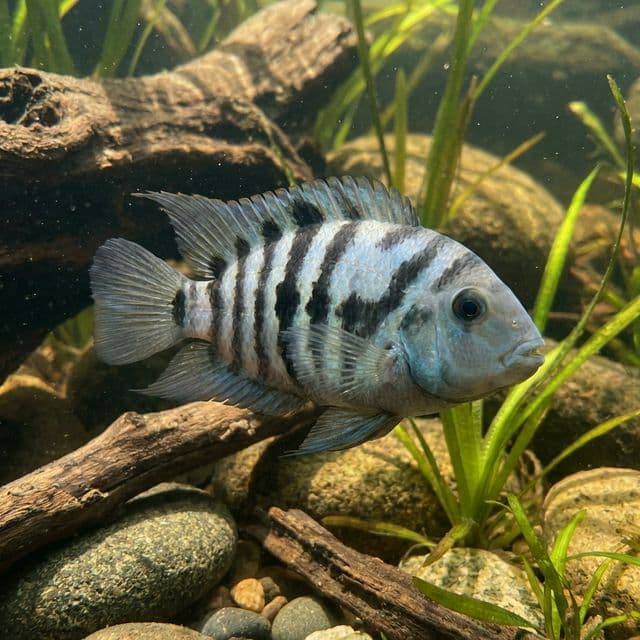
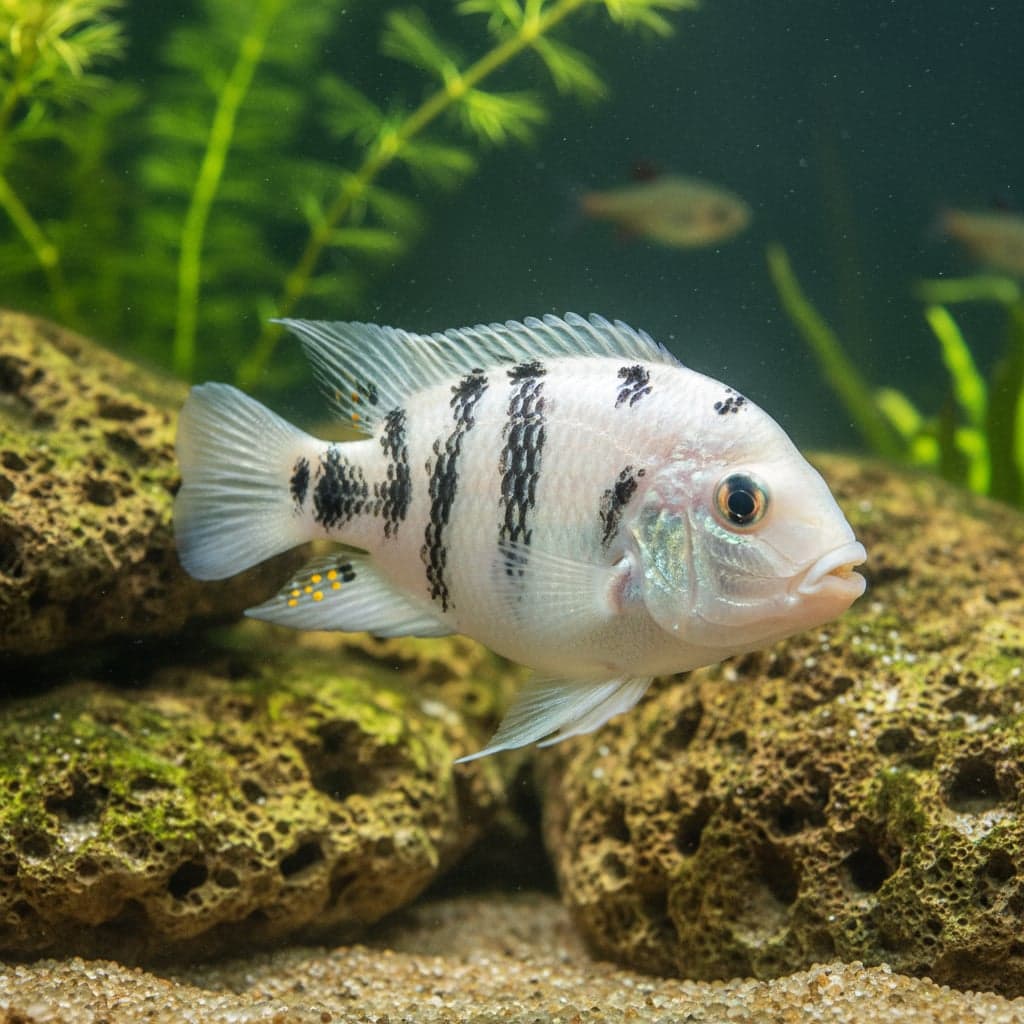
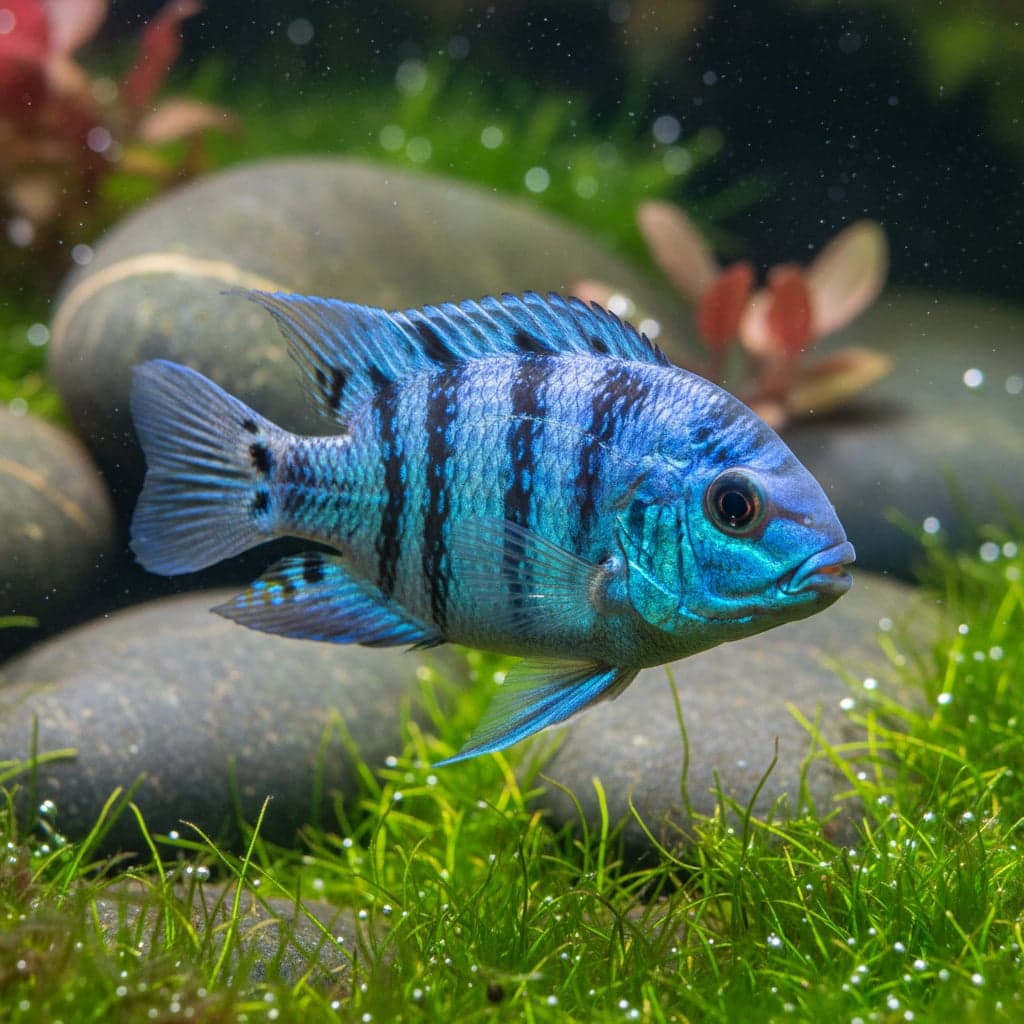
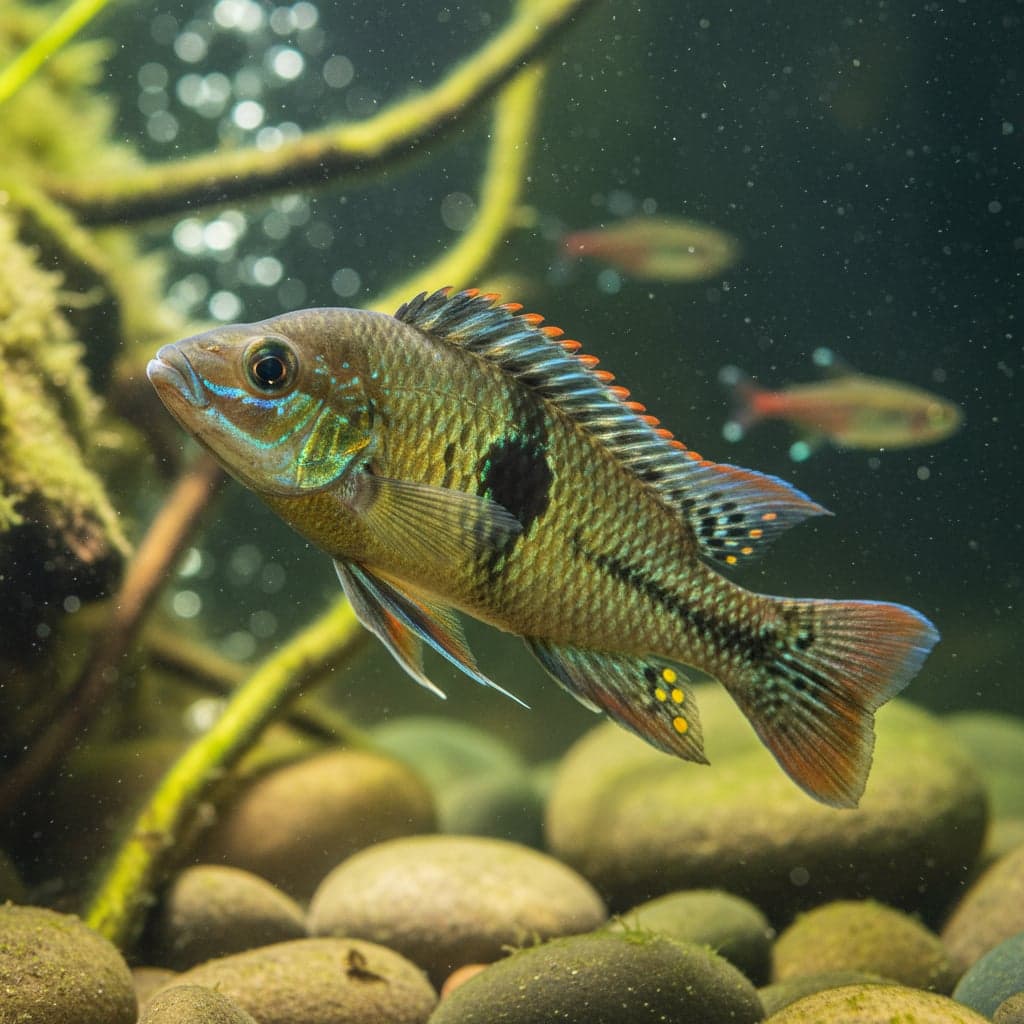
The Honduran Red Point (Amatitlania sp. "Honduran Red Point"), often affectionately called "HRP," is a stunning and far more peaceful relative of the common Convict Cichlid. While it shares the same robust shape and vertical barring of its cousin, the HRP is distinguished by its luminous, pearlescent ice-blue or cyan body. Its name is derived from the vibrant red and orange highlights that adorn the fins and the base of the caudal peduncle, creating a spectacular contrast against its shimmering blue scales.
In the aquarium, they are highly sought after by those who want the personality and breeding behavior of a Central American cichlid without the extreme aggression and "tank-wrecking" habits often associated with larger species.
Natural Habitat & Origin
As its name suggests, this species is endemic to Honduras. It is specifically found in the Rio Danlí and Rio Monga river systems. They inhabit relatively small, clear-water streams with moderate current and rocky or sandy substrates. Unlike many other Central American habitats that are alkaline and hard, the HRP often comes from slightly softer and more neutral waters, though they remain highly adaptable in captivity.
Care Requirements
The Honduran Red Point is a remarkably hardy fish and an excellent choice for those new to cichlids. A minimum tank size of 20 gallons (75L) is suitable for a single pair, though 30-40 gallons is preferred to provide space for tank mates.
Maintain stable parameters: a pH of 7.0 to 8.0 and a temperature of 74°F to 82°F (24°C to 28°C). The tank should be decorated with a mix of smooth stones, driftwood, and caves (terracotta pots or overturned slate). They are natural cave-spawners and enjoy having a secure retreat. While they do dig occasionally, they are relatively kind to hardy plants like Anubias or Java Fern if these are securely attached to hardscape.
Diet & Feeding
Honduran Red Points are quintessential generalist omnivores. In the wild, they graze on biofilm, small invertebrates, and organic detritus.
In captivity, they are eager feeders:
- High-quality cichlid flakes and pellets (as the staple)
- Frozen foods such as Bloodworms, Mysis shrimp, and Krill (as treats)
- Supplementation with vegetable-based wafers or spirulina flakes
- Live foods like brine shrimp or daphnia will encourage peak coloration and health
They have a fast metabolism and should be fed small amounts twice daily.
Behavior & Temperament
While they are semi-aggressive and territorial, especially when spawning, the HRP is considerably milder than the common Convict Cichlid. They are excellent parents and will fiercely defend their brood, but they rarely pursue tank mates across the entire aquarium once their territory is established. They are best kept as a mated pair. Outside of breeding, they are generally curious and active fish that will interact with their owner.
Tank Mates
Suitable tank mates include other robust but non-overpowering species:
- Swordtails and Platies (which share their Central American roots)
- Large Tetras (like Buenos Aires or Columbian Tetras)
- Robust Catfish (like Corydoras or small Plecos)
- Other small, semi-aggressive cichlids (only in very large tanks)
Avoid keeping them with very timid or slow-moving fish, as the quick movements and territoriality of the HRP can be stressful for them.
Breeding
Breeding Honduran Red Points is incredibly easy and often happens spontaneously. They are cave spawners; the female will deposit 50-150 eggs inside a cave or crevice, which the male then fertilizes. Both parents provide exemplary care, fanning the eggs and protecting the fry with intense dedication. The fry are easy to raise on crushed flakes or baby brine shrimp. Be warned: like Convicts, they are prolific spawners, and you should have a plan for the numerous offspring.
Common Health Issues
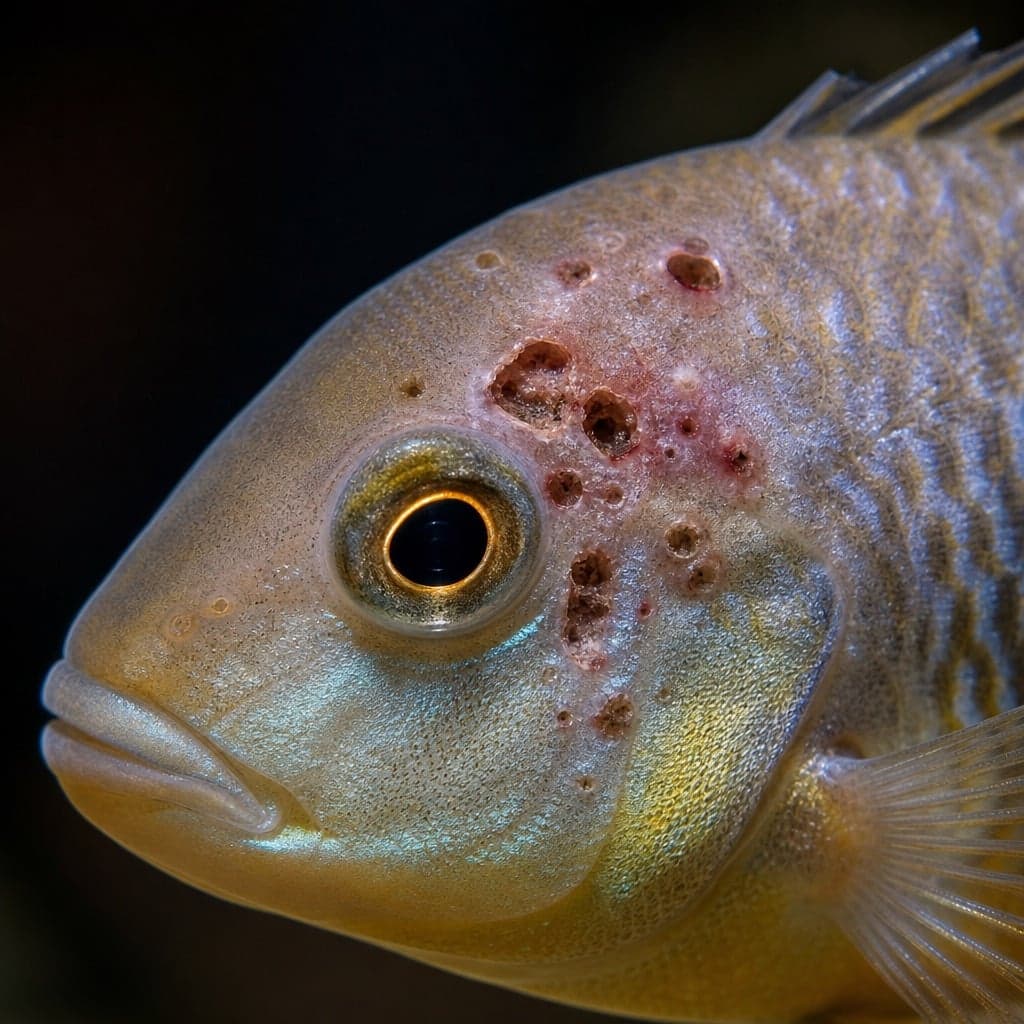
They are exceptionally hardy and resistant to most common diseases. However, like all cichlids, they are susceptible to Ich and Hexamita (Hole-in-the-Head) if water quality is allowed to deteriorate or if they are fed an improper diet. Regular water changes and a varied diet are the only requirements to keep them in peak health.